 Eastern European Images are for illustrative purposes only, may be inaccurate, and do not guarantee the presence or absence of specific ingredients.
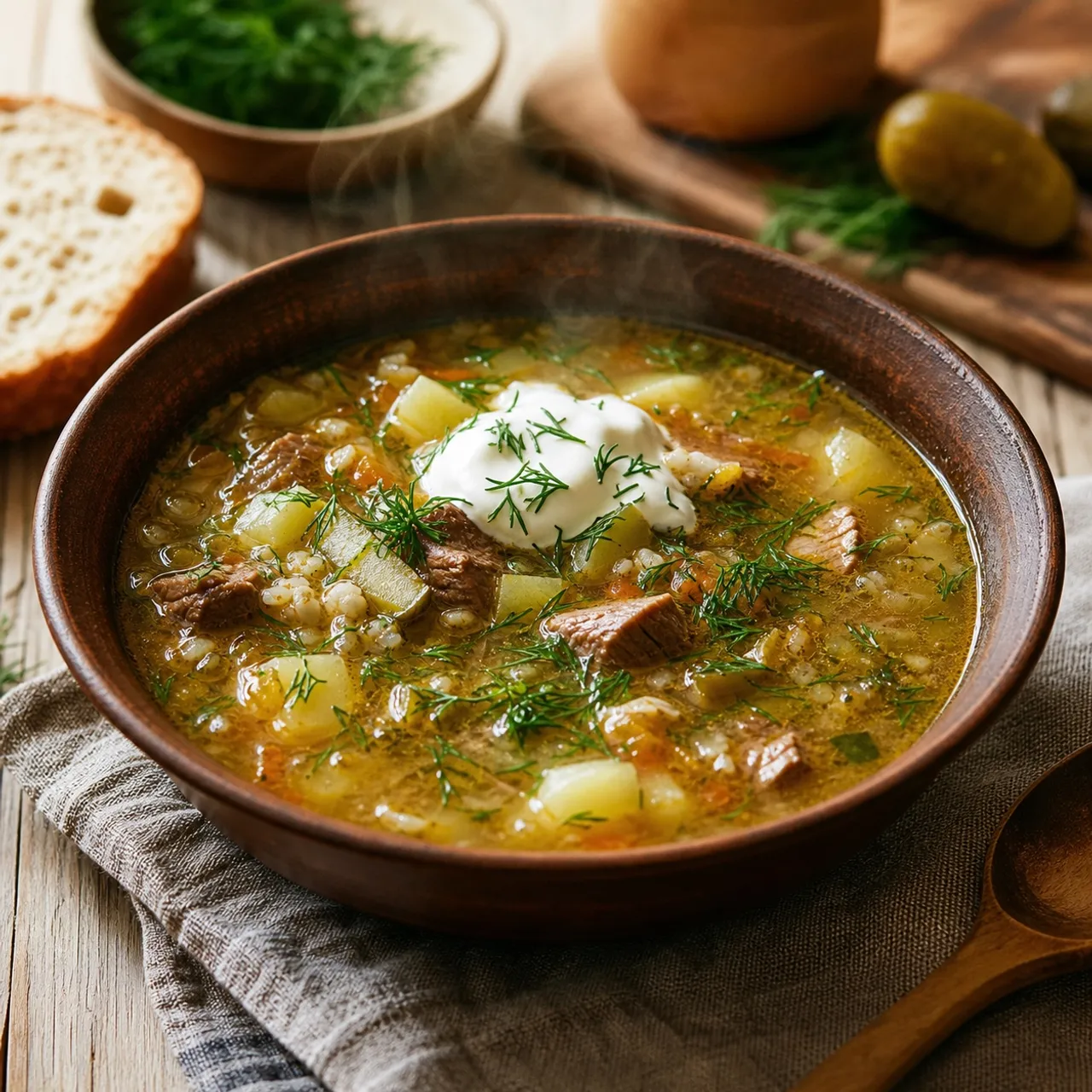
 Rassolnik
A hearty Russian soup distinguished by the briny tang of pickled cucumbers and pearl barley.
Contains common allergens
In the app, Listahan checks these against your household automatically.
Instructions
5 steps- 1
Place the beef short ribs in a large pot with 8 cups of cold water, bring to a boil, then skim the foam and simmer gently for 1 hour until the meat is tender and the broth is rich.
- 2
While the broth simmers, rinse the pearl barley well and parboil it in a separate pot for 20 minutes, then drain to remove excess starch that would otherwise cloud the soup.
- 3
Remove the ribs, shred the meat off the bone, and return the meat and parboiled barley to the broth, then add the cubed potatoes and simmer for 15 minutes.
- 4
In a skillet, saute the chopped onion and grated carrot over medium heat until softened and golden, about 7 minutes, then stir in the diced pickles and pickle brine and cook 3 more minutes.
- 5
Add the sauteed vegetable mixture to the pot, simmer everything together for 10 minutes until the potatoes are tender, then season to taste and serve hot with a dollop of sour cream.
Listahan Family Score™
66/100
Works for many families
Score reflects how well this recipe fits a typical busy household. In the app, your Family Score is personalized to your household's allergens, kids, and pantry.
Nutrition
per serving705
Calories
50 g
Protein
72 g
Carbs
24 g
Fat
Estimated per serving. Actual values depend on the brands and portions you use.
Listahan cooking guide
Chef notes & practical guide
Technique notes, ingredient swaps, serve-alongside ideas, storage guidance, and equipment for this recipe.
Cultural context
Rassolnik belongs to a family of Russian soups built around rassol, the brine from pickled cucumbers. The brine is not just a garnish-level sour note; it shapes the broth, balances rich meat, and gives the soup its recognizable tang. Barley and potatoes make it sturdy enough for cold-weather meals without turning it into a stew.
Listahan note
This version keeps the soup centered on a clear beef broth, chewy pearl barley, and pickles cooked just long enough to soften their edge. The separate barley parboil is worth keeping because it gives the finished bowl a cleaner broth.
Technique cues
- Skim the beef broth early and keep it at a gentle simmer. A hard boil makes the broth cloudy and can toughen the meat before it has time to relax.
- Parboiling the pearl barley separately removes surface starch, which matters in rassolnik because the brine should brighten the broth instead of fighting a gummy texture.
- Cook the pickled cucumbers with the onion, carrot, and brine before adding them to the pot. That short skillet step rounds the brine and helps the vegetables taste integrated, not raw and sharp.
Kitchen flow
- Parallel prep
- Start rinsing and parboiling the barley while the beef broth simmers; chop the potatoes, onion, carrot, and pickles before the ribs come out.
- Make-ahead
- Cook the broth and shred the beef ahead, then finish with barley, potatoes, and the pickle mixture when you are closer to serving.
- Leftover move
- Warm leftovers with an extra splash of water or broth and add a fresh spoonful of sour cream at the table if using it.
- Cleanup rhythm
- Use the barley pot first, then rinse it before the starch dries; wipe the pickle skillet right after it is emptied into the soup.
Ingredient brief
Role, handling, and swap guidance for each key ingredient.
Beef short ribs
Broth base and meat
Purpose: Short ribs bring enough bone and connective tissue to make a rich soup broth with tender pieces of beef for the bowl.
Handling: Start them in cold water, skim well after the boil begins, and simmer gently until the meat pulls away from the bone.
Adaptation: Beef shank gives a similar brothy result, while stew meat is easier to shred but makes a less rounded broth.
Pearl barley
Body and chew
Purpose: Barley gives rassolnik its hearty texture and keeps the soup filling without making it heavy.
Handling: Rinse well, parboil separately, and drain before it goes into the main pot.
Adaptation: Rice makes a softer, lighter soup; add it later so it does not break down.
Pickled cucumbers
Signature briny vegetable
Purpose: They provide the sour-salty flavor that separates rassolnik from a standard beef and potato soup.
Handling: Dice them small enough to fit easily on a spoon and cook them briefly in the skillet before adding to the broth.
Adaptation: Dill pickles work well if they are not sweet; sweet pickles will push the soup in the wrong direction.
Pickle brine
Acid and seasoning
Purpose: The brine seasons the broth and gives the soup its clean tang without needing vinegar added separately.
Handling: Add it with the pickles in the skillet first, then taste the soup before adding any extra salt.
Adaptation: Use less brine for a gentler soup, then add more at the end if the broth tastes flat.
Potatoes
Soft starch
Purpose: Potatoes make the soup feel substantial and absorb some of the briny broth as they cook.
Handling: Cut them into even cubes so they become tender during the final simmer without falling apart.
Adaptation: Waxy potatoes hold their shape best; russets taste good but can crumble and thicken the broth.
Onion and carrot
Sweet aromatic base
Purpose: They soften the sharpness of the pickles and give the beef broth a warmer, rounder flavor.
Handling: Cook them until golden before adding the pickles, since the soup's final simmer is short.
Adaptation: If you only have diced carrot instead of grated, cook it a few minutes longer so it softens properly.
Technique notes
- Do not salt the broth heavily at the beginning. The pickles and brine bring seasoning later, and the balance is easier to control at the end.
- Shred the short rib meat into spoon-size pieces rather than large chunks so each bowl gets broth, barley, potato, and beef together.
- Add the sauteed pickle mixture only after the potatoes have had a head start. Too much acidity early can make potatoes take longer to soften.
Ingredient swaps
- Weeknight shortcut
- Use prepared beef broth and simmer cubed beef until tender, then continue with the barley, potatoes, and pickle mixture.
- Brine control
- Start with half the pickle brine if your pickles are very salty or assertive, then adjust the finished soup by the spoonful.
- Lighter broth path
- Use fewer short ribs and add more potatoes for a less meat-forward bowl, keeping the pickle brine measured so it does not dominate.
Serve alongside
- Dark rye bread with butter
- Buckwheat kasha
- Cabbage and cucumber salad
- Potato pirozhki
- Black tea with lemon
- Kvass
- Cold lager
Serving suggestions only — check pairings for your household's allergens.
Storage & reheating
- Refrigerate the soup in a sealed container with the beef, barley, and broth together so the grains stay hydrated.
- Reheat gently on the stovetop, adding water or broth as needed because barley continues to thicken the soup as it sits.
- Freeze in portion-size containers, thaw in the refrigerator, and loosen with broth while reheating.
Equipment
- Large heavy soup pot
- Small saucepan for barley
- Skillet for onion, carrot, and pickles
- Tongs and fork for removing and shredding short ribs
Make this household-aware
Listahan Pro checks this recipe against your household's allergens, finds pantry-aware swaps, builds the shopping list, and helps you plan the week around it.
Plan it in Listahan
Add Rassolnik to your week, check it against your household's allergens, and build the shopping list automatically.
More Eastern European recipes
 Eastern European Lens Verified Images are for illustrative purposes only, may be inaccurate, and do not guarantee the presence or absence of specific ingredients.
 Shashlik
Smoky, charred cubes of marinated lamb or pork threaded on skewers and grilled over embers — Central Asia's festive open-fire classic, fragrant with onion and spice.
 Eastern European Lens Verified Images are for illustrative purposes only, may be inaccurate, and do not guarantee the presence or absence of specific ingredients.
 Vatrushka
Soft, pillowy Russian buns filled with a sweetened quark or farmer's cheese center — lightly golden and gently sweet, perfect alongside tea or coffee.
 Eastern European Lens Verified Images are for illustrative purposes only, may be inaccurate, and do not guarantee the presence or absence of specific ingredients.
 Kurtosh Kalach
Hungary's iconic chimney cake — sweet yeast dough spiraled around a spit, rolled in cinnamon sugar, and roasted until the outside caramelizes into a crackly, warm shell.