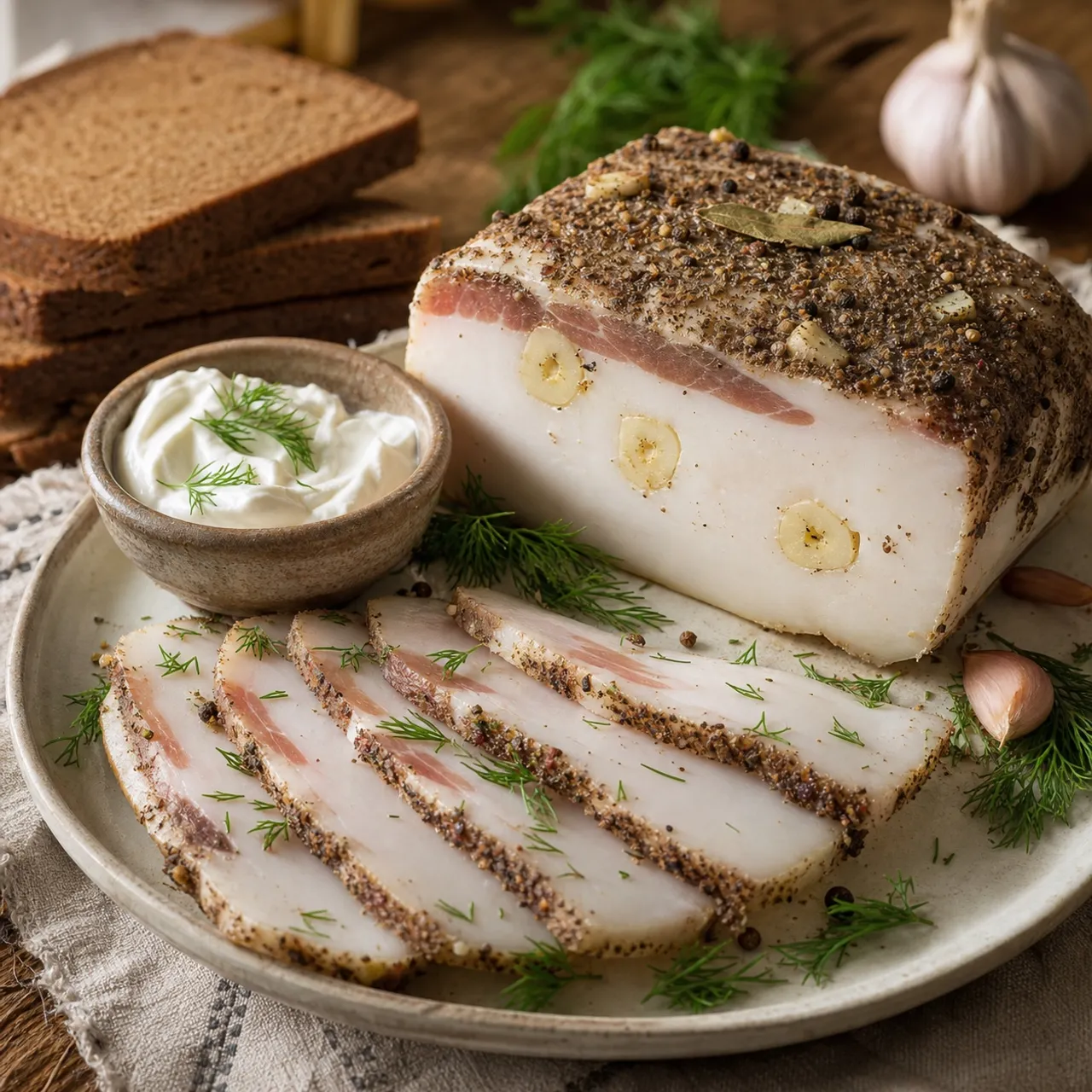
 Eastern European Images are for illustrative purposes only, may be inaccurate, and do not guarantee the presence or absence of specific ingredients.
 Salo
Ukrainian cured pork fatback seasoned with garlic and spices, traditionally sliced thin and served with rye bread.
No common allergens detected
Based on this recipe's ingredient list. Always verify with your own brands and labels.
Good to know
- Ready in under 30 minutes
Matched from this dish's own ingredients and timing. Browse more: 30-minute meals
Instructions
5 steps- 1
Rinse the pork fatback and pat it completely dry, then score the surface in a shallow crosshatch pattern about 1/4 inch deep to help the cure penetrate evenly.
- 2
In a small bowl, combine the kosher salt, cracked peppercorns, crumbled bay leaves, and ground coriander, then rub this mixture firmly into every surface of the fatback.
- 3
Press the sliced garlic into the scored cuts and over the top, then wrap the seasoned slab tightly in cheesecloth or parchment paper.
- 4
Place the wrapped salo in a dish, refrigerate, and cure for 5 days, turning it once daily so the seasonings distribute evenly throughout the fat.
- 5
After curing, scrape off excess salt, slice the salo paper-thin against the skin, and serve cold with rye bread, mustard, and a shot of cold vodka.
Listahan Family Score™
75/100
Good fit for most families
Score reflects how well this recipe fits a typical busy household. In the app, your Family Score is personalized to your household's allergens, kids, and pantry.
Nutrition
per serving450
Calories
49 g
Protein
2 g
Carbs
26 g
Fat
Estimated per serving. Actual values depend on the brands and portions you use.
Listahan cooking guide
Chef notes & practical guide
Technique notes, ingredient swaps, serve-alongside ideas, storage guidance, and equipment for this recipe.
Cultural context
Salo is especially tied to Ukrainian home cooking, where a small plate of cured pork fatback can sit beside rye bread, pickles, onions, and strong drink as much as it can sit beside a bowl of soup. The point is not to eat a large portion; it is sliced very thin so the cold fat softens on the tongue and carries the garlic, pepper, bay, and coriander.
Listahan note
This version keeps the cure simple and pantry-friendly, with garlic pressed into shallow cuts so the seasoning reaches more than just the surface. It prioritizes clean slicing and a firm, cold texture over heavy smoking or extra spice.
Technique cues
- Drying the fatback well before seasoning helps the salt and spices cling instead of sliding off into the wrapping.
- The shallow crosshatch matters because fatback is dense; the cuts give garlic and seasoning places to settle without shredding the slab.
- Slice salo paper-thin straight from the refrigerator. Thick slices can taste heavy, while thin slices read as rich, salty, and aromatic.
Kitchen flow
- Parallel prep
- While the fatback dries on towels, slice the garlic and mix the pepper, bay, coriander, and salt so the slab can be seasoned all at once.
- Make-ahead
- This is built for advance prep: cure it several days before serving, then slice only what you need while it is still cold and firm.
- Leftover move
- Dice a little cured salo and render it slowly to start potatoes, buckwheat, cabbage, or scrambled eggs.
- Cleanup rhythm
- Use a rimmed dish under the wrapped slab in the refrigerator, then wash the dish when you turn the salo so salt and garlic juices do not build up.
Ingredient brief
Role, handling, and swap guidance for each key ingredient.
Fresh pork fatback, skin on
Main cured fat
Purpose: Fatback gives salo its firm, clean texture, and the skin helps the slab hold its shape while curing and slicing.
Handling: Rinse, pat completely dry, and score only shallowly so the slab stays intact.
Adaptation: Skinless fatback can be used, but it is a little harder to handle and may slice less neatly.
Garlic, sliced
Sharp aromatic
Purpose: Garlic gives the cured fat its familiar savory bite and perfumes the scored cuts.
Handling: Slice the cloves thinly so they can be pressed into the surface without tearing the fatback.
Adaptation: Crushed garlic gives stronger coverage, but it is messier to scrape away before slicing.
Black peppercorns, cracked
Peppery backbone
Purpose: Cracked peppercorns add fragrance and small bursts of heat without turning the cure muddy.
Handling: Crack them coarsely rather than grinding them fine so they stay aromatic and easy to brush off.
Adaptation: Ground black pepper works in a pinch, but use a lighter hand because it coats the surface more aggressively.
Bay leaves, crumbled
Herbal seasoning
Purpose: Bay adds a dry, resinous note that balances the richness of the pork fat.
Handling: Crumble the leaves small enough to distribute through the salt mixture, then scrape away loose pieces before serving.
Adaptation: A small pinch of dried thyme changes the flavor toward a more herbal profile if bay leaves are not available.
Ground coriander
Warm spice note
Purpose: Coriander brings a gentle citrusy warmth that keeps the cure from tasting only salty and garlicky.
Handling: Mix it evenly into the salt before rubbing so it does not clump in one spot.
Adaptation: Lightly crushed coriander seed gives a more rustic texture and a brighter aroma.
Technique notes
- Use firm pressure when rubbing in the cure, especially along the scored lines and edges where seasoning can miss.
- Turn the slab once daily so the cure contacts different sides instead of settling on the bottom of the dish.
- Before slicing, scrape off excess salt and large spice pieces; the seasoning should flavor the fat, not form a gritty crust.
Ingredient swaps
- Bread-free serving path
- Serve thin slices with boiled potatoes, cucumber rounds, or pickled vegetables instead of rye bread; the plate will be lighter and less earthy.
- No-vodka table
- Pair with cold mineral water, kvass, or black tea if you want the same bracing contrast without spirits.
- Milder garlic direction
- Use fewer garlic slices and keep them mostly on the surface rather than pressed deep into every score.
- Pepper-forward version
- Increase the cracked black pepper slightly and keep the coriander steady so the cure tastes sharper without becoming sweet.
Serve alongside
- Rye bread with hot mustard
- Boiled young potatoes with dill
- Pickled cucumbers and red onion
- Buckwheat kasha with mushrooms
- Cold vodka
- Kvass
- Strong black tea
Serving suggestions only — check pairings for your household's allergens.
Storage & reheating
- Keep the cured salo wrapped and refrigerated, slicing portions as needed so the cut face stays clean and firm.
- Do not reheat for serving; eat it cold or dice small pieces to render gently into a hot pan for cooking.
- For longer storage, wrap tightly and freeze, then thaw in the refrigerator until firm enough to shave thinly.
Equipment
- Sharp slicing knife
- Cutting board with juice groove
- Cheesecloth or parchment paper
- Rimmed glass or ceramic dish
Make this household-aware
Listahan Pro checks this recipe against your household's allergens, finds pantry-aware swaps, builds the shopping list, and helps you plan the week around it.
Plan it in Listahan
Add Salo to your week, check it against your household's allergens, and build the shopping list automatically.
More Eastern European recipes
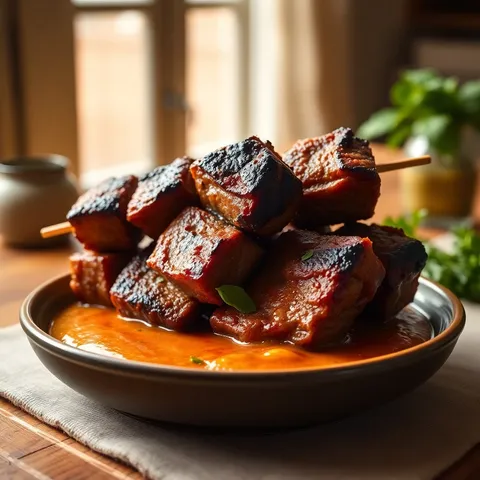 Eastern European Lens Verified Images are for illustrative purposes only, may be inaccurate, and do not guarantee the presence or absence of specific ingredients.
 Shashlik
Smoky, charred cubes of marinated lamb or pork threaded on skewers and grilled over embers — Central Asia's festive open-fire classic, fragrant with onion and spice.
 Eastern European Lens Verified Images are for illustrative purposes only, may be inaccurate, and do not guarantee the presence or absence of specific ingredients.
 Vatrushka
Soft, pillowy Russian buns filled with a sweetened quark or farmer's cheese center — lightly golden and gently sweet, perfect alongside tea or coffee.
 Eastern European Lens Verified Images are for illustrative purposes only, may be inaccurate, and do not guarantee the presence or absence of specific ingredients.
 Kurtosh Kalach
Hungary's iconic chimney cake — sweet yeast dough spiraled around a spit, rolled in cinnamon sugar, and roasted until the outside caramelizes into a crackly, warm shell.