 Eastern European Images are for illustrative purposes only, may be inaccurate, and do not guarantee the presence or absence of specific ingredients.
  Serving Images are for illustrative purposes only, may be inaccurate, and do not guarantee the presence or absence of specific ingredients.
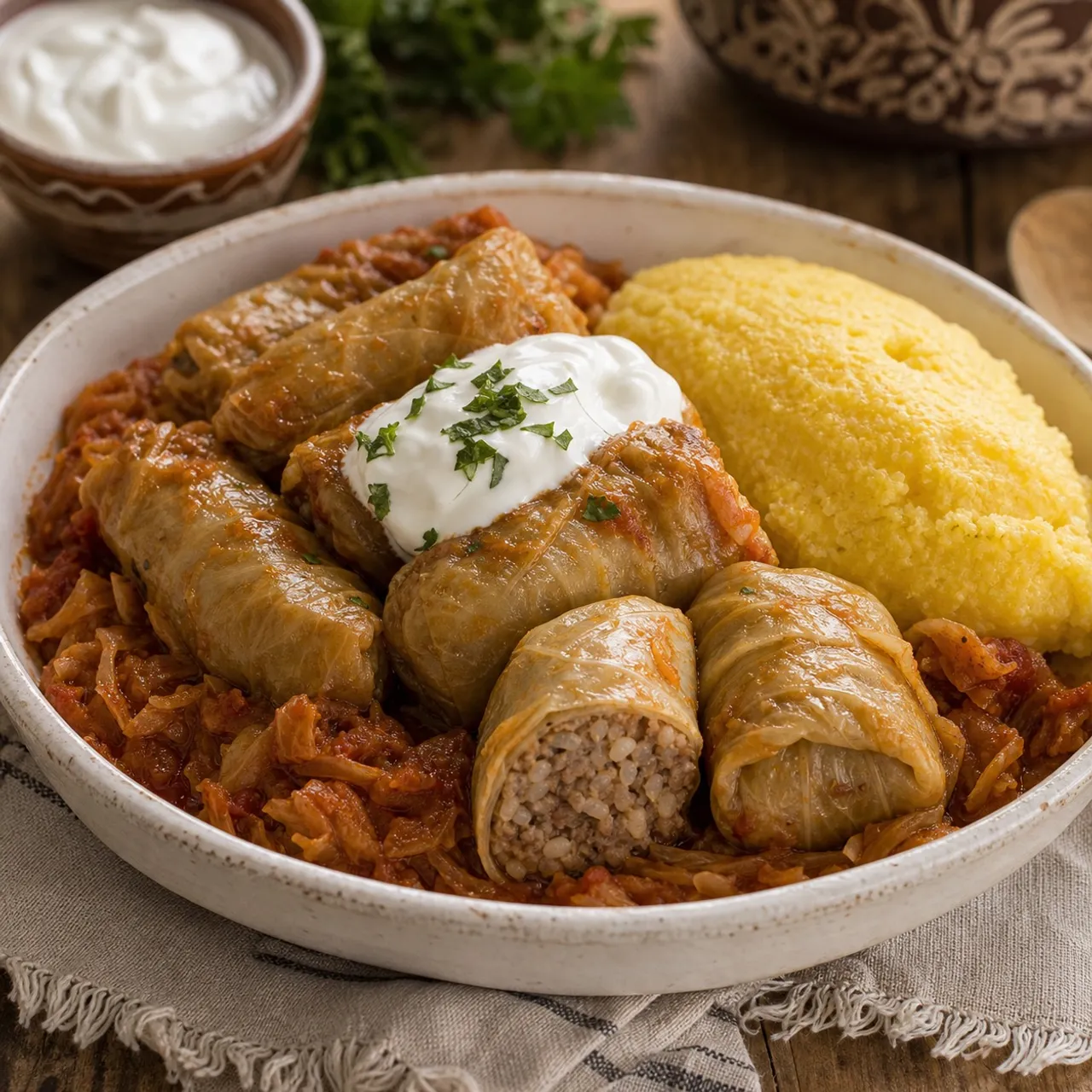
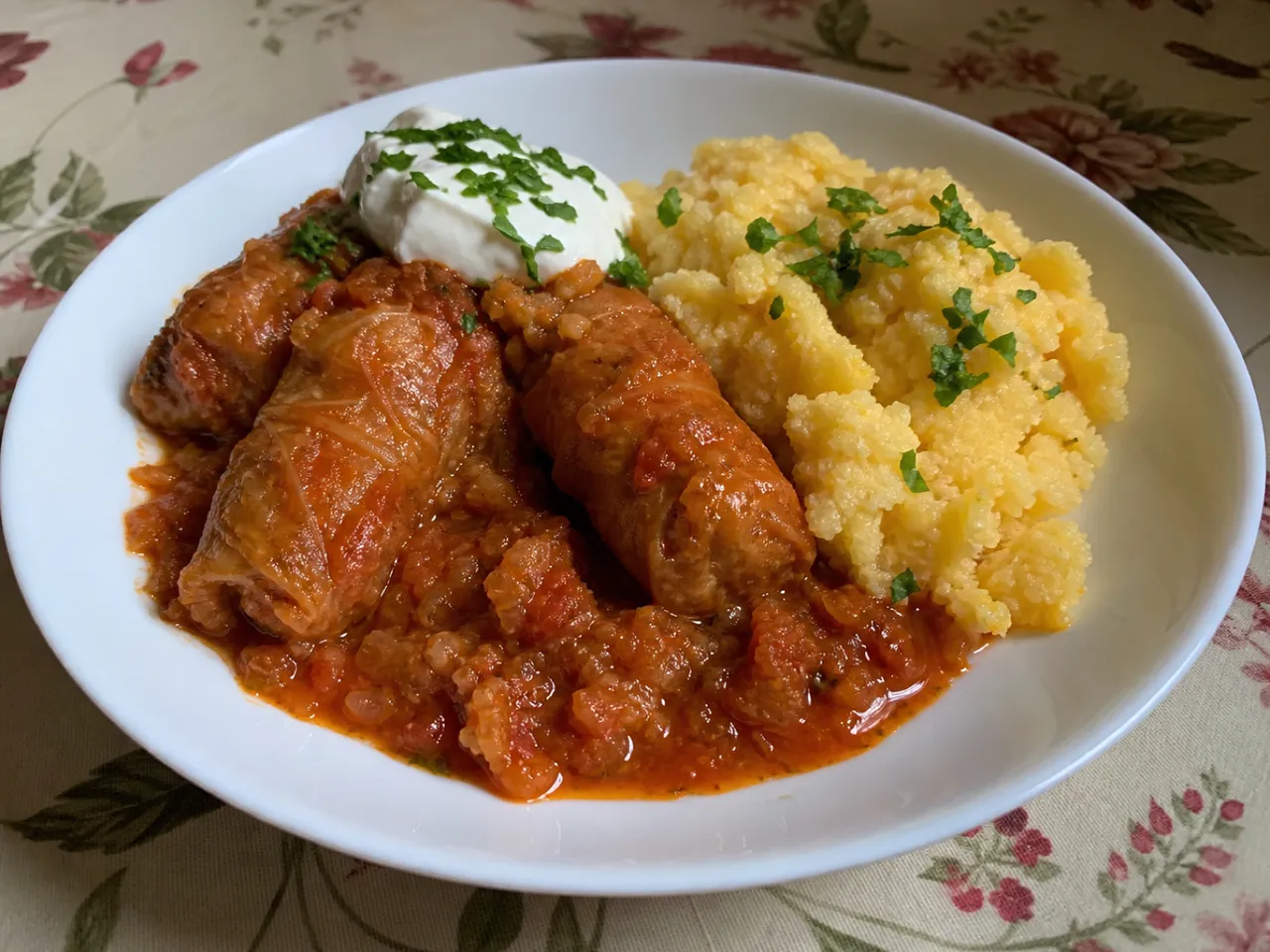
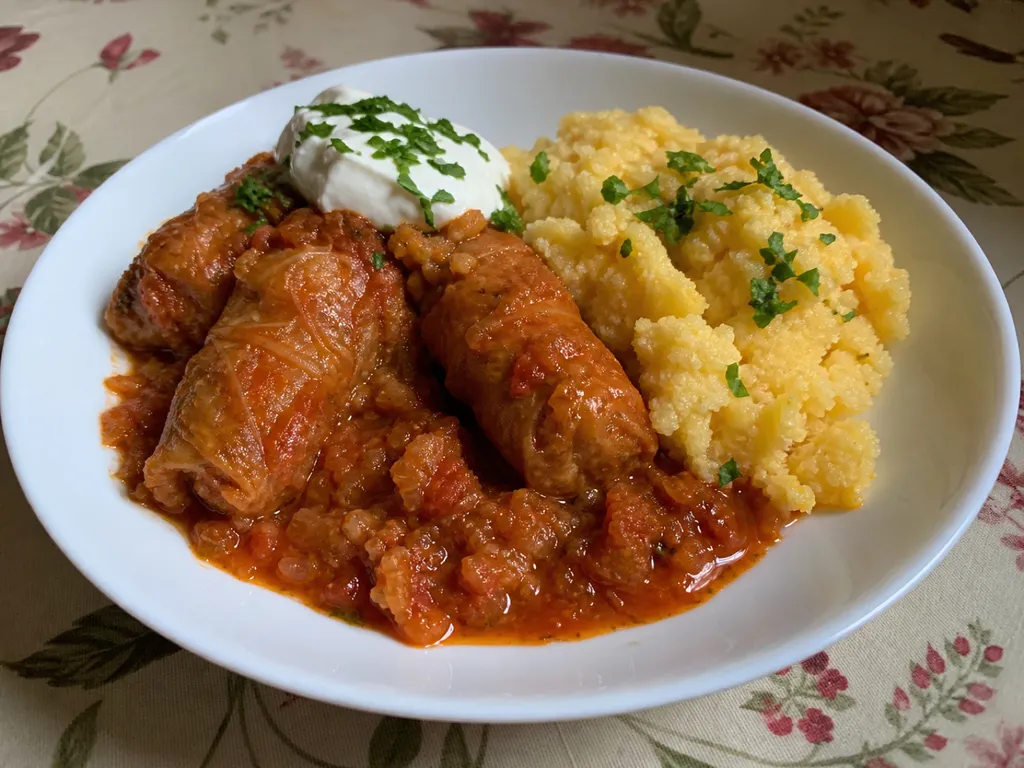
 Sarmale
Romania's cherished cabbage rolls, packed with seasoned pork and rice, slow-simmered in tomato sauce until silky-tender — Sunday dinner at its most comforting.
No common allergens detected
Based on this recipe's ingredient list. Always verify with your own brands and labels.
Good to know
- One-pot
Matched from this dish's own ingredients and timing. Browse more: one-pot dinners
Instructions
6 steps- 1
Gently separate the leaves of the pickled cabbage. Cut away the thick central vein from each leaf to make rolling easier. If using fresh cabbage, blanch the whole head in boiling water until the leaves soften and can be peeled off.
- 2
In a bowl, mix the ground pork, uncooked rice, finely chopped onion, tomato paste, dried thyme, salt, and pepper. Knead the mixture until evenly combined.
- 3
Place about 2 tablespoons of the meat mixture near the base of a cabbage leaf. Roll it up tightly, tucking in the sides as you go to form a neat, secure packet.
- 4
Chop any leftover cabbage leaves and spread half of them on the bottom of a large Dutch oven or heavy pot. Layer the stuffed rolls on top, fitting them snugly. Tuck strips of smoked bacon between the rolls for flavor.
- 5
Cover with the remaining chopped cabbage. Pour the tomato juice and enough water over the rolls to just submerge them.
- 6
Bring to a boil on the stove, then cover and transfer to a 350°F (175°C) oven. Bake for 2 hours until the cabbage is tender and the sauce has reduced and thickened.
 Images are for illustrative purposes only, may be inaccurate, and do not guarantee the presence or absence of specific ingredients.
 Listahan Family Score™
72/100
Good fit for most families
Score reflects how well this recipe fits a typical busy household. In the app, your Family Score is personalized to your household's allergens, kids, and pantry.
Nutrition
per serving530
Calories
49 g
Protein
26 g
Carbs
24 g
Fat
Estimated per serving. Actual values depend on the brands and portions you use.
Listahan cooking guide
Chef notes & practical guide
Technique notes, ingredient swaps, serve-alongside ideas, storage guidance, and equipment for this recipe.
Cultural context
Sarmale are Romanian stuffed cabbage rolls that descend from Ottoman-influenced dolma, adapted over centuries to use the sour fermented cabbage (varza murata) that was the most practical preserved vegetable in Romanian winters. The dish is the centerpiece of Romanian Christmas and Easter tables — it is common to prepare 100 or more rolls at a time, layering them in large clay pots with smoked pork and tomato juice for a long, slow braise. Each family has an inherited recipe, and the dish carries powerful associations with home and holiday.
Listahan note
This version uses a mix of ground pork and rice inside fermented cabbage leaves, braised low and slow in tomato juice and smoked pork — the overnight rest in the pot is not optional if you want the depth of flavor that defines real sarmale.
Technique cues
- Rinse fermented cabbage leaves briefly to reduce sharpness without losing all the sour tang — the acid is a structural flavor, not a flaw to be eliminated.
- Layer smoked pork ribs or smoked bacon between the rolls in the pot; they season the braising liquid throughout the long cook and add smokiness that no spice can replicate.
- Sarmale are almost always better the next day — the rolling juices absorb back into the rolls overnight, and the acidity of the cabbage mellows and integrates.
Kitchen flow
- Parallel prep
- Mix and refrigerate the filling while you separate and prep the cabbage leaves; both steps take about the same amount of time so running them together cuts total prep by half.
- Make-ahead
- Sarmale are a classic make-ahead dish — cook them fully the day before serving and reheat gently on the stovetop or in a 300 degree F oven; the flavor genuinely improves overnight.
- Leftover move
- Chop leftover sarmale and stir into the remaining braising liquid with a splash of water to create a thick, smoky stuffed-cabbage soup.
- Cleanup rhythm
- Use a single large Dutch oven or clay pot from rolling station to oven — this reduces washing and keeps the braise concentrated.
Ingredient brief
Role, handling, and swap guidance for each key ingredient.
fermented (sour) cabbage leaves
outer wrapper
Purpose: The lactic fermentation in the cabbage provides a distinctive sour tang that seasons the filling from the outside and cannot be replicated with fresh cabbage.
Handling: Separate leaves carefully without tearing; if only whole heads are available, submerge in cold water for 15 minutes to soften before peeling.
Adaptation: Fresh cabbage leaves blanched in salted water for 3 minutes make a milder alternative, though the sour dimension is lost.
ground pork
filling base
Purpose: Pork's fat content keeps the filling moist through the long braise and is the traditional meat in most Romanian households.
Handling: Mix raw with the other filling ingredients — the meat will cook inside the roll during braising.
Adaptation: A half-and-half mix of ground pork and ground beef is common and adds more body.
uncooked white rice
filling binder and stretcher
Purpose: Raw rice absorbs the meat juices as it cooks inside the roll, swelling to create a firm, cohesive filling that does not fall apart when you cut into a roll.
Handling: Add unrinsed and uncooked directly to the raw filling mixture — do not pre-cook.
Adaptation: Barley can replace rice for a nuttier texture and slightly more fiber.
smoked pork (ribs or smoked bacon)
braising flavoring
Purpose: The smoked pork layered through the pot infuses the tomato braising liquid with a deep, campfire smokiness that permeates every roll.
Handling: Cut into chunks and lay between the layers of rolls before adding the liquid.
Adaptation: Smoked turkey necks or smoked paprika added to the liquid work for a lighter or pork-free variation.
tomato juice
braising liquid
Purpose: Tomato juice adds sweetness and acidity that balance the sourness of the cabbage and create a brick-colored braising sauce.
Handling: Use plain tomato juice or canned crushed tomatoes thinned with water; season lightly as it will concentrate during the long cook.
Adaptation: Crushed canned tomatoes blended smooth and diluted to juice consistency are interchangeable.
Technique notes
- Roll sarmale tightly — a loose roll will fall apart during the long braise; tuck the sides in first, then roll from the base upward like a burrito.
- Place any torn or unusable leaves flat on the bottom of the pot before layering the rolls — they act as a natural buffer that prevents the bottom rolls from scorching.
- Use a heavy lid or cover the pot with foil before baking; steam loss dries out the rolls and requires adding liquid mid-cook, which dilutes the braising sauce.
Ingredient swaps
- Gluten-free direction
- Sarmale is naturally gluten-free when made with rice filling and plain tomato juice — verify that any smoked pork product does not contain added starch or seasonings.
- Weeknight shortcut
- Use a slow cooker on high for 4 hours instead of the oven braise — the result is slightly less caramelized but equally tender, and you can start it mid-morning.
- Lower-fat direction
- Replace half the ground pork with finely chopped mushrooms for a leaner filling that still binds well and holds moisture during braising.
Serve alongside
- Mamaliga (Romanian polenta)
- Sour cream for spooning over
- Pickled hot peppers
- Romanian Feteasca Neagra red wine
- Cold lager beer
Serving suggestions only — check pairings for your household's allergens.
Storage & reheating
- Sarmale keep refrigerated in their braising liquid for up to 5 days and improve in flavor each day.
- They freeze very well for up to 3 months; thaw overnight in the refrigerator and reheat covered with a splash of tomato juice to prevent drying.
Equipment
- Large Dutch oven or clay pot with a tight-fitting lid
- Wide, shallow bowl for mixing the filling
- Sharp paring knife for trimming the thick central rib of cabbage leaves
Make this household-aware
Listahan Pro checks this recipe against your household's allergens, finds pantry-aware swaps, builds the shopping list, and helps you plan the week around it.
Plan it in Listahan
Add Sarmale to your week, check it against your household's allergens, and build the shopping list automatically.
More Eastern European recipes
 Eastern European Lens Verified Images are for illustrative purposes only, may be inaccurate, and do not guarantee the presence or absence of specific ingredients.
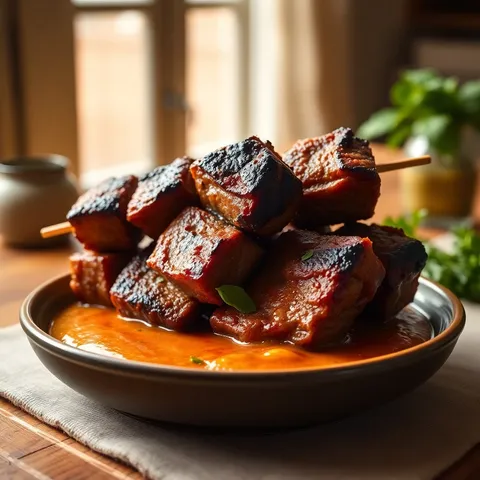
 Shashlik
Smoky, charred cubes of marinated lamb or pork threaded on skewers and grilled over embers — Central Asia's festive open-fire classic, fragrant with onion and spice.
 Eastern European Lens Verified Images are for illustrative purposes only, may be inaccurate, and do not guarantee the presence or absence of specific ingredients.
 Vatrushka
Soft, pillowy Russian buns filled with a sweetened quark or farmer's cheese center — lightly golden and gently sweet, perfect alongside tea or coffee.
 Eastern European Lens Verified Images are for illustrative purposes only, may be inaccurate, and do not guarantee the presence or absence of specific ingredients.
 Kurtosh Kalach
Hungary's iconic chimney cake — sweet yeast dough spiraled around a spit, rolled in cinnamon sugar, and roasted until the outside caramelizes into a crackly, warm shell.