 Eastern European Images are for illustrative purposes only, may be inaccurate, and do not guarantee the presence or absence of specific ingredients.
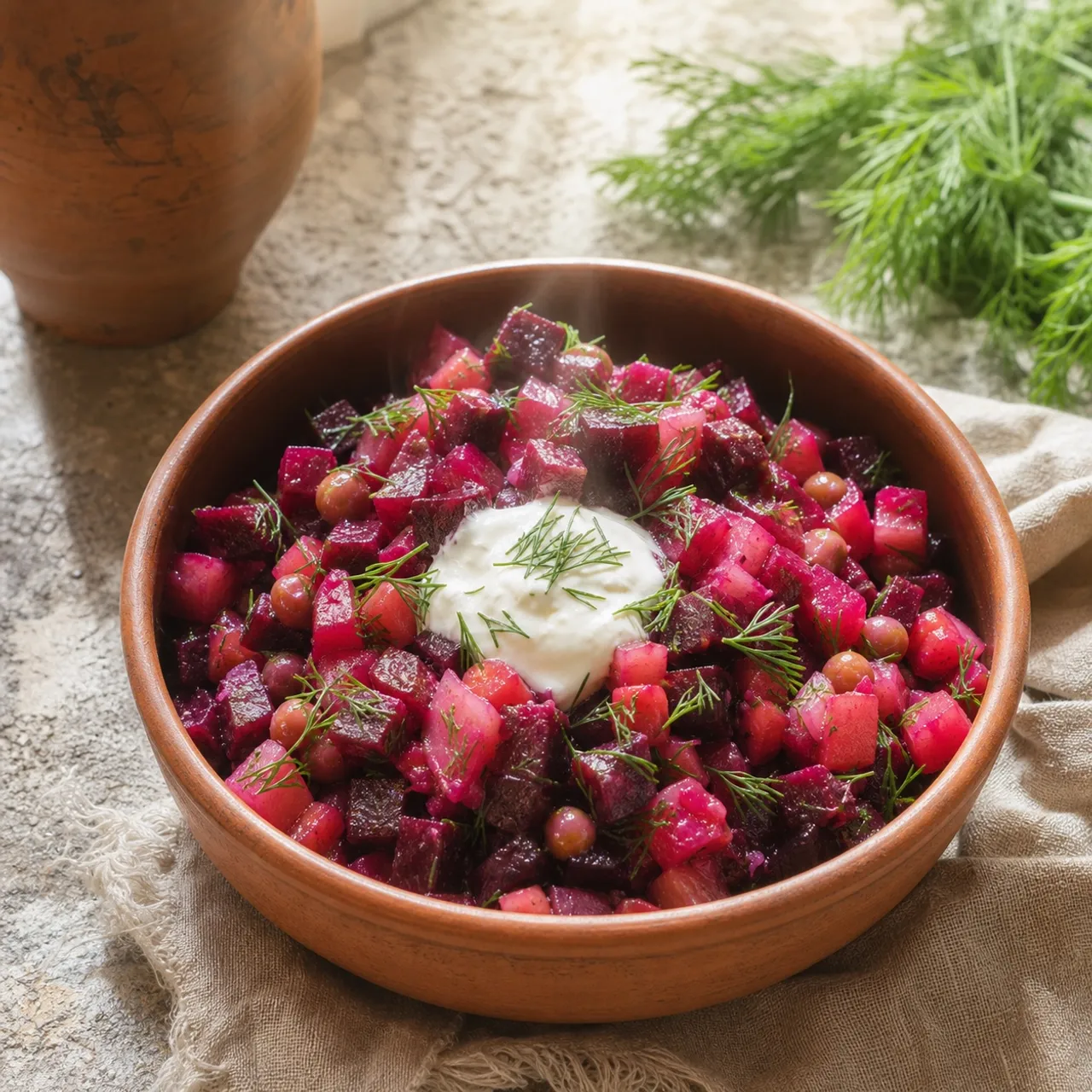
 Vinegret
A vibrant beet-based Russian salad of diced vegetables dressed simply with oil and vinegar.
No common allergens detected
Based on this recipe's ingredient list. Always verify with your own brands and labels.
Instructions
5 steps- 1
Place the beets, potatoes, and carrots in separate pots of salted water and boil until fork-tender, roughly 45 minutes for the beets and 25 minutes for the potatoes and carrots, then cool completely.
- 2
Peel all the cooled vegetables and cut them into uniform 1/4-inch dice so the salad has a consistent texture in every bite.
- 3
Toss the diced beets first with 1 tablespoon of the sunflower oil in a separate bowl, which coats them and stops their color from bleeding into the rest of the salad.
- 4
In a large bowl, combine the potatoes, carrots, sauerkraut, diced pickles, and green peas, then fold in the oiled beets along with the remaining 2 tablespoons of oil.
- 5
Season with 1/2 tsp salt and a few grinds of black pepper, toss gently to coat, and chill for at least 30 minutes before serving so the flavors meld.
Listahan Family Score™
72/100
Good fit for most families
Score reflects how well this recipe fits a typical busy household. In the app, your Family Score is personalized to your household's allergens, kids, and pantry.
Nutrition
per serving245
Calories
5 g
Protein
34 g
Carbs
11 g
Fat
Estimated per serving. Actual values depend on the brands and portions you use.
Listahan cooking guide
Chef notes & practical guide
Technique notes, ingredient swaps, serve-alongside ideas, storage guidance, and equipment for this recipe.
Cultural context
Vinegret is a Russian and Eastern European cold salad built around winter storage vegetables: beets, potatoes, carrots, pickled cucumbers, sauerkraut, and peas. Its name points back to vinaigrette-style dressings, but home versions are often very simple, relying on the tart pickled ingredients and sunflower oil rather than a sharp poured dressing.
Listahan note
This version keeps the salad clean and practical: boil the vegetables separately, dice them evenly, and oil the beets first so the colors stay more distinct. The short chill is not decorative; it gives the potatoes time to absorb the briny flavor from the sauerkraut and pickles.
Technique cues
- Cool the beets, potatoes, and carrots completely before dicing. Warm vegetables mash at the edges and make the salad heavy instead of clean-cut.
- The 1/4-inch dice matters because Vinegret is about balance in each forkful. Large beet chunks dominate, while tiny potato pieces turn starchy and dull the texture.
- Sunflower oil is traditional here because it gives a round, nutty background without covering the pickled brightness. Add it gradually and fold gently so the vegetables stay intact.
Kitchen flow
- Parallel prep
- Start the beets first, then cook the potatoes and carrots while the beets continue; drain everything onto separate plates so cooling happens faster.
- Make-ahead
- Cook and dice the vegetables a day ahead, then fold the salad together a few hours before serving so the potatoes do not take on too much beet color.
- Leftover move
- Spoon leftovers beside rye toast, smoked fish, or a fried egg for a quick cold plate.
- Cleanup rhythm
- Peel the beets over a cutting board lined with parchment or a washable mat, then rinse the knife and board before moving to the lighter vegetables.
Ingredient brief
Role, handling, and swap guidance for each key ingredient.
Beets
Color and earthy base
Purpose: Beets give Vinegret its deep color, gentle sweetness, and recognizable earthy backbone.
Handling: Boil until fork-tender, cool fully, peel, dice, then toss first with 1 tablespoon of sunflower oil to slow color bleeding.
Adaptation: Roasted beets give a more concentrated flavor, but they make the salad taste sweeter and less brisk.
Potatoes
Starchy body
Purpose: Potatoes soften the acidity from the pickles and sauerkraut and make the salad filling enough to serve as part of a meal.
Handling: Boil just until tender, then cool before peeling and cutting so the cubes hold their shape.
Adaptation: Waxy potatoes hold cleaner edges than floury potatoes, which tend to crumble into the dressing.
Carrots
Sweet vegetable note
Purpose: Carrots add a mild sweetness that keeps the salad from tasting only sour and earthy.
Handling: Cook until tender but not collapsing, then dice to match the potatoes and beets.
Adaptation: Extra carrot can replace some of the potato if you want a lighter, sweeter mix.
Sauerkraut, drained and chopped
Tart crunch
Purpose: Sauerkraut brings acidity, saltiness, and a little chew that keeps the boiled vegetables lively.
Handling: Drain well and chop so long strands do not pull through the salad.
Adaptation: If the sauerkraut is very sharp, rinse briefly and squeeze dry; the flavor will be milder but less complex.
Baby dill pickles
Briny accent
Purpose: Dill pickles give small pops of salt and acidity that make the beet and potato taste brighter.
Handling: Finely dice them so the briny flavor is distributed instead of landing in big bites.
Adaptation: Cornichons make the salad sharper and more delicate; larger dill pickles work if diced small and drained.
Green peas, cooked
Soft green contrast
Purpose: Peas add sweetness and a tender pop against the denser root vegetables.
Handling: Use cooled, well-drained peas so they do not water down the salad.
Adaptation: Leave them out for a more old-school root vegetable version, or add a few extra pickles for sharper contrast.
Technique notes
- Do not boil all the vegetables in one pot. Beets take longer and will stain the potatoes and carrots before you even start mixing.
- Drain the sauerkraut and pickles well. Extra brine makes the bottom of the bowl watery and can turn the potatoes mushy.
- Fold the oiled beets in last with a wide spoon or spatula. Stirring hard gives you a pink mash instead of a diced salad.
Ingredient swaps
- Roasted beet path
- Roast the beets instead of boiling for a deeper, sweeter flavor; keep the potatoes and carrots boiled so the salad still feels light.
- Sharper pickle direction
- Use cornichons in place of baby dill pickles for a brighter, more acidic bite, and dice them very small.
- Pantry shortcut
- Use cooked packaged beets when time is tight, but pat them dry before dicing so they do not loosen the salad.
- Oil choice
- Use sunflower oil for the most typical flavor; a mild neutral oil works, but the salad will taste less nutty.
Serve alongside
- Buckwheat kasha with mushrooms
- Rye bread with butter
- Pan-fried potato zrazy
- Simple cucumber and dill salad
- Kvass
- Black tea with lemon
- Sparkling mineral water
Serving suggestions only — check pairings for your household's allergens.
Storage & reheating
- Refrigerate in a sealed container, keeping any extra beet juices at the bottom of the bowl stirred in just before serving.
- Reheating is not part of this dish; let it sit briefly after chilling so the oil loosens and the flavors read clearly.
- Freezing is not a good fit because the potatoes and beets turn watery and grainy after thawing.
Equipment
- Three medium pots
- Colander
- Sharp chef's knife
- Large mixing bowl
Make this household-aware
Listahan Pro checks this recipe against your household's allergens, finds pantry-aware swaps, builds the shopping list, and helps you plan the week around it.
Plan it in Listahan
Add Vinegret to your week, check it against your household's allergens, and build the shopping list automatically.
More Eastern European recipes
 Eastern European Lens Verified Images are for illustrative purposes only, may be inaccurate, and do not guarantee the presence or absence of specific ingredients.
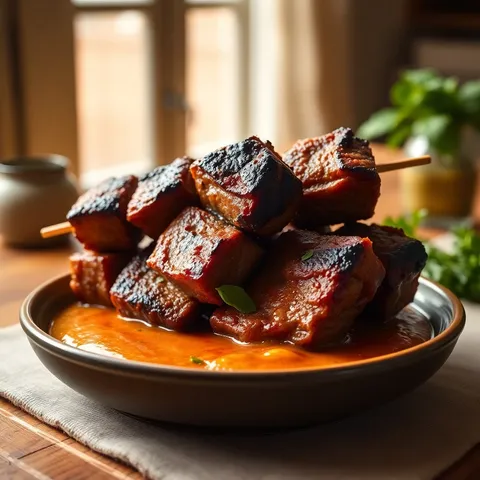
 Shashlik
Smoky, charred cubes of marinated lamb or pork threaded on skewers and grilled over embers — Central Asia's festive open-fire classic, fragrant with onion and spice.
 Eastern European Lens Verified Images are for illustrative purposes only, may be inaccurate, and do not guarantee the presence or absence of specific ingredients.
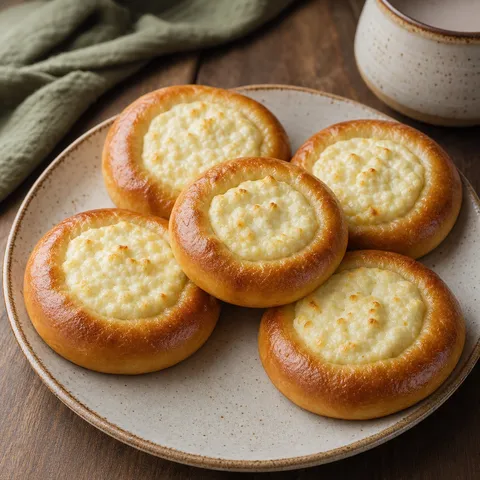
 Vatrushka
Soft, pillowy Russian buns filled with a sweetened quark or farmer's cheese center — lightly golden and gently sweet, perfect alongside tea or coffee.
 Eastern European Lens Verified Images are for illustrative purposes only, may be inaccurate, and do not guarantee the presence or absence of specific ingredients.
 Kurtosh Kalach
Hungary's iconic chimney cake — sweet yeast dough spiraled around a spit, rolled in cinnamon sugar, and roasted until the outside caramelizes into a crackly, warm shell.