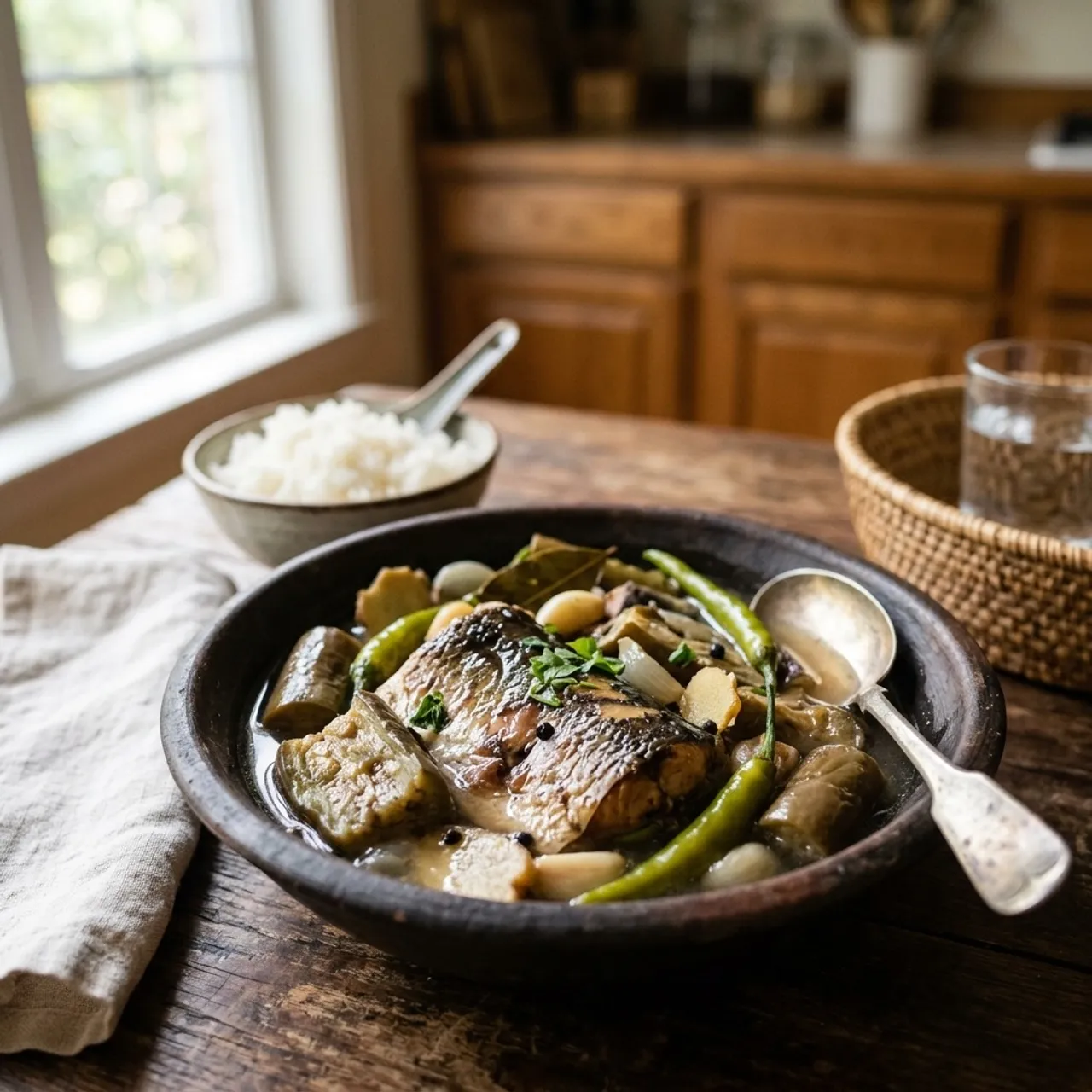
 Filipino Images are for illustrative purposes only, may be inaccurate, and do not guarantee the presence or absence of specific ingredients.
 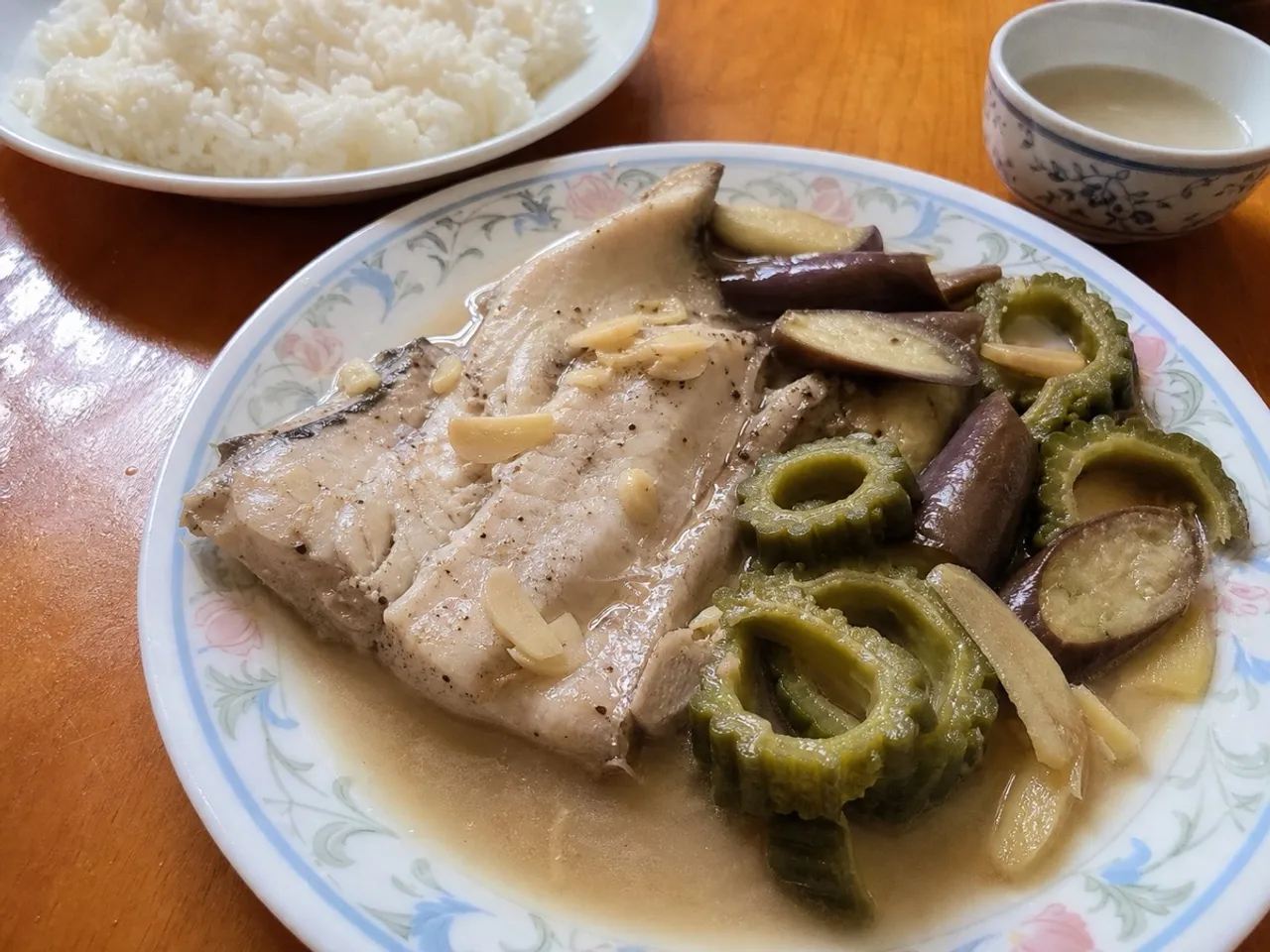 Serving Images are for illustrative purposes only, may be inaccurate, and do not guarantee the presence or absence of specific ingredients.
 Bangus Belly Paksiw
A wonderfully tart, garlic-forward stew starring the prized, buttery belly of the milkfish. Simmered simply with vinegar and spices, this rustic dish is a masterclass in balancing sourness with savory richness.
Contains common allergens
In the app, Listahan checks these against your household automatically.
Good to know
- One-pot
- Ready in under 30 minutes
Matched from this dish's own ingredients and timing. Browse more: one-pot dinners30-minute meals
Instructions
5 steps- 1
Layer the Aromatics: In a wide, shallow pan or clay pot (palayok), scatter the crushed ginger, smashed garlic, and whole black peppercorns evenly across the bottom.
- 2
Arrange the Fish and Veggies: Place the milkfish bellies skin-side down over the aromatics. Arrange the slices of eggplant and bitter melon around and on top of the fish.
- 3
Add Liquids: Pour the cane vinegar, water, and cooking oil over the fish and vegetables. Season with a pinch of salt.
- 4
Simmer Gently: Place the pan over medium heat and bring to a boil. *Crucial step:* Do not stir the mixture, as this will introduce a raw vinegar taste.
- 5
Reduce and Finish: Once boiling, lower the heat to a gentle simmer, cover the pan, and let it cook for 15-20 minutes. The dish is done when the fish is opaque and flaky, the vegetables are tender, and the liquid has reduced slightly. Serve with warm rice.
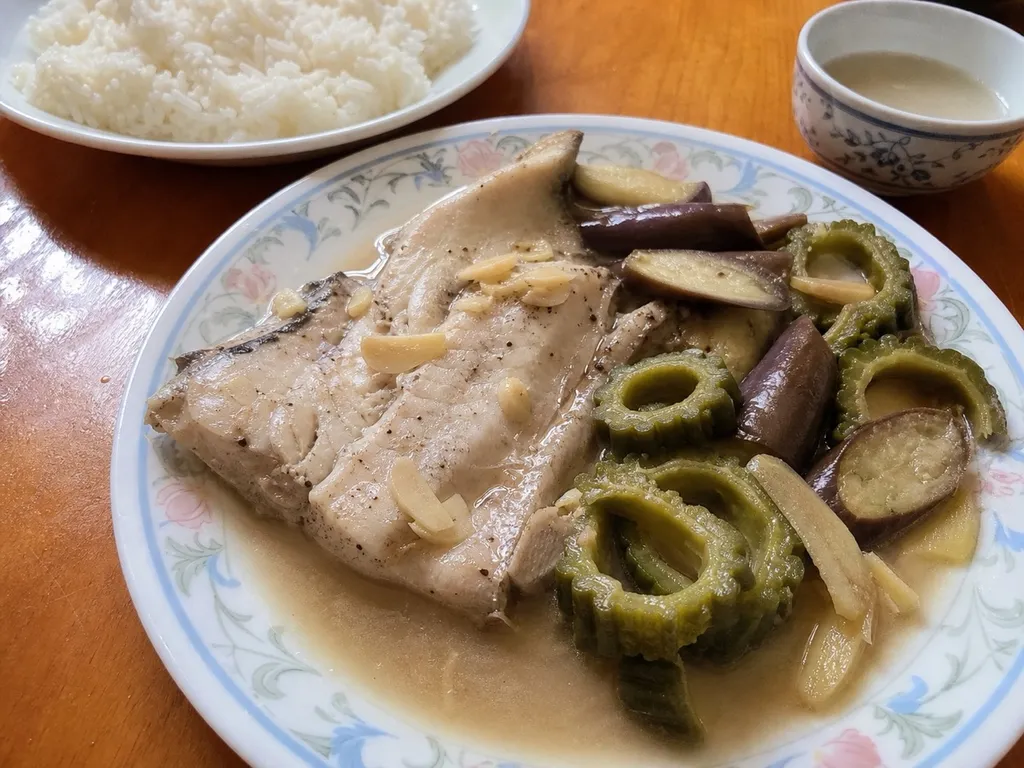 Images are for illustrative purposes only, may be inaccurate, and do not guarantee the presence or absence of specific ingredients.
 Listahan Family Score™
72/100
Good fit for most families
Score reflects how well this recipe fits a typical busy household. In the app, your Family Score is personalized to your household's allergens, kids, and pantry.
Nutrition
per serving70
Calories
1 g
Protein
9 g
Carbs
4 g
Fat
Estimated per serving. Actual values depend on the brands and portions you use.
Listahan cooking guide
Chef notes & practical guide
Technique notes, ingredient swaps, serve-alongside ideas, storage guidance, and equipment for this recipe.
Cultural context
Paksiw is the Filipino method of simmering fish or meat in vinegar, and bangus, the national fish, is a favorite for it. The milkfish belly, the richest cut, poaches gently in vinegar with ginger and garlic, often with bitter melon and eggplant. The vinegar both seasons and preserves, a thrifty everyday technique.
Listahan note
This version poaches the fatty bangus belly in just enough vinegar and water, adding bitter melon and eggplant so the dish eats like a complete, tangy plate.
Technique cues
- Do not stir once the vinegar goes in; let it boil to avoid a raw, sharp taste.
- Use the fatty belly cut, which stays moist through the simmer.
- Add the vegetables partway so they cook without falling apart.
Kitchen flow
- Parallel prep
- Prep the fish and vegetables while the vinegar base comes to a boil.
- Make-ahead
- Paksiw keeps well and even improves; make it a day ahead and reheat gently.
- Leftover move
- Serve cold leftover paksiw with hot rice, a traditional way to eat it.
- Cleanup rhythm
- One pan; rinse promptly to clear the vinegar smell.
Ingredient brief
Role, handling, and swap guidance for each key ingredient.
Milkfish (bangus) belly
Main protein
Purpose: The fatty belly stays rich and tender as it poaches in the vinegar.
Handling: Use boneless belly and lay it skin-side down to hold together.
Adaptation: Mackerel or another oily fish works.
Cane vinegar
Acid and base
Purpose: Seasons and gently preserves the fish, defining paksiw.
Handling: Add and let it boil before stirring.
Adaptation: White vinegar works in a pinch.
Ginger and garlic
Aromatics
Purpose: Cut the fishiness and add warmth to the broth.
Handling: Slice ginger and smash garlic; add at the start.
Adaptation: Increase ginger if you prefer a sharper aroma.
Bitter melon and eggplant
Vegetables
Purpose: Add bitterness and silkiness that balance the tang.
Handling: Slice and add partway through the simmer.
Adaptation: Okra or long beans can join or replace them.
Technique notes
- Let the vinegar boil before stirring so the dish tastes mellow, not raw.
- Handle the fish gently so the belly stays intact.
- Keep the simmer gentle; a hard boil breaks the fish apart.
Ingredient swaps
- Different-fish direction
- Use mackerel or galunggong when bangus is unavailable.
- Milder direction
- Reduce the bitter melon for a gentler plate.
- Richer direction
- Finish with a small splash of coconut milk for paksiw na ginataan.
Serve alongside
- Steamed white rice
- Grilled eggplant
- Fresh tomatoes
- Sauteed greens
- Cold water
- Iced tea
- Calamansi juice
Serving suggestions only — check pairings for your household's allergens.
Storage & reheating
- Refrigerate up to 3 days; paksiw keeps especially well thanks to the vinegar.
- Reheat gently or serve cold with hot rice in the traditional style.
- Freezing is possible but the fish texture softens.
Equipment
- Wide pan or pot
- Lid
- Cutting board
- Fish spatula
Make this household-aware
Listahan Pro checks this recipe against your household's allergens, finds pantry-aware swaps, builds the shopping list, and helps you plan the week around it.
Plan it in Listahan
Add Bangus Belly Paksiw to your week, check it against your household's allergens, and build the shopping list automatically.
More Filipino recipes
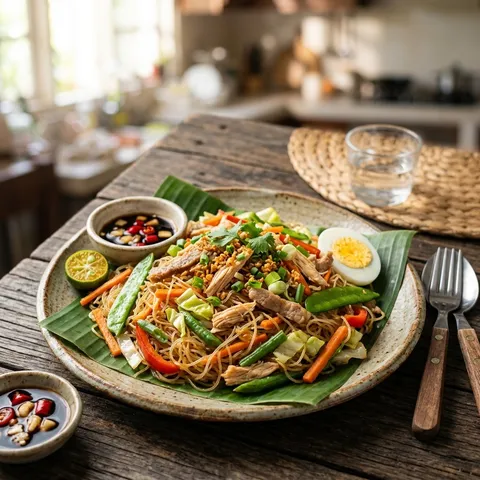 Filipino Lens Verified Images are for illustrative purposes only, may be inaccurate, and do not guarantee the presence or absence of specific ingredients.
 Pancit Bihon
Thin rice vermicelli stir-fried with chicken, shrimp, and vegetables in a savory soy-citrus sauce, a fixture at every Filipino celebration.
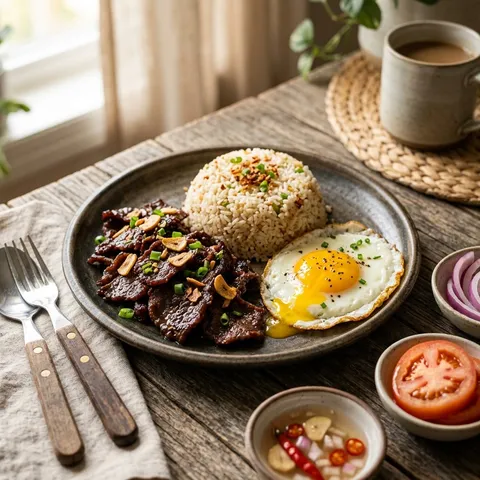 Filipino Lens Verified Images are for illustrative purposes only, may be inaccurate, and do not guarantee the presence or absence of specific ingredients.
 Tapsilog
A hearty breakfast combo of marinated beef (tapa), garlic fried rice (sinangag), and a fried egg (itlog).
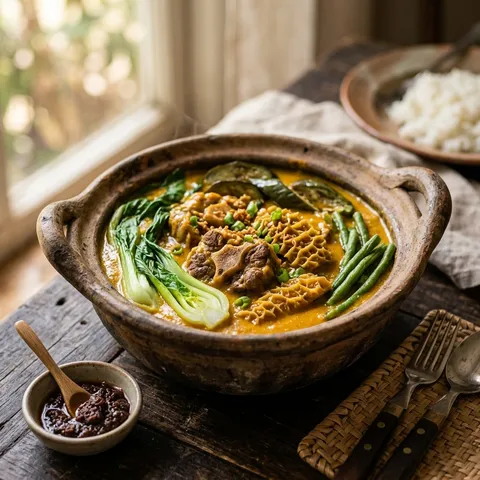 Filipino Lens Verified Images are for illustrative purposes only, may be inaccurate, and do not guarantee the presence or absence of specific ingredients.
 Kare-Kare
A rich peanut stew typically made with oxtail and vegetables, served with shrimp paste.