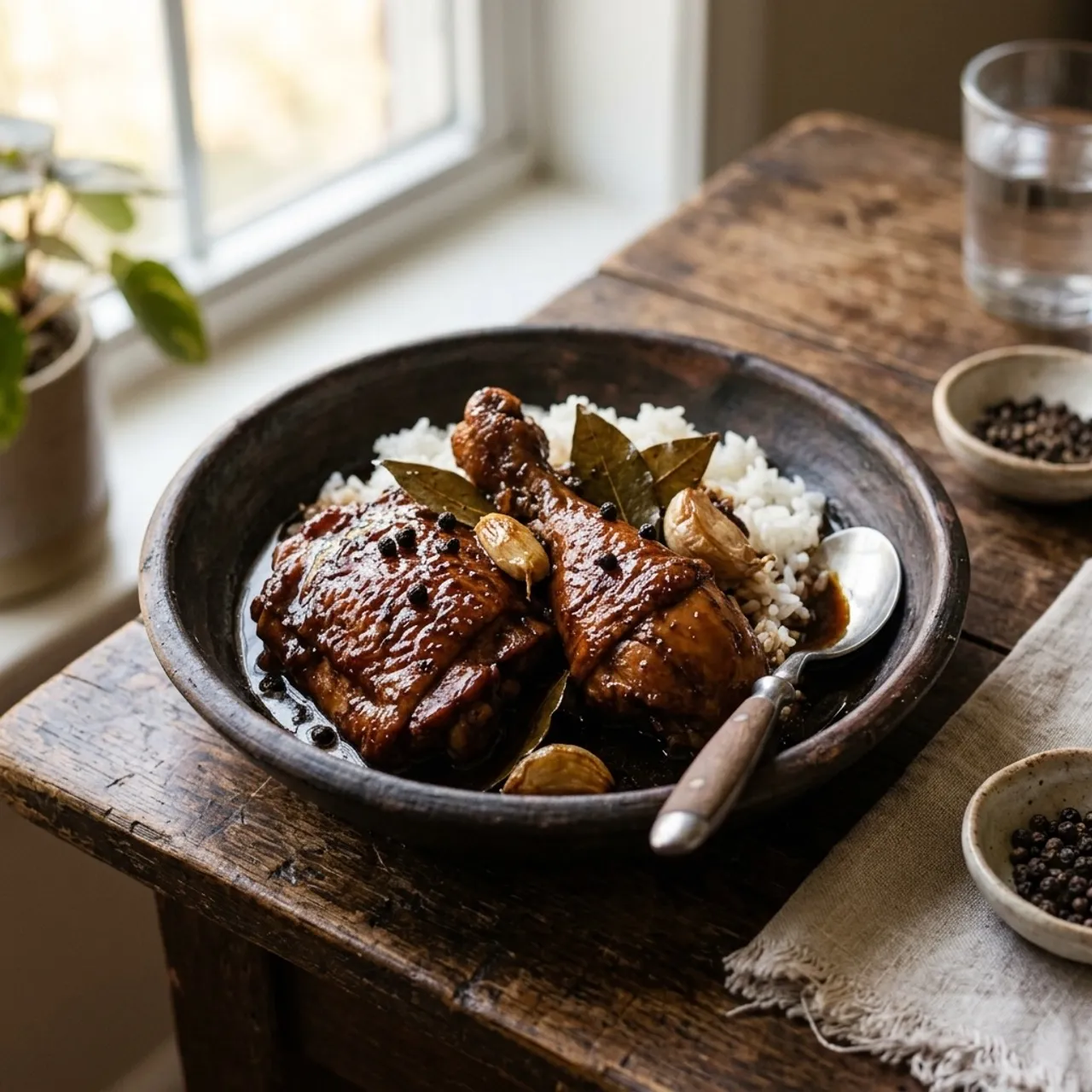
 Filipino Images are for illustrative purposes only, may be inaccurate, and do not guarantee the presence or absence of specific ingredients.
 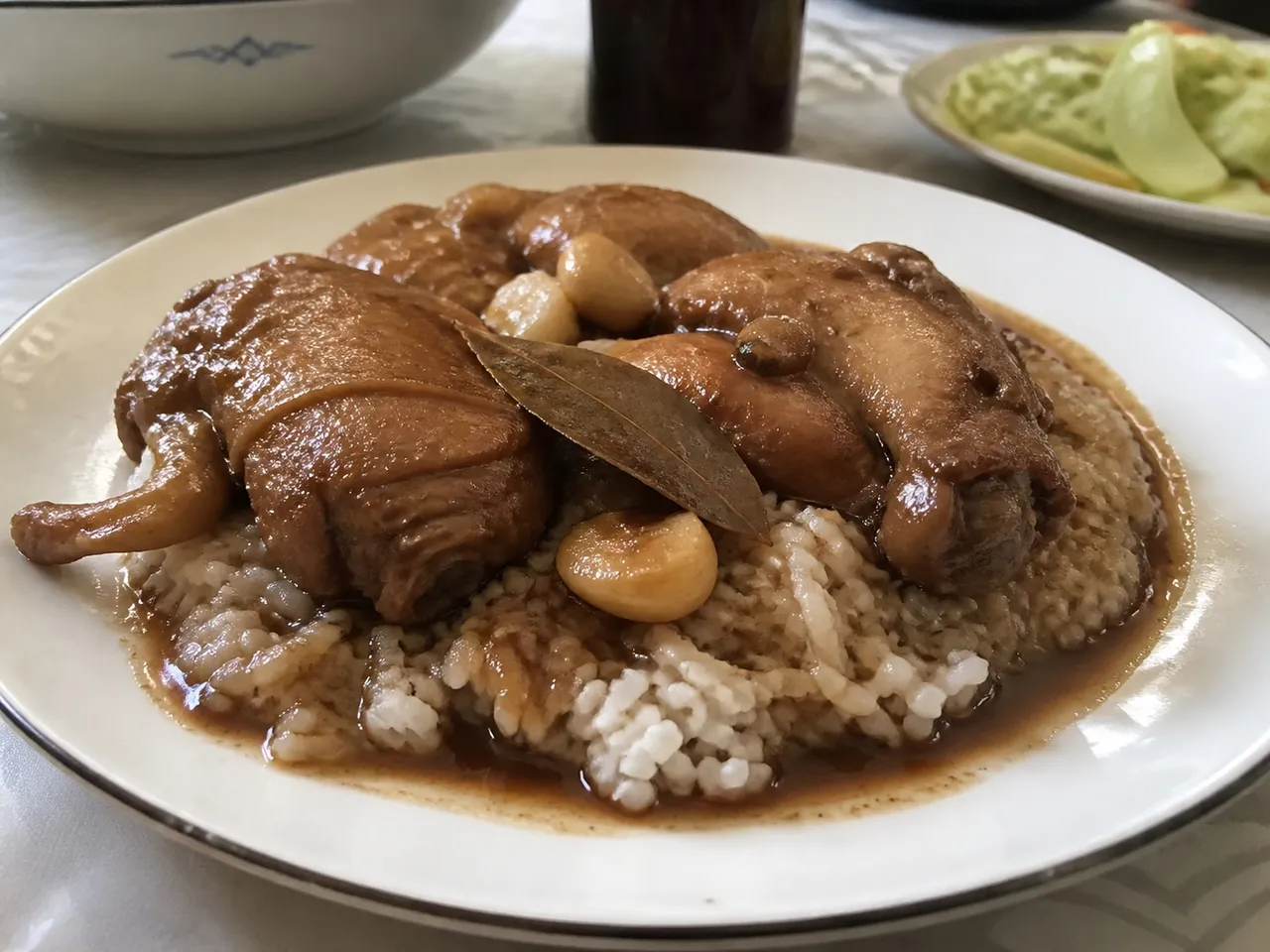 Serving Images are for illustrative purposes only, may be inaccurate, and do not guarantee the presence or absence of specific ingredients.
 Chicken Adobo
A classic Filipino dish of chicken marinated and simmered in soy sauce, vinegar, and garlic.
Contains common allergens
In the app, Listahan checks these against your household automatically.
Instructions
6 steps- 1
Combine the chicken, soy sauce, vinegar, garlic, bay leaves, and peppercorns in a bowl; marinate at room temperature for 30 minutes, or refrigerate up to overnight for deeper flavor.
- 2
Transfer the chicken and marinade to a pot, add the water, and bring to a boil uncovered for 5 minutes to mellow the vinegar's sharp edge.
- 3
Reduce the heat, cover, and simmer 25 to 30 minutes, turning once, until the chicken is tender.
- 4
Remove the chicken and set aside. Heat the oil in a skillet and sear the chicken pieces until the skin is golden and slightly crisp, 3 to 4 minutes per side.
- 5
Meanwhile, boil the braising liquid over high heat until reduced and slightly syrupy, 8 to 10 minutes; stir in the brown sugar if using.
- 6
Discard the bay leaves, return the chicken to the sauce to coat, and serve hot over steamed rice.
Listahan Family Score™
70/100
Good fit for most families
Score reflects how well this recipe fits a typical busy household. In the app, your Family Score is personalized to your household's allergens, kids, and pantry.
Listahan field notes
Why this adobo works
Chicken Adobo is simple on paper, but the dish lives in timing: the vinegar softening in the pan, the soy-garlic sauce turning glossy, and the chicken getting better after a night in the fridge.
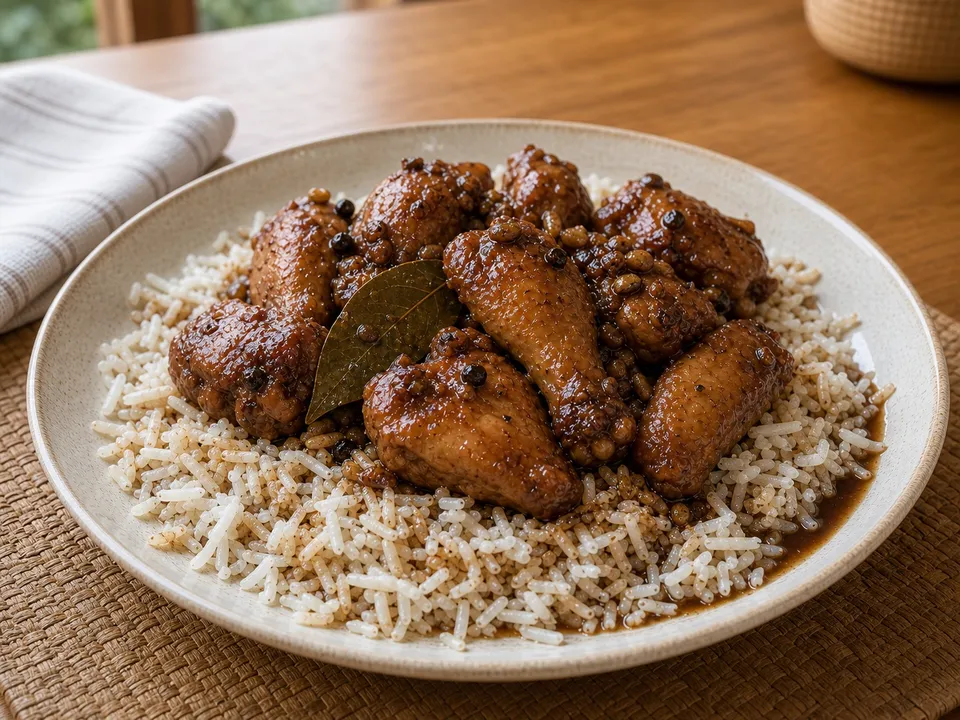 Images are for illustrative purposes only, may be inaccurate, and do not guarantee the presence or absence of specific ingredients.
 Cultural context
Adobo is often called a Filipino comfort-food anchor, but it is not one single fixed recipe. The name comes through Spanish, while the vinegar-and-salt preservation logic belongs to older island cooking traditions. Every household has a version: some darker with soy, some brighter with vinegar, some saucier, some nearly dry and lacquered.
Listahan note
This Listahan version keeps the ingredient list short and familiar, then puts the attention where it matters: browning the chicken, giving the vinegar a few undisturbed minutes, and reducing the sauce until it clings.
Technique cues
- Let the vinegar boil briefly before stirring so the sauce tastes rounded instead of sharp.
- Use a wide pan if you can. More surface area helps the sauce reduce into a glaze instead of staying watery.
- Serve with plain rice rather than heavily seasoned sides; adobo wants something quiet to catch the sauce.
Listahan ingredient brief
What each ingredient is doing
Role, handling note, and practical swap guidance for the ingredients that shape the dish.
Bone-in chicken thighs or drumsticks
Main protein
Purpose: Bone-in dark meat stays juicy through the simmer and gives the sauce more body.
Handling: Pat dry before searing; keep pieces in a single layer when browning.
Adaptation: Boneless thighs work for a faster version; reduce simmering time and watch for dryness.
Soy sauce
Salt and umami base
Purpose: Builds the dark color and savory backbone of the glaze.
Handling: Use regular soy sauce for classic intensity; low-sodium soy may need a pinch more salt.
Adaptation: Tamari can work for a gluten-free version if the brand is certified gluten-free.
White cane vinegar
Acid and preservation note
Purpose: Gives adobo its signature brightness and balances the richness of the chicken.
Handling: Let it boil uncovered for a few minutes before stirring so the sharp edge mellows.
Adaptation: Distilled white vinegar is clean and accessible; coconut vinegar is more rounded if you have it.
Garlic
Aromatic anchor
Purpose: Crushed garlic perfumes the sauce and gives the glaze its home-cooked depth.
Handling: Crush instead of finely mincing if you want flavor without tiny burnt bits during searing.
Adaptation: Garlic powder can help in a pinch, but fresh garlic is noticeably better here.
Bay leaves and peppercorns
Background seasoning
Purpose: They add the quiet herbal and peppery notes that make the sauce feel complete.
Handling: Leave peppercorns whole for aroma without aggressive heat.
Adaptation: Ground pepper works, but use less and add it near the end.
Steamed white rice
Serving base
Purpose: Plain rice catches the soy-vinegar sauce and keeps the dish balanced.
Handling: Start it before searing the chicken so dinner lands together.
Adaptation: Brown rice or cauliflower rice works, but the classic plate is plain white rice.
Nutrition
per serving95
Calories
3 g
Protein
5 g
Carbs
7 g
Fat
Estimated per serving. Actual values depend on the brands and portions you use.
Listahan cooking guide
The Listahan cooking brief
The static guidance stays public for search depth and real usefulness. Pro is the household-aware layer: safety checks, pantry-aware swaps, planning, shopping, and adaptive Household Lens guidance.
Technique notes
- Do not rush the first boil. Letting the vinegar bubble before stirring is the difference between sharp sauce and rounded sauce.
- Brown the chicken in batches if the pan is crowded. Steaming the chicken at the start makes the final glaze thinner.
- The best finish is glossy, not dry. Stop reducing when the sauce coats a spoon and still pools lightly around the rice.
Adaptation notes
- Gluten-free direction
- Use certified gluten-free tamari instead of soy sauce and verify the vinegar brand.
- Lower-sodium direction
- Use low-sodium soy sauce, then reduce the sauce less aggressively so it does not become too salty.
- Boneless weeknight path
- Use boneless thighs and simmer 15-18 minutes after searing; skip chicken breast unless you prefer a leaner texture.
- Vinegar backup
- Use distilled white vinegar for a clean profile or coconut vinegar for a softer Filipino pantry note.
Serve alongside
Plates
- Steamed jasmine rice
- Garlic fried rice
- Cucumber-tomato salad
- Simple sauteed greens
Drinks
- Calamansi sparkling water
- Iced tea
- Light lager
- Cold coconut water
Hold and reheat
- Refrigerate with the sauce in a sealed container for up to 4 days.
- Reheat gently on the stovetop with a splash of water until the sauce loosens and the chicken is hot.
- Freeze up to 2 months; thaw overnight, then simmer uncovered to bring the glaze back.
Prep station
- Wide skillet, saute pan, or wok with lid
- Tongs for turning chicken
- Small bowl for reserved marinade
- Rice cooker or small pot for serving rice
Make this household-aware
Listahan Pro turns the public guide into a personalized plan with pantry-aware swaps, one-tap "add missing to Shop," lunchbox scheduling automation, and adaptive Household Lens guidance.
Plan it in Listahan
Add Chicken Adobo to your week, check it against your household's allergens, and build the shopping list automatically.
More Filipino recipes
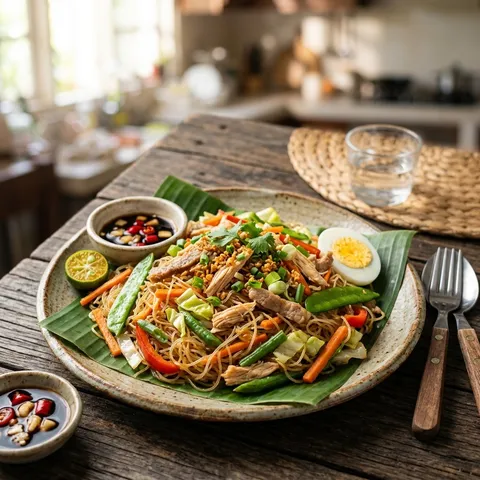 Filipino Lens Verified Images are for illustrative purposes only, may be inaccurate, and do not guarantee the presence or absence of specific ingredients.
 Pancit Bihon
Thin rice vermicelli stir-fried with chicken, shrimp, and vegetables in a savory soy-citrus sauce, a fixture at every Filipino celebration.
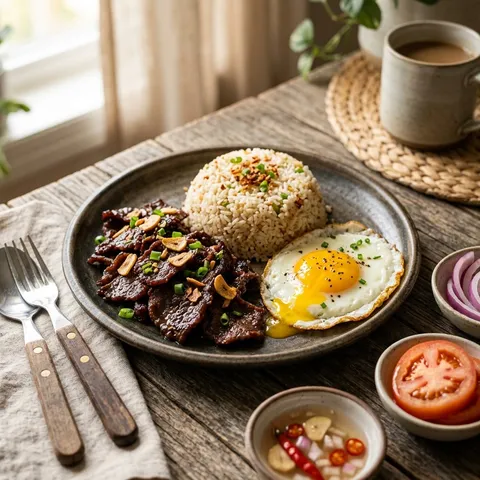 Filipino Lens Verified Images are for illustrative purposes only, may be inaccurate, and do not guarantee the presence or absence of specific ingredients.
 Tapsilog
A hearty breakfast combo of marinated beef (tapa), garlic fried rice (sinangag), and a fried egg (itlog).
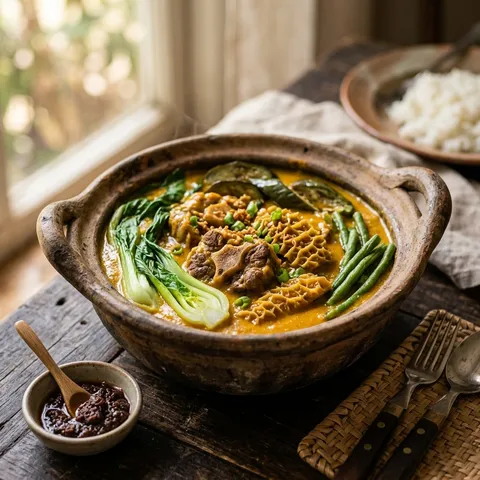 Filipino Lens Verified Images are for illustrative purposes only, may be inaccurate, and do not guarantee the presence or absence of specific ingredients.
 Kare-Kare
A rich peanut stew typically made with oxtail and vegetables, served with shrimp paste.