 Filipino Images are for illustrative purposes only, may be inaccurate, and do not guarantee the presence or absence of specific ingredients.
 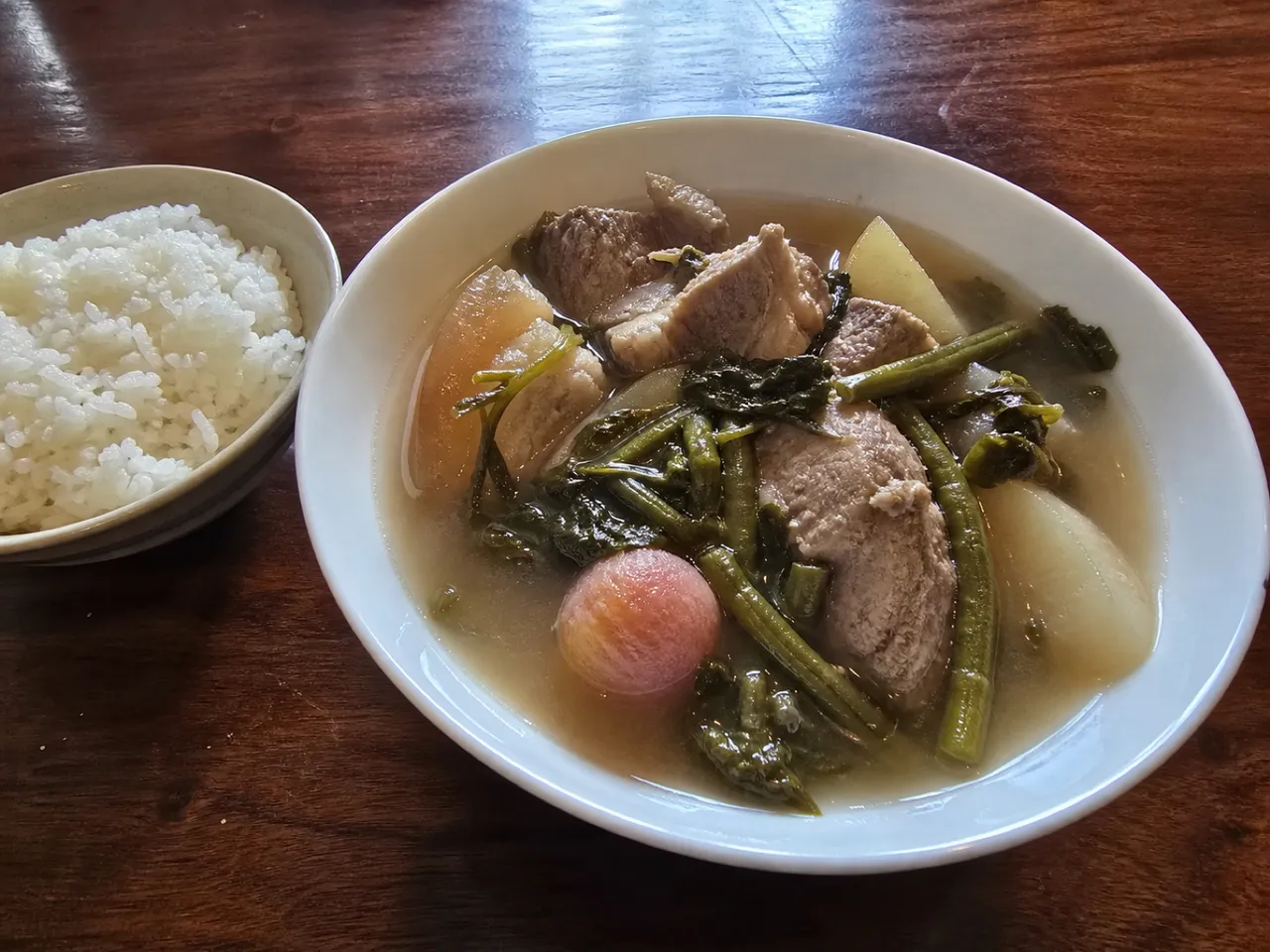 Serving Images are for illustrative purposes only, may be inaccurate, and do not guarantee the presence or absence of specific ingredients.
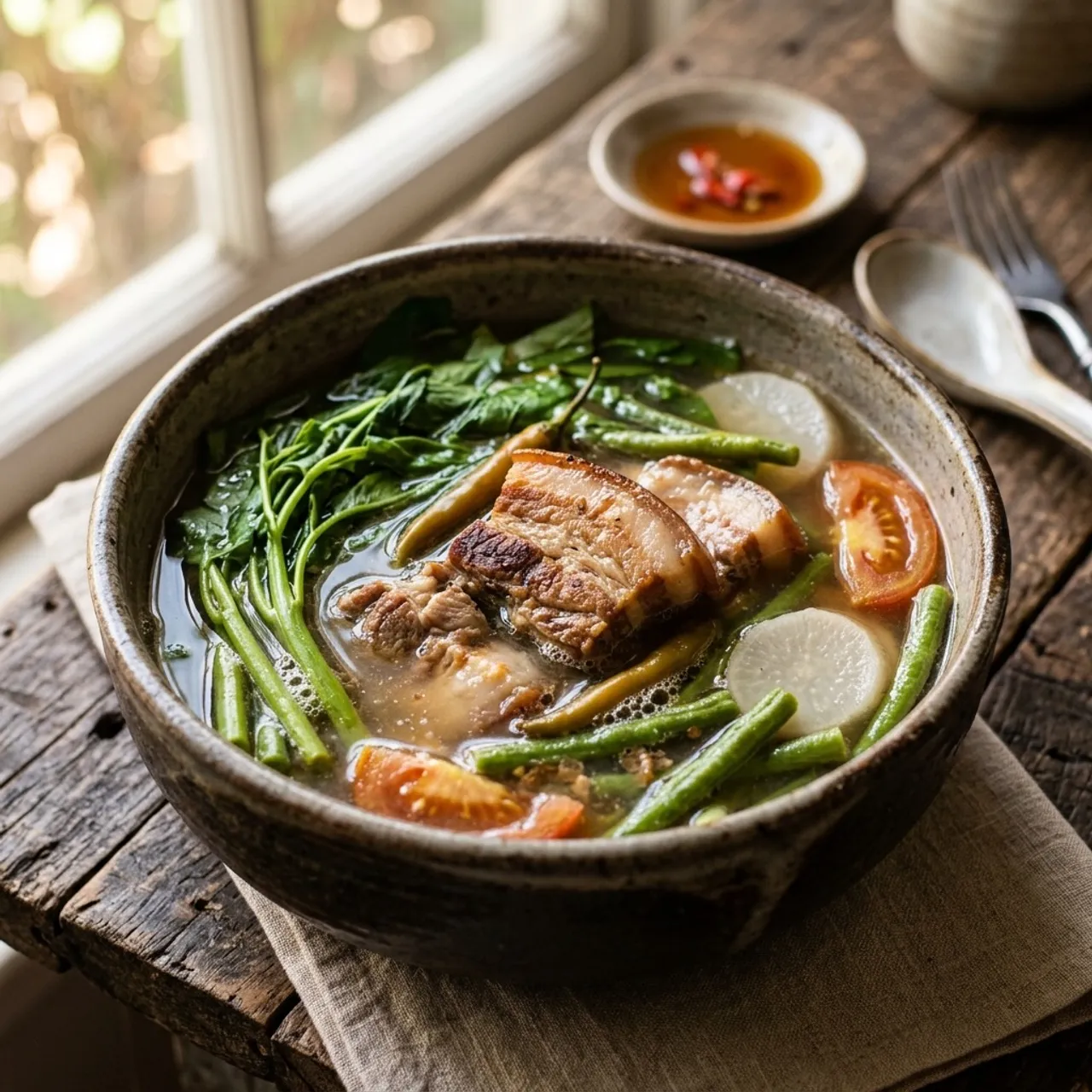
 Sinigang na Baboy
Dive into a vibrant, soul-warming tamarind soup that bursts with tangy, savory, and perfectly sour flavors. Packed with tender chunks of pork belly and crisp fresh vegetables, it's the ultimate homestyle Filipino stew.
Contains common allergens
In the app, Listahan checks these against your household automatically.
Good to know
- One-pot
Matched from this dish's own ingredients and timing. Browse more: one-pot dinners
Instructions
5 steps- 1
Boil the Pork: In a large pot, combine the pork belly chunks, quartered tomatoes, onion, and 8 cups of water. Bring to a rolling boil over high heat.
- 2
Skim and Simmer: Once boiling, skim off any scum that rises to the surface. Lower the heat to a gentle simmer, cover, and cook for 40-45 minutes, or until the pork is fork-tender.
- 3
Add Tamarind and Radish: Stir in the tamarind soup base and the sliced radish. Simmer for another 5-7 minutes until the radish is somewhat translucent and tender.
- 4
Season and Add Greens: Season the broth with fish sauce to taste. Add the long green chilies and the kangkong stalks, cooking for 2 minutes.
- 5
Finish: Turn off the heat, add the kangkong leaves, and cover the pot. The residual heat will wilt the leaves perfectly in about 2 minutes. Serve hot with steamed white rice.
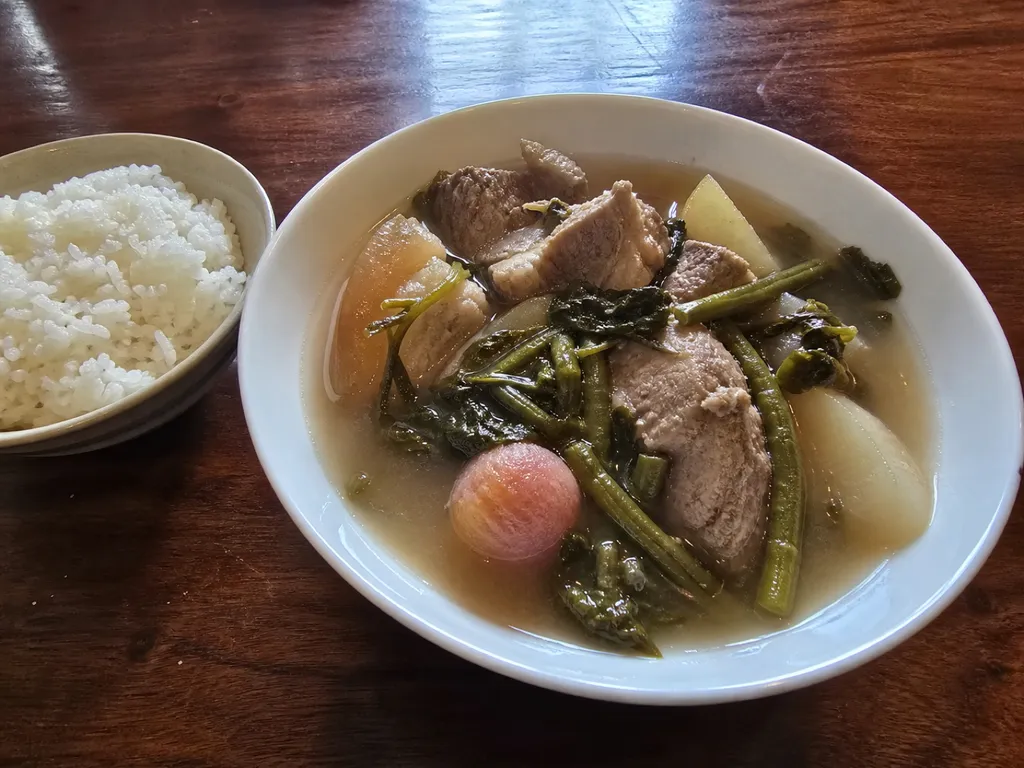 Images are for illustrative purposes only, may be inaccurate, and do not guarantee the presence or absence of specific ingredients.
 Listahan Family Score™
59/100
Works for many families
Score reflects how well this recipe fits a typical busy household. In the app, your Family Score is personalized to your household's allergens, kids, and pantry.
Nutrition
per serving460
Calories
50 g
Protein
4 g
Carbs
26 g
Fat
Estimated per serving. Actual values depend on the brands and portions you use.
Listahan cooking guide
Chef notes & practical guide
Technique notes, ingredient swaps, serve-alongside ideas, storage guidance, and equipment for this recipe.
Cultural context
Sinigang is the Filipino sour soup, and pork belly is its most beloved version. The sourness traditionally came from tamarind, though guava, calamansi, or green mango appear by region and season. What unites every pot is the balance of clean savory broth against a bright, almost mouth-watering tartness.
Listahan note
This version leans on a tamarind soup base for a reliable sour backbone, then builds depth by simmering the pork low and skimming carefully before the vegetables go in.
Technique cues
- Skim the foam during the first hard boil so the finished broth stays clear instead of cloudy.
- Add vegetables in order of toughness; daikon first, leafy kangkong last so nothing overcooks.
- Taste and adjust the sour-salty balance at the end, since tamarind bases vary in strength.
Kitchen flow
- Parallel prep
- Start the pork simmering, then prep and queue vegetables by cook time while it tenderizes.
- Make-ahead
- Make the pork broth a day ahead; add fresh vegetables only when reheating.
- Leftover move
- Reheat the broth and pour over fresh rice; the sourness mellows nicely overnight.
- Cleanup rhythm
- One pot plus a cutting board; strain any leftover bones before storing.
Ingredient brief
Role, handling, and swap guidance for each key ingredient.
Pork belly
Main protein
Purpose: The fat renders into the broth and keeps the meat tender through a long simmer.
Handling: Cut into 2-inch chunks and skim foam after the first boil.
Adaptation: Pork shoulder or country ribs work for a leaner pot.
Tamarind soup base
Souring agent
Purpose: Delivers the signature tart backbone quickly and consistently.
Handling: Stir in gradually and taste; you may not need the full packet.
Adaptation: Fresh tamarind pulp or green tamarind gives a brighter, less salty sour.
Daikon radish
Hearty vegetable
Purpose: Sweetens the broth as it softens and gives body to each spoonful.
Handling: Slice diagonally so pieces cook evenly.
Adaptation: Turnip is a close stand-in with a similar mild sweetness.
Water spinach (kangkong)
Leafy finish
Purpose: Adds fresh green color and a tender bite right before serving.
Handling: Separate stems from leaves; add stems a minute before the leaves.
Adaptation: Spinach or bok choy works when kangkong is unavailable.
Fish sauce (patis)
Salt and umami
Purpose: Seasons the broth with savory depth that salt alone cannot match.
Handling: Add near the end and taste, since the tamarind base is already salted.
Adaptation: Light soy sauce can substitute, though the flavor shifts slightly.
Technique notes
- Do not boil the kangkong leaves; drop them in off the heat so they stay green and tender.
- Build sourness in stages and taste as you go, because an over-soured pot is hard to walk back.
- Let the pork reach true fork-tenderness before adding vegetables, or the meat will fight the spoon.
Ingredient swaps
- Lighter direction
- Use pork shoulder and trim visible fat for a cleaner, less rich broth.
- Fresh-souring direction
- Swap the packet for fresh tamarind or green mango and season with salt to control sodium.
- Pescatarian direction
- Replace pork with shrimp or milkfish and shorten the simmer dramatically.
Serve alongside
- Steamed white rice
- Fish sauce with calamansi and chili
- Grilled eggplant
- Fried fish
- Cold water
- Calamansi juice
- Iced tea
Serving suggestions only — check pairings for your household's allergens.
Storage & reheating
- Refrigerate broth and pork together for up to 3 days; store extra greens separately.
- Reheat gently on the stovetop and add fresh kangkong if the original has wilted.
- Freezing is possible for the pork broth, though leafy vegetables do not survive it well.
Equipment
- Large soup pot
- Skimmer or slotted spoon
- Ladle
- Cutting board
Make this household-aware
Listahan Pro checks this recipe against your household's allergens, finds pantry-aware swaps, builds the shopping list, and helps you plan the week around it.
Plan it in Listahan
Add Sinigang na Baboy to your week, check it against your household's allergens, and build the shopping list automatically.
More Filipino recipes
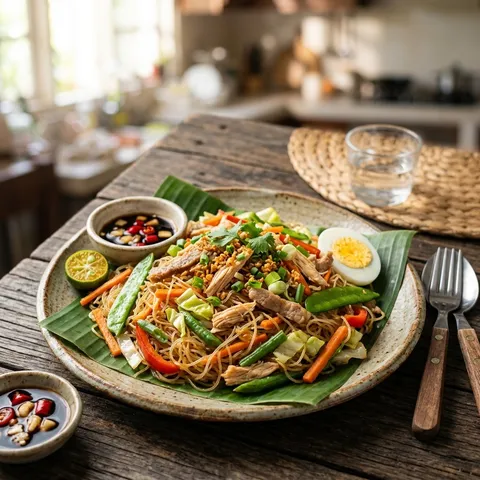 Filipino Lens Verified Images are for illustrative purposes only, may be inaccurate, and do not guarantee the presence or absence of specific ingredients.
 Pancit Bihon
Thin rice vermicelli stir-fried with chicken, shrimp, and vegetables in a savory soy-citrus sauce, a fixture at every Filipino celebration.
 Filipino Lens Verified Images are for illustrative purposes only, may be inaccurate, and do not guarantee the presence or absence of specific ingredients.
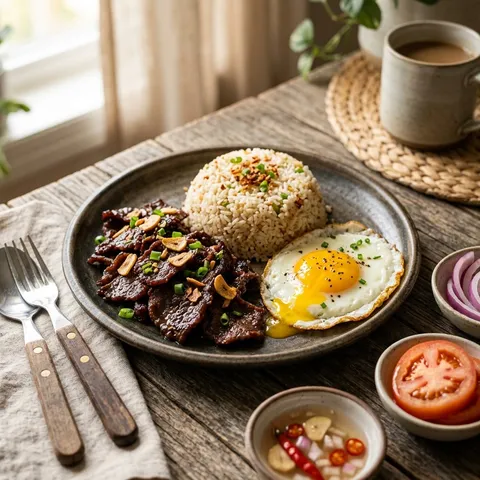
 Tapsilog
A hearty breakfast combo of marinated beef (tapa), garlic fried rice (sinangag), and a fried egg (itlog).
 Filipino Lens Verified Images are for illustrative purposes only, may be inaccurate, and do not guarantee the presence or absence of specific ingredients.
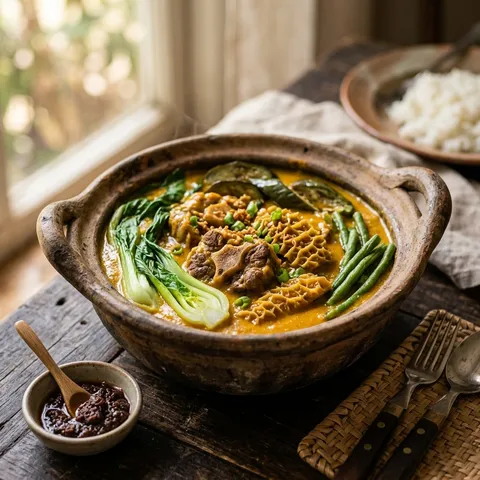
 Kare-Kare
A rich peanut stew typically made with oxtail and vegetables, served with shrimp paste.