 Filipino Images are for illustrative purposes only, may be inaccurate, and do not guarantee the presence or absence of specific ingredients.
  Serving Images are for illustrative purposes only, may be inaccurate, and do not guarantee the presence or absence of specific ingredients.
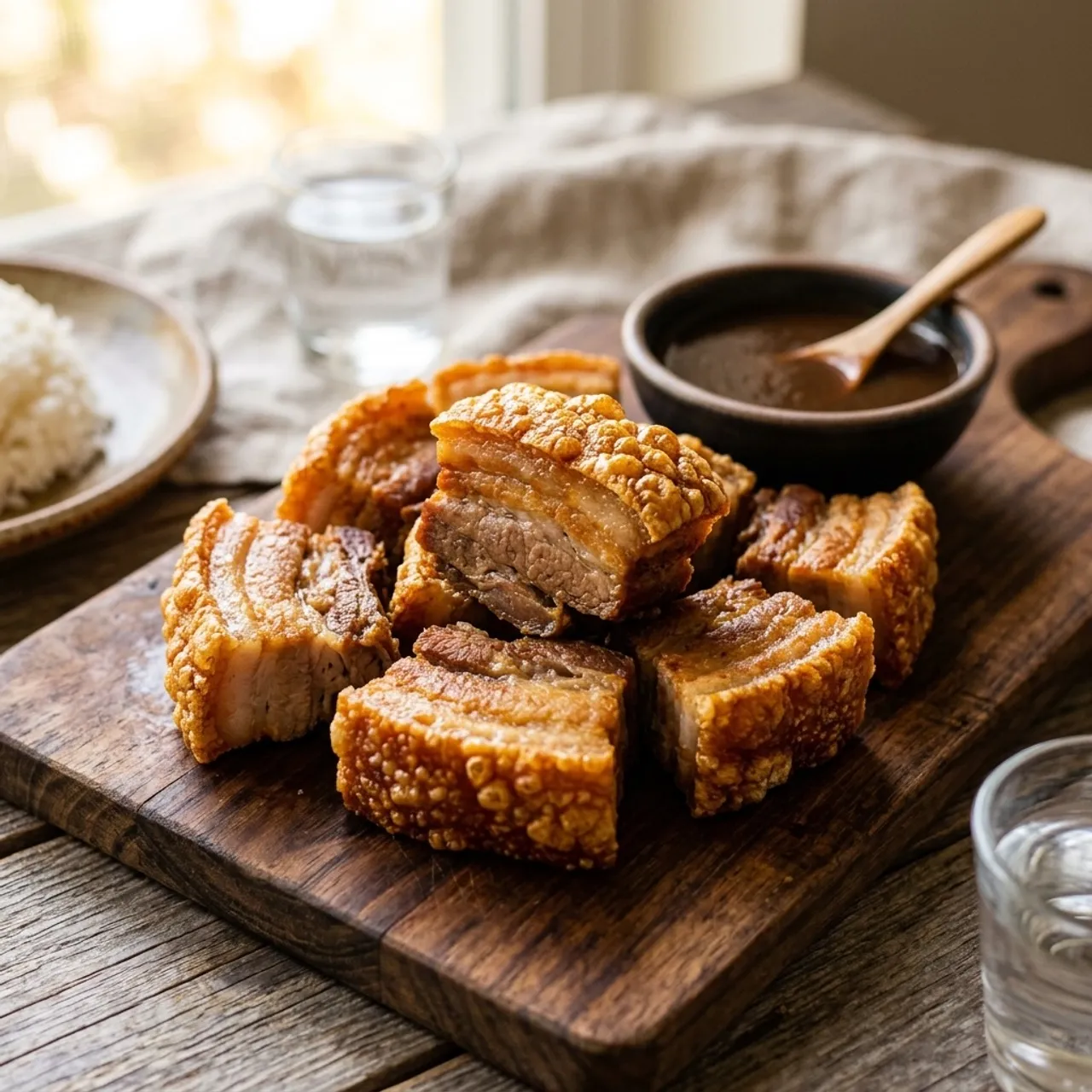
 Lechon Kawali
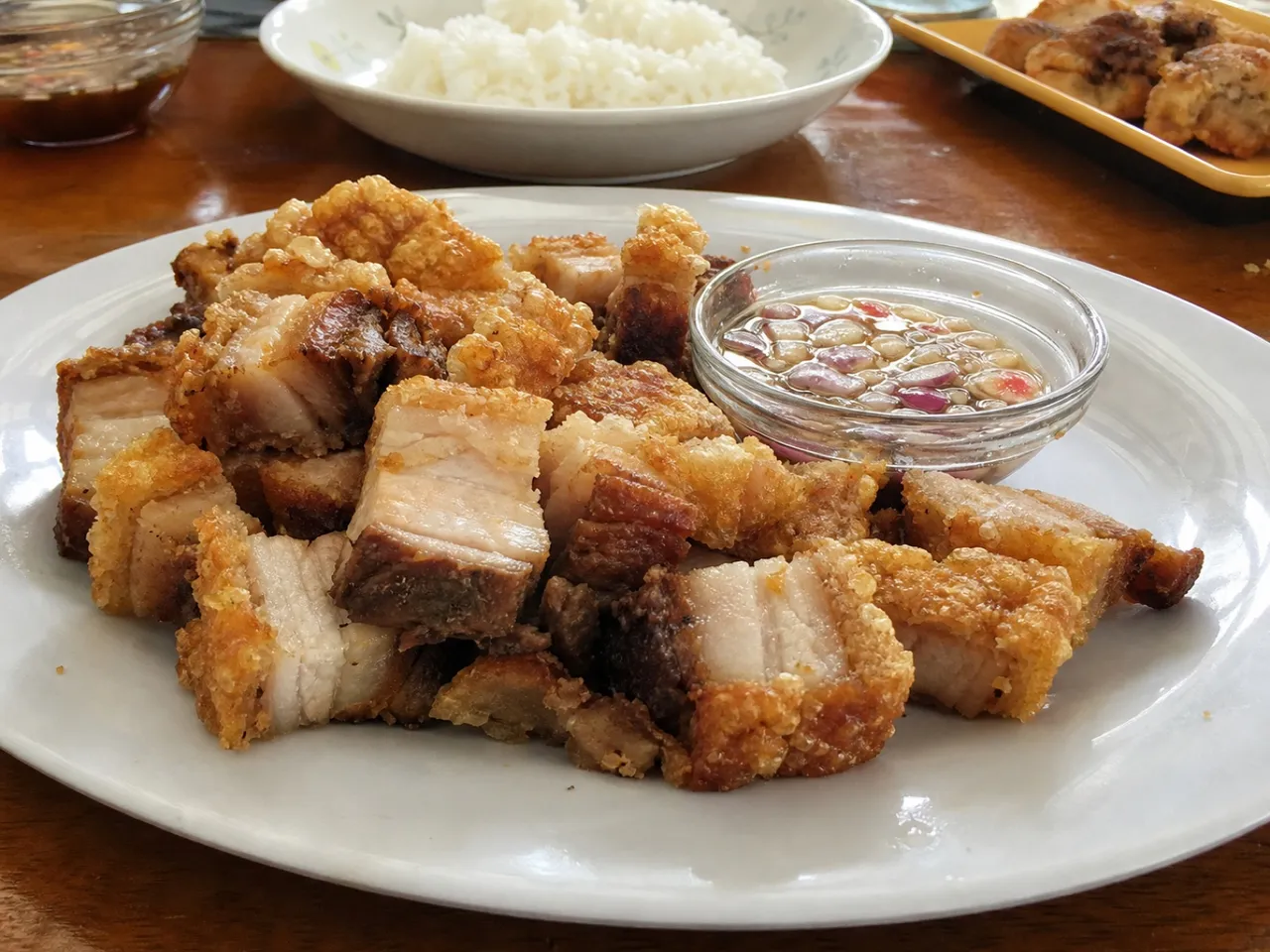
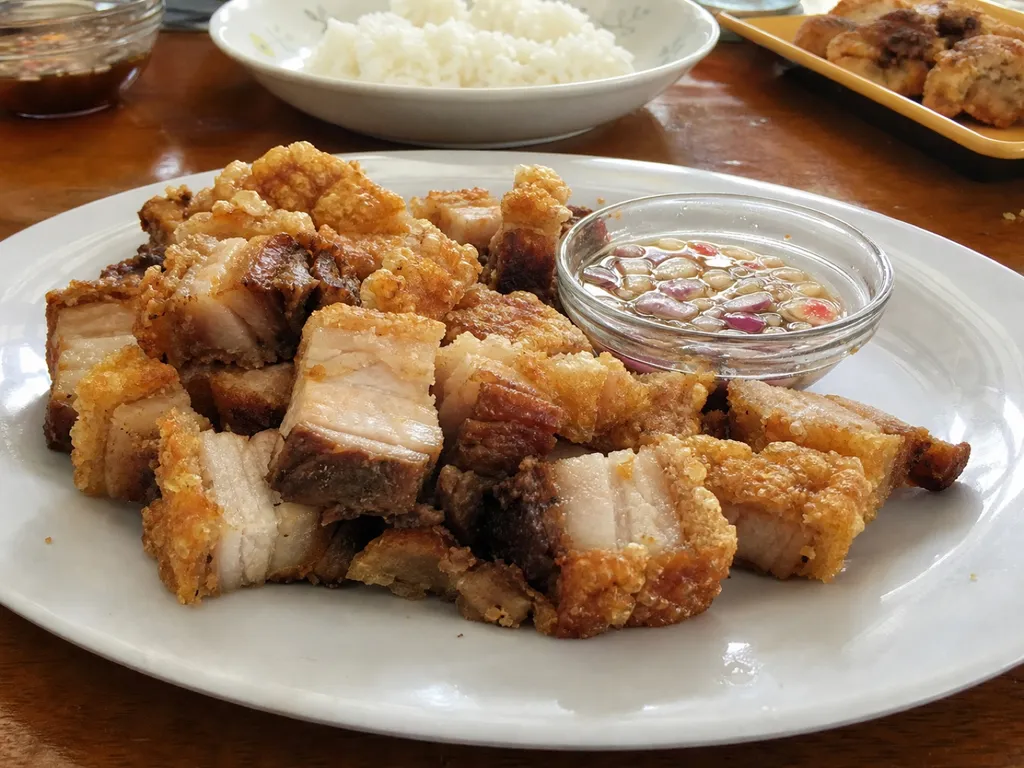
Treat yourself to the ultimate crunch with this irresistible deep-fried pork belly. The skin blisters into a spectacular crispy crust while the meat inside remains phenomenally juicy and tender.
No common allergens detected
Based on this recipe's ingredient list. Always verify with your own brands and labels.
Good to know
- Crispy
Matched from this dish's own ingredients and timing. Browse more: crispy recipes
Instructions
5 steps- 1
Boil the Pork: In a large pot, place the pork belly, peppercorns, bay leaves, crushed garlic, and salt. Add enough water to submerge the meat. Bring to a boil over medium-high heat, then reduce to a simmer. Cover and cook for 45-60 minutes until the skin is easily pierced with a fork but the meat is not falling apart.
- 2
Dry the Pork: Carefully remove the pork belly from the broth and place it on a wire rack. Let it cool and air dry completely for at least 30 minutes. For an extra crispy crust, pat it dry with paper towels and leave it uncovered in the refrigerator for a few hours.
- 3
Prep for Frying: Score the skin with a sharp knife in a crisscross pattern. Rub a pinch of salt over the skin. Heat the cooking oil in a deep, heavy-bottomed pot or wok to 350°F (175°C).
- 4
Deep Fry: Carefully lower the pork belly into the hot oil (stand back, as it will splatter). Fry for 10-15 minutes, turning occasionally, until the skin is blistered, deeply golden brown, and incredibly crispy.
- 5
Rest and Slice: Remove the pork and drain on a wire rack for 10 minutes. This resting period ensures the juices redistribute. Chop into bite-sized pieces and serve hot with lechon sauce or vinegar.
 Images are for illustrative purposes only, may be inaccurate, and do not guarantee the presence or absence of specific ingredients.
 Listahan Family Score™
73/100
Good fit for most families
Score reflects how well this recipe fits a typical busy household. In the app, your Family Score is personalized to your household's allergens, kids, and pantry.
Nutrition
per serving600
Calories
49 g
Protein
2 g
Carbs
43 g
Fat
Estimated per serving. Actual values depend on the brands and portions you use.
Listahan cooking guide
Chef notes & practical guide
Technique notes, ingredient swaps, serve-alongside ideas, storage guidance, and equipment for this recipe.
Cultural context
Lechon Kawali is the stovetop answer to whole-roasted lechon: a slab of pork belly boiled until tender, dried, then deep-fried until the skin blisters into glass-like crackling. Kawali means the wok or deep pan it is fried in. It delivers the prized crunch of roast pig without an outdoor fire.
Listahan note
This version insists on two things that make or break the crackle: simmering the belly with aromatics first, then drying it thoroughly before it ever touches the hot oil.
Technique cues
- Dry the boiled pork completely, ideally uncovered in the fridge, so the skin puffs instead of steaming.
- Fry in oil deep and hot enough to submerge the skin, and stand back, as moisture makes it spit.
- Rest the pork a few minutes before chopping so the juices settle and the crust stays crisp.
Kitchen flow
- Parallel prep
- Boil and air-dry the pork ahead; the frying step then takes only minutes.
- Make-ahead
- Simmer and chill the belly the day before, then fry just before serving.
- Leftover move
- Chop cold leftovers into sisig or fried rice rather than reheating whole.
- Cleanup rhythm
- Let the frying oil cool fully, strain it, and wipe spatter from the stovetop.
Ingredient brief
Role, handling, and swap guidance for each key ingredient.
Pork belly slab (skin-on)
Main cut
Purpose: The layered fat and skin are what crisp and puff during frying.
Handling: Simmer until tender, then dry the skin thoroughly before frying.
Adaptation: Pork shoulder with skin works but yields less dramatic crackling.
Coarse salt
Seasoning and drying agent
Purpose: Seasons the meat and helps draw surface moisture from the skin.
Handling: Rub into the dried skin before frying for better blistering.
Adaptation: Any coarse salt works; avoid fine salt, which over-salts quickly.
Bay leaves and peppercorns
Aromatics
Purpose: Infuse the simmering water so the meat is seasoned from within.
Handling: Add to the boil; they are discarded before frying.
Adaptation: Star anise or garlic can join or replace them for a different note.
Garlic
Aromatic
Purpose: Rounds out the simmering broth and perfumes the meat.
Handling: Crush and add to the boiling water.
Adaptation: Garlic powder in the boil is a passable shortcut.
Technique notes
- The crackle lives or dies on dryness; an overnight uncovered chill in the fridge is the single best trick.
- Fry at a steady high heat, since lukewarm oil makes greasy, leathery skin instead of glass.
- Chop with a heavy knife right before serving so each piece keeps its crunch.
Ingredient swaps
- Oven-finish direction
- After boiling and drying, blast the skin under a broiler for a lower-oil crackle.
- Leaner direction
- Use a thicker-meat, thinner-fat belly cut for a less heavy result.
- Air-fryer direction
- Air-fry the dried, seasoned belly at high heat, turning, for less oil overall.
Serve alongside
- Steamed white rice
- Spiced vinegar dipping sauce
- Mang Tomas lechon sauce
- Atchara (pickled papaya)
- Cold lager
- Calamansi soda
- Iced tea
Serving suggestions only — check pairings for your household's allergens.
Storage & reheating
- Refrigerate cooked pork up to 3 days, though the skin softens once stored.
- Re-crisp in a hot oven or air fryer rather than a microwave to recover crunch.
- Freeze the boiled, undried belly up to 2 months and fry fresh after thawing.
Equipment
- Deep pot for simmering
- Deep heavy pan or wok for frying
- Spider or slotted spoon
- Heavy knife for chopping
Make this household-aware
Listahan Pro checks this recipe against your household's allergens, finds pantry-aware swaps, builds the shopping list, and helps you plan the week around it.
Plan it in Listahan
Add Lechon Kawali to your week, check it against your household's allergens, and build the shopping list automatically.
More Filipino recipes
 Filipino Lens Verified Images are for illustrative purposes only, may be inaccurate, and do not guarantee the presence or absence of specific ingredients.
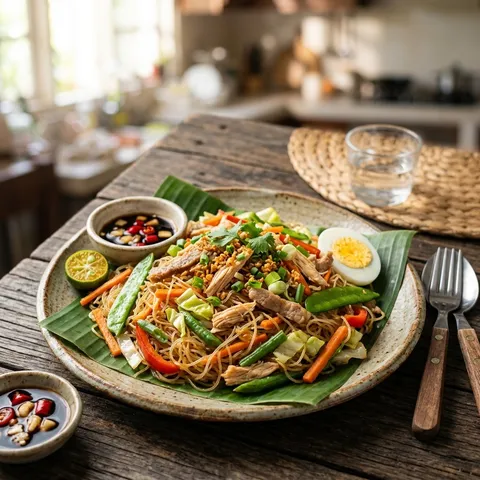
 Pancit Bihon
Thin rice vermicelli stir-fried with chicken, shrimp, and vegetables in a savory soy-citrus sauce, a fixture at every Filipino celebration.
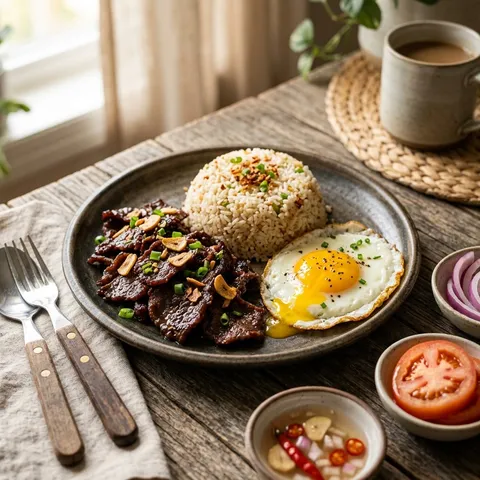 Filipino Lens Verified Images are for illustrative purposes only, may be inaccurate, and do not guarantee the presence or absence of specific ingredients.
 Tapsilog
A hearty breakfast combo of marinated beef (tapa), garlic fried rice (sinangag), and a fried egg (itlog).
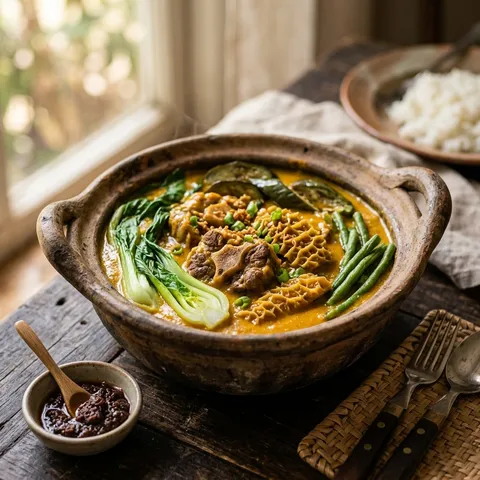 Filipino Lens Verified Images are for illustrative purposes only, may be inaccurate, and do not guarantee the presence or absence of specific ingredients.
 Kare-Kare
A rich peanut stew typically made with oxtail and vegetables, served with shrimp paste.