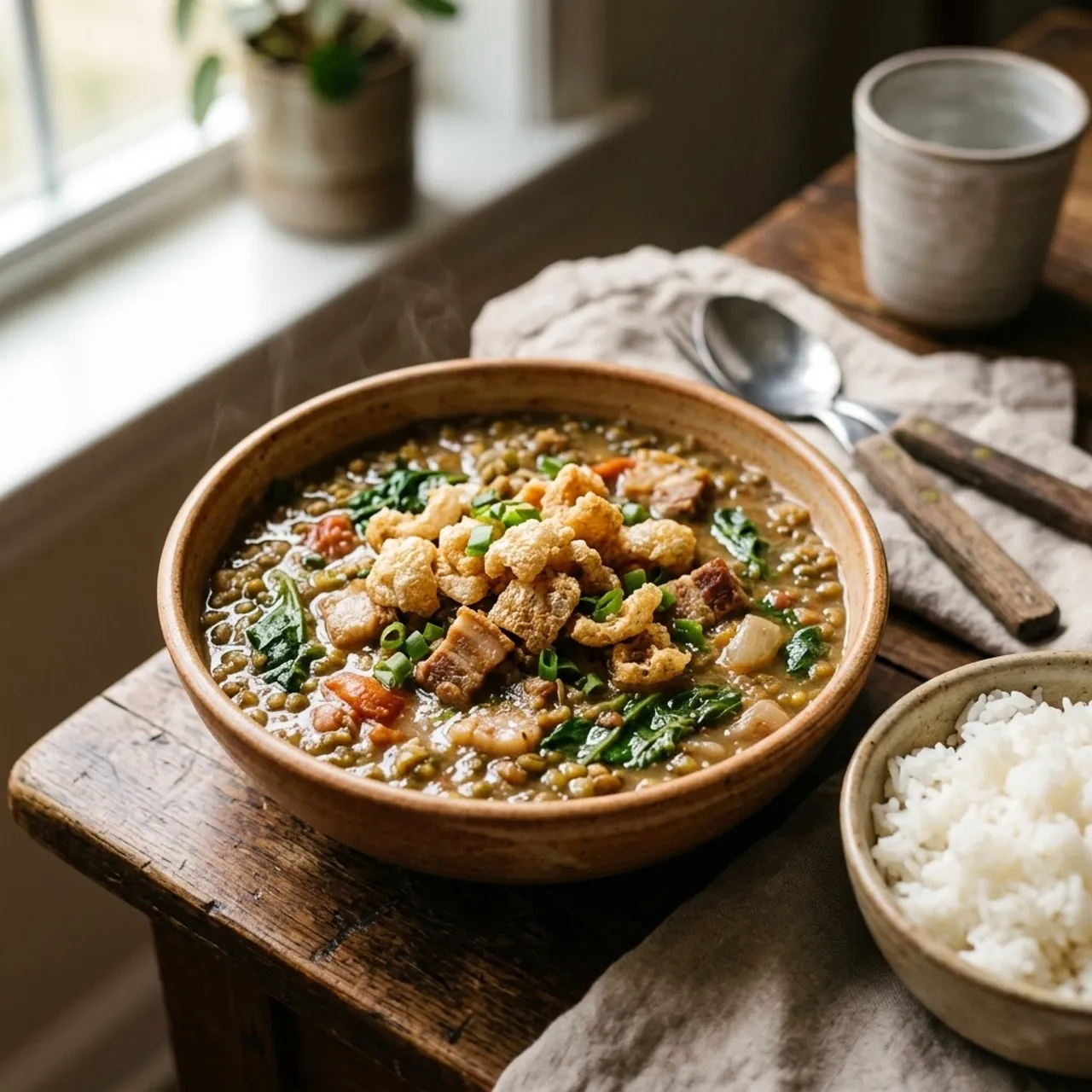
 Filipino Images are for illustrative purposes only, may be inaccurate, and do not guarantee the presence or absence of specific ingredients.
 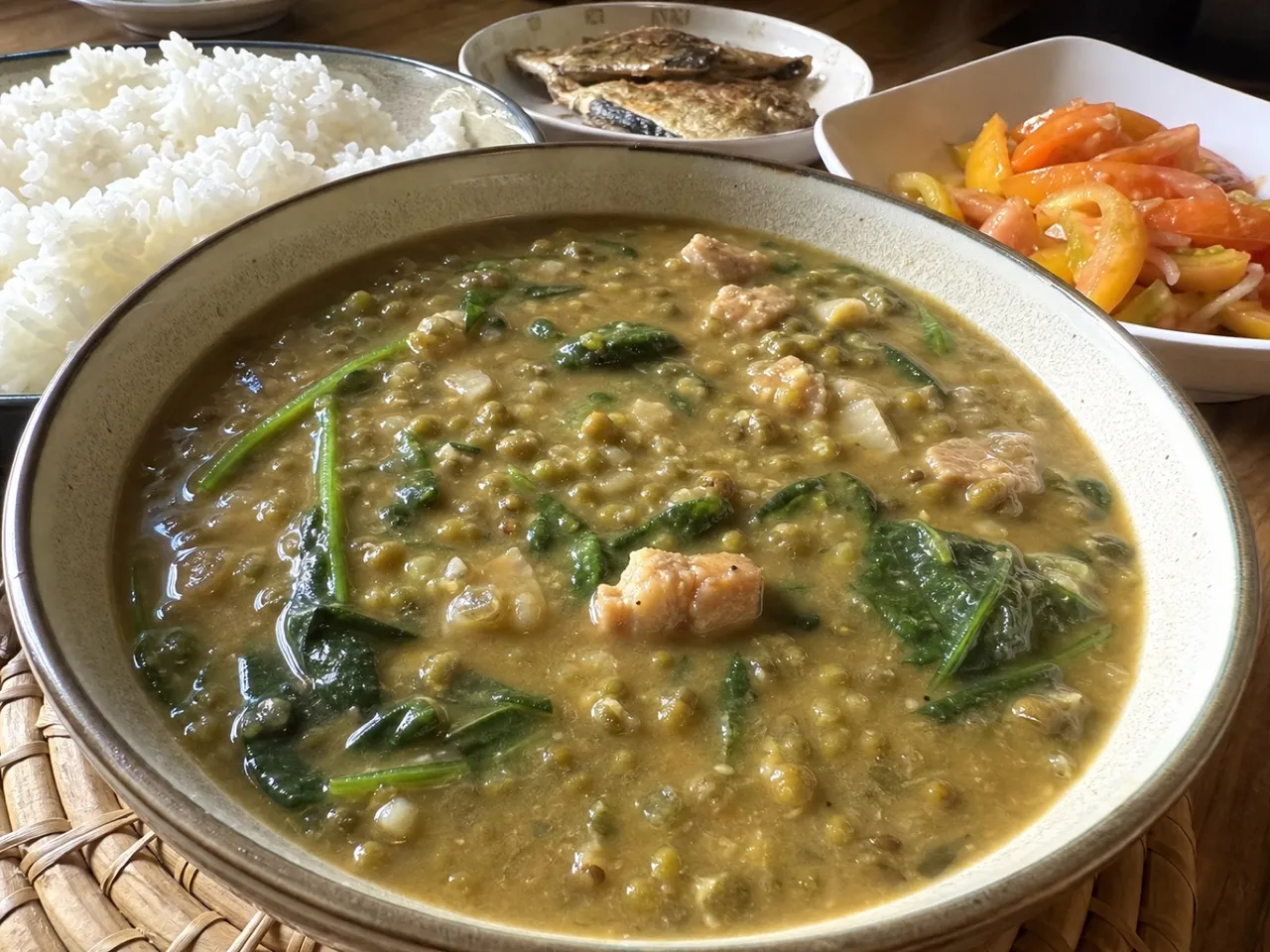 Serving Images are for illustrative purposes only, may be inaccurate, and do not guarantee the presence or absence of specific ingredients.
 Ginisang Monggo
A hearty, thrifty stew of creamy mung beans simmered with pork and leafy greens, a beloved Friday staple in Filipino homes.
Contains common allergens
In the app, Listahan checks these against your household automatically.
Instructions
6 steps- 1
In a pot, combine the mung beans and water, bring to a boil, then simmer uncovered for 40-45 minutes until the beans are very soft and beginning to burst, adding more water as needed.
- 2
While the beans cook, heat the oil in a separate pan over medium-high and brown the pork cubes for 5-6 minutes until they render some fat and crisp at the edges.
- 3
Add the garlic, onion, and tomatoes to the pork and sauté for 4-5 minutes until the tomatoes break down into a soft sofrito.
- 4
Pour the cooked mung beans with their liquid into the pork pan, then season with fish sauce and black pepper and stir to combine.
- 5
Simmer gently for 10 minutes to meld the flavors, mashing some beans against the side for a creamier texture.
- 6
Stir in the spinach or moringa leaves and cook for 1-2 minutes until just wilted, then serve hot over steamed rice.
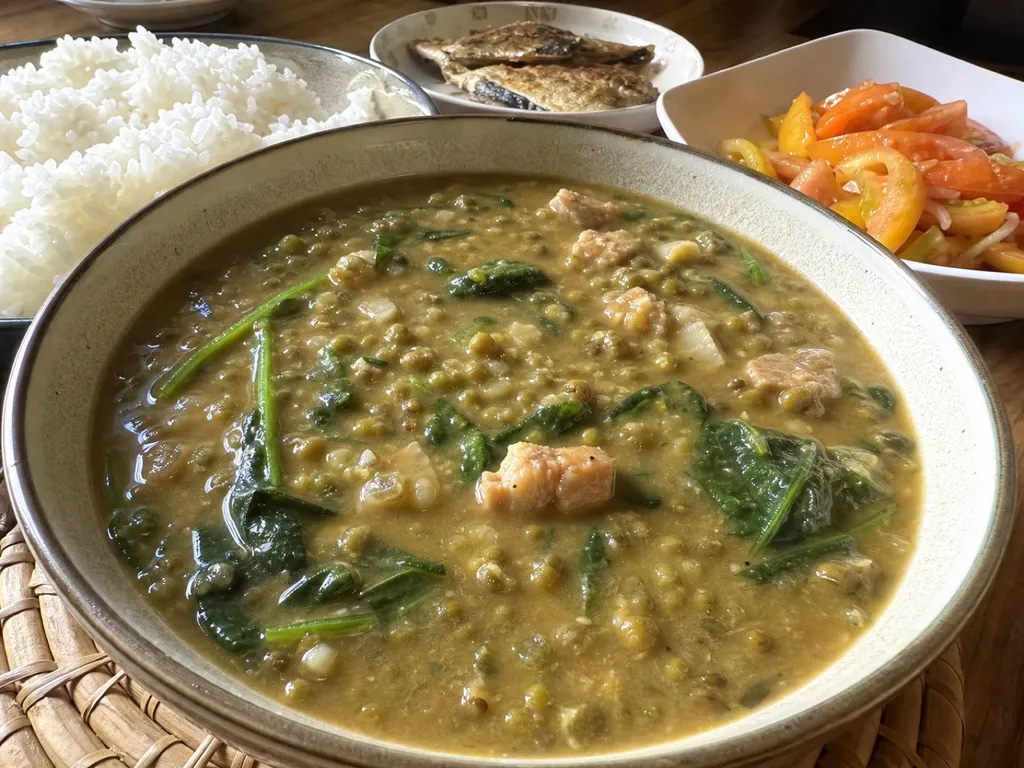 Images are for illustrative purposes only, may be inaccurate, and do not guarantee the presence or absence of specific ingredients.
 Listahan Family Score™
68/100
Works for many families
Score reflects how well this recipe fits a typical busy household. In the app, your Family Score is personalized to your household's allergens, kids, and pantry.
Nutrition
per serving575
Calories
43 g
Protein
34 g
Carbs
30 g
Fat
Estimated per serving. Actual values depend on the brands and portions you use.
Listahan cooking guide
Chef notes & practical guide
Technique notes, ingredient swaps, serve-alongside ideas, storage guidance, and equipment for this recipe.
Cultural context
Ginisang Monggo is a humble mung bean stew, beans simmered soft and sauteed with garlic, tomato, pork, and leafy greens. Traditionally eaten on Fridays, it is frugal, nourishing everyday food. The beans break down into a thick, savory pottage that is pure comfort over rice.
Listahan note
This version simmers the mung beans until they begin to break down for body, then builds savory depth with a pork-and-tomato saute and finishes with greens.
Technique cues
- Simmer the beans until some break down to thicken the stew naturally.
- Saute the aromatics and pork well before adding the beans for depth.
- Add greens at the end so they stay bright.
Kitchen flow
- Parallel prep
- Simmer the beans while you brown the pork and prep aromatics.
- Make-ahead
- Make a day ahead; it thickens and deepens overnight.
- Leftover move
- Loosen leftover monggo with water and serve over fresh rice.
- Cleanup rhythm
- One pot; soak it promptly, as the beans thicken and stick.
Ingredient brief
Role, handling, and swap guidance for each key ingredient.
Mung beans
Base
Purpose: They soften into a thick, savory pottage.
Handling: Rinse and simmer until tender and partly broken down.
Adaptation: Split mung beans cook faster.
Pork belly
Flavor and protein
Purpose: Adds savory fat and richness.
Handling: Cube and brown before adding to the beans.
Adaptation: Omit for a vegetarian version and use oil.
Tomato
Aromatic base
Purpose: Adds acidity and body to the saute.
Handling: Dice and cook down until soft.
Adaptation: Canned diced tomato works.
Spinach or moringa (malunggay)
Leafy finish
Purpose: Adds fresh green nutrition and color.
Handling: Stir in at the end off the heat.
Adaptation: Bitter melon leaves or kangkong work.
Technique notes
- Let some beans break down for a naturally thick stew.
- Build the saute well; it carries the whole dish.
- Add the greens at the very end for color and freshness.
Ingredient swaps
- Vegetarian direction
- Skip the pork and use oil; add fried tofu for protein.
- Seafood direction
- Add shrimp or fried fish, a popular variation.
- Leaner direction
- Use lean pork or just a little for flavor.
Serve alongside
- Steamed white rice
- Fried fish
- Crispy pork
- Sauteed greens
- Cold water
- Iced tea
- Calamansi juice
Serving suggestions only — check pairings for your household's allergens.
Storage & reheating
- Refrigerate up to 3 days; it thickens when chilled.
- Reheat with a splash of water to loosen.
- Freeze up to 2 months; thaw and loosen with water.
Equipment
- Heavy pot
- Wooden spoon
- Cutting board
- Ladle
Make this household-aware
Listahan Pro checks this recipe against your household's allergens, finds pantry-aware swaps, builds the shopping list, and helps you plan the week around it.
Plan it in Listahan
Add Ginisang Monggo to your week, check it against your household's allergens, and build the shopping list automatically.
More Filipino recipes
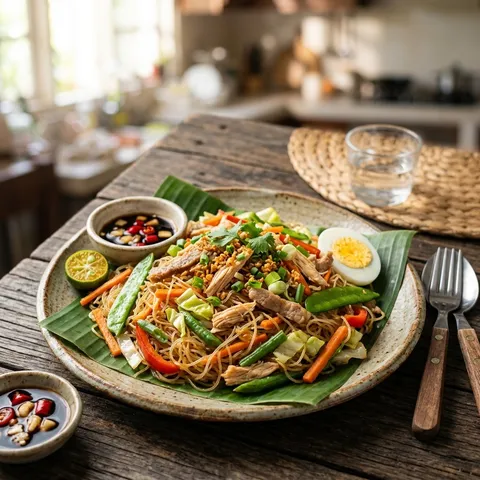 Filipino Lens Verified Images are for illustrative purposes only, may be inaccurate, and do not guarantee the presence or absence of specific ingredients.
 Pancit Bihon
Thin rice vermicelli stir-fried with chicken, shrimp, and vegetables in a savory soy-citrus sauce, a fixture at every Filipino celebration.
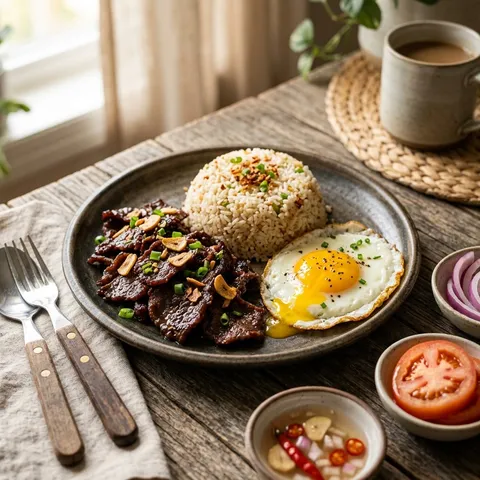 Filipino Lens Verified Images are for illustrative purposes only, may be inaccurate, and do not guarantee the presence or absence of specific ingredients.
 Tapsilog
A hearty breakfast combo of marinated beef (tapa), garlic fried rice (sinangag), and a fried egg (itlog).
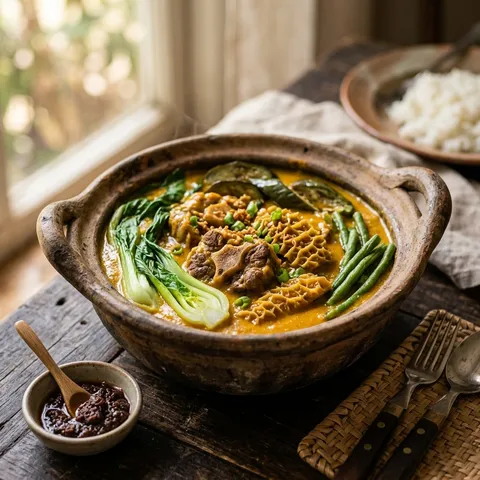 Filipino Lens Verified Images are for illustrative purposes only, may be inaccurate, and do not guarantee the presence or absence of specific ingredients.
 Kare-Kare
A rich peanut stew typically made with oxtail and vegetables, served with shrimp paste.