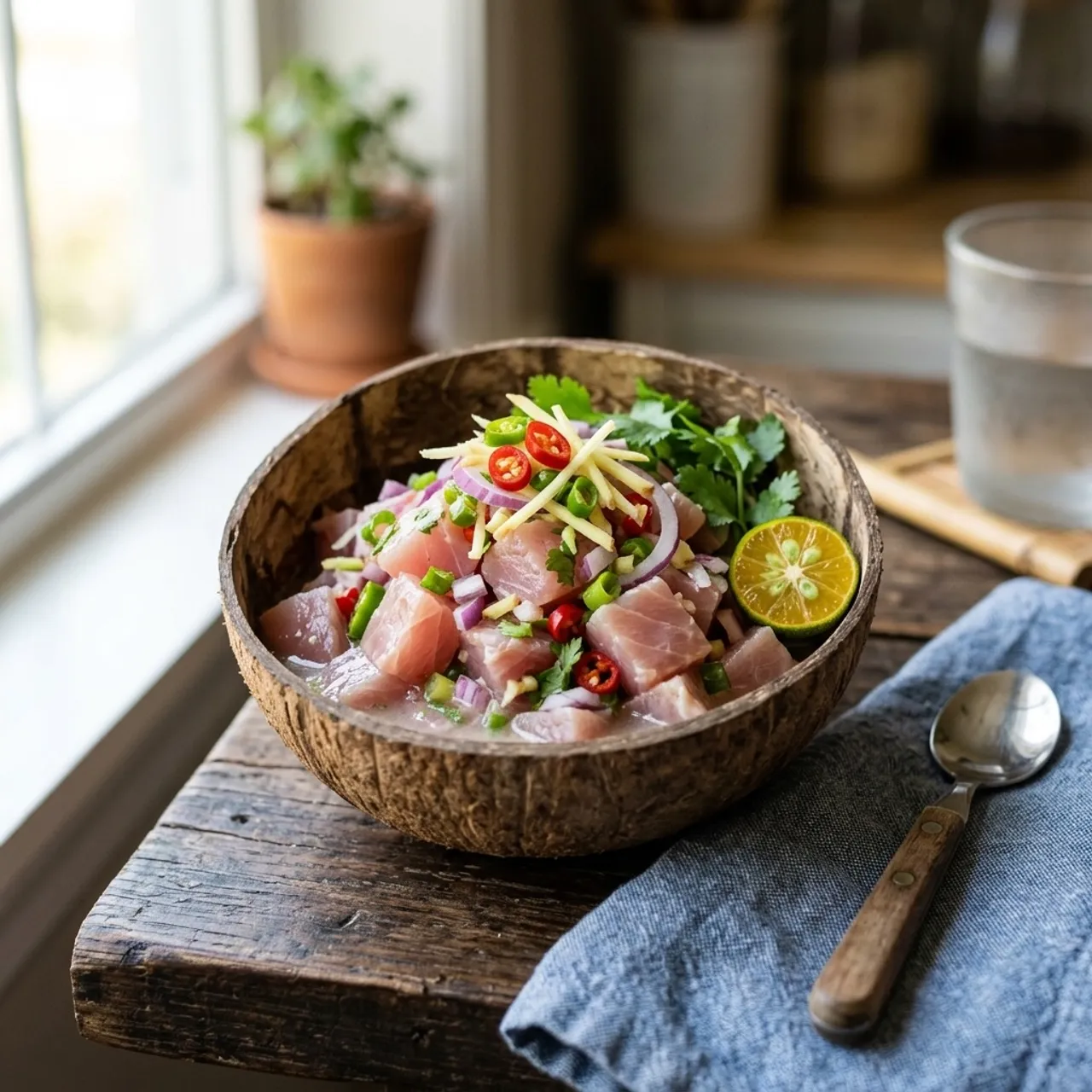
 Filipino Images are for illustrative purposes only, may be inaccurate, and do not guarantee the presence or absence of specific ingredients.
 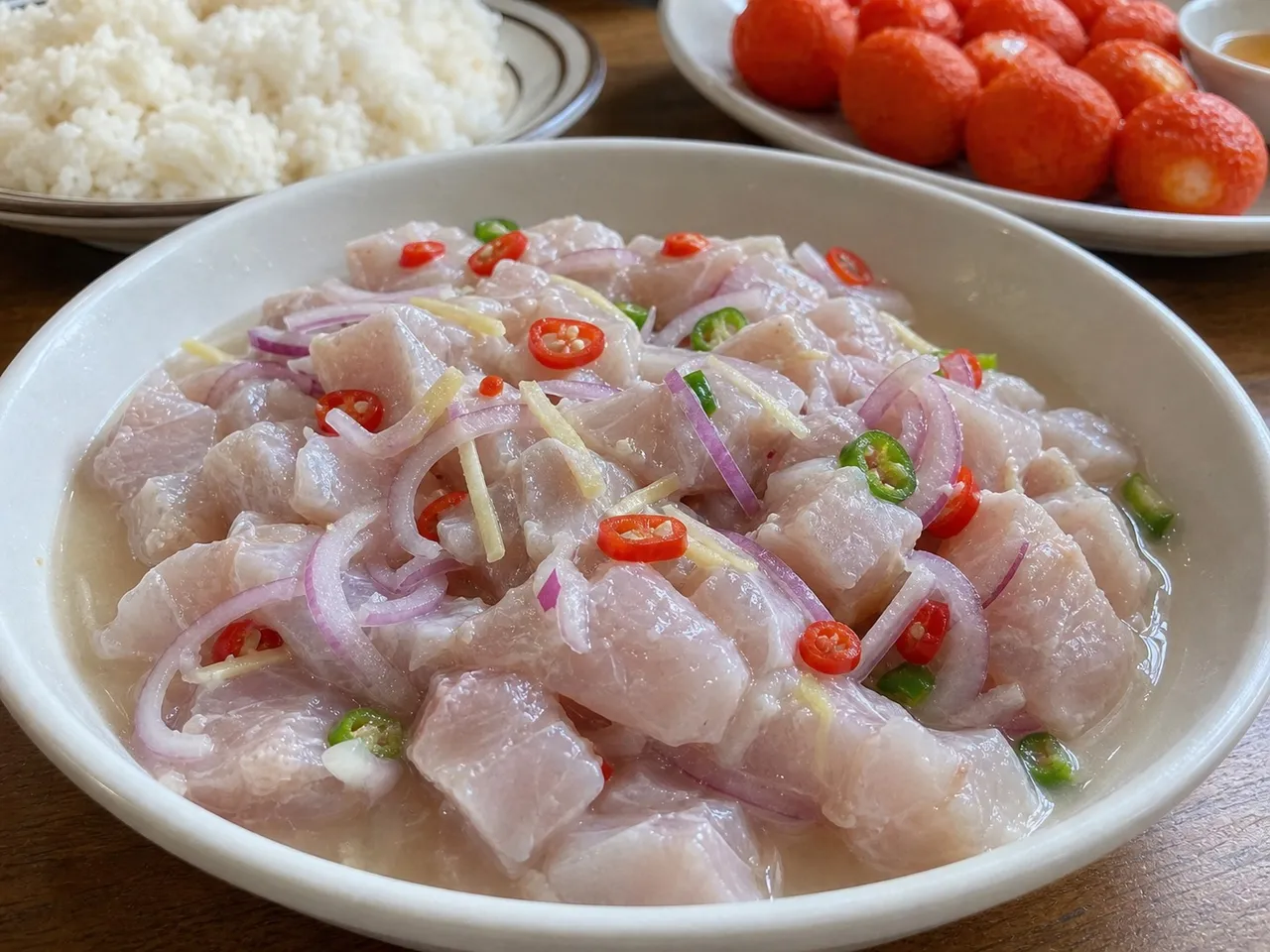 Serving Images are for illustrative purposes only, may be inaccurate, and do not guarantee the presence or absence of specific ingredients.
 Kinilaw na Isda
The Filipino version of ceviche, featuring raw fish cured in vinegar and citrus.
Contains common allergens
In the app, Listahan checks these against your household automatically.
Good to know
- Ready in under 30 minutes
Matched from this dish's own ingredients and timing. Browse more: 30-minute meals
Instructions
5 steps- 1
The Wash (Crucial Step): Place the cubed fresh fish in a colander or bowl. Pour 1/2 cup of the vinegar over the fish and toss briefly for about 30 seconds. This "washes" the fish, neutralizing any fishy odor and lightly starting the curing process. Drain the vinegar completely and lightly squeeze the fish. Do NOT rinse with water.
- 2
Mix Aromatics: In a non-reactive bowl (glass or ceramic, never metal), combine the remaining 1/2 cup of fresh vinegar, calamansi juice, thinly sliced red onions, minced ginger, chopped chilies, salt, and pepper.
- 3
Cure the Fish: Add the washed fish cubes to the aromatic vinegar mixture. Gently toss everything together so the fish is completely submerged and coated in the acidic liquid.
- 4
Rest Briefly: Let it sit for 10 to 15 minutes in the refrigerator. The acid will "cook" the fish, turning the outside opaque white while leaving the inside tender and raw. Do not over-marinate, or the fish will become rubbery.
- 5
Serve immediately: Serve ice-cold as a refreshing appetizer or "pulutan" (bar snack).
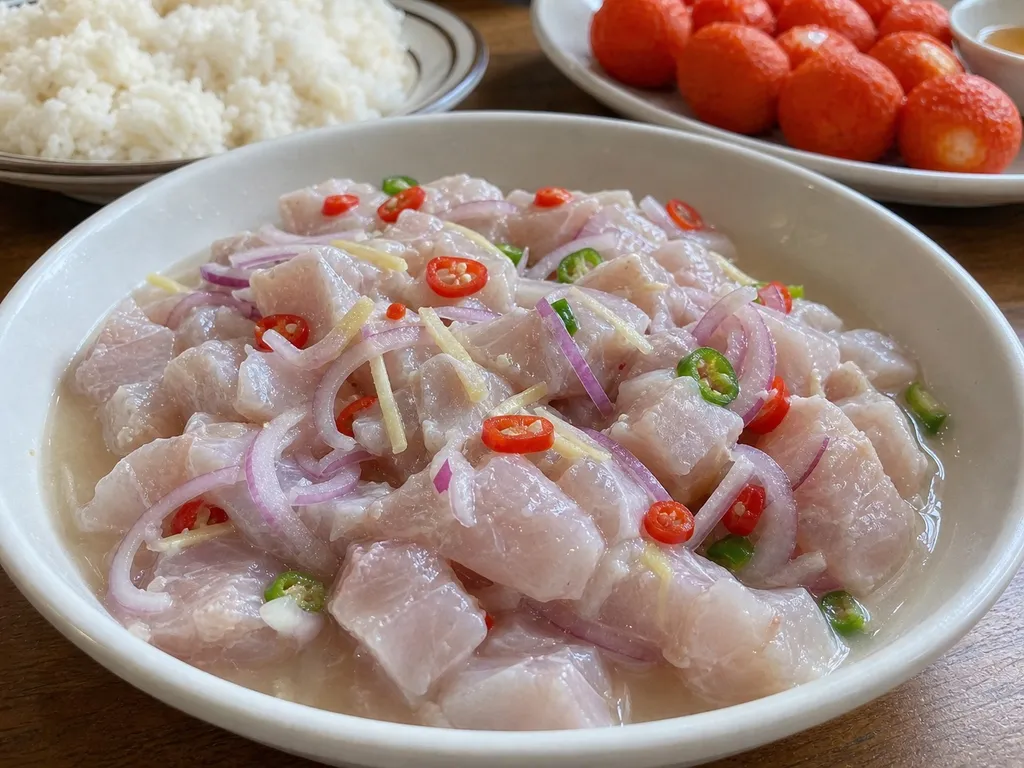 Images are for illustrative purposes only, may be inaccurate, and do not guarantee the presence or absence of specific ingredients.
 Listahan Family Score™
60/100
Works for many families
Score reflects how well this recipe fits a typical busy household. In the app, your Family Score is personalized to your household's allergens, kids, and pantry.
Nutrition
per serving425
Calories
30 g
Protein
8 g
Carbs
30 g
Fat
Estimated per serving. Actual values depend on the brands and portions you use.
Listahan cooking guide
Chef notes & practical guide
Technique notes, ingredient swaps, serve-alongside ideas, storage guidance, and equipment for this recipe.
Cultural context
Kinilaw is the Filipino raw-fish dish, fresh seafood cured in vinegar and calamansi with ginger, onion, and chili. Predating Spanish contact, it is one of the oldest Filipino cooking methods, the acid cooking the fish without heat. Freshness is everything: only the best fish should ever be used.
Listahan note
This version uses sushi-grade fish, a first rinse in vinegar then a fresh cure, and plenty of ginger and chili so the dish is bright, clean, and lively.
Technique cues
- Use only impeccably fresh, sushi-grade fish; freshness is non-negotiable.
- Rinse the fish in vinegar first, then cure in fresh acid for a cleaner taste.
- Cure only briefly so the fish stays tender, not rubbery.
Kitchen flow
- Parallel prep
- Cut the aromatics and measure the acids while the fish stays chilled.
- Make-ahead
- Best made and eaten fresh; do not cure far ahead.
- Leftover move
- Kinilaw is meant to be eaten right away; it does not keep well.
- Cleanup rhythm
- A bowl and a board; rinse promptly and keep everything cold.
Ingredient brief
Role, handling, and swap guidance for each key ingredient.
Sushi-grade fish
Main
Purpose: Only the freshest fish is safe and delicious raw-cured.
Handling: Cube evenly and keep very cold until curing.
Adaptation: Tuna or Spanish mackerel are classic choices.
Coconut or cane vinegar
Curing acid
Purpose: Cures the fish and provides the tangy base.
Handling: Use a first rinse, then fresh vinegar to cure.
Adaptation: Either vinegar works; coconut is more rounded.
Calamansi juice
Bright acid
Purpose: Adds citrus lift to the cure.
Handling: Add with the fresh vinegar.
Adaptation: Lime works.
Ginger, onion, and chili
Aromatics and heat
Purpose: Provide warmth, crunch, and heat that define kinilaw.
Handling: Mince ginger, slice onion thin, chop chili; fold in fresh.
Adaptation: Adjust chili to taste.
Technique notes
- Source the freshest fish possible; this dish lives or dies on it.
- Cure briefly; over-curing makes the fish chalky and firm.
- Serve immediately and very cold for the best texture.
Ingredient swaps
- Coconut-cream direction
- Add a splash of coconut cream for a richer kinilaw sa gata.
- Milder direction
- Reduce the chili and add cucumber for a gentler dish.
- Different-fish direction
- Use any sashimi-grade fish that is freshest that day.
Serve alongside
- Steamed white rice
- Green mango
- Grilled fish
- Cucumber
- Cold lager
- Calamansi soda
- Cold water
Serving suggestions only — check pairings for your household's allergens.
Storage & reheating
- Eat fresh; kinilaw does not store well and is best within the hour.
- If needed, refrigerate briefly, though the texture firms.
- Do not freeze.
Equipment
- Mixing bowl
- Sharp knife
- Cutting board
- Citrus juicer
Make this household-aware
Listahan Pro checks this recipe against your household's allergens, finds pantry-aware swaps, builds the shopping list, and helps you plan the week around it.
Plan it in Listahan
Add Kinilaw na Isda to your week, check it against your household's allergens, and build the shopping list automatically.
More Filipino recipes
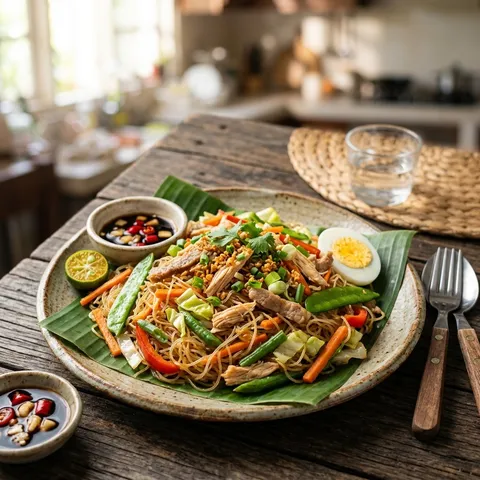 Filipino Lens Verified Images are for illustrative purposes only, may be inaccurate, and do not guarantee the presence or absence of specific ingredients.
 Pancit Bihon
Thin rice vermicelli stir-fried with chicken, shrimp, and vegetables in a savory soy-citrus sauce, a fixture at every Filipino celebration.
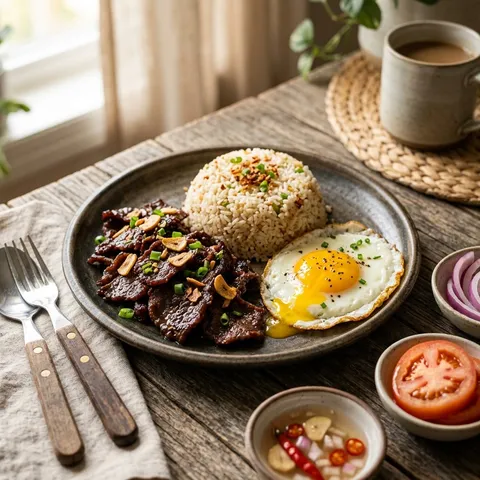 Filipino Lens Verified Images are for illustrative purposes only, may be inaccurate, and do not guarantee the presence or absence of specific ingredients.
 Tapsilog
A hearty breakfast combo of marinated beef (tapa), garlic fried rice (sinangag), and a fried egg (itlog).
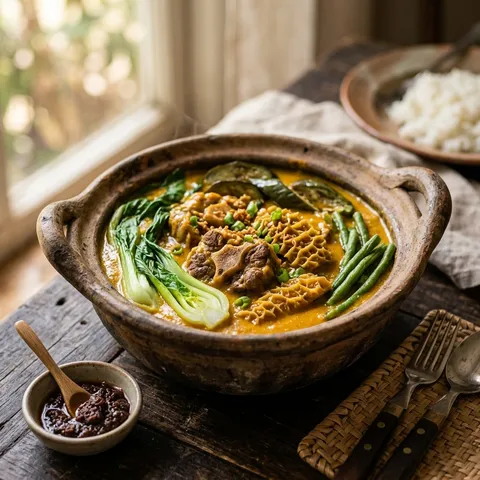 Filipino Lens Verified Images are for illustrative purposes only, may be inaccurate, and do not guarantee the presence or absence of specific ingredients.
 Kare-Kare
A rich peanut stew typically made with oxtail and vegetables, served with shrimp paste.