 Filipino Images are for illustrative purposes only, may be inaccurate, and do not guarantee the presence or absence of specific ingredients.
  Serving Images are for illustrative purposes only, may be inaccurate, and do not guarantee the presence or absence of specific ingredients.
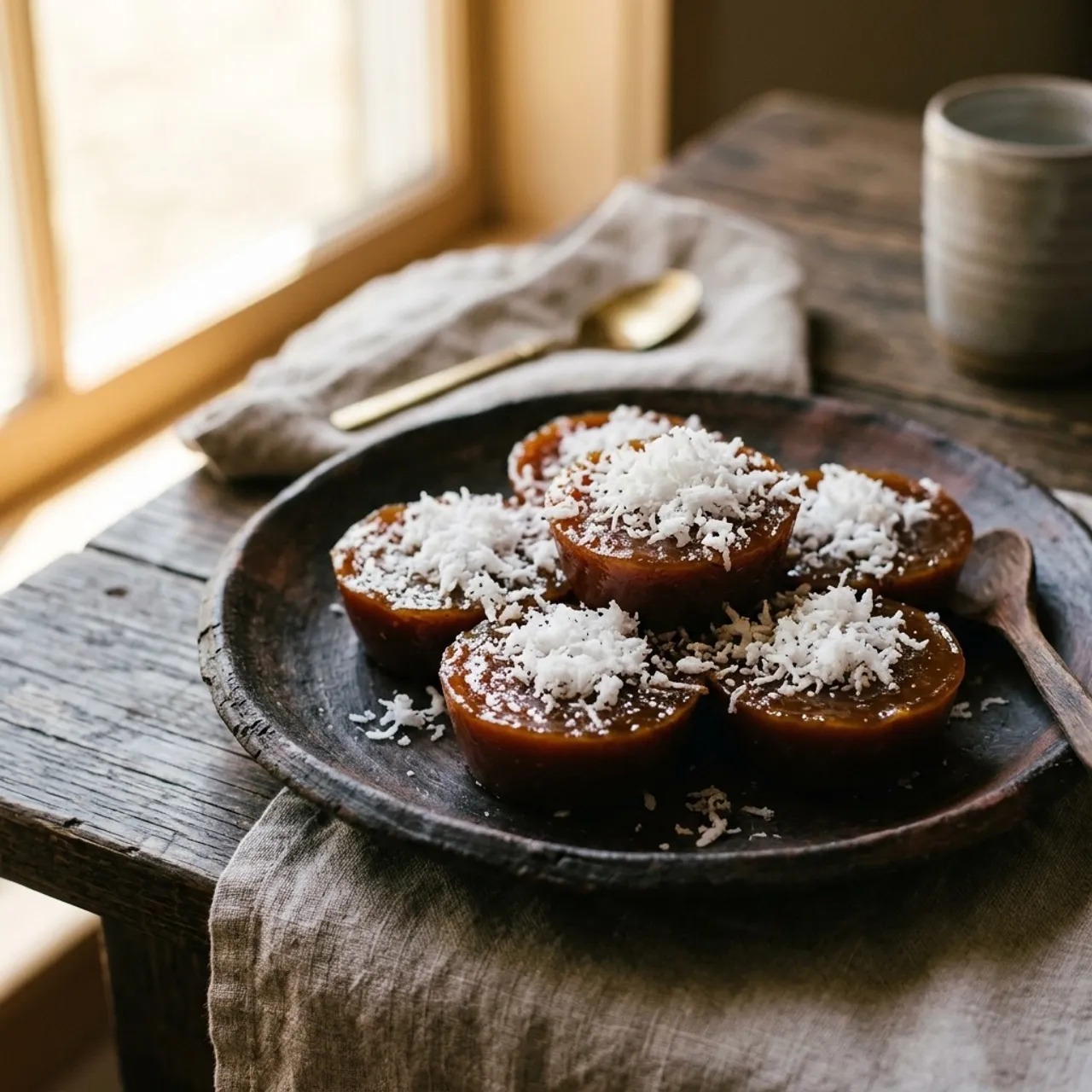
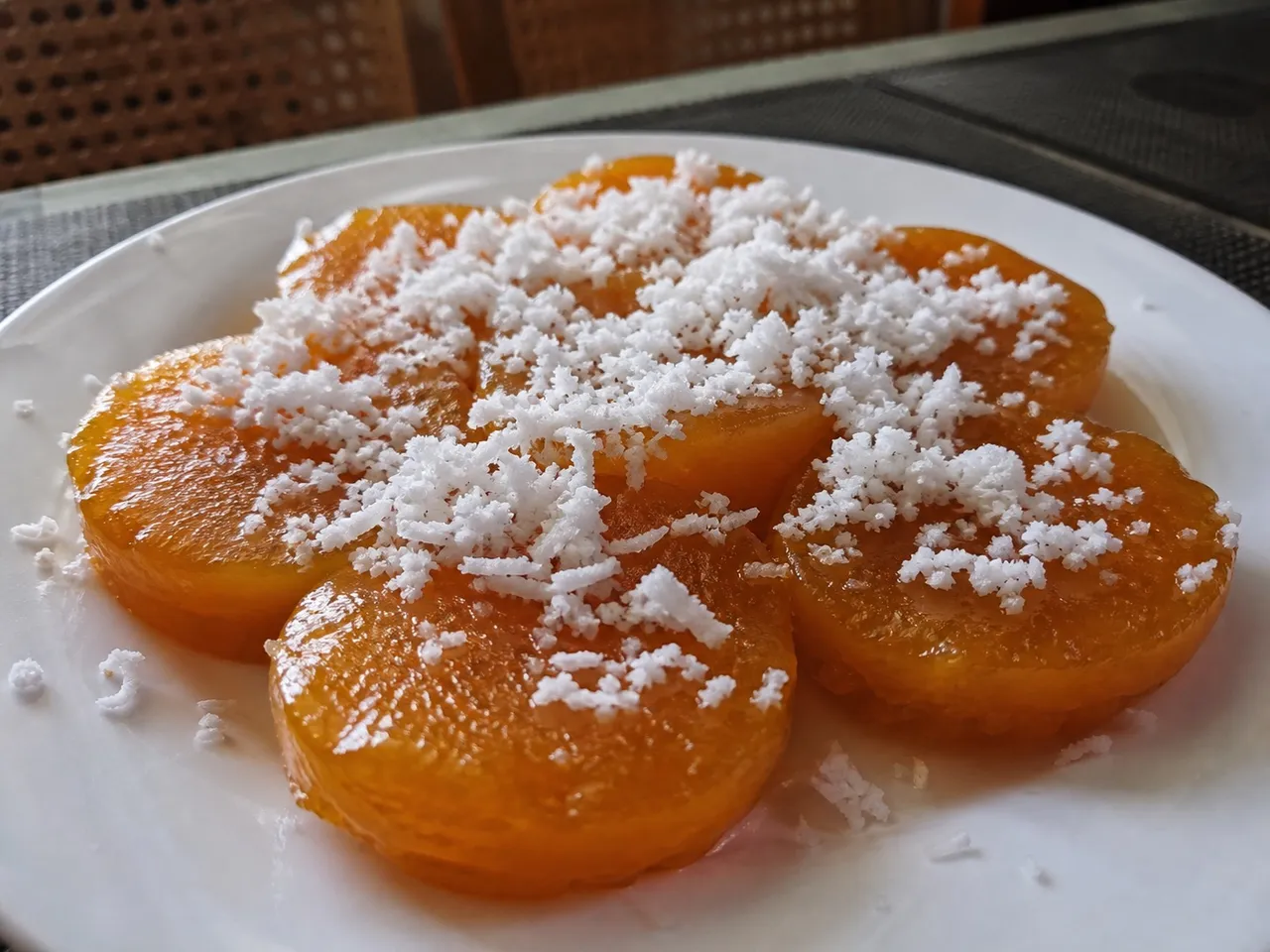
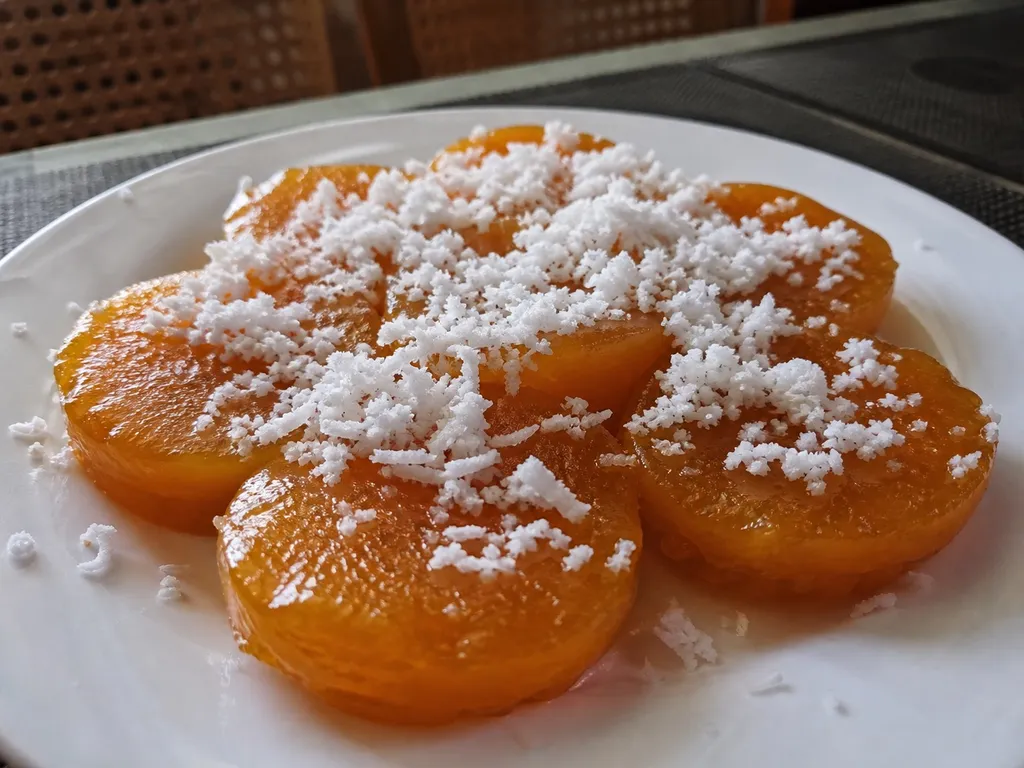
 Kutsinta
Sticky, chewy, brown steamed cakes typically served with grated coconut.
Contains common allergens
In the app, Listahan checks these against your household automatically.
Instructions
6 steps- 1
Prepare the Steamer: Bring the water in your steamer to a rapid boil. Lightly grease small silicone molds or traditional plastic kutsinta molds with cooking oil.
- 2
Mix the Batter: In a large mixing bowl, combine the tapioca flour, all-purpose flour, and brown sugar. Gradually whisk in the water until the sugar is completely dissolved and the batter is smooth.
- 3
Add Lye and Color: Stir in the lye water and annatto extract. The lye water is crucial for the distinctive chewy texture, while the annatto gives it a reddish-brown color. Pass the mixture through a fine-mesh strainer to remove any lumps.
- 4
Fill Molds: Pour the strained batter into the prepared molds, filling them almost to the top.
- 5
Steam: Place the molds in the steamer, cover with a cloth-wrapped lid, and steam on medium-low heat for 30-40 minutes until the top is firm and slightly indented in the center.
- 6
Cool and Serve: Remove from the steamer and let them cool completely; they will firm up as they cool. Remove from the molds and serve topped with freshly grated coconut.
 Images are for illustrative purposes only, may be inaccurate, and do not guarantee the presence or absence of specific ingredients.
 Listahan Family Score™
71/100
Good fit for most families
Score reflects how well this recipe fits a typical busy household. In the app, your Family Score is personalized to your household's allergens, kids, and pantry.
Nutrition
per serving190
Calories
2 g
Protein
45 g
Carbs
0 g
Fat
Estimated per serving. Actual values depend on the brands and portions you use.
Listahan cooking guide
Chef notes & practical guide
Technique notes, ingredient swaps, serve-alongside ideas, storage guidance, and equipment for this recipe.
Cultural context
Kutsinta is a chewy, jiggly steamed rice cake tinted amber-brown, traditionally colored and set with lye water and topped with grated coconut. A merienda classic, its appeal is entirely textural: glossy, springy, and translucent. The lye water gives it both the bounce and the distinctive deep color.
Listahan note
This version balances tapioca and flour for the right chew and uses a measured amount of lye water for the signature jiggle and amber tone, finished simply with coconut.
Technique cues
- Use lye water sparingly; too much makes the cakes bitter and overly firm.
- Strain the batter so the cakes steam smooth and glossy.
- Steam just until set so they stay springy, not rubbery.
Kitchen flow
- Parallel prep
- Mix and strain the batter while the steamer comes up to full steam.
- Make-ahead
- Steam ahead and top with fresh coconut just before serving.
- Leftover move
- Re-steam day-old kutsinta briefly to restore the bounce.
- Cleanup rhythm
- Rinse the molds and steamer while warm before batter sets.
Ingredient brief
Role, handling, and swap guidance for each key ingredient.
Tapioca flour
Base for chew
Purpose: Gives kutsinta its signature springy, translucent texture.
Handling: Whisk with the all-purpose flour and liquid until smooth.
Adaptation: A higher tapioca ratio yields a bouncier cake.
Brown sugar
Sweetener and color
Purpose: Sweetens and contributes to the amber color.
Handling: Dissolve fully in the water before mixing.
Adaptation: Muscovado deepens both flavor and color.
Lye water (lihiya)
Texture and color
Purpose: Creates the jiggly bounce and characteristic deep tone.
Handling: Measure carefully; a small amount goes a long way.
Adaptation: Use the exact amount called for; substitutes change the texture.
Grated coconut
Topping
Purpose: Adds fresh richness against the sweet, springy cake.
Handling: Top each cake just before serving.
Adaptation: Latik (coconut curds) is a richer alternative.
Technique notes
- Measure the lye water precisely; it is the easiest thing to overdo.
- Strain the batter for the cleanest, glossiest cakes.
- Do not over-steam, or the springy texture turns tough.
Ingredient swaps
- Color-from-annatto direction
- Lean on annatto for color and minimize the lye water.
- Richer-topping direction
- Top with latik instead of plain coconut.
- Lower-sugar direction
- Reduce the sugar slightly for a less sweet cake.
Serve alongside
- Grated coconut
- Latik
- Sapin-sapin
- Fresh mango
- Hot tea
- Coffee
- Cold milk
Serving suggestions only — check pairings for your household's allergens.
Storage & reheating
- Store at room temperature for a day or refrigerate up to 3 days.
- Re-steam briefly to soften and restore the bounce.
- Freezing is not recommended, as the texture hardens.
Equipment
- Steamer
- Small molds or cups
- Fine strainer
- Mixing bowl
Make this household-aware
Listahan Pro checks this recipe against your household's allergens, finds pantry-aware swaps, builds the shopping list, and helps you plan the week around it.
Plan it in Listahan
Add Kutsinta to your week, check it against your household's allergens, and build the shopping list automatically.
More Filipino recipes
 Filipino Lens Verified Images are for illustrative purposes only, may be inaccurate, and do not guarantee the presence or absence of specific ingredients.
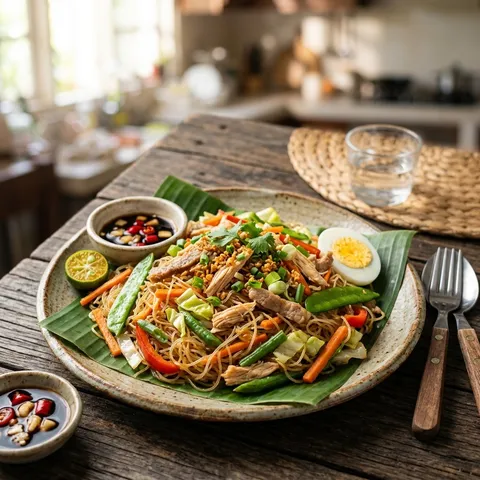
 Pancit Bihon
Thin rice vermicelli stir-fried with chicken, shrimp, and vegetables in a savory soy-citrus sauce, a fixture at every Filipino celebration.
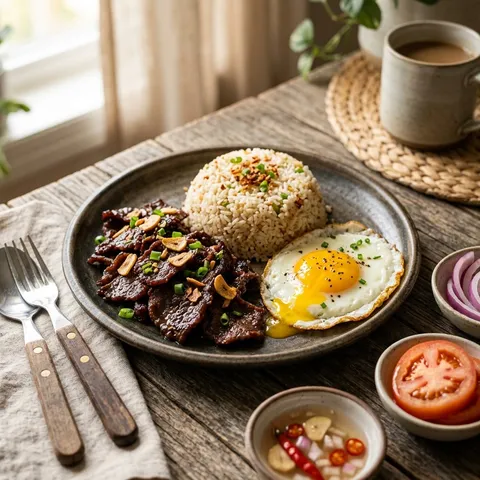 Filipino Lens Verified Images are for illustrative purposes only, may be inaccurate, and do not guarantee the presence or absence of specific ingredients.
 Tapsilog
A hearty breakfast combo of marinated beef (tapa), garlic fried rice (sinangag), and a fried egg (itlog).
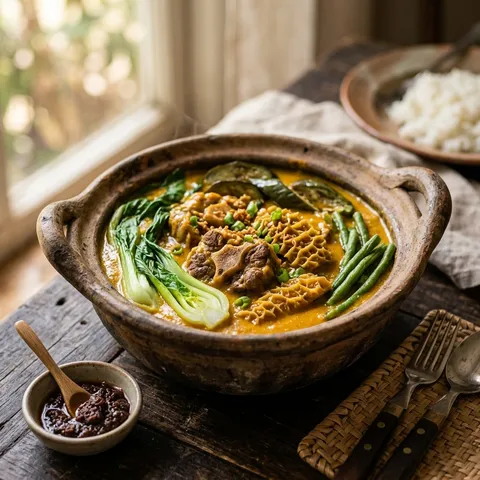 Filipino Lens Verified Images are for illustrative purposes only, may be inaccurate, and do not guarantee the presence or absence of specific ingredients.
 Kare-Kare
A rich peanut stew typically made with oxtail and vegetables, served with shrimp paste.