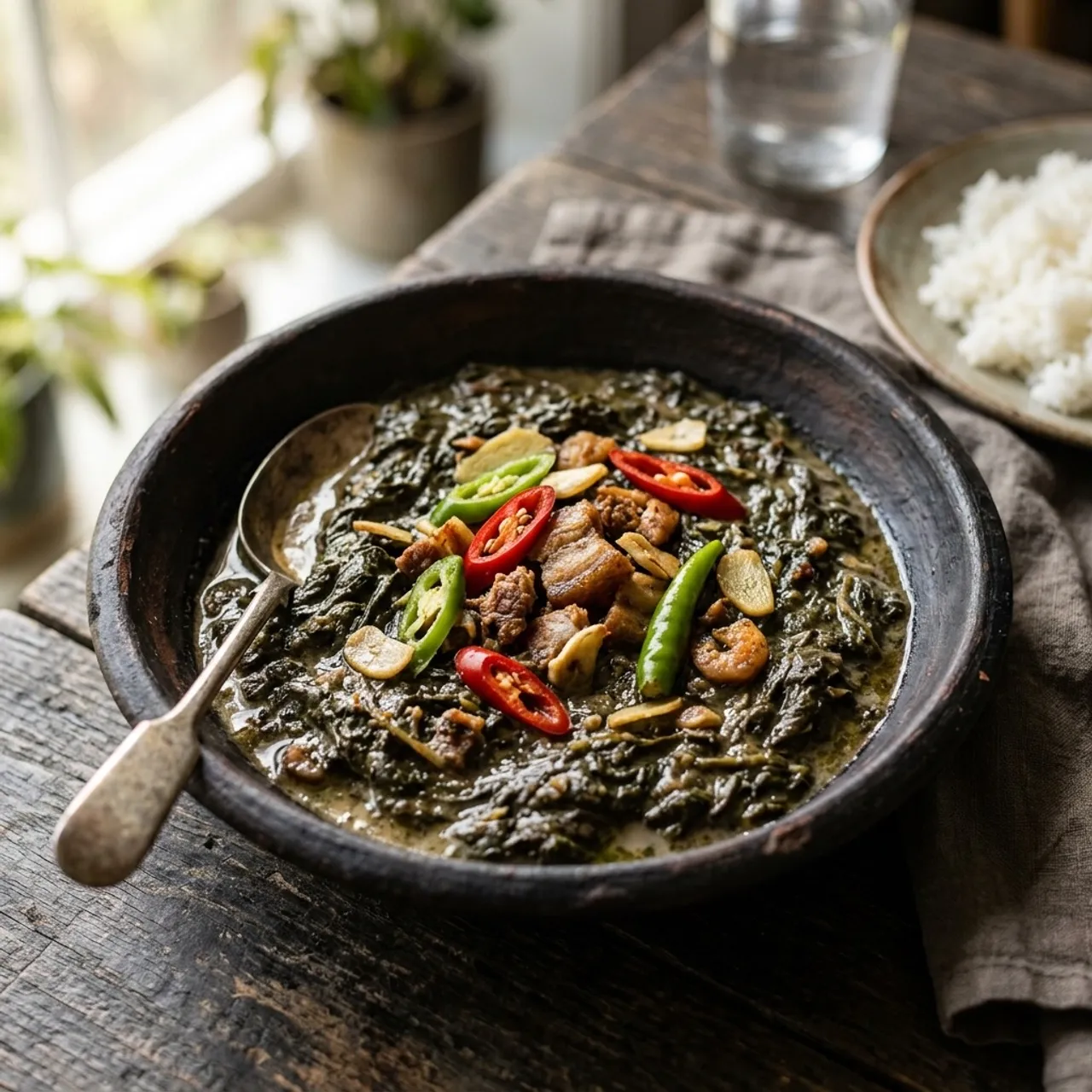
 Filipino Images are for illustrative purposes only, may be inaccurate, and do not guarantee the presence or absence of specific ingredients.
 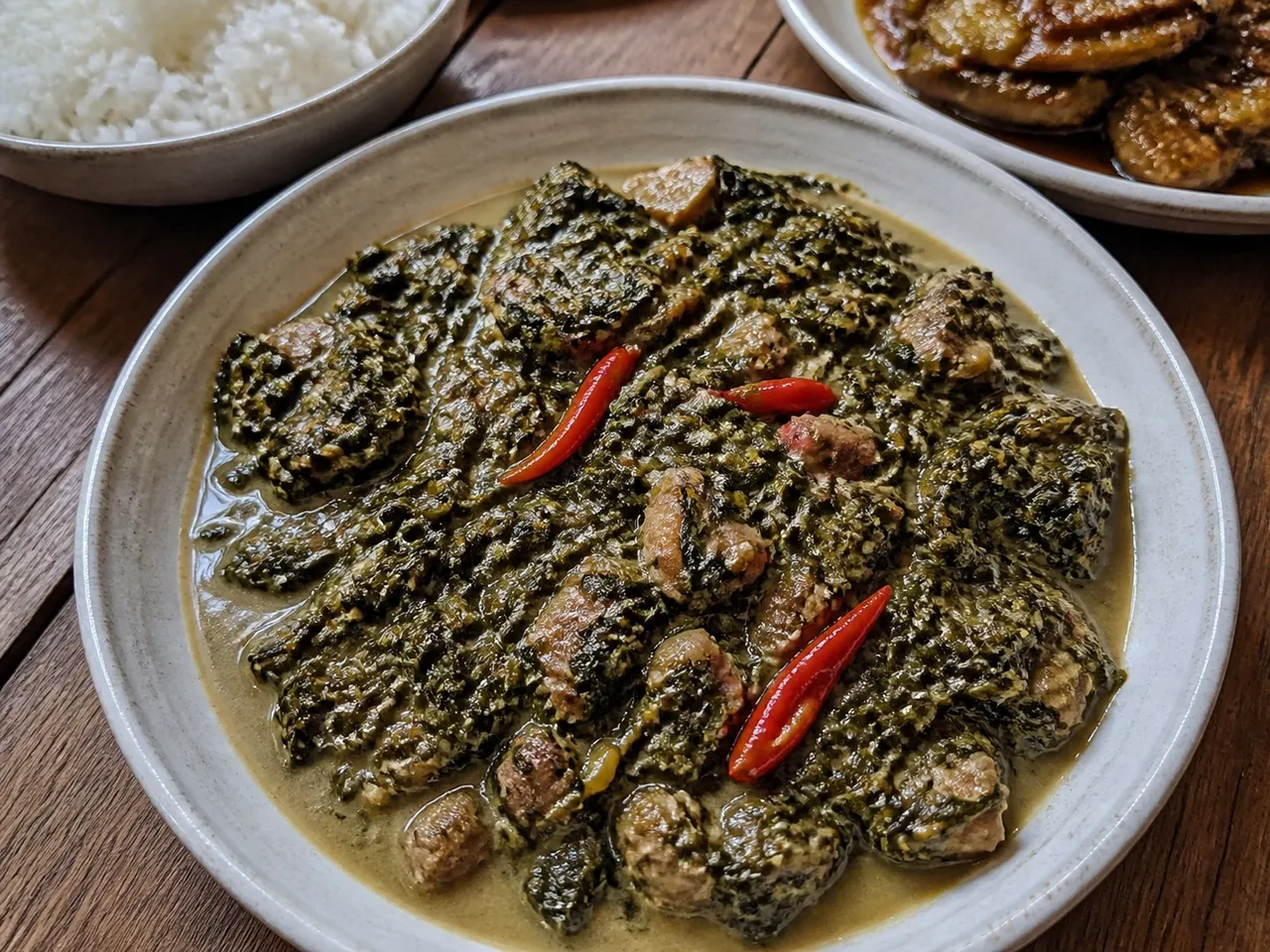 Serving Images are for illustrative purposes only, may be inaccurate, and do not guarantee the presence or absence of specific ingredients.
 Laing
Dried taro leaves cooked in spicy coconut milk with pork or shrimp.
Contains common allergens
In the app, Listahan checks these against your household automatically.
Good to know
- One-pot
Matched from this dish's own ingredients and timing. Browse more: one-pot dinners
Instructions
5 steps- 1
Simmer the Base: In a wide pan or wok, combine the thin coconut milk, pork belly, shrimp paste, ginger, garlic, and onions. Bring to a gentle boil over medium heat and simmer for 15-20 minutes until the pork is tender.
- 2
Add the Leaves: Do NOT wash or crumble the dried taro leaves. Place them gently on top of the simmering liquid. Press them down lightly with a wooden spoon so they absorb the liquid.
- 3
Crucial Rule (Do Not Stir): Lower the heat to a gentle simmer. Cover the pan and let it cook for 20-25 minutes. *Do not stir the mixture* during this time; stirring taro leaves before they are fully cooked releases calcium oxalate crystals, which cause an itchy sensation in the throat.
- 4
Add Coconut Cream and Chilies: Once the leaves are very soft and the liquid has mostly absorbed, pour the thick coconut cream over the top and scatter the chopped chilies.
- 5
Reduce and Finish: Now you may gently stir the mixture. Let it simmer uncovered for another 10-15 minutes until the coconut cream thickens, reduces, and begins to render its oil. Serve hot with rice.
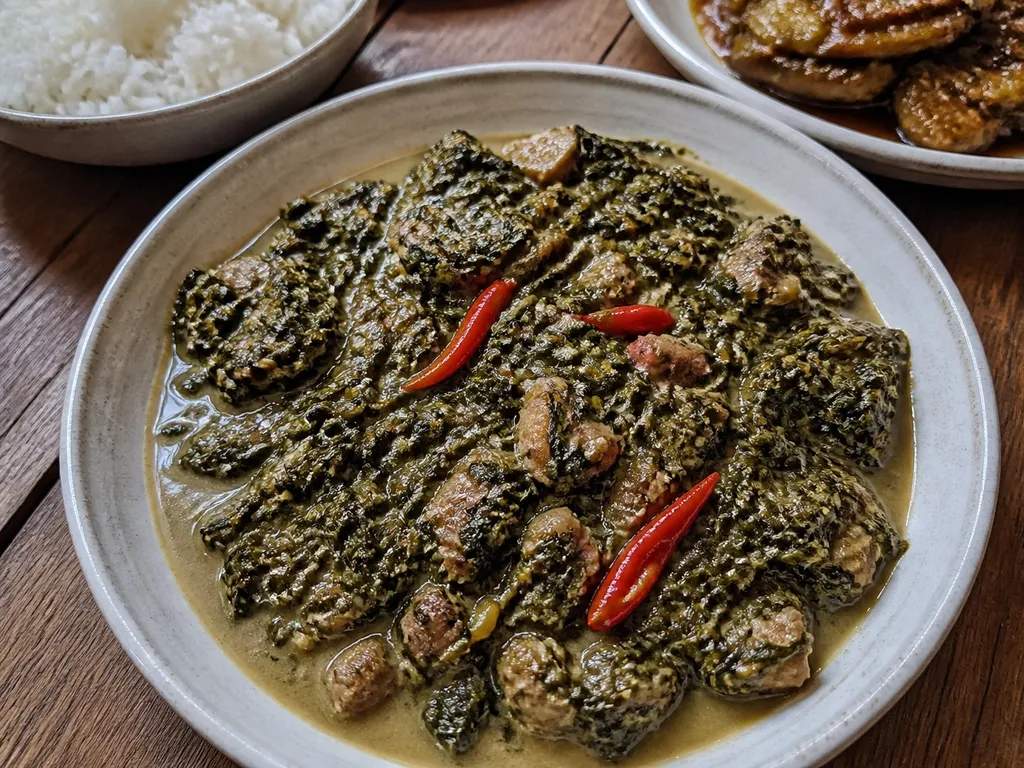 Images are for illustrative purposes only, may be inaccurate, and do not guarantee the presence or absence of specific ingredients.
 Listahan Family Score™
57/100
Works for many families
Score reflects how well this recipe fits a typical busy household. In the app, your Family Score is personalized to your household's allergens, kids, and pantry.
Nutrition
per serving2880
Calories
93 g
Protein
78 g
Carbs
263 g
Fat
Estimated per serving. Actual values depend on the brands and portions you use.
Listahan cooking guide
Chef notes & practical guide
Technique notes, ingredient swaps, serve-alongside ideas, storage guidance, and equipment for this recipe.
Cultural context
Laing is a Bicolano dish of dried taro leaves slow-simmered in coconut milk with chili and shrimp paste until silky and rich. The leaves must be dried and the dish left undisturbed early on, since stirring taro leaves too soon can make them itchy. It is intensely savory, creamy, and as spicy as the cook dares.
Listahan note
This version simmers the dried taro leaves patiently in coconut milk without early stirring, layering in shrimp paste and chili for the deep, creamy heat Bicol is known for.
Technique cues
- Do not stir the taro leaves early; let them cook in the coconut milk first.
- Use dried, not fresh, taro leaves to avoid the itchy, scratchy texture.
- Reduce until the coconut oil just begins to separate for the richest result.
Kitchen flow
- Parallel prep
- Render the pork and bloom the shrimp paste while measuring coconut milk.
- Make-ahead
- Laing deepens overnight; make it ahead and reheat gently.
- Leftover move
- Spoon leftover laing over rice or fold into a rice bowl with egg.
- Cleanup rhythm
- One pan; wipe the coconut residue while warm.
Ingredient brief
Role, handling, and swap guidance for each key ingredient.
Dried taro leaves
Main vegetable
Purpose: They soak up the coconut milk and turn silky and savory.
Handling: Use fully dried leaves and resist stirring early.
Adaptation: Dried collard or spinach can approximate, though the flavor differs.
Coconut milk and cream
Base
Purpose: Provide the rich, creamy body that defines laing.
Handling: Simmer in thin milk first, then finish with thick cream.
Adaptation: Full-fat canned coconut milk works throughout.
Shrimp paste (bagoong)
Salt and umami
Purpose: Adds the funky, salty backbone.
Handling: Saute briefly to bloom before adding liquid.
Adaptation: Use fish sauce or salt for a shellfish-free version.
Pork belly
Richness
Purpose: Renders fat that deepens the coconut sauce.
Handling: Cut into small strips and render before building the dish.
Adaptation: Omit for a vegetarian-leaning laing using oil.
Technique notes
- Patience is the rule; let the leaves simmer undisturbed before stirring.
- Always use dried taro leaves to avoid the itch from fresh ones.
- Cook until the oil separates for the deepest, most authentic flavor.
Ingredient swaps
- Shellfish-free direction
- Season with fish sauce or salt instead of bagoong.
- Vegetarian direction
- Skip the pork, use oil, and season with salt or miso.
- Milder direction
- Reduce the bird's eye chilies for a gentler heat.
Serve alongside
- Steamed white rice
- Grilled fish
- Fried egg
- Bicol Express
- Cold water
- Iced tea
- Calamansi juice
Serving suggestions only — check pairings for your household's allergens.
Storage & reheating
- Refrigerate up to 3 days; the flavor improves overnight.
- Reheat gently over low heat so the coconut sauce stays smooth.
- Freeze up to 2 months; stir well after thawing.
Equipment
- Wide pan or pot
- Wooden spoon
- Cutting board
- Rice cooker or pot
Make this household-aware
Listahan Pro checks this recipe against your household's allergens, finds pantry-aware swaps, builds the shopping list, and helps you plan the week around it.
Plan it in Listahan
Add Laing to your week, check it against your household's allergens, and build the shopping list automatically.
More Filipino recipes
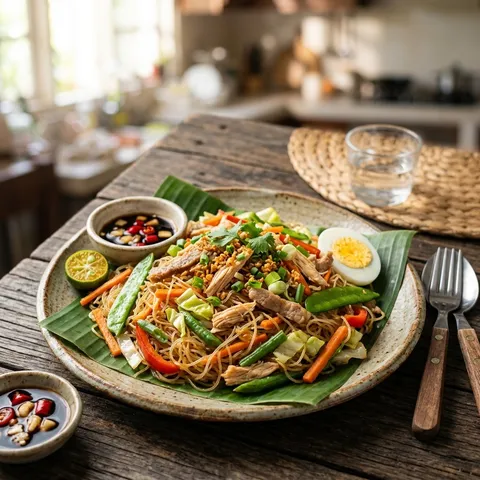 Filipino Lens Verified Images are for illustrative purposes only, may be inaccurate, and do not guarantee the presence or absence of specific ingredients.
 Pancit Bihon
Thin rice vermicelli stir-fried with chicken, shrimp, and vegetables in a savory soy-citrus sauce, a fixture at every Filipino celebration.
 Filipino Lens Verified Images are for illustrative purposes only, may be inaccurate, and do not guarantee the presence or absence of specific ingredients.
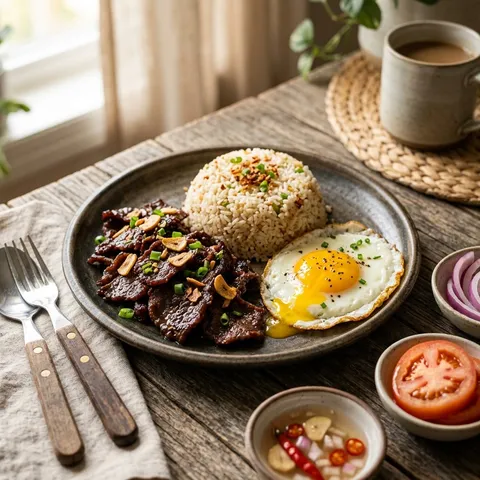
 Tapsilog
A hearty breakfast combo of marinated beef (tapa), garlic fried rice (sinangag), and a fried egg (itlog).
 Filipino Lens Verified Images are for illustrative purposes only, may be inaccurate, and do not guarantee the presence or absence of specific ingredients.
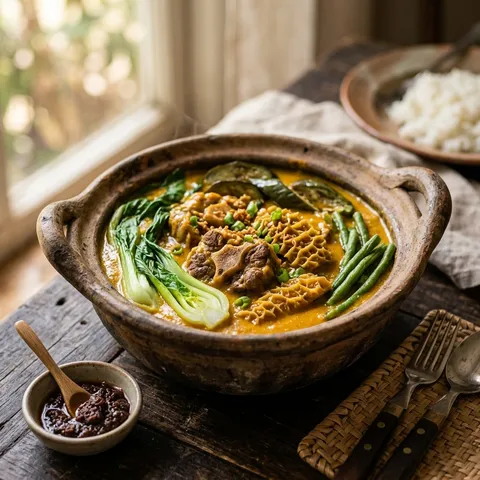
 Kare-Kare
A rich peanut stew typically made with oxtail and vegetables, served with shrimp paste.