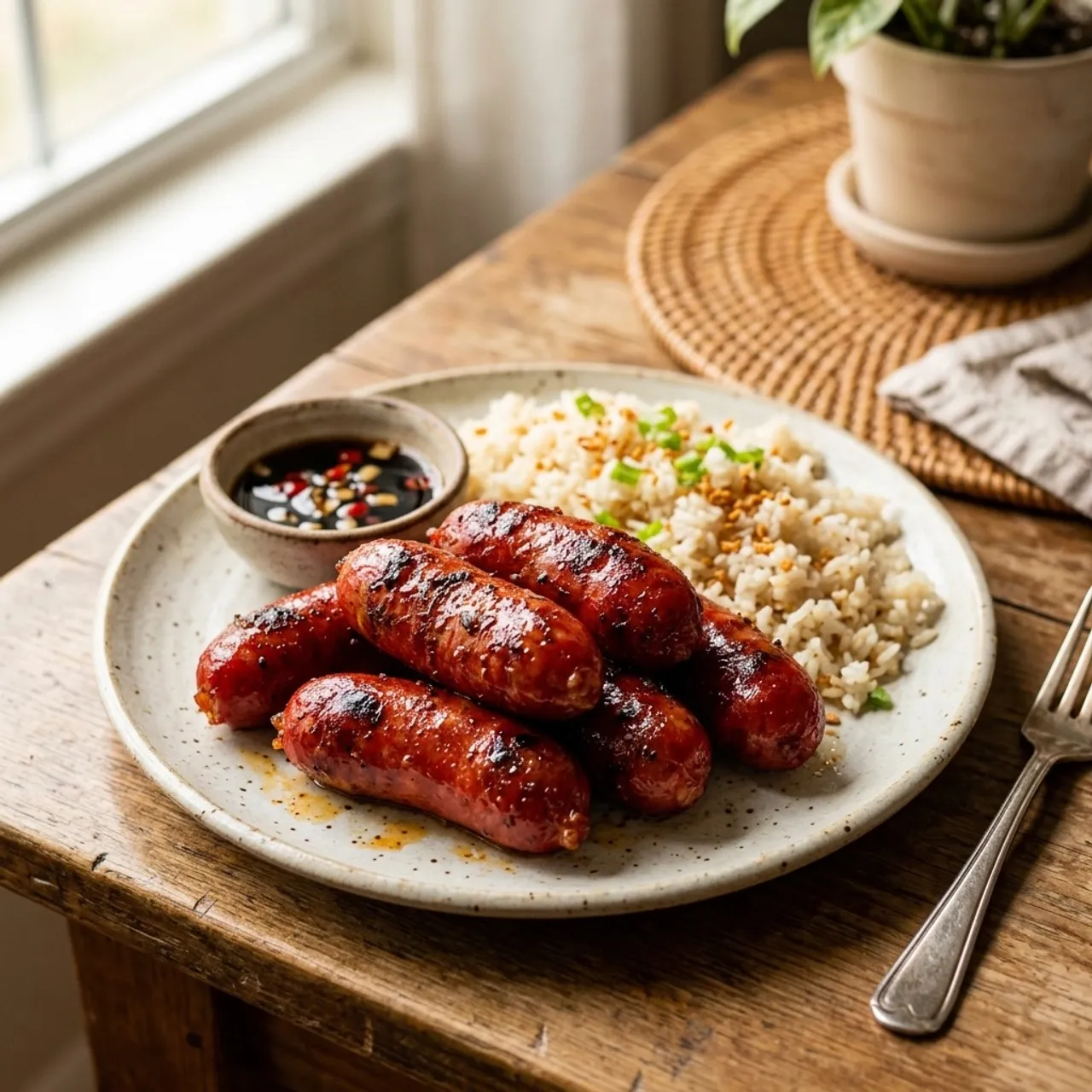
 Filipino Images are for illustrative purposes only, may be inaccurate, and do not guarantee the presence or absence of specific ingredients.
 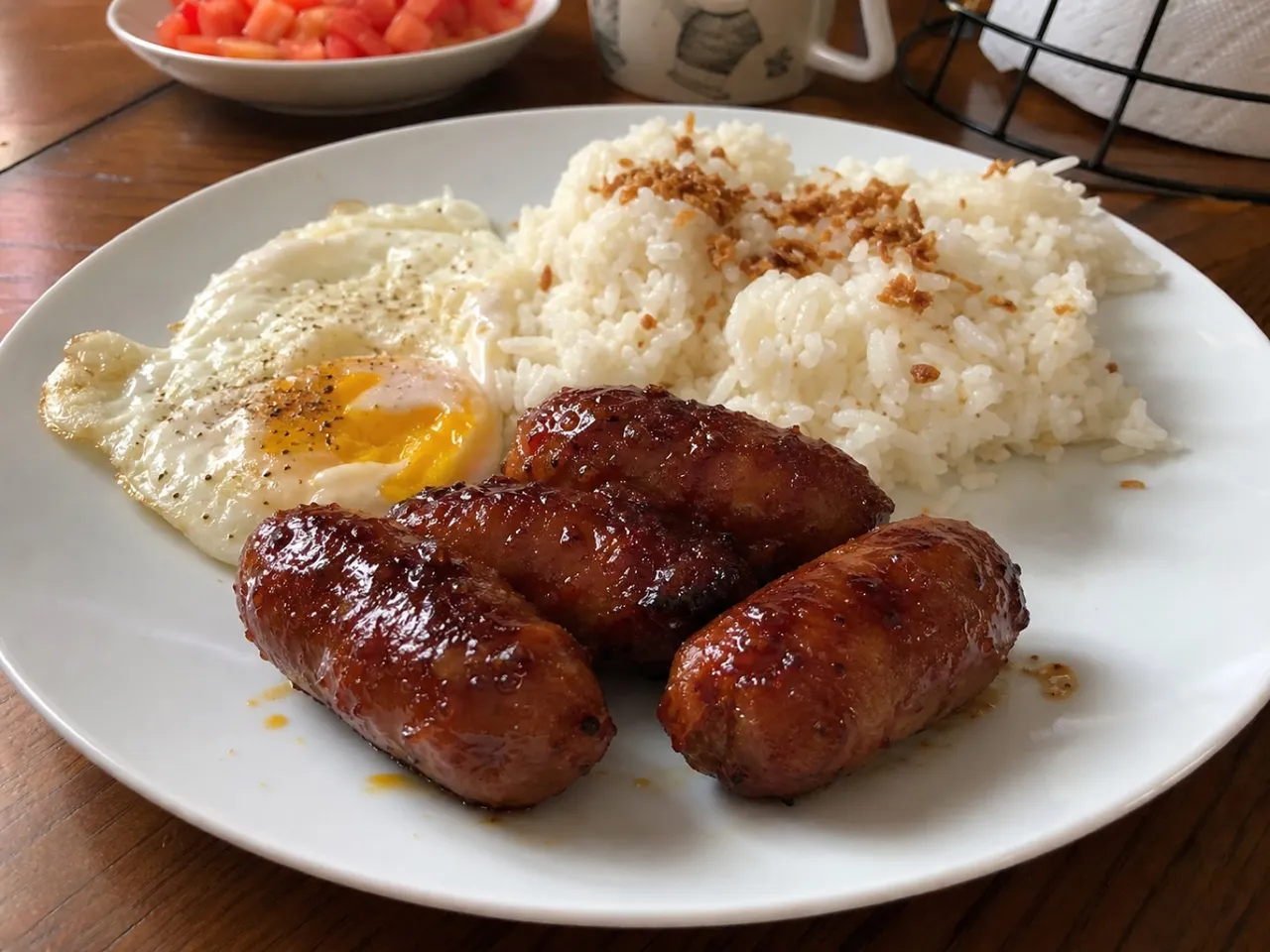 Serving Images are for illustrative purposes only, may be inaccurate, and do not guarantee the presence or absence of specific ingredients.
 Longganisa
Sweet and garlicky Filipino pork sausages, typically served with garlic rice and egg.
Contains common allergens
In the app, Listahan checks these against your household automatically.
Instructions
5 steps- 1
Mix the Filling: In a large bowl, combine the ground pork, minced garlic, brown sugar, soy sauce, salt, pepper, and vinegar. Mix thoroughly by hand until the mixture becomes sticky and well-incorporated. Cover and refrigerate for at least 4 hours (or overnight) to let the flavors meld.
- 2
Stuff the Casings: Carefully thread the casing onto a sausage stuffer or funnel. Pipe the pork mixture into the casing, being careful not to overstuff. Twist the casing every 3-4 inches to form individual links. Tie the ends securely.
- 3
Simmer: To cook, place the longganisa links in a cold skillet and add just enough water to reach halfway up the sausages (about 1/2 cup). Bring to a boil over medium heat, then simmer uncovered until the water completely evaporates (about 15-20 minutes).
- 4
Fry in Own Fat: Once the water is gone, the sausages will begin to release their own fat. Prick the casings lightly with a toothpick to let excess steam out. Let them pan-fry in their own rendered fat, turning frequently, until the sugars caramelize and the exterior is dark, sticky, and slightly charred.
- 5
Serve: Serve piping hot with garlic fried rice, a sunny-side-up egg, and vinegar for dipping.
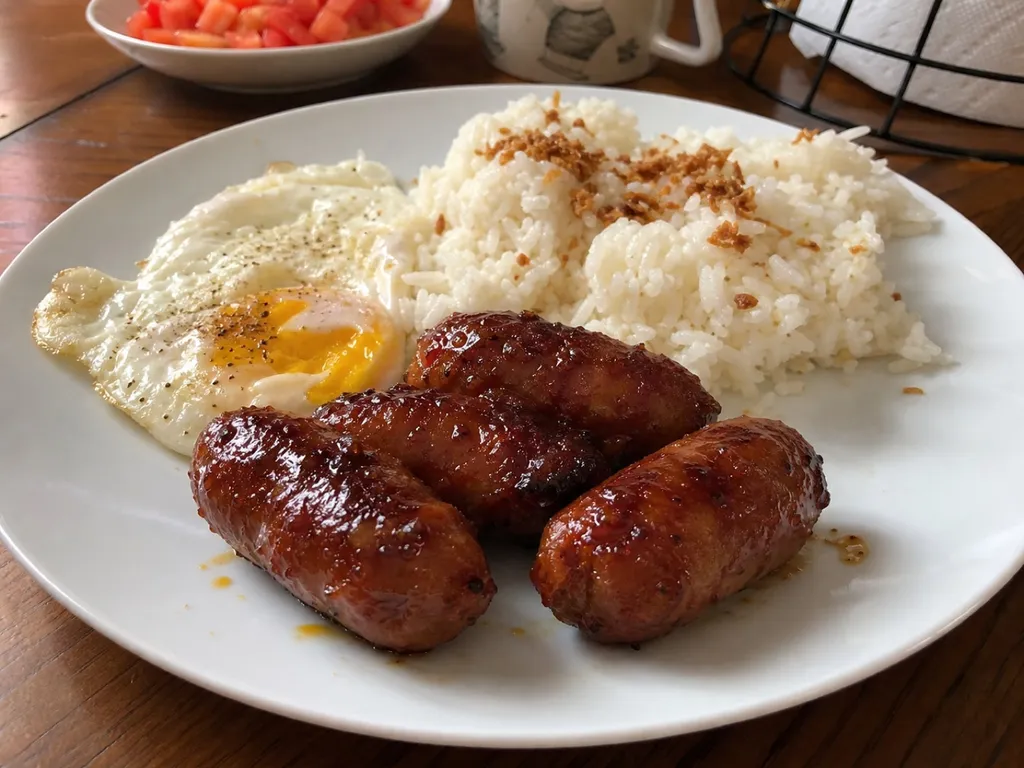 Images are for illustrative purposes only, may be inaccurate, and do not guarantee the presence or absence of specific ingredients.
 Listahan Family Score™
68/100
Works for many families
Score reflects how well this recipe fits a typical busy household. In the app, your Family Score is personalized to your household's allergens, kids, and pantry.
Nutrition
per serving570
Calories
50 g
Protein
33 g
Carbs
25 g
Fat
Estimated per serving. Actual values depend on the brands and portions you use.
Listahan cooking guide
Chef notes & practical guide
Technique notes, ingredient swaps, serve-alongside ideas, storage guidance, and equipment for this recipe.
Cultural context
Longganisa is the Filipino breakfast sausage, and it changes dramatically by region: garlicky and sour in Vigan, sweet and red in Pampanga, fat and short in Lucban. Most home versions skew sweet-garlicky, eaten with garlic rice and a fried egg as longsilog. It is a sausage tradition shaped by Spanish chorizo and remade in countless local styles.
Listahan note
This version balances sweet and garlicky in the popular hamonado style, with enough vinegar to keep it from cloying and a good fat ratio for juiciness.
Technique cues
- Keep the pork fat content high so the sausage stays juicy, not dry.
- Cook with a splash of water first, then let it fry in its own rendered fat.
- Let the sugar caramelize lightly at the end for the classic sticky edges.
Kitchen flow
- Parallel prep
- Mix and shape or case the sausages ahead; cook only what you need each morning.
- Make-ahead
- The mixture benefits from an overnight rest; shape and chill before cooking.
- Leftover move
- Slice leftover longganisa into fried rice for the next day's longsilog.
- Cleanup rhythm
- One pan; the rendered fat wipes away easily while warm.
Ingredient brief
Role, handling, and swap guidance for each key ingredient.
Ground pork
Main protein
Purpose: The fat-to-lean ratio determines juiciness and that signature sausage bite.
Handling: Use 20 to 30 percent fat and mix the seasonings in thoroughly.
Adaptation: Add a little extra fat if using leaner pork.
Garlic
Signature aromatic
Purpose: Garlic is the backbone of most longganisa styles.
Handling: Mince very finely so it distributes evenly through the meat.
Adaptation: Use more or less to match a Vigan or sweeter style.
Brown sugar
Sweetener
Purpose: Gives the hamonado style its sweet, caramelizing character.
Handling: Mix in well; it browns as the sausage finishes cooking.
Adaptation: Reduce for a more savory, Vigan-leaning sausage.
Vinegar
Acid and preservation note
Purpose: Balances the sweetness and adds the traditional tang.
Handling: Mix into the meat; it also helps the texture set.
Adaptation: Cane vinegar is traditional; white vinegar works.
Technique notes
- Start with a little water in the pan, then let the sausages fry in their own fat.
- Do not rush the caramelization; the sticky sugared edges are the best part.
- Let the seasoned meat rest before cooking so the flavors meld.
Ingredient swaps
- Gluten-free direction
- Use tamari in place of soy sauce and skinless patties instead of cased links.
- Skinless direction
- Shape into patties or logs without casings for an easier home version.
- Savory direction
- Cut the sugar and boost garlic and vinegar for a Vigan-style sausage.
Serve alongside
- Garlic fried rice
- Fried egg
- Sliced tomatoes
- Spiced vinegar
- Hot coffee
- Calamansi juice
- Cold water
Serving suggestions only — check pairings for your household's allergens.
Storage & reheating
- Refrigerate cooked sausage up to 3 days; raw mixture keeps 2 days.
- Reheat in a pan to recrisp the caramelized edges.
- Freeze shaped raw sausages up to 2 months and thaw before cooking.
Equipment
- Mixing bowl
- Skillet
- Sausage casings or shaping wrap
- Spatula
Make this household-aware
Listahan Pro checks this recipe against your household's allergens, finds pantry-aware swaps, builds the shopping list, and helps you plan the week around it.
Plan it in Listahan
Add Longganisa to your week, check it against your household's allergens, and build the shopping list automatically.
More Filipino recipes
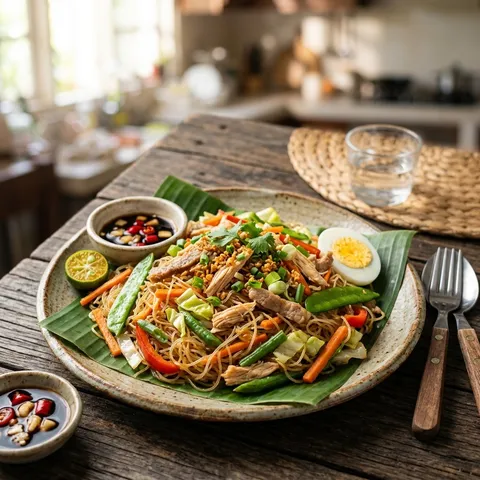 Filipino Lens Verified Images are for illustrative purposes only, may be inaccurate, and do not guarantee the presence or absence of specific ingredients.
 Pancit Bihon
Thin rice vermicelli stir-fried with chicken, shrimp, and vegetables in a savory soy-citrus sauce, a fixture at every Filipino celebration.
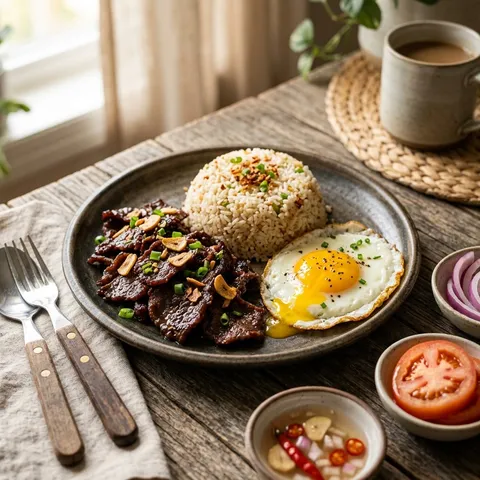 Filipino Lens Verified Images are for illustrative purposes only, may be inaccurate, and do not guarantee the presence or absence of specific ingredients.
 Tapsilog
A hearty breakfast combo of marinated beef (tapa), garlic fried rice (sinangag), and a fried egg (itlog).
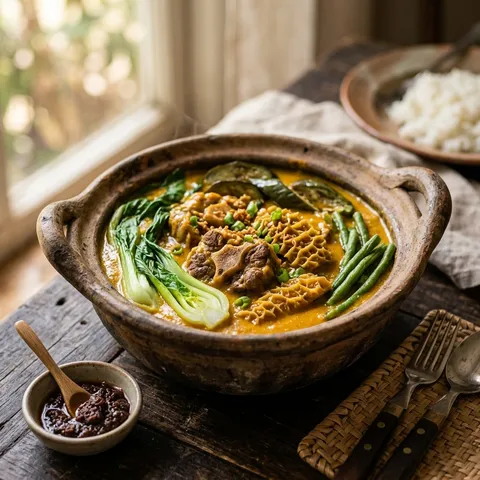 Filipino Lens Verified Images are for illustrative purposes only, may be inaccurate, and do not guarantee the presence or absence of specific ingredients.
 Kare-Kare
A rich peanut stew typically made with oxtail and vegetables, served with shrimp paste.