 Filipino Images are for illustrative purposes only, may be inaccurate, and do not guarantee the presence or absence of specific ingredients.
  Serving Images are for illustrative purposes only, may be inaccurate, and do not guarantee the presence or absence of specific ingredients.
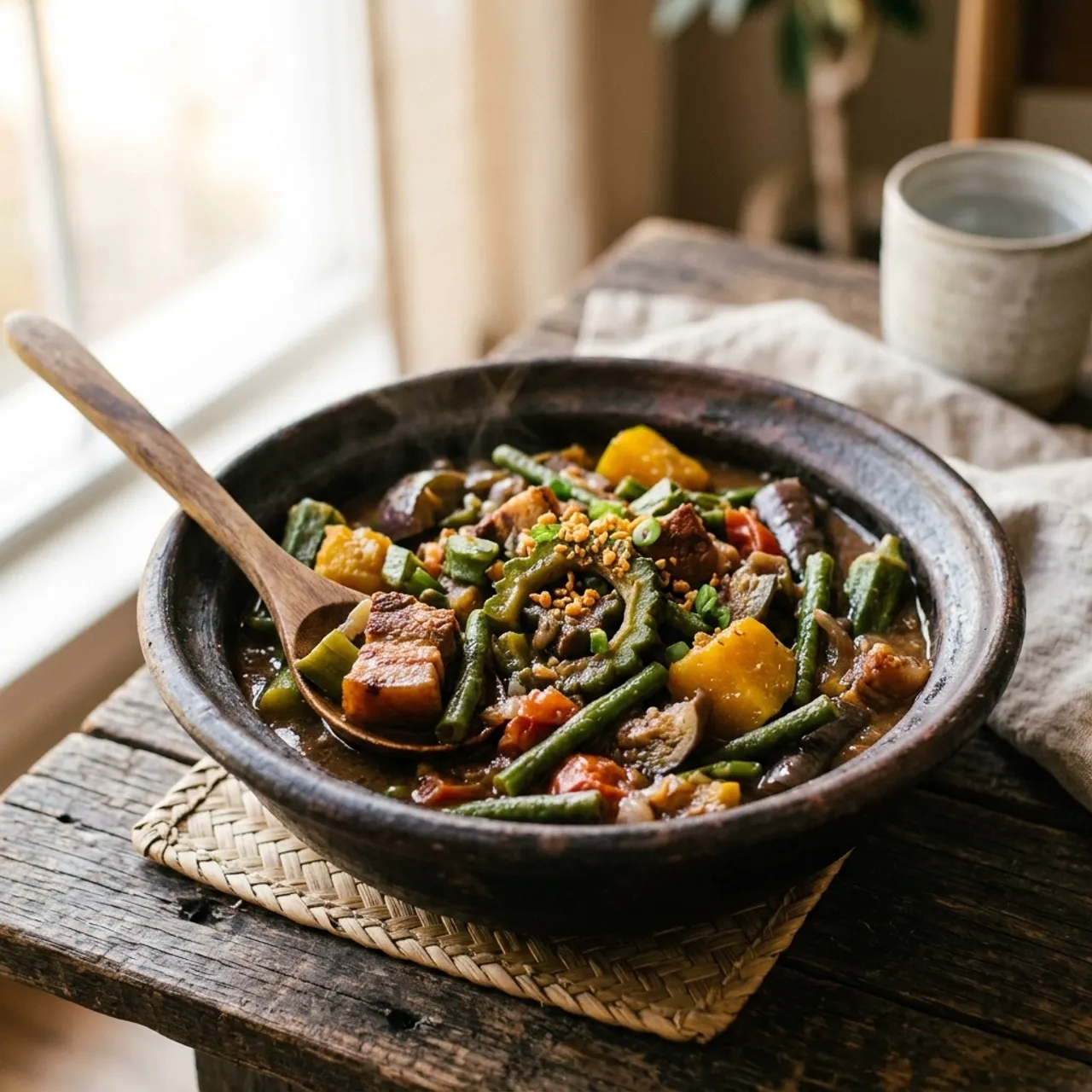
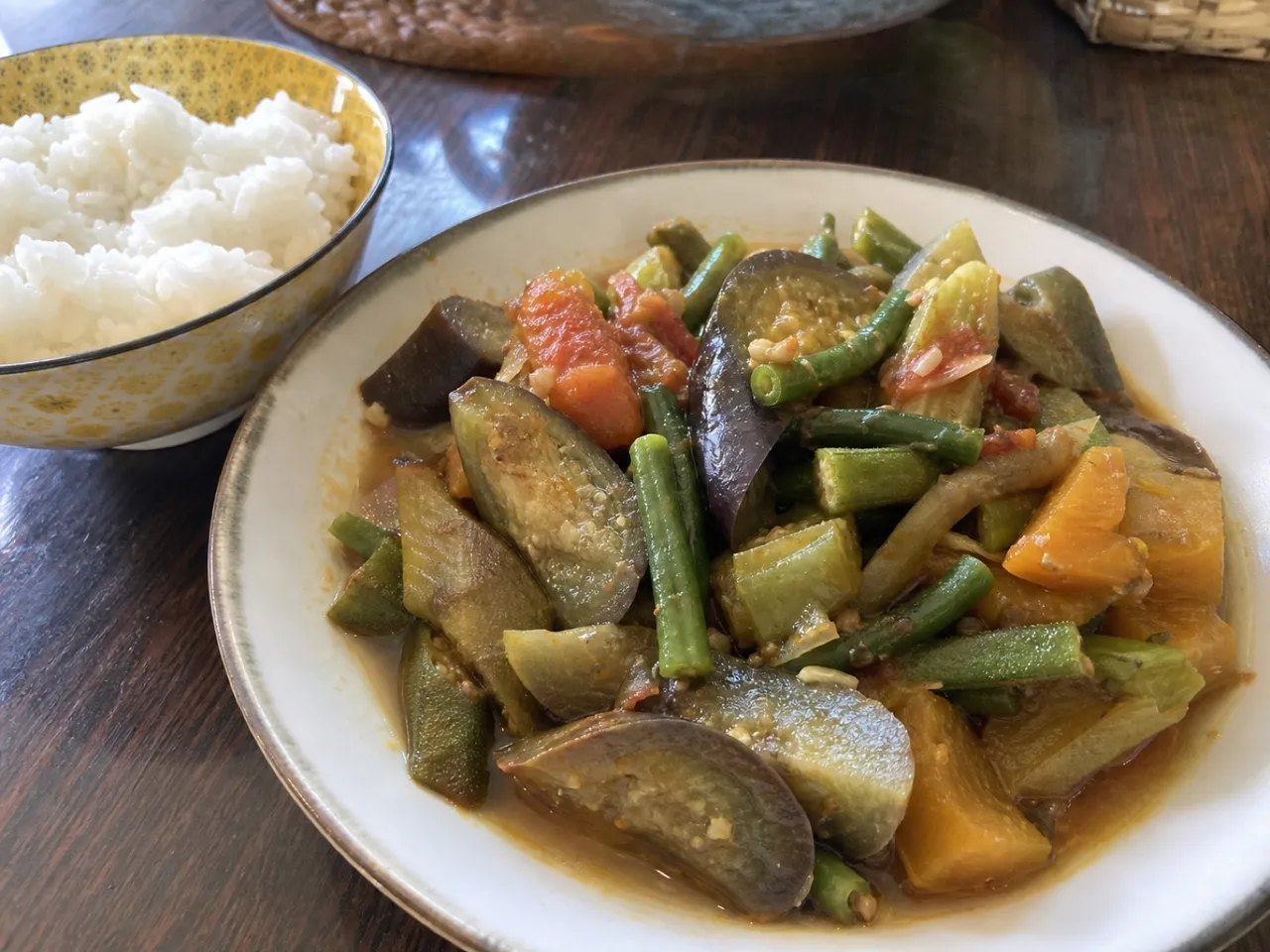
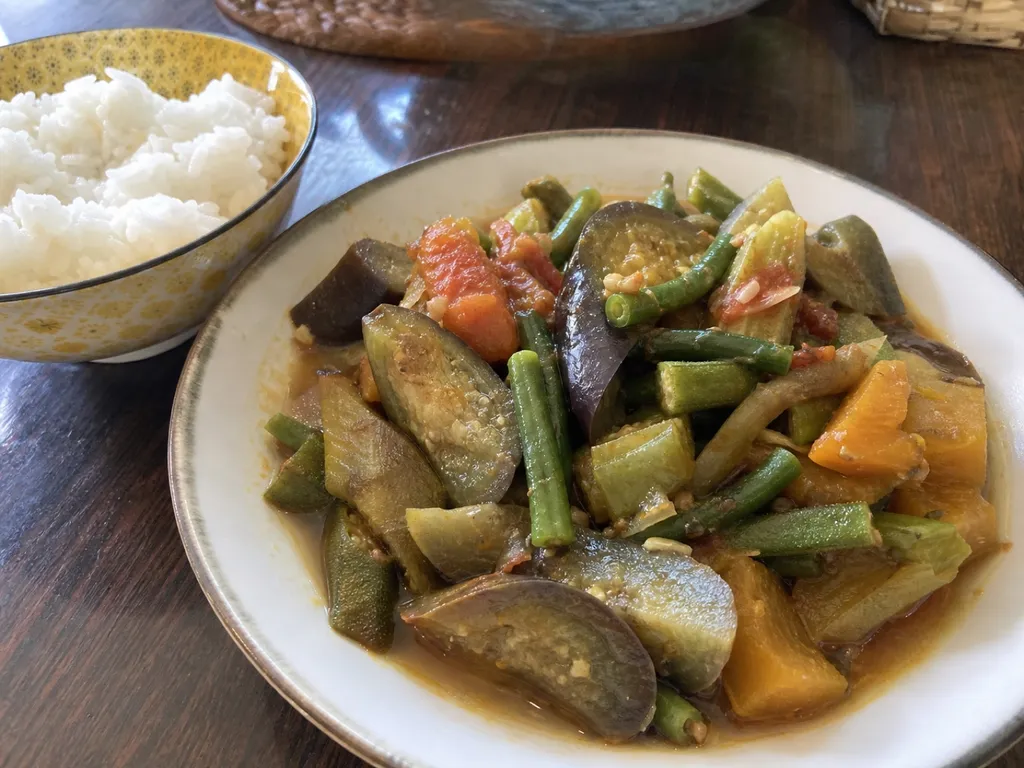
 Pinakbet
An indigenous northern dish of mixed vegetables steamed in fish or shrimp sauce.
Contains common allergens
In the app, Listahan checks these against your household automatically.
Instructions
5 steps- 1
Render the Pork: In a wide pan, cook the pork belly strips over medium heat until they release their fat and turn golden and crispy. Push the pork to one side.
- 2
Sauté Aromatics: In the rendered pork fat, sauté the onions and diced tomatoes for about 5 minutes until the tomatoes break down and become mushy. Stir the pork back in.
- 3
Add Shrimp Paste: Add the shrimp paste and cook for 2 minutes to release its umami flavor. Pour in 1 cup of water and bring to a simmer.
- 4
Layer the Vegetables: Add the hardest vegetables first: the squash (kalabasa) and string beans. Cover and simmer for 5 minutes. Next, add the eggplant and bitter melon (do not stir the bitter melon to prevent it from becoming excessively bitter).
- 5
Steam to Finish: Cover the pan again and let the vegetables steam in the flavorful liquid for another 5-7 minutes. The vegetables should be tender but retain their shape and a slight bite. Serve hot.
 Images are for illustrative purposes only, may be inaccurate, and do not guarantee the presence or absence of specific ingredients.
 Listahan Family Score™
61/100
Works for many families
Score reflects how well this recipe fits a typical busy household. In the app, your Family Score is personalized to your household's allergens, kids, and pantry.
Nutrition
per serving750
Calories
74 g
Protein
42 g
Carbs
33 g
Fat
Estimated per serving. Actual values depend on the brands and portions you use.
Listahan cooking guide
Chef notes & practical guide
Technique notes, ingredient swaps, serve-alongside ideas, storage guidance, and equipment for this recipe.
Cultural context
Pinakbet is an Ilocano vegetable stew built around bitter melon, eggplant, squash, and string beans, all bound by salty shrimp paste. The name comes from a word meaning shrunken or shriveled, describing how the vegetables cook down. It is proof that vegetable cooking in the Philippines can be bold and deeply savory.
Listahan note
This version layers the vegetables by cook time and seasons with bagoong so each keeps some bite, avoiding the mushy stew that overcooking produces.
Technique cues
- Add vegetables in order of toughness so nothing turns to mush.
- Bloom the shrimp paste in fat first for a deeper, less raw flavor.
- Avoid over-stirring so the vegetables hold their shape.
Kitchen flow
- Parallel prep
- Cut all vegetables and group them by cook time before you start.
- Make-ahead
- Best made fresh; the bloomed shrimp paste base can be prepped ahead.
- Leftover move
- Fold leftovers into fried rice or serve over fresh rice with grilled fish.
- Cleanup rhythm
- One pan; wipe the shrimp paste residue while warm.
Ingredient brief
Role, handling, and swap guidance for each key ingredient.
Pork belly
Flavor base
Purpose: Renders fat that carries the shrimp paste and seasons the vegetables.
Handling: Cut into strips and crisp before adding vegetables.
Adaptation: Omit for a vegetarian version and use a little oil.
Shrimp paste (bagoong)
Salt and umami
Purpose: The defining seasoning that ties the vegetables together.
Handling: Saute briefly to mellow before adding the vegetables.
Adaptation: Use miso or salt for a shellfish-free version.
Bitter melon (ampalaya)
Signature vegetable
Purpose: Its bitterness is the backbone of authentic pinakbet.
Handling: Seed and slice; salt briefly to temper the bitterness if preferred.
Adaptation: Reduce the amount for a milder dish, but do not omit it entirely.
Eggplant and squash
Vegetable body
Purpose: Add silkiness and gentle sweetness to balance the bitter melon.
Handling: Cut into even pieces; add squash earlier as it takes longer.
Adaptation: Okra and string beans round out the mix.
Technique notes
- Layer vegetables by toughness and resist stirring so they steam rather than break down.
- Bloom the bagoong well; raw shrimp paste tastes flat and sharp.
- Stop cooking while the vegetables still have a little bite.
Ingredient swaps
- Vegetarian direction
- Skip the pork, use oil, and season with miso instead of shrimp paste.
- Shellfish-free direction
- Replace bagoong with salt or fish sauce and label clearly.
- Milder direction
- Salt and rinse the bitter melon to soften its edge.
Serve alongside
- Steamed white rice
- Grilled or fried fish
- Fried egg
- Spiced vinegar
- Cold water
- Iced tea
- Calamansi juice
Serving suggestions only — check pairings for your household's allergens.
Storage & reheating
- Refrigerate up to 3 days in a sealed container.
- Reheat gently in a pan; the vegetables soften further on reheating.
- Freezing is not recommended, as the vegetables lose texture.
Equipment
- Wide pan or wok
- Wooden spoon
- Cutting board
- Lid for steaming
Make this household-aware
Listahan Pro checks this recipe against your household's allergens, finds pantry-aware swaps, builds the shopping list, and helps you plan the week around it.
Plan it in Listahan
Add Pinakbet to your week, check it against your household's allergens, and build the shopping list automatically.
More Filipino recipes
 Filipino Lens Verified Images are for illustrative purposes only, may be inaccurate, and do not guarantee the presence or absence of specific ingredients.
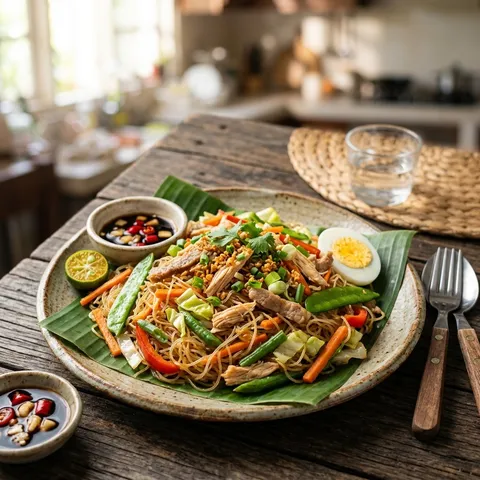
 Pancit Bihon
Thin rice vermicelli stir-fried with chicken, shrimp, and vegetables in a savory soy-citrus sauce, a fixture at every Filipino celebration.
 Filipino Lens Verified Images are for illustrative purposes only, may be inaccurate, and do not guarantee the presence or absence of specific ingredients.
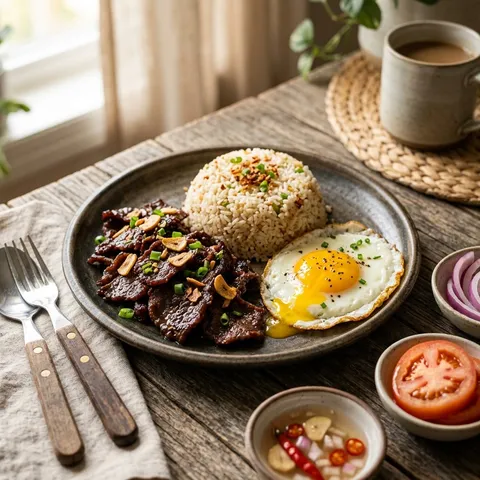
 Tapsilog
A hearty breakfast combo of marinated beef (tapa), garlic fried rice (sinangag), and a fried egg (itlog).
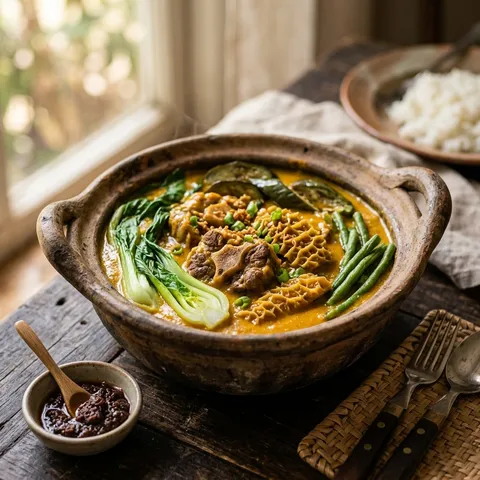 Filipino Lens Verified Images are for illustrative purposes only, may be inaccurate, and do not guarantee the presence or absence of specific ingredients.
 Kare-Kare
A rich peanut stew typically made with oxtail and vegetables, served with shrimp paste.