 Italian Images are for illustrative purposes only, may be inaccurate, and do not guarantee the presence or absence of specific ingredients.
  Serving Images are for illustrative purposes only, may be inaccurate, and do not guarantee the presence or absence of specific ingredients.
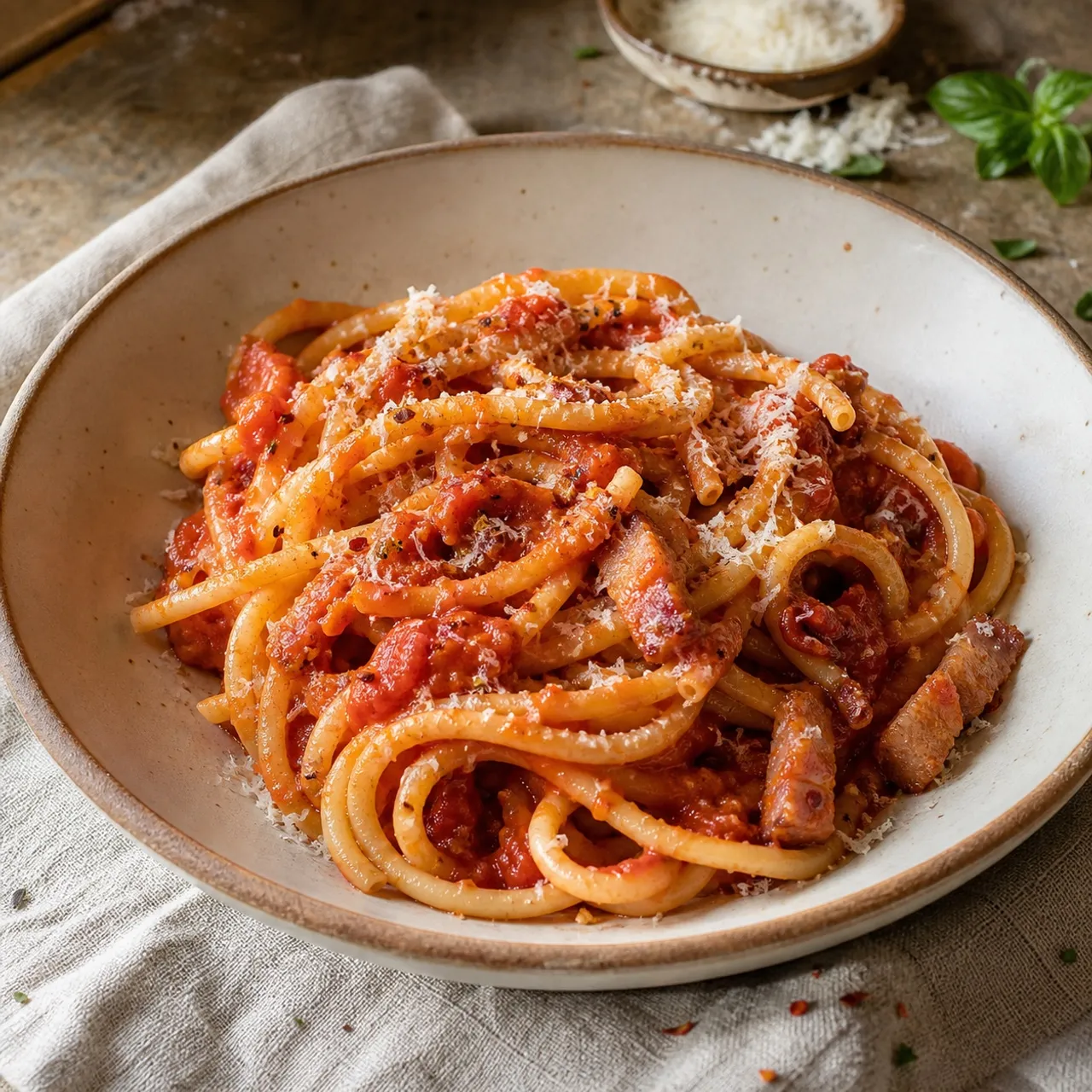
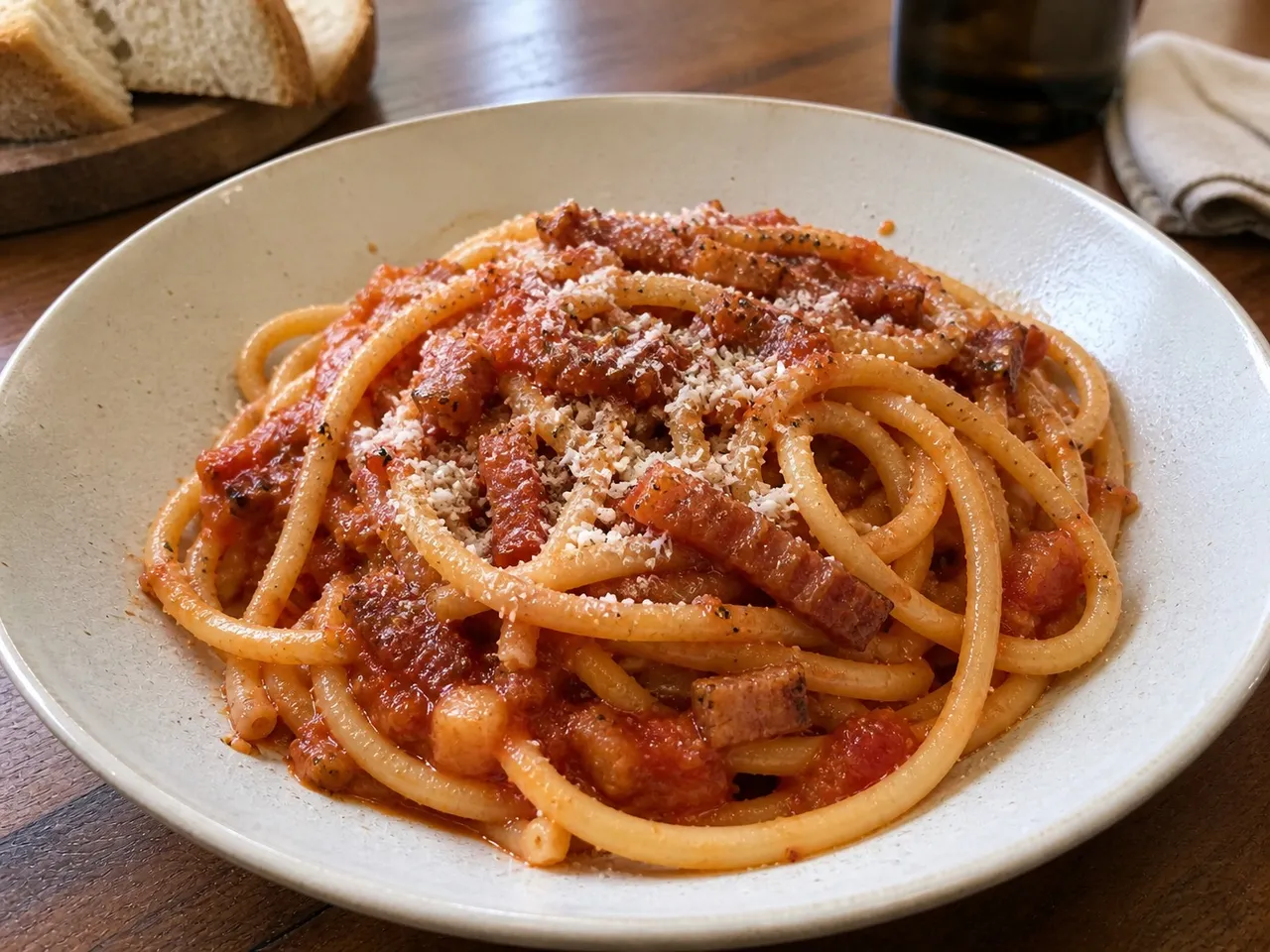
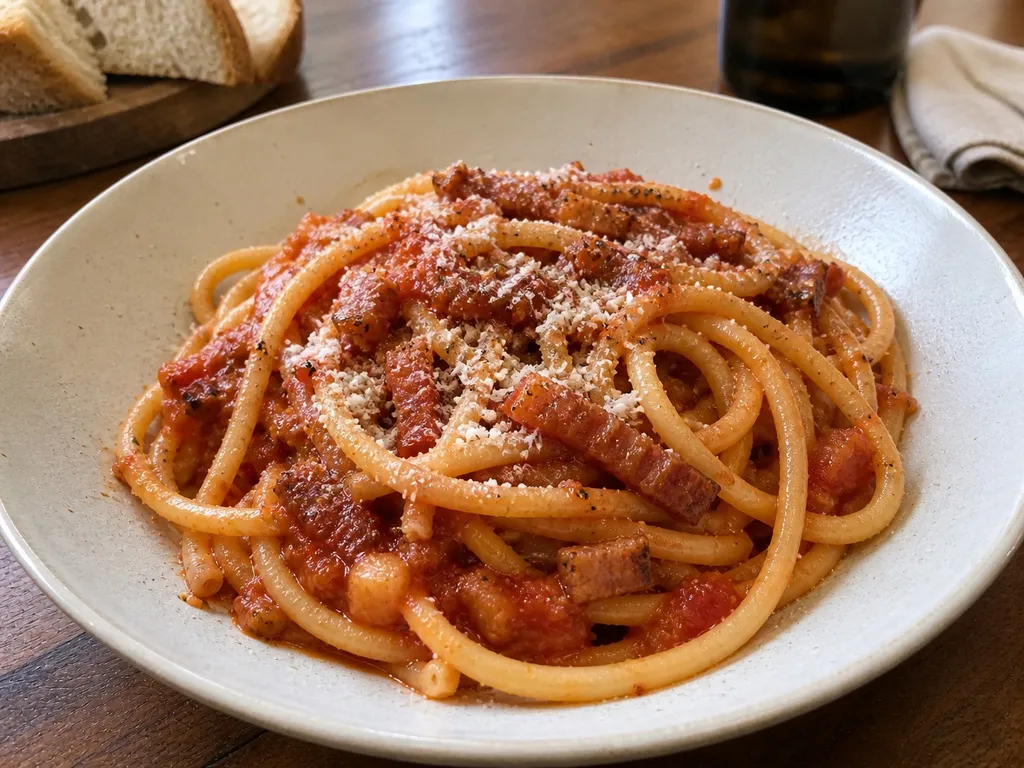
 Bucatini all'Amatriciana
A traditional Italian pasta sauce based on guanciale, pecorino cheese, and tomato.
Contains common allergens
In the app, Listahan checks these against your household automatically.
Good to know
- Ready in under 30 minutes
Matched from this dish's own ingredients and timing. Browse more: 30-minute meals
Instructions
6 steps- 1
Crisp the Guanciale: Place the strips of guanciale in a large, cold skillet. Turn the heat to medium-low. Allow the fat to render slowly until the guanciale is crispy on the outside but still chewy in the center (about 8-10 minutes).
- 2
Add Chili and Wine: Add the dried chili flakes to the rendered pork fat and toast for 30 seconds until fragrant. If using white wine, pour it in now and let it bubble rapidly until completely evaporated.
- 3
Simmer the Sauce: Add the hand-crushed San Marzano tomatoes to the skillet. Bring to a gentle simmer. Let the sauce cook and thicken for 10-15 minutes while the pasta water boils.
- 4
Boil the Pasta: Bring a large pot of lightly salted water to a rolling boil. Add the bucatini and cook until *al dente* (usually 9-11 minutes).
- 5
Combine: Transfer the cooked bucatini directly into the skillet with the tomato sauce, bringing along a little of the starchy pasta water. Toss vigorously over medium heat for 1-2 minutes until the pasta is well coated and the sauce clings to the noodles.
- 6
Finish with Cheese: Remove the skillet entirely from the heat. Gradually sprinkle in the grated Pecorino Romano while continuously tossing the pasta to melt the cheese into a creamy emulsion without it clumping. Serve immediately.
 Images are for illustrative purposes only, may be inaccurate, and do not guarantee the presence or absence of specific ingredients.
 Listahan Family Score™
63/100
Works for many families
Score reflects how well this recipe fits a typical busy household. In the app, your Family Score is personalized to your household's allergens, kids, and pantry.
Nutrition
per serving490
Calories
20 g
Protein
79 g
Carbs
10 g
Fat
Estimated per serving. Actual values depend on the brands and portions you use.
Listahan cooking guide
Chef notes & practical guide
Technique notes, ingredient swaps, serve-alongside ideas, storage guidance, and equipment for this recipe.
Cultural context
Amatriciana takes its name from Amatrice, a mountain town northeast of Rome, where shepherds built it from pantry staples that traveled well: cured pork jowl, aged sheep's cheese, and dried chili. Tomatoes were a later addition once they reached the region, turning a white pasta into the red sauce most people know today. It became one of Rome's signature dishes, traditionally served on hollow bucatini that catch the glossy sauce.
Listahan note
This version honors the Roman core of guanciale, Pecorino, and tomato without onion or garlic, letting the rendered pork fat and sharp cheese carry the dish. It uses bucatini for the proper chew and sauce-catching shape.
Technique cues
- Render the guanciale slowly from a cold pan so the fat melts out and the meat crisps without scorching; that fat is the flavor base of the whole sauce.
- Take the pan off the heat before stirring in the Pecorino so it melts into a creamy coat instead of seizing into rubbery clumps.
- Finish cooking the bucatini in the sauce with a little pasta water so the starch binds everything into a glossy emulsion.
Kitchen flow
- Parallel prep
- Start the guanciale rendering as the pasta water comes to a boil so the sauce and pasta finish together.
- Make-ahead
- Render the guanciale and build the tomato base ahead; reheat it and add freshly cooked pasta and cheese to serve.
- Leftover move
- Fold leftover pasta and sauce into beaten egg and Pecorino and fry into a crisp pasta frittata.
- Cleanup rhythm
- Wipe the rendered-fat pan while warm so it does not set, and the cheese-coated pot soaks clean in hot water.
Ingredient brief
Role, handling, and swap guidance for each key ingredient.
guanciale
fat and savory backbone
Purpose: Cured pork jowl renders a silky, deeply porky fat that pancetta or bacon cannot fully replicate.
Handling: Cut into short matchsticks or thin strips so it crisps evenly and releases its fat.
Adaptation: Pancetta is the closest substitute; smoked bacon works in a pinch but adds a smokiness that is not traditional.
Pecorino Romano
sharp salty finish
Purpose: This aged sheep's cheese gives the dish its signature tang and salt, distinct from the milder Parmigiano.
Handling: Grate fine and toss off the heat with a splash of pasta water to melt it smoothly.
Adaptation: A mix of Pecorino and Parmigiano softens the sharpness if it is too strong for you.
canned San Marzano tomatoes
sauce body
Purpose: Their low acidity and sweet flesh make a balanced sauce that does not need sugar.
Handling: Crush by hand or roughly chop so the sauce keeps some texture.
Adaptation: Any good whole peeled plum tomato works; avoid watery diced tomatoes, which thin the sauce.
dried chili flakes
gentle heat
Purpose: A measured pinch of warmth is part of the traditional balance, not a side note.
Handling: Bloom briefly in the rendered pork fat before the tomatoes go in.
Adaptation: A small fresh red chili, finely chopped, gives a fresher heat if you prefer.
bucatini
pasta shape
Purpose: The hollow center holds sauce inside and out and gives a satisfying chew that suits the rich coating.
Handling: Cook to just-firm and reserve a cup of the salty cooking water before draining.
Adaptation: Spaghetti or rigatoni both work well if bucatini is hard to find.
Technique notes
- Do not drain off the rendered guanciale fat; it is the dish, and the tomatoes simmer right in it.
- Hold back some grated Pecorino to finish at the table so each plate gets a fresh sharp hit.
- Salt the sauce cautiously, since guanciale and Pecorino are both salty and easily push it over the edge.
Ingredient swaps
- Gluten-free direction
- Use a sturdy gluten-free spaghetti or rigatoni and save extra pasta water to help the sauce cling.
- Lower-sodium direction
- Rinse the guanciale lightly, cut the Pecorino with a low-sodium hard cheese, and skip added salt entirely.
- Weeknight shortcut
- Use pancetta cubes and a quality passata to get a faithful sauce together in about twenty minutes.
Serve alongside
- Bitter greens like puntarelle or escarole with lemon
- Garlic-rubbed bruschetta
- Roasted fennel
- Simple radicchio salad
- A glass of Montepulciano d'Abruzzo
- A crisp Frascati
- Sparkling water with lemon
Serving suggestions only — check pairings for your household's allergens.
Storage & reheating
- Refrigerate leftover pasta and sauce for up to three days in a sealed container. Reheat in a pan with a splash of water to re-loosen the sauce, since the cheese stiffens when cold. The tomato base alone freezes well for up to three months; cook fresh pasta and add cheese after thawing.
Equipment
- A wide, heavy skillet for rendering and saucing
- A large pasta pot
- A box grater or microplane for the Pecorino
- Tongs for tossing pasta into the sauce
Make this household-aware
Listahan Pro checks this recipe against your household's allergens, finds pantry-aware swaps, builds the shopping list, and helps you plan the week around it.
Plan it in Listahan
Add Bucatini all'Amatriciana to your week, check it against your household's allergens, and build the shopping list automatically.
More Italian recipes
 Italian Lens Verified Images are for illustrative purposes only, may be inaccurate, and do not guarantee the presence or absence of specific ingredients.
 Sfogliatella
Naples' iconic shell-shaped pastry with crisp, flaky layers wrapped around a sweet ricotta-semolina filling.
 Italian Lens Verified Images are for illustrative purposes only, may be inaccurate, and do not guarantee the presence or absence of specific ingredients.
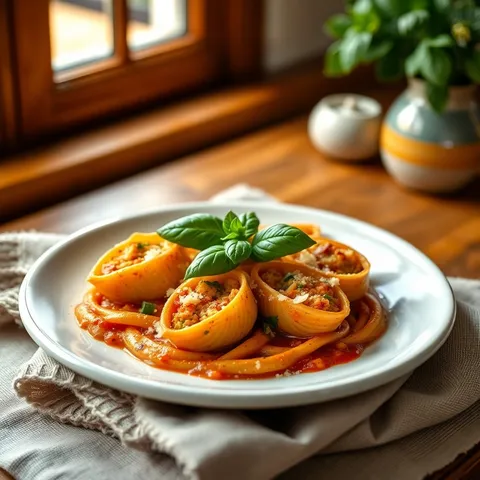
 Stuffed Shells (Conchiglioni Ripieni)
Jumbo pasta shells filled with a creamy ricotta-spinach mixture and baked in tomato sauce.
 Italian Lens Verified Images are for illustrative purposes only, may be inaccurate, and do not guarantee the presence or absence of specific ingredients.
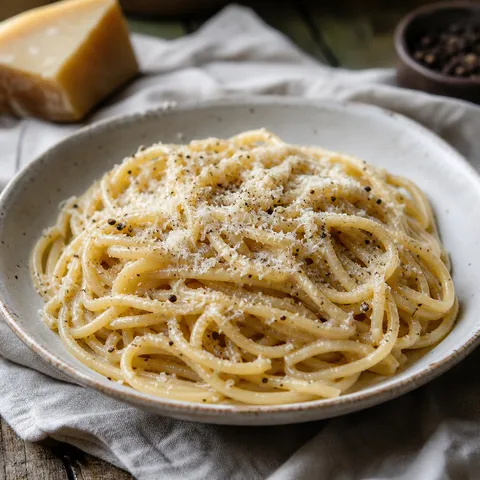
 Cacio e Pepe
A minimalist Roman pasta dish literally meaning "cheese and pepper."