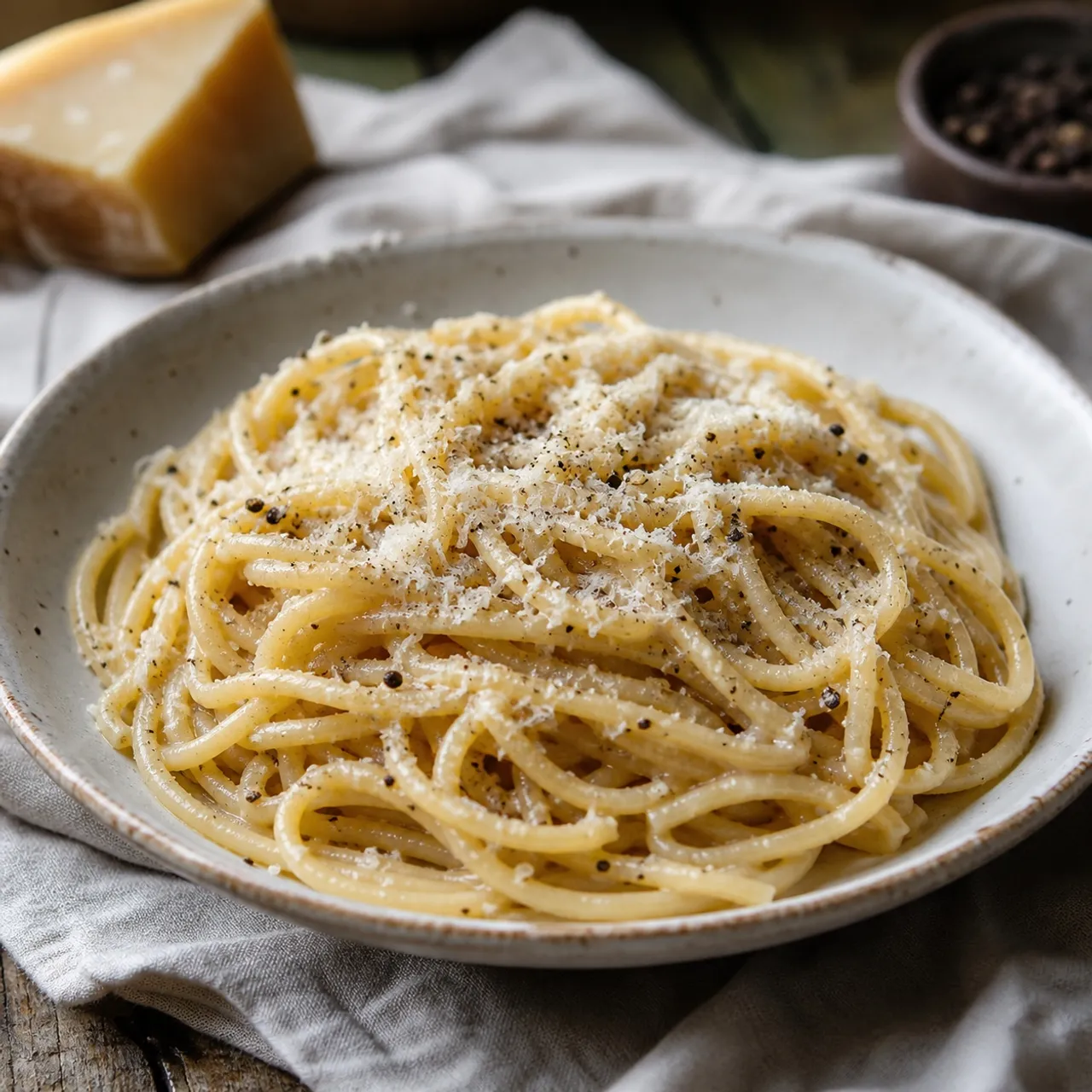
 Italian Images are for illustrative purposes only, may be inaccurate, and do not guarantee the presence or absence of specific ingredients.
 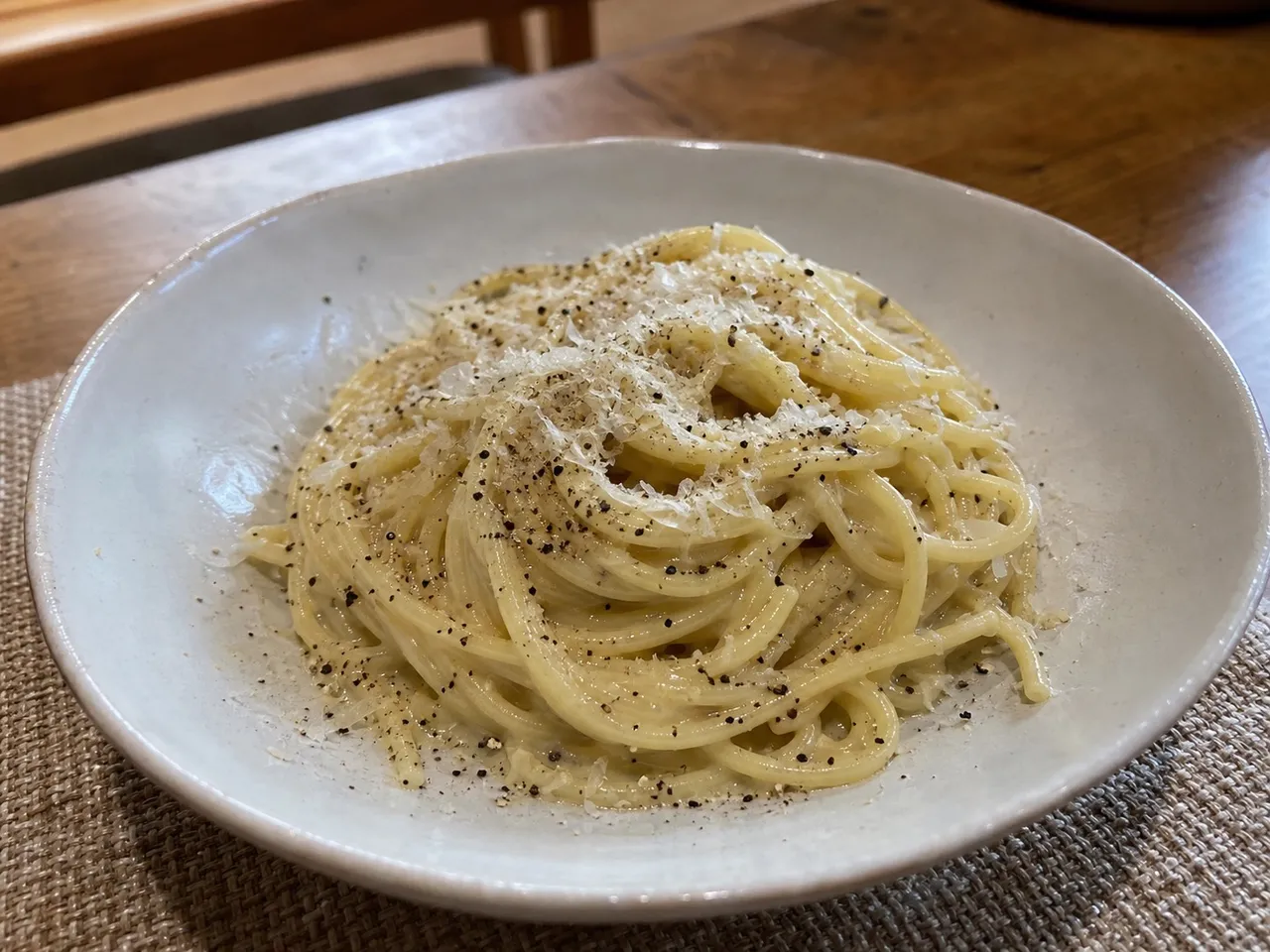 Serving Images are for illustrative purposes only, may be inaccurate, and do not guarantee the presence or absence of specific ingredients.
 Cacio e Pepe
A minimalist Roman pasta dish literally meaning "cheese and pepper."
Contains common allergens
In the app, Listahan checks these against your household automatically.
Good to know
- Ready in under 30 minutes
Matched from this dish's own ingredients and timing. Browse more: 30-minute meals
Instructions
6 steps- 1
Toast the Pepper: Place the whole black peppercorns in a mortar and pestle and crush them coarsely (or use a pepper grinder on a coarse setting). Add the crushed pepper to a large, dry skillet over medium heat. Toast for 1-2 minutes until highly fragrant.
- 2
Boil the Pasta: Bring a pot of water to a boil. Use about half the water you normally would for pasta, and salt it lightly (Pecorino is very salty). This concentrates the starch in the water, which is essential for the sauce. Add the pasta and cook.
- 3
Start the Pepper Broth: When the pasta is about halfway done, carefully ladle 2 ladles of the starchy pasta water into the skillet with the toasted pepper. It will bubble up vigorously. Let it simmer and infuse for 2-3 minutes.
- 4
Transfer the Pasta: Using tongs, transfer the pasta (still very *al dente*) directly from the pot into the skillet with the pepper broth. Finish cooking the pasta in the skillet for the last 2-3 minutes, adding a bit more pasta water if it looks dry.
- 5
Create the Cheese Paste: In a mixing bowl, combine the finely grated Pecorino Romano with 1 ladle of slightly cooled pasta water. Whisk vigorously until a thick, smooth, lump-free paste forms.
- 6
Emulsify: Remove the skillet from the heat entirely. Add the cheese paste to the pasta in the skillet. Toss and stir rapidly and continuously, adding splashes of pasta water as needed, until the cheese melts into a smooth, glossy, creamy sauce that perfectly coats the noodles. Serve immediately on warmed plates.
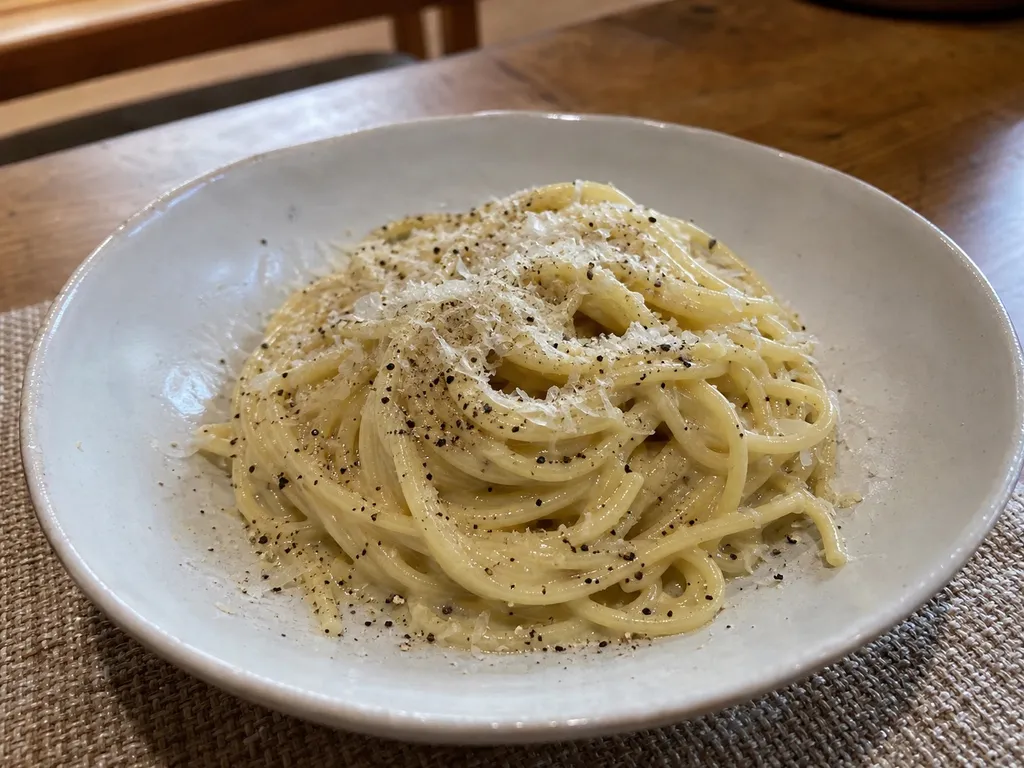 Images are for illustrative purposes only, may be inaccurate, and do not guarantee the presence or absence of specific ingredients.
 Listahan Family Score™
81/100
Good fit for most families
Score reflects how well this recipe fits a typical busy household. In the app, your Family Score is personalized to your household's allergens, kids, and pantry.
Nutrition
per serving575
Calories
26 g
Protein
77 g
Carbs
18 g
Fat
Estimated per serving. Actual values depend on the brands and portions you use.
Listahan cooking guide
Chef notes & practical guide
Technique notes, ingredient swaps, serve-alongside ideas, storage guidance, and equipment for this recipe.
Cultural context
Cacio e pepe — cheese and pepper — is perhaps the starkest example of Roman pasta philosophy: maximum flavor from minimum ingredients. The dish is thought to have Roman pastoral origins, with shepherds carrying aged Pecorino (which does not require refrigeration), dried pasta, and black pepper on long transhumance journeys. The technique is deceptively simple — just starchy pasta water, cheese, and toasted pepper — yet it is one of the most technically demanding pasta preparations, requiring precise temperature control to create a smooth, clinging sauce rather than a clumped, greasy mess.
Listahan note
This version gives you the exact temperature management needed to emulsify the cheese into a smooth sauce rather than a clump — the difference comes entirely from how you combine the starchy water with the cheese before it hits the pasta.
Technique cues
- Create a paste with the grated cheese and a small amount of warm (not boiling) pasta water before adding it to the hot pasta — this pre-hydrates the cheese proteins and prevents the abrupt temperature shock that causes them to seize and clump.
- Toast the black pepper in a dry pan until fragrant before adding it — this brief heat blooms the volatile aromatics and makes the pepper taste rounder and more complex rather than simply sharp and astringent.
- Use a highly starchy pasta water: underfill your pasta pot so the starch concentration is higher, or cook the pasta in less water than usual — this starchier water is the emulsification glue that holds the entire sauce together.
Kitchen flow
- Parallel prep
- Toast the pepper and grate the cheese while the pasta water comes to a boil, so the sauce components are ready the moment the pasta goes in.
- Make-ahead
- Cacio e pepe cannot be made ahead — it must be assembled and served immediately; the sauce seizes within minutes as the pasta cools and the cheese sets.
- Leftover move
- Reheat leftover cacio e pepe gently in a pan with a splash of water over low heat, tossing constantly; the sauce will not be as smooth as fresh but is still enjoyable.
- Cleanup rhythm
- Rinse the pasta pan and cheese bowl immediately after plating since set cheese is much harder to remove than fresh; the pepper pan needs only a quick wipe.
Ingredient brief
Role, handling, and swap guidance for each key ingredient.
Pecorino Romano
primary cheese base
Purpose: Pecorino Romano's sharp, salty, tangy profile provides the intense flavor that defines cacio e pepe; its hard, dry texture also grates finely and melts relatively cleanly.
Handling: Grate very finely on a microplane until it resembles a powder; coarsely grated cheese will not incorporate smoothly into the sauce.
Adaptation: A 50/50 blend of Pecorino and Parmigiano-Reggiano tempers the sharpness for those who find pure Pecorino too pungent.
tonnarelli or spaghetti
pasta vehicle
Purpose: Tonnarelli (a square-cut, thicker Roman spaghetti) or standard spaghetti both have the surface area and starch release needed for the sauce to cling properly.
Handling: Cook in less water than usual to concentrate the starch, and reserve at least a full cup of pasta water before draining.
Adaptation: Rigatoni creates a different but effective version where the sauce collects inside the tubes.
black pepper
the defining flavor
Purpose: Black pepper is not a seasoning accent here — it is half the dish, providing sustained heat, complexity, and the visual speckle that makes the finished pasta recognizable.
Handling: Crack coarsely (not fine powder, not whole peppercorns) and toast in a dry pan for 30 to 60 seconds until fragrant before adding to the pasta.
Adaptation: No substitute captures the same flavor; reduce the quantity for a milder version but keep the toasting step.
Technique notes
- The ideal cacio e pepe has a sauce that coats each strand evenly with no visible clumps of dry cheese and no oily separation — if either happens, you can often rescue it by adding warm pasta water a small splash at a time and tossing vigorously.
- Work quickly from the moment the pasta comes out of the water — every second the pasta sits and cools, the window for a smooth emulsification narrows; have everything set up and ready to go before the pasta finishes cooking.
- Use a pasta with some textural roughness (fresh tonnarelli is ideal, or a bronze-die-cut dried spaghetti) rather than smooth, Teflon-coated commercial pasta — the rougher surface gives the emulsified sauce something to grip.
Ingredient swaps
- Gluten-free direction
- Use a high-quality gluten-free spaghetti; the emulsification technique is unchanged, though gluten-free pasta releases starch differently — reserve extra pasta water.
- Dairy-free direction
- Cacio e pepe is fundamentally a cheese dish; a dairy-free version using nutritional yeast will have a very different character but can still satisfy the peppery pasta craving.
Serve alongside
- Arugula salad with lemon and olive oil
- Roasted Roman-style artichokes (carciofi alla romana)
- Suppli al telefono (Roman fried rice balls) as an antipasto
- Frascati Superiore (the white wine of the Roman hills)
- Sparkling water with lemon — the simplicity of the dish calls for a non-competing beverage
Serving suggestions only — check pairings for your household's allergens.
Storage & reheating
- Cacio e pepe does not store well; serve immediately.
- If you must refrigerate leftovers, do so for no more than 1 day and reheat very gently with added pasta water or plain water to re-emulsify the sauce.
Equipment
- Wide, deep pasta pan or large skillet for vigorous tossing
- Microplane for extremely fine cheese grating — essential for a lump-free sauce
- Tongs for tossing the pasta and continuously moving it through the sauce
Make this household-aware
Listahan Pro checks this recipe against your household's allergens, finds pantry-aware swaps, builds the shopping list, and helps you plan the week around it.
Plan it in Listahan
Add Cacio e Pepe to your week, check it against your household's allergens, and build the shopping list automatically.
More Italian recipes
 Italian Lens Verified Images are for illustrative purposes only, may be inaccurate, and do not guarantee the presence or absence of specific ingredients.
 Sfogliatella
Naples' iconic shell-shaped pastry with crisp, flaky layers wrapped around a sweet ricotta-semolina filling.
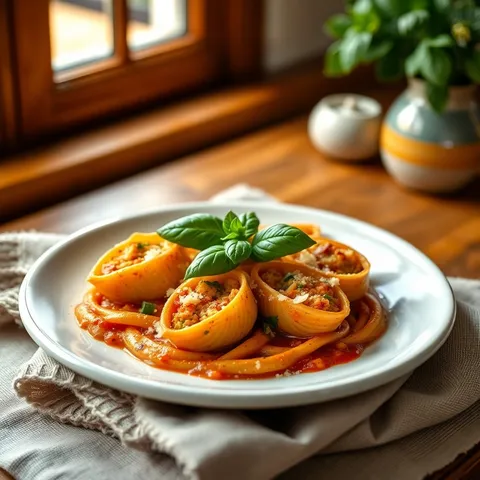 Italian Lens Verified Images are for illustrative purposes only, may be inaccurate, and do not guarantee the presence or absence of specific ingredients.
 Stuffed Shells (Conchiglioni Ripieni)
Jumbo pasta shells filled with a creamy ricotta-spinach mixture and baked in tomato sauce.
 Italian Lens Verified Images are for illustrative purposes only, may be inaccurate, and do not guarantee the presence or absence of specific ingredients.
 Negroni
The bold, bittersweet Italian aperitivo balancing equal parts gin, Campari, and sweet vermouth over ice.