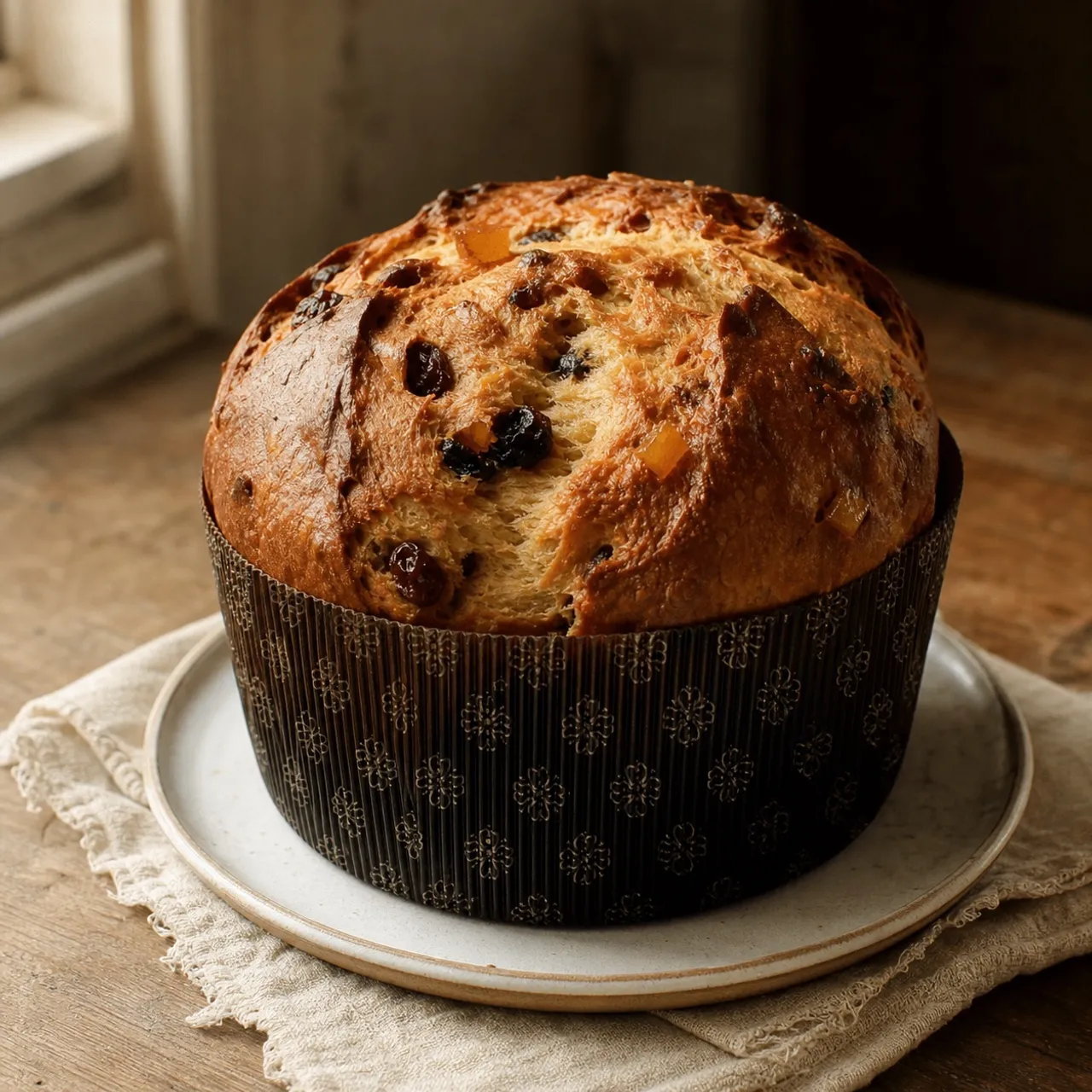
 Italian Images are for illustrative purposes only, may be inaccurate, and do not guarantee the presence or absence of specific ingredients.
 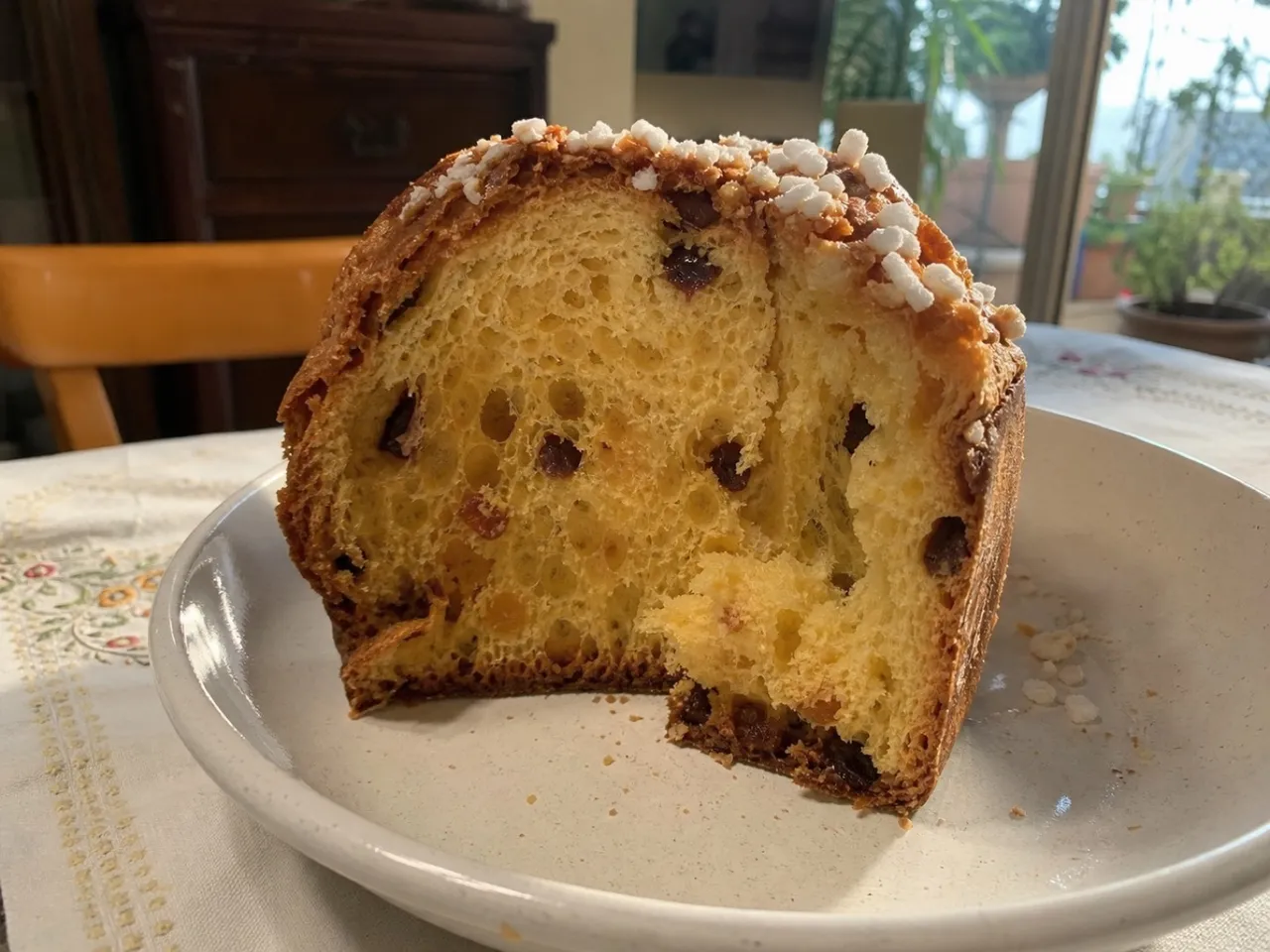 Serving Images are for illustrative purposes only, may be inaccurate, and do not guarantee the presence or absence of specific ingredients.
 Panettone
A sweet bread loaf originally from Milan, traditionally prepared for Christmas.
Contains common allergens
In the app, Listahan checks these against your household automatically.
Good to know
- Ready in under 30 minutes
Matched from this dish's own ingredients and timing. Browse more: 30-minute meals
Instructions
6 steps- 1
Prepare the Starter: You must feed your lievito madre three times at 4-hour intervals at 82°F (28°C) on the first day to ensure it is incredibly active and strong enough to lift the heavy, enriched dough.
- 2
First Dough (Primo Impasto): In a stand mixer, dissolve the sugar in the water. Tear the active starter into pieces and add it to the bowl along with the flour. Mix until a dough forms. Gradually incorporate the egg yolks. Once the gluten is well developed, slowly add the softened butter in batches until fully incorporated and the dough passes the windowpane test. Cover and proof at 80°F (26°C) for 12-14 hours until it triples in volume.
- 3
Second Dough (Secondo Impasto): Deflate the first dough and return it to the mixer. Add the flour and knead until smooth. Gradually add the sugar, egg yolks, salt, and vanilla. Once perfectly smooth, slowly add the softened butter. Finally, gently fold in the rum-soaked raisins and candied citrus peels on the lowest speed.
- 4
Rest and Shape: Let the dough rest in the bowl for 30 minutes. Turn it out onto a lightly buttered surface. Perform a series of gentle stretch-and-folds (pirlatura) to create a tight, round boule. Place the dough seam-side down into a paper panettone mold.
- 5
Final Proof and Score: Proof at 82°F (28°C) for 6-8 hours, or until the dome of the dough reaches 1 inch below the top of the mold. Let it sit at room temperature for 15 minutes to form a slight skin. Using a razor blade, score a cross into the top and place a small pat of butter in the center.
- 6
Bake and Hang: Bake at 325°F (160°C) for 45-55 minutes until a skewer comes out clean or the internal temperature reaches 200°F (93°C). Immediately upon removing from the oven, pierce the bottom of the panettone with metal skewers and hang it upside down over a large pot to cool completely (at least 10 hours). This prevents the delicate, airy crumb from collapsing under its own weight.
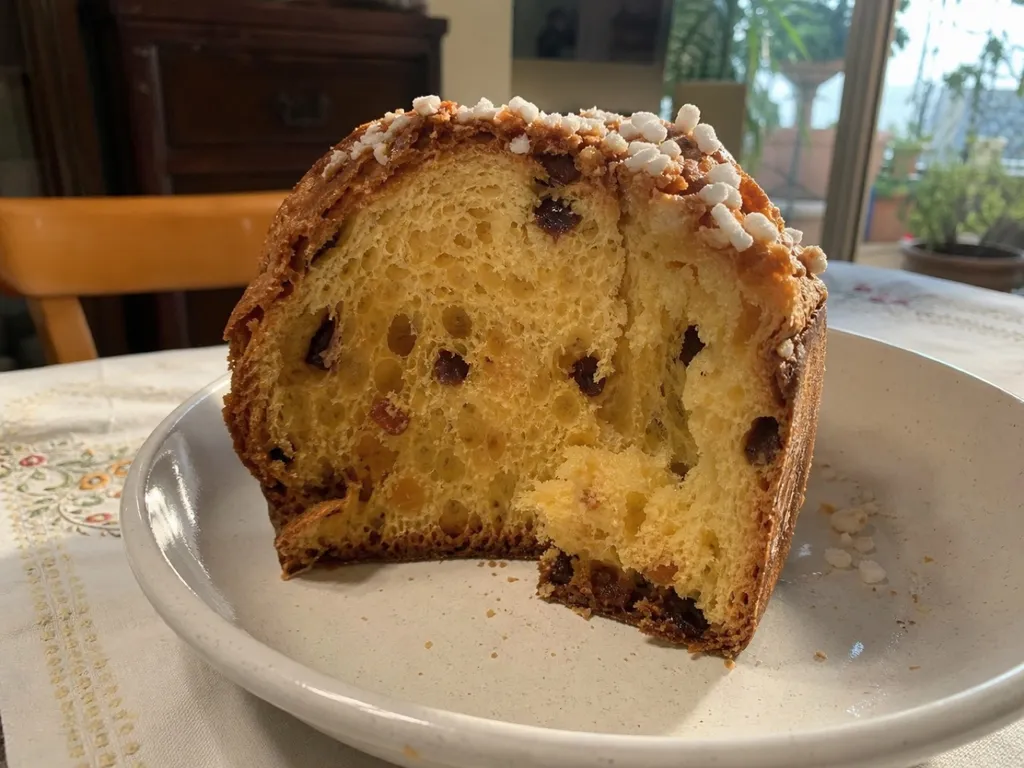 Images are for illustrative purposes only, may be inaccurate, and do not guarantee the presence or absence of specific ingredients.
 Listahan Family Score™
68/100
Works for many families
Score reflects how well this recipe fits a typical busy household. In the app, your Family Score is personalized to your household's allergens, kids, and pantry.
Listahan cooking guide
Chef notes & practical guide
Technique notes, ingredient swaps, serve-alongside ideas, storage guidance, and equipment for this recipe.
Cultural context
Panettone is a tall, domed Christmas bread from Milan, built on a natural yeast starter that ferments the enriched dough over several days rather than hours, giving it a distinctive tang and open, airy crumb. Candied citrus peel and raisins studded through the dough are traditional, and the bread is baked in a tall paper mold that lets it rise well above the height of a standard loaf pan.
Listahan note
This version hangs the finished loaves upside down immediately after baking, since panettone's soft, enriched crumb collapses under its own weight if it's left standing upright while still hot.
Technique cues
- A natural yeast starter fermented over multiple days develops the dough's characteristic tang, something commercial yeast alone can't replicate in a single rise.
- Kneading the enriched, butter- and egg-heavy dough thoroughly develops enough gluten structure to support the tall rise without collapsing.
- Folding candied citrus peel and raisins in during the final stages of mixing, rather than earlier, keeps them evenly distributed without overworking the dough.
- Baking in a tall paper mold supports the dough's rise past the height a standard round pan would allow.
Kitchen flow
- Parallel prep
- While Panettone is in the oven, measure out any garnish or topping — like the candied citrus peel — so it's ready the moment the bake finishes cooling.
- Make-ahead
- Panettone's dough or batter (built around candied citrus peel) can usually be made a day ahead and refrigerated, then baked fresh — many doughs actually improve with an overnight rest.
- Leftover move
- Leftover Panettone freezes well — wrap individual portions tightly and thaw at room temperature, or crumble it over ice cream for a quick second life. This one leans on the candied citrus peel. Everything else is quick — the bake is the one step that takes real time.
- Cleanup rhythm
- Soak the mixing bowl and beaters for Panettone right away — sugar and butter residue hardens fast once it cools. This one leans on the candied citrus peel. Everything else is quick — the bake is the one step that takes real time.
Ingredient brief
Role, handling, and swap guidance for each key ingredient.
First Dough: 100g active lievito madre, 250g strong bread flour, 120ml water, 75g sugar, 60g egg yolks, 75g soft butter
Main protein or body
Purpose: First Dough: 100g active lievito madre, 250g strong bread flour, 120ml water, 75g sugar, 60g egg yolks, 75g soft butter gives Panettone its main substance and carries the seasoning.
Handling: Measure before heating and break up clumps so the mix distributes evenly.
Adaptation: Use a certified gluten-free alternative when needed and expect a small texture change.
Second Dough: 60g strong bread flour, 50g sugar, 60g egg yolks, 75g soft butter, 1 tsp salt, 1 vanilla bean
Main protein or body
Purpose: Second Dough: 60g strong bread flour, 50g sugar, 60g egg yolks, 75g soft butter, 1 tsp salt, 1 vanilla bean gives Panettone its main substance and carries the seasoning.
Handling: Measure before heating and break up clumps so the mix distributes evenly.
Adaptation: Use a certified gluten-free alternative when needed and expect a small texture change.
Inclusions: 150g dark raisins, 100g candied orange peel, 50g candied citron
Flavor support
Purpose: Inclusions: 150g dark raisins, 100g candied orange peel, 50g candied citron supports the balance of Panettone and should taste integrated.
Handling: Prep before heat is high so the cooking step can move without rushing.
Adaptation: Use the closest fresh equivalent and expect a modest shift in flavor or texture.
Technique notes
- Skewer the base of the warm loaf and hang it upside down for several hours, since gravity alone keeps the tall crumb from sinking while it cools.
- Panettone keeps well for a week or more at room temperature wrapped tightly, owing to the long fermentation and moisture in the enriched dough.
- Toast leftover slices lightly and serve with butter or mascarpone rather than eating it plain past the first day or two.
Ingredient swaps
- Gluten-free direction
- Replace the bread flour with a certified gluten-free 1:1 flour blend or gluten-free noodles/breadcrumbs — check that any other packaged ingredients here are labeled gluten-free too. This one leans on the candied citrus peel.
- Dairy-free direction
- Use a neutral dairy-free butter and a full-fat plant milk (oat or coconut give the closest richness) anywhere this recipe calls for dairy. This one leans on the candied citrus peel.
- Egg-aware direction
- Replace the egg yolks with a flax or chia egg (1 tbsp ground seed + 3 tbsp water, rested 5 minutes) for binding, best when eggs are there for binding rather than structure or rise. This one leans on the candied citrus peel.
- Lower-sodium direction
- Salt in stages instead of all at once, tasting as you go — you'll likely need less than the full amount. This one leans on the candied citrus peel.
Serve alongside
- Fresh berries
- Citrus fruit salad
- Mint leaves
- Black coffee
- Hot tea
- Sparkling water with lemon
Serving suggestions only — check pairings for your household's allergens.
Storage & reheating
- Store covered for 3 to 4 days, refrigerated when dairy, eggs, custard, or fresh fruit are involved.
- Reheat gently only when warmth improves the texture.
- Freeze sturdy baked portions up to 2 months; avoid freezing delicate fresh toppings.
Equipment
- Mixing bowls
- Baking dish or pan
- Cooling rack
Make this household-aware
Listahan Pro checks this recipe against your household's allergens, finds pantry-aware swaps, builds the shopping list, and helps you plan the week around it.
Plan it in Listahan
Add Panettone to your week, check it against your household's allergens, and build the shopping list automatically.
More Italian recipes
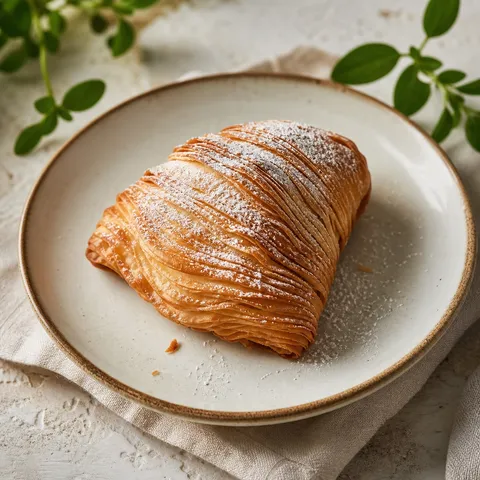 Italian Lens Verified Images are for illustrative purposes only, may be inaccurate, and do not guarantee the presence or absence of specific ingredients.
 Sfogliatella
Naples' iconic shell-shaped pastry with crisp, flaky layers wrapped around a sweet ricotta-semolina filling.
 Italian Lens Verified Images are for illustrative purposes only, may be inaccurate, and do not guarantee the presence or absence of specific ingredients.
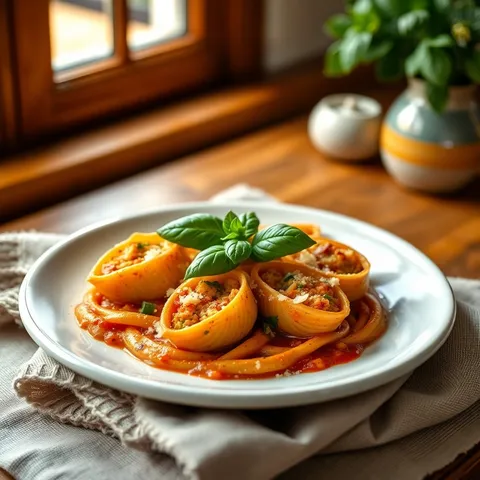
 Stuffed Shells (Conchiglioni Ripieni)
Jumbo pasta shells filled with a creamy ricotta-spinach mixture and baked in tomato sauce.
 Italian Lens Verified Images are for illustrative purposes only, may be inaccurate, and do not guarantee the presence or absence of specific ingredients.
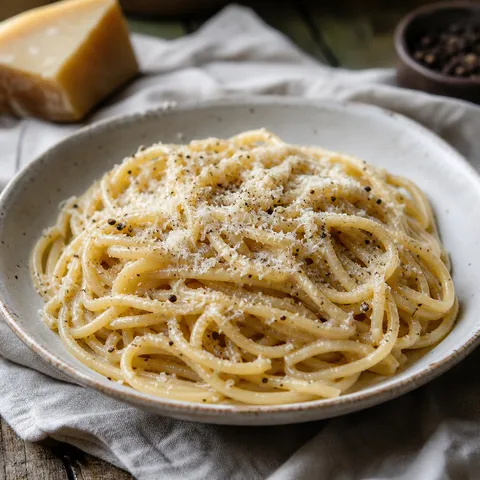
 Cacio e Pepe
A minimalist Roman pasta dish literally meaning "cheese and pepper."