 Italian Images are for illustrative purposes only, may be inaccurate, and do not guarantee the presence or absence of specific ingredients.
 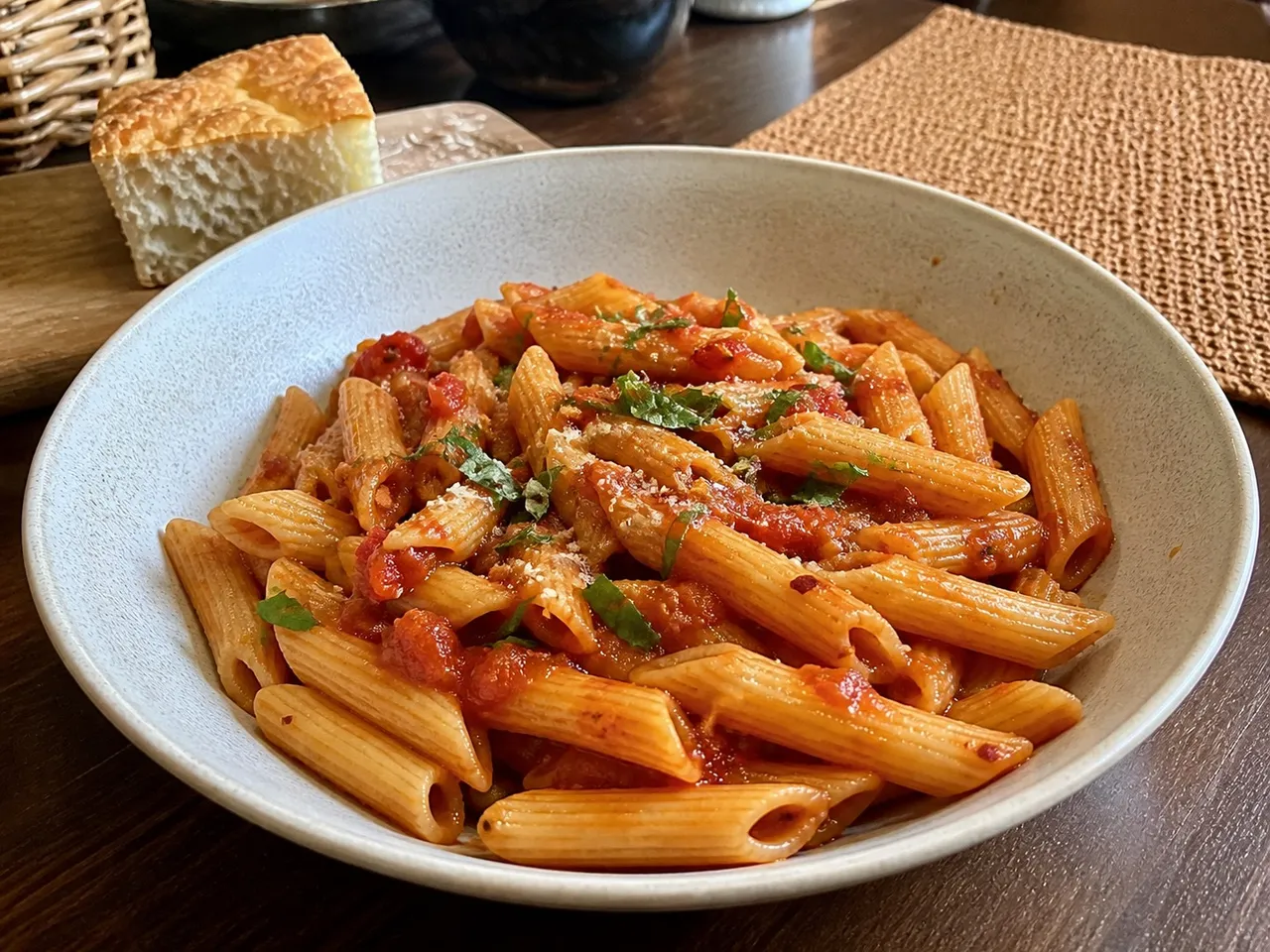 Serving Images are for illustrative purposes only, may be inaccurate, and do not guarantee the presence or absence of specific ingredients.
 Penne all'Arrabbiata
A fiery Roman tomato sauce spiked with garlic and chilli — "angry" pasta in the best way.
Contains common allergens
In the app, Listahan checks these against your household automatically.
Good to know
- Ready in under 30 minutes
Matched from this dish's own ingredients and timing. Browse more: 30-minute meals
Instructions
6 steps- 1
Infuse the Oil: Warm the olive oil in a pan over medium-low heat with the sliced garlic and crumbled chilli until fragrant and the garlic is pale gold — do not let it burn.
- 2
Add Tomatoes: Pour in the crushed tomatoes, season with salt, and simmer for 12-15 minutes until thickened and glossy.
- 3
Cook the Pasta: Boil the penne in well-salted water until al dente, reserving a cup of pasta water before draining.
- 4
Combine: Toss the pasta into the sauce with a splash of pasta water, stirring over heat until each piece is coated.
- 5
Finish: Stir through chopped parsley.
- 6
Serve: Plate immediately; arrabbiata is traditionally served without cheese to let the chilli shine.
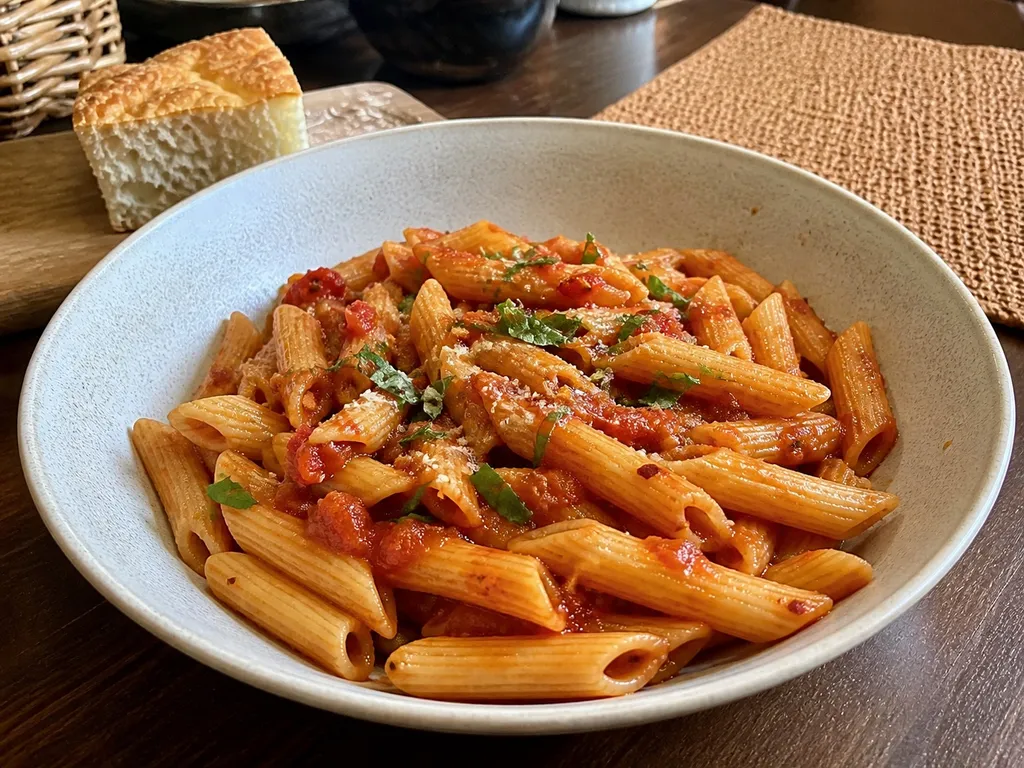 Images are for illustrative purposes only, may be inaccurate, and do not guarantee the presence or absence of specific ingredients.
 Listahan Family Score™
69/100
Works for many families
Score reflects how well this recipe fits a typical busy household. In the app, your Family Score is personalized to your household's allergens, kids, and pantry.
Nutrition
per serving520
Calories
14 g
Protein
81 g
Carbs
15 g
Fat
Estimated per serving. Actual values depend on the brands and portions you use.
Listahan cooking guide
Chef notes & practical guide
Technique notes, ingredient swaps, serve-alongside ideas, storage guidance, and equipment for this recipe.
Cultural context
Arrabbiata means 'angry' in Italian, a nod to the heat of the dried red chiles that define the sauce. The dish comes from Rome and Lazio, where peasant cooks built big flavor from pantry staples: tomatoes, garlic, olive oil, and peperoncino. Unlike many Roman pasta sauces it contains no meat or cheese, making it one of the purest expressions of Southern Italian simplicity.
Listahan note
This version leans into the Lazio tradition of keeping the sauce spare and fast, letting the tomatoes reduce just enough to concentrate without losing brightness.
Technique cues
- Toast the dried chiles briefly in olive oil before adding garlic so their fat-soluble heat blooms fully into the sauce instead of sitting on top.
- Use canned whole San Marzano tomatoes crushed by hand rather than diced or pureed — the irregular pieces give the sauce body without turning it into a smooth gravy.
- Reserve a ladleful of pasta water and add it a splash at a time when you toss the penne in the pan, emulsifying the starchy water with the oil into a glossy coating.
Kitchen flow
- Parallel prep
- Start the salted pasta water first; the sauce cooks in about the same time as the pasta. Slice garlic and measure chiles while water comes to a boil.
- Make-ahead
- The tomato sauce keeps refrigerated for up to 5 days and actually improves overnight. Cook pasta fresh and reheat the sauce in the pan.
- Leftover move
- Leftover penne arrabbiata is excellent baked: spread in a dish, top with torn mozzarella and breadcrumbs, and roast at 400 F until bubbling and golden.
- Cleanup rhythm
- This is a one-pan sauce plus one pasta pot. Deglaze the pan with the pasta water while it is still hot and the cleanup is nearly immediate.
Ingredient brief
Role, handling, and swap guidance for each key ingredient.
penne rigate
primary pasta
Purpose: The ridged tubes trap the chunky tomato sauce in every groove and hold heat well.
Handling: Cook in well-salted water until one minute shy of al dente before finishing in the pan.
Adaptation: Rigatoni or ziti work equally well; avoid smooth penne liscie as the sauce slides off.
canned whole tomatoes
sauce base
Purpose: Whole tomatoes are packed at peak ripeness and have less added liquid than diced, giving a more concentrated sauce.
Handling: Crush by squeezing through your fist directly into the pan to control texture.
Adaptation: Fresh plum tomatoes peeled and seeded work in summer, but canned is more reliable year-round.
dried red chile flakes
defining heat
Purpose: Peperoncino is not a background note in arrabbiata — it is the point of the dish.
Handling: Start with half a teaspoon per serving and adjust after tasting; different brands vary wildly in intensity.
Adaptation: Whole dried calabrian chiles, crushed, give slightly more fruitiness alongside the heat.
garlic
aromatic base
Purpose: Garlic thinly sliced rather than minced gives sweeter, less pungent flavor as it gently toasts.
Handling: Slice into thin coins and cook over medium-low heat just until pale gold, not brown.
Adaptation: No real swap — garlic is structural to this sauce.
extra-virgin olive oil
cooking fat and finishing richness
Purpose: A generous pour at the start builds the flavor base; a drizzle at the end adds freshness and sheen.
Handling: Use a good-quality oil since the sauce is simple enough that the oil flavor registers.
Adaptation: No substitute; butter or neutral oil would change the character entirely.
fresh flat-leaf parsley
bright finish
Purpose: Parsley added off-heat adds color and a grassy note that lifts the richness of the oil.
Handling: Chop just before serving; do not add over direct heat or it turns dull.
Adaptation: Fresh basil works but shifts the flavor profile toward sweeter and more classically Neapolitan.
Technique notes
- The sauce should be visibly oily — this is intentional. The olive oil emulsifies with pasta water during tossing to create a glossy, cohesive coating rather than a watery pool.
- Arrabbiata is traditionally served without cheese in Rome; the heat and acid are meant to be experienced cleanly. Pecorino Romano can be offered on the side for those who want it.
- If your tomatoes taste acidic, add a small pinch of sugar or a few minutes more cooking time rather than baking soda, which can muddy the flavor.
Ingredient swaps
- Gluten-free direction
- Use your preferred gluten-free penne and add it to the sauce pan with extra pasta water since GF pasta releases more starch and benefits from longer finishing.
- Lower-sodium direction
- Use no-salt-added canned tomatoes and season carefully at the table; the boldness of garlic and chiles means this dish does not depend heavily on added salt.
- Weeknight shortcut
- The sauce can be made with a 15-oz can of good-quality crushed tomatoes if you are short on time; skip the hand-crushing step.
Serve alongside
- Arugula salad with shaved Parmigiano and lemon
- Roasted broccolini with garlic
- Garlic bread with fresh parsley butter
- Montepulciano d'Abruzzo (mirrors the tomato acidity)
- Sparkling water with lemon
- Peroni lager
Serving suggestions only — check pairings for your household's allergens.
Storage & reheating
- Sauce keeps refrigerated in a sealed container for up to 5 days; cooked pasta is best stored separately and reheated in a splash of water in the pan.
- The assembled dish can be frozen for up to 2 months; thaw overnight in the refrigerator and reheat gently on the stovetop with a tablespoon of water to loosen.
Equipment
- Wide skillet or saute pan (at least 12 inches) for tossing pasta with sauce
- Large heavy-bottomed pasta pot with a tight-fitting lid
- Spider skimmer or tongs for transferring pasta directly to the sauce pan
Make this household-aware
Listahan Pro checks this recipe against your household's allergens, finds pantry-aware swaps, builds the shopping list, and helps you plan the week around it.
Plan it in Listahan
Add Penne all'Arrabbiata to your week, check it against your household's allergens, and build the shopping list automatically.
More Italian recipes
 Italian Lens Verified Images are for illustrative purposes only, may be inaccurate, and do not guarantee the presence or absence of specific ingredients.
 Sfogliatella
Naples' iconic shell-shaped pastry with crisp, flaky layers wrapped around a sweet ricotta-semolina filling.
 Italian Lens Verified Images are for illustrative purposes only, may be inaccurate, and do not guarantee the presence or absence of specific ingredients.
 Stuffed Shells (Conchiglioni Ripieni)
Jumbo pasta shells filled with a creamy ricotta-spinach mixture and baked in tomato sauce.
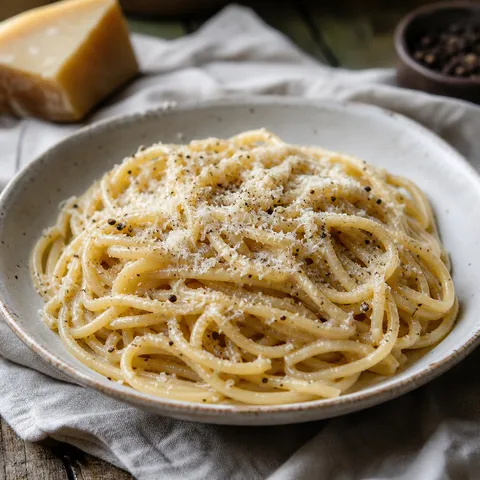 Italian Lens Verified Images are for illustrative purposes only, may be inaccurate, and do not guarantee the presence or absence of specific ingredients.
 Cacio e Pepe
A minimalist Roman pasta dish literally meaning "cheese and pepper."