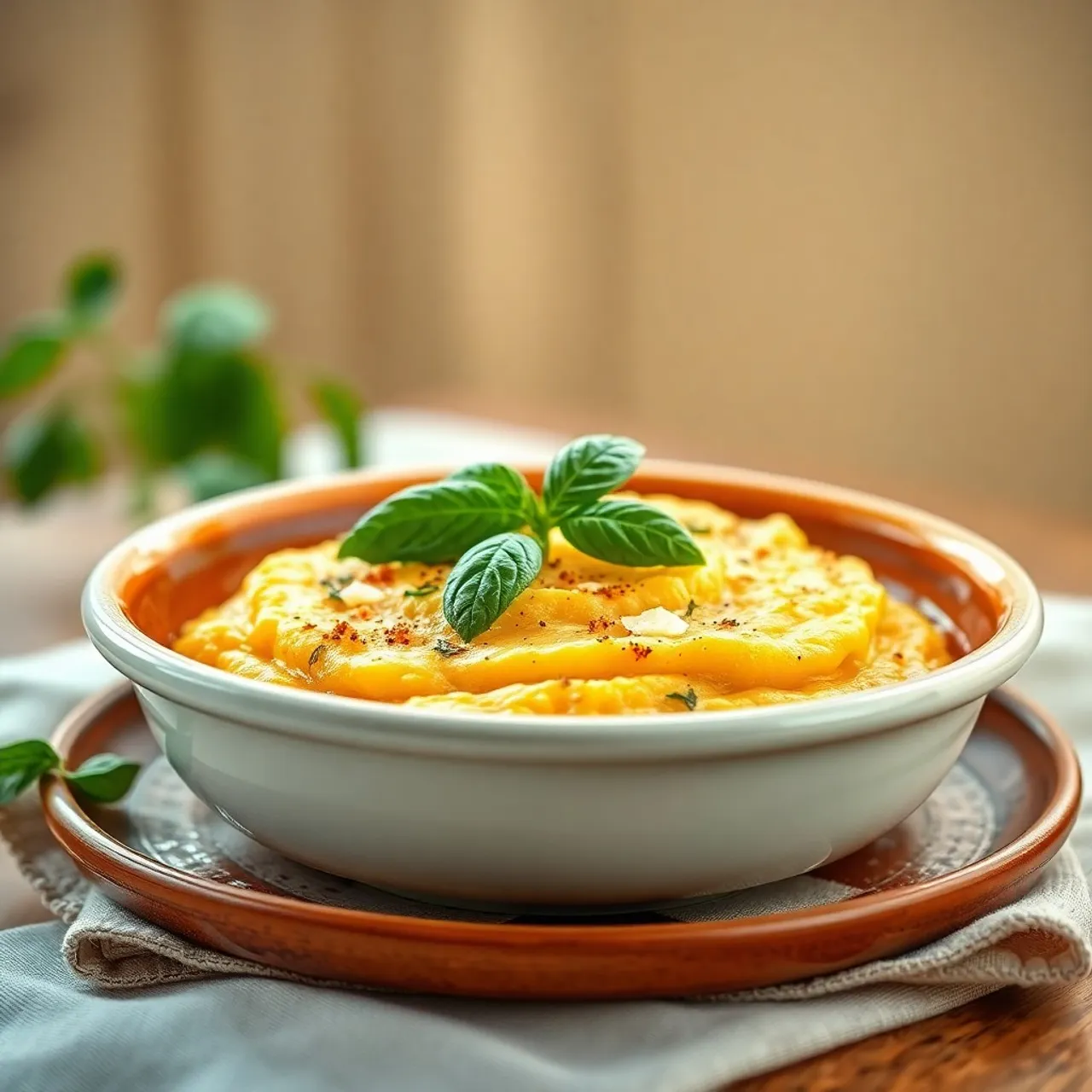
 Italian Images are for illustrative purposes only, may be inaccurate, and do not guarantee the presence or absence of specific ingredients.
 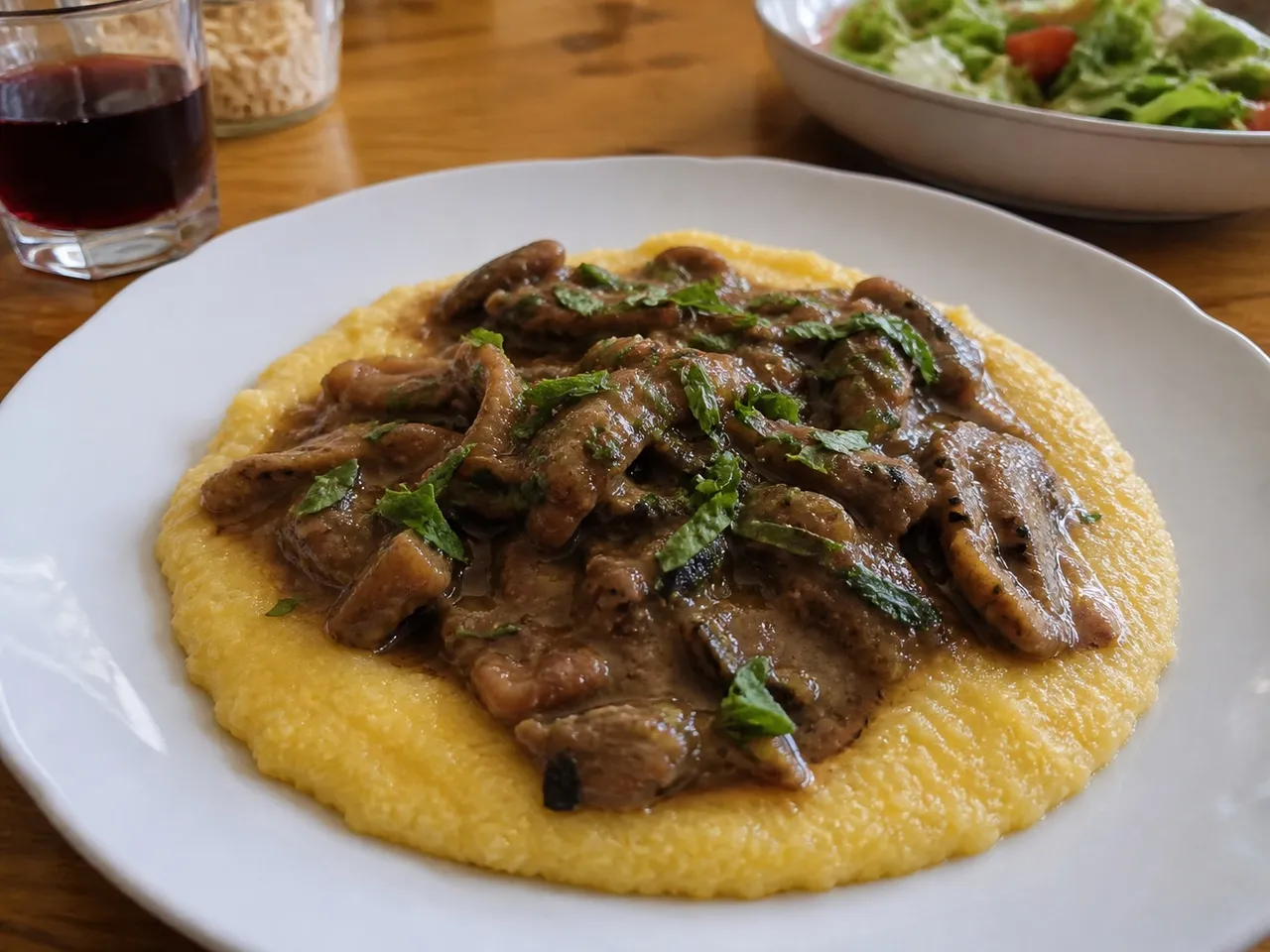 Serving Images are for illustrative purposes only, may be inaccurate, and do not guarantee the presence or absence of specific ingredients.
 Polenta
A dish of boiled cornmeal that may be served as a hot porridge or allowed to cool and solidify.
Contains common allergens
In the app, Listahan checks these against your household automatically.
Good to know
- One-pot
Matched from this dish's own ingredients and timing. Browse more: one-pot dinners
Instructions
6 steps- 1
Boil the Liquid: In a large, heavy-bottomed saucepan or copper pot, bring the water or broth to a vigorous boil. Add the sea salt.
- 2
Whisk in Cornmeal: Reduce the heat to medium-low. Slowly pour the cornmeal into the boiling water in a thin, steady stream while whisking continuously and vigorously to prevent any lumps from forming.
- 3
Simmer and Stir: Once all the cornmeal is incorporated and the mixture begins to bubble and spit, reduce the heat to the lowest possible setting. Switch from a whisk to a long-handled wooden spoon.
- 4
Cook Patiently: Cook the polenta for 35-45 minutes, stirring deeply every 4-5 minutes, scraping the bottom and sides of the pot to prevent scorching. The polenta is ready when it pulls away cleanly from the sides of the pot and the grains are tender and no longer gritty.
- 5
Mantecatura (Enriching): Remove the pot from the heat. Stir in the cubed butter and grated Parmesan cheese. Beat vigorously until the butter is completely melted and the polenta is incredibly creamy and glossy.
- 6
Serve: Serve immediately as a soft, hot porridge (perfect under stews or braises), or pour it into a greased baking dish to cool, set, and later be sliced and grilled or fried.
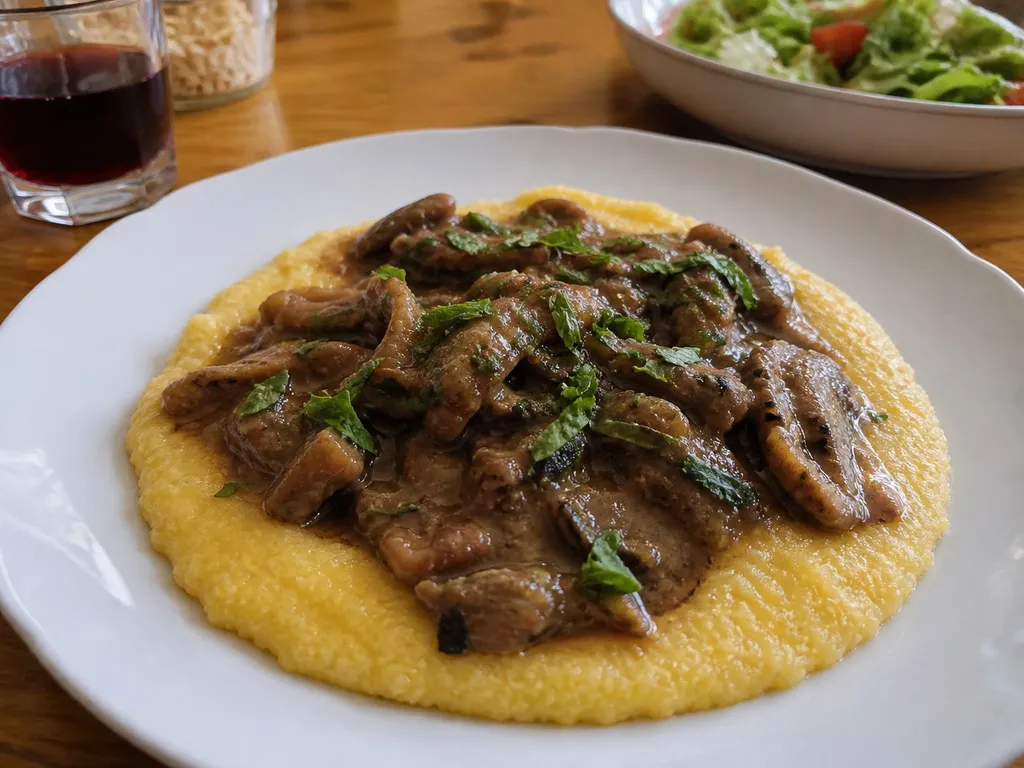 Images are for illustrative purposes only, may be inaccurate, and do not guarantee the presence or absence of specific ingredients.
 Listahan Family Score™
78/100
Good fit for most families
Score reflects how well this recipe fits a typical busy household. In the app, your Family Score is personalized to your household's allergens, kids, and pantry.
Nutrition
per serving435
Calories
16 g
Protein
53 g
Carbs
19 g
Fat
Estimated per serving. Actual values depend on the brands and portions you use.
Listahan cooking guide
Chef notes & practical guide
Technique notes, ingredient swaps, serve-alongside ideas, storage guidance, and equipment for this recipe.
Cultural context
Polenta is northern Italy's cornmeal porridge, a peasant staple that became a regional cornerstone after corn arrived from the Americas in the 16th century. For generations it was poured onto a wooden board at the center of the table and eaten communally, soft and steaming or later cut firm and grilled. It is the canvas of the Italian north, served creamy under braises or crisped into slabs alongside cheese and mushrooms.
Listahan note
This version aims for the creamy, slow-stirred style enriched with butter and Parmigiano, the kind you spoon under a stew. It also notes how to set and grill the leftovers so nothing goes to waste.
Technique cues
- Rain the cornmeal into the liquid in a slow stream while whisking so it disperses; dumping it in at once guarantees lumps.
- Cook it longer than you think, stirring often over low heat, so the corn loses its raw graininess and turns silky.
- Stir in butter and cheese only at the end off direct heat so the fat emulsifies smoothly into the porridge.
Kitchen flow
- Parallel prep
- Get any braise or topping going first since polenta needs near-constant attention once the cornmeal goes in.
- Make-ahead
- Pour cooked polenta into a sheet pan to set firm; the next day you can cut and grill or pan-fry the slabs.
- Leftover move
- Cut chilled set polenta into wedges and sear them crisp in oil, then top with cheese or a fried egg.
- Cleanup rhythm
- Fill the polenta pot with hot water to soak immediately, since dried-on cornmeal is stubborn to scrub.
Ingredient brief
Role, handling, and swap guidance for each key ingredient.
coarse cornmeal
main body
Purpose: Stone-ground corn gives polenta its sweet flavor and the slightly toothsome texture that defines it.
Handling: Measure it ready to pour so you can add it in a steady stream while whisking.
Adaptation: Instant polenta cooks in minutes but lacks depth; avoid fine cornflour, which goes pasty.
water or stock
cooking liquid
Purpose: The liquid hydrates the corn and carries flavor; stock makes a savory base for braises.
Handling: Bring to a gentle simmer and salt it before adding the cornmeal so the grain seasons from within.
Adaptation: Part milk makes it richer and creamier if serving it as a soft side.
butter
richness
Purpose: It rounds out the corn's edges and gives the finished polenta a glossy, luxurious mouthfeel.
Handling: Cut into pieces and beat in at the end so it melts evenly.
Adaptation: Olive oil keeps it dairy-light; mascarpone makes it extra plush.
Parmigiano-Reggiano
savory depth
Purpose: Its salt and umami transform plain cornmeal into a craveable, savory base.
Handling: Grate fresh and stir in off the heat with the butter.
Adaptation: Pecorino adds more bite; Grana Padano is a gentler, budget-friendly option.
Technique notes
- A wide, heavy pot spreads the heat and reduces sticking and scorching on the bottom.
- If it thickens too far before it is fully tender, loosen with a ladle of hot water or stock and keep cooking.
- For grilled polenta, chill the set slabs thoroughly so they firm up and hold their shape on the grates.
Ingredient swaps
- Dairy-free option
- Finish with olive oil and nutritional yeast instead of butter and cheese for a savory, plant-based version.
- Weeknight shortcut
- Use instant polenta to get a creamy bowl on the table in under ten minutes, then enrich with butter and cheese.
- Lower-sodium direction
- Cook in unsalted stock and lean on a small amount of sharp cheese to season instead of added salt.
Serve alongside
- Braised short ribs or osso buco
- Sauteed mushrooms with garlic and thyme
- Sausages with peppers
- Gorgonzola crumbles and walnuts
- A glass of Barbera
- A robust Nebbiolo
- Sparkling water with lemon
Serving suggestions only — check pairings for your household's allergens.
Storage & reheating
- Soft polenta firms up as it cools, so refrigerate it in a sealed container for up to four days and reheat with extra liquid to loosen. Set polenta keeps well chilled and is best reheated by grilling or pan-frying. It can be frozen in slabs for up to two months and crisped from thawed.
Equipment
- A wide, heavy-bottomed pot
- A sturdy whisk and a wooden spoon
- A sheet pan for setting leftovers
- A grill pan or cast-iron skillet for crisping
Make this household-aware
Listahan Pro checks this recipe against your household's allergens, finds pantry-aware swaps, builds the shopping list, and helps you plan the week around it.
Plan it in Listahan
Add Polenta to your week, check it against your household's allergens, and build the shopping list automatically.
More Italian recipes
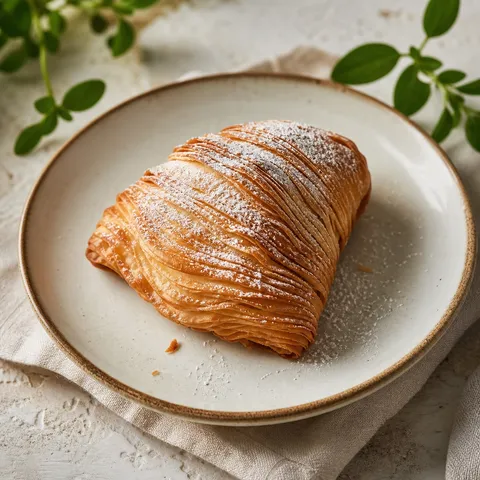 Italian Lens Verified Images are for illustrative purposes only, may be inaccurate, and do not guarantee the presence or absence of specific ingredients.
 Sfogliatella
Naples' iconic shell-shaped pastry with crisp, flaky layers wrapped around a sweet ricotta-semolina filling.
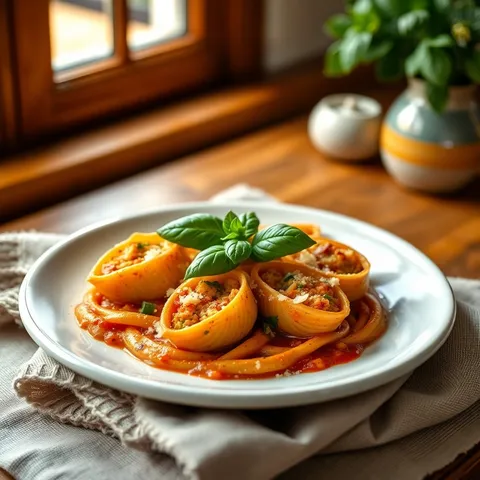 Italian Lens Verified Images are for illustrative purposes only, may be inaccurate, and do not guarantee the presence or absence of specific ingredients.
 Stuffed Shells (Conchiglioni Ripieni)
Jumbo pasta shells filled with a creamy ricotta-spinach mixture and baked in tomato sauce.
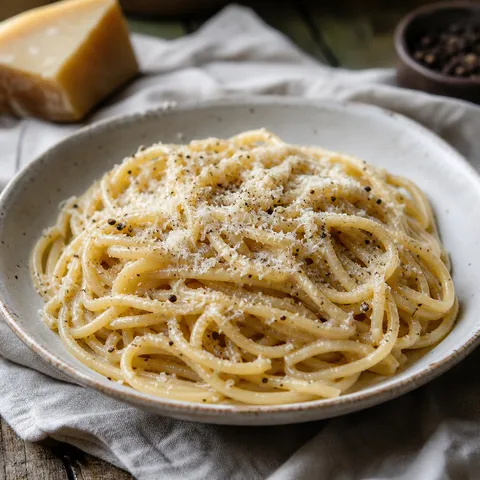 Italian Lens Verified Images are for illustrative purposes only, may be inaccurate, and do not guarantee the presence or absence of specific ingredients.
 Cacio e Pepe
A minimalist Roman pasta dish literally meaning "cheese and pepper."