 Italian Images are for illustrative purposes only, may be inaccurate, and do not guarantee the presence or absence of specific ingredients.
  Serving Images are for illustrative purposes only, may be inaccurate, and do not guarantee the presence or absence of specific ingredients.
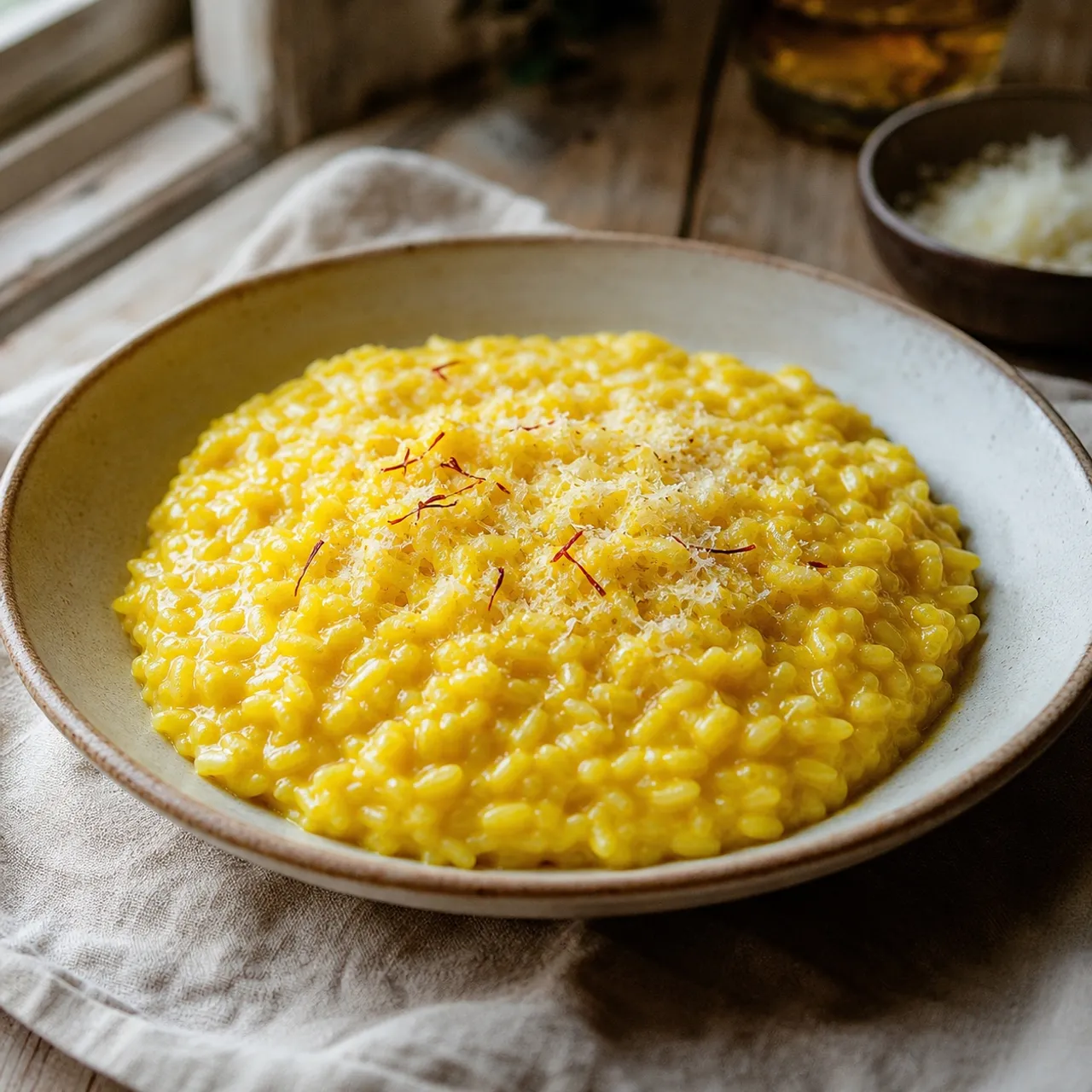
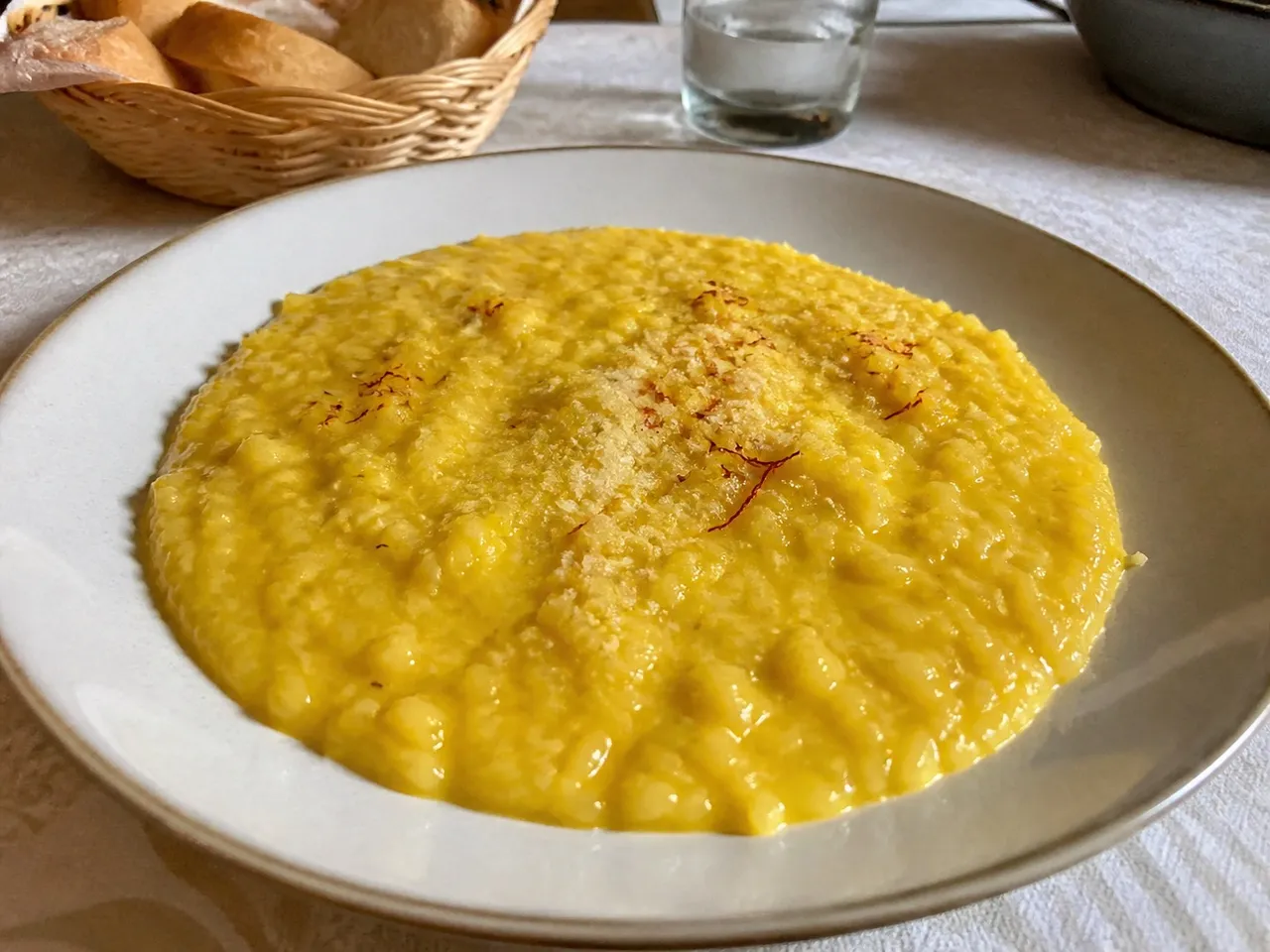
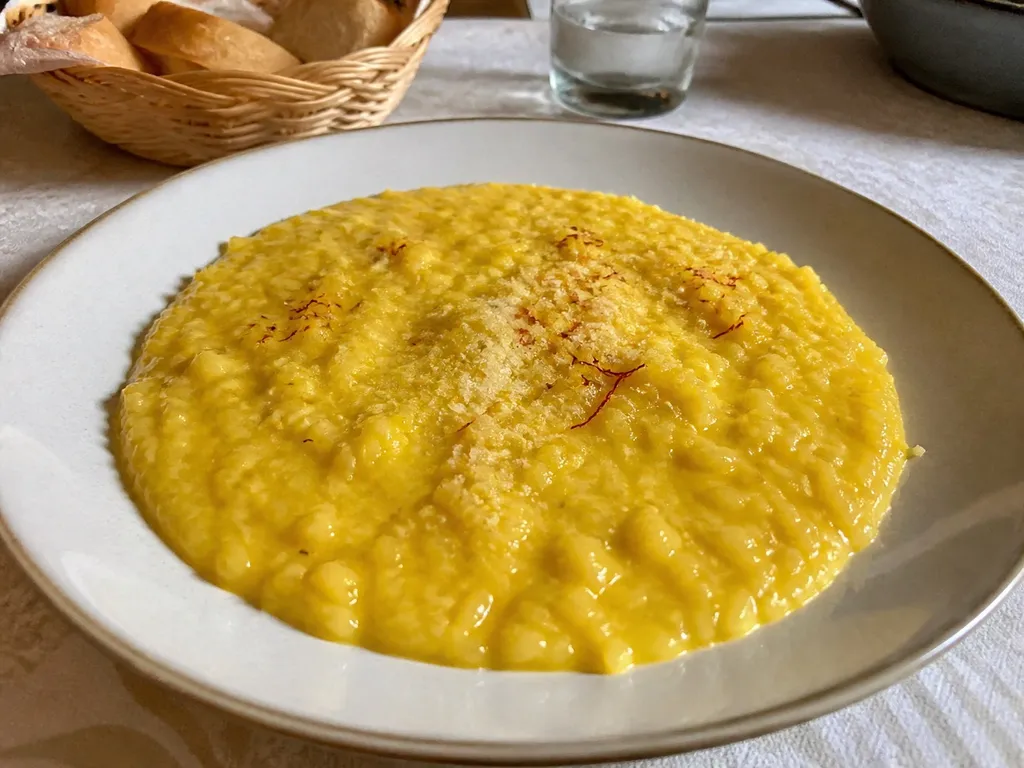
 Risotto alla Milanese
Transport yourself to Northern Italy with this intensely creamy, golden saffron-infused rice dish from Milan. Every spoonful offers a luxurious texture and a delicate, earthy flavor profile.
Contains common allergens
In the app, Listahan checks these against your household automatically.
Instructions
6 steps- 1
Prepare the Broth: In a saucepan, bring the broth to a gentle simmer and keep it warm over low heat. The broth must be hot when added to the rice to maintain an even cooking temperature.
- 2
Sweat the Onion: In a large, heavy-bottomed skillet or Dutch oven, melt 2 tablespoons of butter over medium-low heat. Add the finely minced onion and a pinch of salt. Cook gently for 5-7 minutes until the onion is completely soft and translucent, without browning.
- 3
Toast the Rice: Increase the heat to medium. Add the rice to the skillet and stir constantly for 2-3 minutes. The edges of the rice grains should become translucent, and it should smell slightly nutty.
- 4
Deglaze and Simmer: Pour in the white wine, stirring constantly until the liquid is almost completely absorbed.
- 5
Add Broth Gradually: Begin adding the hot broth one ladle (about 1/2 cup) at a time, stirring frequently. Wait until the liquid is mostly absorbed before adding the next ladle. Halfway through cooking, pour in the steeped saffron liquid. Continue this process until the rice is tender but retains a slight bite (*al dente*), about 18-20 minutes.
- 6
Mantecatura (The Finish): Remove the skillet from the heat. Vigorously stir in the remaining 2 tablespoons of cold butter and the grated Parmesan cheese until fully melted and emulsified, creating a velvety, wave-like consistency. Serve immediately on flat plates.
 Images are for illustrative purposes only, may be inaccurate, and do not guarantee the presence or absence of specific ingredients.
 Listahan Family Score™
75/100
Good fit for most families
Score reflects how well this recipe fits a typical busy household. In the app, your Family Score is personalized to your household's allergens, kids, and pantry.
Nutrition
per serving715
Calories
24 g
Protein
89 g
Carbs
26 g
Fat
Estimated per serving. Actual values depend on the brands and portions you use.
Listahan cooking guide
Chef notes & practical guide
Technique notes, ingredient swaps, serve-alongside ideas, storage guidance, and equipment for this recipe.
Cultural context
Risotto alla Milanese is one of the most iconic dishes of Lombardy, its golden color coming from saffron — a spice that was a luxury trade good in Renaissance Milan. The most famous origin story places it in 1574, when an apprentice glassworker who used saffron to tint cathedral windows allegedly added it to rice at a wedding feast as a joke, and the guests loved it. Whether true or not, the dish has defined Milanese cucina for centuries and is the traditional accompaniment to ossobuco, the two dishes forming one of Italy's most celebrated pairings.
Listahan note
This version uses warm stock added ladle by ladle and finishes with a generous mantecatura — the vigorous off-heat incorporation of butter and Parmesan that transforms the rice from a stew into a creamy, flowing dish.
Technique cues
- Keep your stock at a bare simmer in a separate pot throughout cooking — adding cold liquid to hot rice shocks the starch and creates an uneven, gluey texture instead of a smooth, creamy one.
- Stir regularly but not constantly; brief periods of rest between stirring allow the rice to gently toast in the fat, which adds nutty flavor and helps the grains hold their shape.
- The mantecatura at the end — removing the pan from heat and beating in cold cubed butter with vigorous stirring — is what creates the 'wave' (all'onda) texture; the dish should flow slightly when the pan is tilted.
Kitchen flow
- Parallel prep
- Get the stock warming on one burner while you saute the shallots and toast the rice on another, so you have warm stock ready the moment the wine absorbs.
- Make-ahead
- You can par-cook risotto up to 70 percent done, spread it on a tray to cool, and refrigerate it; finish to order in 5 to 7 minutes with additional warm stock.
- Leftover move
- Cold leftover risotto firms up — shape into patties and pan-fry in butter for golden, crispy arancini-style risotto cakes that are arguably better than the original.
- Cleanup rhythm
- Soak the risotto pan immediately after plating since starch bonds strongly to the pan once cooled; the stock pot just needs a rinse while still warm.
Ingredient brief
Role, handling, and swap guidance for each key ingredient.
Arborio rice
starchy base
Purpose: Arborio and other risotto rices (Carnaroli, Vialone Nano) contain high levels of surface starch that release slowly into the cooking liquid, creating the characteristic creamy consistency.
Handling: Do not rinse the rice before cooking — the surface starch is exactly what you want to develop the sauce.
Adaptation: Carnaroli is preferred by many professionals as it holds its shape better; Arborio is more widely available and works excellently.
saffron threads
color, aroma, and flavor
Purpose: Saffron imparts the unmistakable golden color and a distinctive floral, slightly metallic flavor that is the entire identity of this dish.
Handling: Bloom saffron in a small amount of warm (not boiling) stock or water for at least 10 minutes before adding to the rice so the color and flavor fully infuse.
Adaptation: There is no true substitute for saffron — turmeric can approximate the color but the flavor profile is entirely different.
dry white wine
acidity and deglazing agent
Purpose: Wine added after toasting the rice deglazes the pan, adds acidity to balance the richness, and its alcohol carries fat-soluble flavor compounds into the sauce.
Handling: Add when the rice is hot and toasted and let it absorb almost completely before adding the first ladle of stock.
Adaptation: A splash of white wine vinegar diluted in stock can substitute if you prefer to cook without wine.
Parmigiano-Reggiano
umami finish
Purpose: Parmesan adds the nutty, savory depth that rounds out the saffron and makes the finished risotto taste complete rather than one-dimensional.
Handling: Grate finely and add off heat along with the butter during the mantecatura so it melts smoothly without clumping.
Adaptation: Grana Padano is a more affordable option with a similar flavor profile.
unsalted butter
enriching and emulsifying agent
Purpose: Cold butter beaten in at the end creates an emulsion with the starchy liquid that gives risotto its distinctive creamy, glossy consistency.
Handling: Cut into small cubes and keep cold until the very end of cooking; warm butter does not emulsify as effectively.
Adaptation: For dairy-free, a high-quality olive oil can be stirred in off heat for a different but still luscious result.
Technique notes
- Toast the dry rice in the butter and shallots for a full 2 minutes until it turns slightly translucent at the edges — this step gelatinizes the outer starch and prevents the grains from becoming mushy during the long cook.
- Taste the rice frequently in the last 5 minutes of cooking; risotto is done when the grain is tender with just a slight resistance at the very center, not chalky but not fully soft.
- Serve risotto immediately after the mantecatura — it continues to absorb liquid and tighten as it sits, so a perfect all'onda texture becomes porridge-like within minutes.
Ingredient swaps
- Gluten-free direction
- Risotto is naturally gluten-free when made with gluten-free stock; verify that wine and any added flavoring agents are also gluten-free.
- Dairy-free option
- Substitute the butter with a good-quality olive oil for the mantecatura and omit the Parmesan or use a dairy-free hard cheese alternative.
- Lower-cost direction
- Saffron is expensive — purchase a small amount from a spice shop rather than a grocery store for significantly better quality at lower price per gram.
Serve alongside
- Ossobuco alla Milanese (the classic pairing)
- Pan-roasted veal cutlet with sage
- Braised fennel with white wine
- Pinot Grigio (bright acidity complements the saffron)
- Franciacorta sparkling wine (Lombardy's native sparkling wine)
Serving suggestions only — check pairings for your household's allergens.
Storage & reheating
- Risotto is best eaten immediately; if you must store it, transfer to an airtight container and refrigerate for up to 2 days.
- Reheat with a splash of warm stock over medium-low heat, stirring constantly to restore some creaminess, though it will not fully return to the original all'onda texture.
Equipment
- Wide, heavy-bottomed saucepan or saute pan (a wider surface area means more even evaporation and better stirring access)
- Small saucepan for keeping stock warm at a steady simmer
- Ladle for adding stock in consistent measured additions
Make this household-aware
Listahan Pro checks this recipe against your household's allergens, finds pantry-aware swaps, builds the shopping list, and helps you plan the week around it.
Plan it in Listahan
Add Risotto alla Milanese to your week, check it against your household's allergens, and build the shopping list automatically.
More Italian recipes
 Italian Lens Verified Images are for illustrative purposes only, may be inaccurate, and do not guarantee the presence or absence of specific ingredients.
 Sfogliatella
Naples' iconic shell-shaped pastry with crisp, flaky layers wrapped around a sweet ricotta-semolina filling.
 Italian Lens Verified Images are for illustrative purposes only, may be inaccurate, and do not guarantee the presence or absence of specific ingredients.
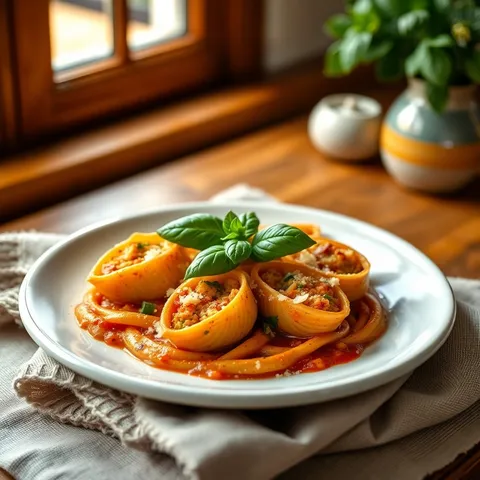
 Stuffed Shells (Conchiglioni Ripieni)
Jumbo pasta shells filled with a creamy ricotta-spinach mixture and baked in tomato sauce.
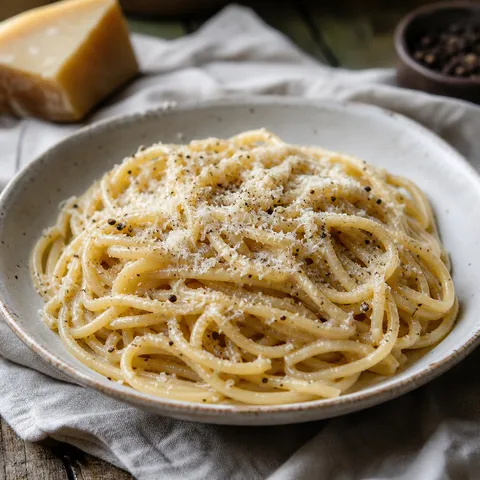 Italian Lens Verified Images are for illustrative purposes only, may be inaccurate, and do not guarantee the presence or absence of specific ingredients.
 Cacio e Pepe
A minimalist Roman pasta dish literally meaning "cheese and pepper."