 Italian Images are for illustrative purposes only, may be inaccurate, and do not guarantee the presence or absence of specific ingredients.
  Serving Images are for illustrative purposes only, may be inaccurate, and do not guarantee the presence or absence of specific ingredients.
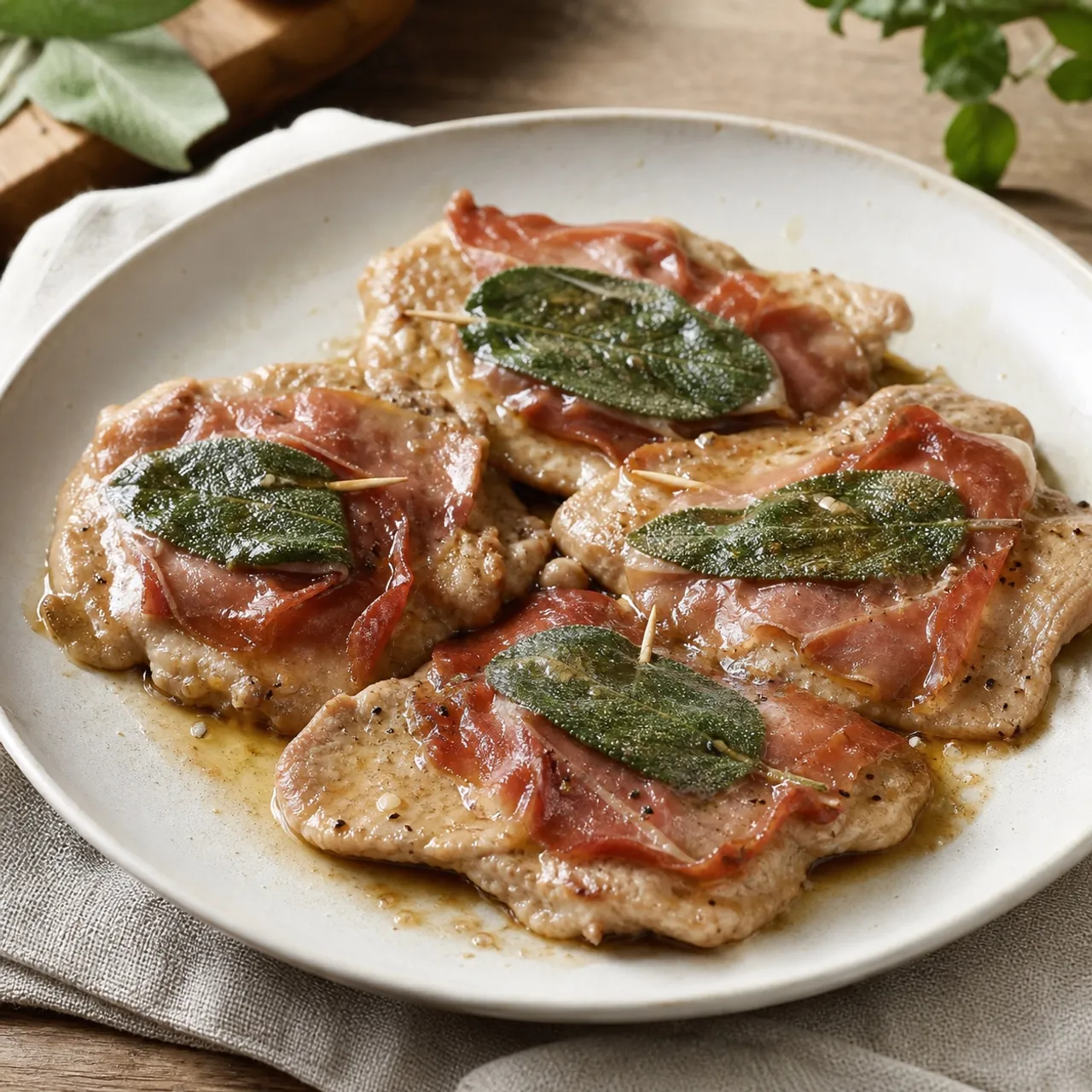
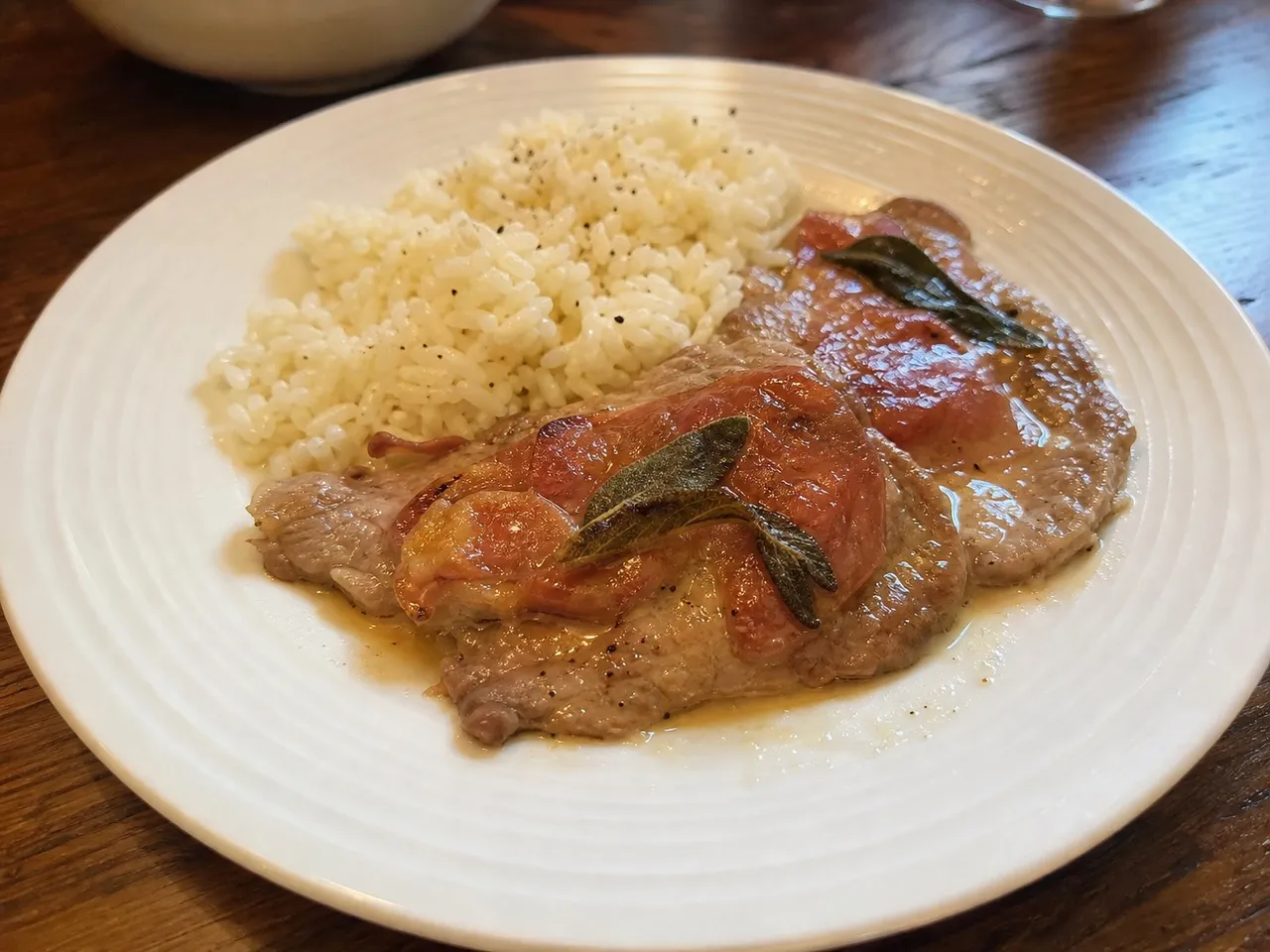
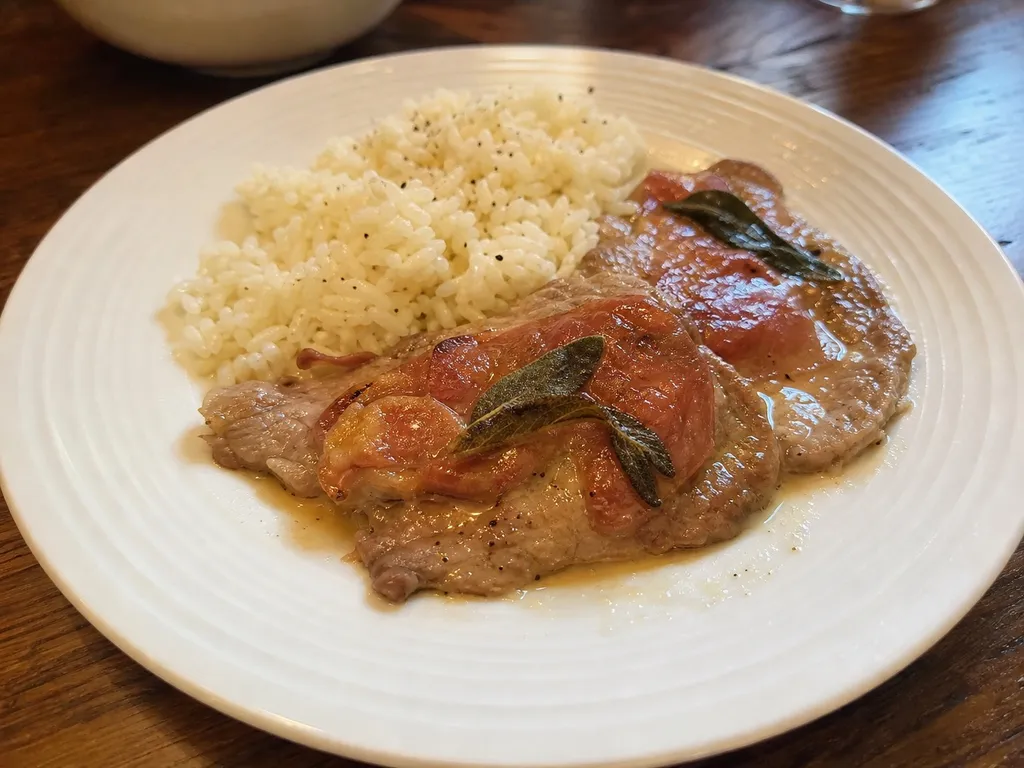
 Saltimbocca alla Romana
Veal cutlets wrapped with prosciutto and sage, cooked in white wine.
Contains common allergens
In the app, Listahan checks these against your household automatically.
Good to know
- Ready in under 30 minutes
Matched from this dish's own ingredients and timing. Browse more: 30-minute meals
Instructions
6 steps- 1
Prep the Cutlets: Lay the pounded veal cutlets flat on a cutting board. Season the meat lightly with pepper (use very little salt, as the prosciutto is quite salty).
- 2
Assemble the Saltimbocca: Place one whole fresh sage leaf flat in the center of each cutlet. Top with a slice of prosciutto, pressing it gently so it adheres to the meat. Secure the prosciutto and sage to the veal by threading a wooden toothpick in and out through the center.
- 3
Dredge: Lightly dredge only the bottom (veal) side of each cutlet in flour, shaking off any excess.
- 4
Pan-Fry: Heat the olive oil and 1 tablespoon of butter in a large skillet over medium-high heat. Place the cutlets in the skillet, prosciutto-side down first. Cook for just 1-2 minutes until the prosciutto is slightly crisp.
- 5
Flip and Cook: Flip the cutlets carefully using tongs. Cook the floured veal side for another 1-2 minutes until lightly browned. Remove the cutlets to a warm plate and tent with foil.
- 6
Make the Pan Sauce: Discard excess fat from the skillet. Pour in the white wine to deglaze, scraping up any browned bits. Simmer rapidly for 2 minutes until the wine reduces by half. Swirl in the remaining 2 tablespoons of butter until melted and the sauce turns glossy. Pour the sauce directly over the warm cutlets and serve immediately.
 Images are for illustrative purposes only, may be inaccurate, and do not guarantee the presence or absence of specific ingredients.
 Listahan Family Score™
67/100
Works for many families
Score reflects how well this recipe fits a typical busy household. In the app, your Family Score is personalized to your household's allergens, kids, and pantry.
Nutrition
per serving190
Calories
1 g
Protein
7 g
Carbs
15 g
Fat
Estimated per serving. Actual values depend on the brands and portions you use.
Listahan cooking guide
Chef notes & practical guide
Technique notes, ingredient swaps, serve-alongside ideas, storage guidance, and equipment for this recipe.
Cultural context
Saltimbocca — meaning 'jumps in the mouth' in Italian — is a hallmark of Roman trattoria cooking, thought to have originated in Brescia (Lombardy) before becoming inseparable from the Roman table. The dish pairs thin veal cutlets with prosciutto and fresh sage, fastened together and quickly pan-fried in butter and finished with white wine. Its genius lies in the layering of flavors: the delicate veal, the salty-porky prosciutto that crisps on contact with the pan, and the herbal bitterness of sage, all united by a simple white wine pan sauce that takes minutes to make.
Listahan note
This version cooks the veal prosciutto-side down first so the prosciutto crisps directly against the pan, then flips briefly to just barely cook through the veal — timing is everything, as veal scallopini overcooks in seconds.
Technique cues
- Pound the veal cutlets to an even 1/4-inch thickness using a meat mallet or the bottom of a heavy pan — uneven thickness means parts will overcook before others are done.
- Secure the prosciutto and sage to the veal with a toothpick through all layers; if left unsecured, the prosciutto tends to curl and separate as it cooks.
- Deglaze the pan with white wine immediately after removing the meat and reduce the liquid by half in about 60 seconds — this lifts the caramelized fond and creates the pan sauce without needing any thickeners.
Kitchen flow
- Parallel prep
- Pound and assemble all the cutlets with prosciutto and sage before turning on the stove, so you can cook them in rapid succession without pausing.
- Make-ahead
- The assembled, unpounded cutlets can be refrigerated sandwiched between parchment for up to 4 hours before cooking; the dish itself must be cooked to order.
- Leftover move
- Leftover saltimbocca can be sliced thinly and used as a topping for bruschetta or tucked into a sandwich with arugula and a squeeze of lemon.
- Cleanup rhythm
- Deglaze the pan immediately after removing the meat — the wine sauce cleanup happens as part of cooking, leaving only a quick hot-water wipe of the pan.
Ingredient brief
Role, handling, and swap guidance for each key ingredient.
veal cutlets
main protein
Purpose: Thin veal scallopini have a delicate, mild flavor and tender texture that showcases the prosciutto and sage without competing with them.
Handling: Pound to even 1/4-inch thickness and pat dry so they sear rather than steam in the pan.
Adaptation: Thin chicken cutlets (paillards) or pork tenderloin slices work well and are more widely available; the flavor is slightly more assertive but the technique is identical.
prosciutto di Parma
salty, crispy crust
Purpose: Prosciutto crisps against the hot pan and imparts saltiness and rich pork flavor into the butter, creating a savory, crackling layer over the veal.
Handling: Use thin slices and press firmly against the veal; do not add additional salt to the meat since prosciutto provides more than enough.
Adaptation: Speck (smoked prosciutto) adds a subtle smokiness; bacon cut thin can substitute in a pinch but is much more strongly flavored.
fresh sage
herbal aromatic
Purpose: Sage's earthy, slightly camphor-like flavor is the defining aromatic of this dish and pairs classically with both veal and butter.
Handling: Use whole, unblemished leaves placed directly on the veal under the prosciutto and secured with a toothpick.
Adaptation: Dried sage has a dusty, concentrated flavor that overwhelms rather than complements; fresh sage is not optional here.
unsalted butter
cooking fat and pan sauce base
Purpose: Butter browns at the right temperature for quick-cooking veal and provides the fat base for the wine pan sauce.
Handling: Use a moderate amount — about 2 tablespoons for 4 cutlets — and keep the heat at medium-high so the butter foams but does not burn.
Adaptation: A combination of butter and olive oil raises the smoke point slightly for cooks who find butter alone burns too fast.
dry white wine
pan sauce and deglazing acid
Purpose: White wine dissolves the caramelized fond from the pan and creates a quick, bright sauce with minimal effort.
Handling: Add immediately after removing the meat while the pan is still very hot so it sizzles and reduces rapidly.
Adaptation: Dry Marsala gives a deeper, nuttier sauce with a different but still traditional character.
Technique notes
- The total cooking time for thin veal scallopini is 3 to 4 minutes — about 2 minutes prosciutto-side down until the prosciutto is crispy, then 1 to 2 minutes on the veal side just until the meat turns opaque; any longer and the veal becomes tough and dry.
- Resist moving the cutlets once they go into the pan prosciutto-side down; let them sit undisturbed so the prosciutto develops a proper sear and clings to the veal rather than sliding around.
- Finish each plate with a squeeze of lemon — it is not in the traditional Roman recipe but it brightens every element on the plate and many Roman cooks add it tableside.
Ingredient swaps
- Gluten-free direction
- Saltimbocca is naturally gluten-free; ensure the wine and butter are free of added gluten ingredients (most are).
- Poultry direction
- Thin chicken breast cutlets make an excellent and more accessible version; increase cooking time by 1 to 2 minutes per side as chicken is less forgiving of undercooking than veal.
Serve alongside
- Roasted asparagus with lemon and olive oil
- Sauteed spinach with garlic
- Roasted potatoes with rosemary and sea salt
- Frascati or Castelli Romani white (the local Roman wines traditionally served with this dish)
- Pinot Grigio or light Vermentino
Serving suggestions only — check pairings for your household's allergens.
Storage & reheating
- Saltimbocca is best served immediately; leftovers can be stored in the refrigerator for 1 day but the prosciutto loses its crispness.
- Reheat gently in a skillet over low heat with a splash of white wine; avoid microwave which makes the prosciutto rubbery.
Equipment
- Meat mallet or heavy-bottomed pan for pounding the cutlets evenly
- Large stainless-steel skillet (not nonstick — you need the fond for the pan sauce)
- Toothpicks for securing the layered assembly during cooking
Make this household-aware
Listahan Pro checks this recipe against your household's allergens, finds pantry-aware swaps, builds the shopping list, and helps you plan the week around it.
Plan it in Listahan
Add Saltimbocca alla Romana to your week, check it against your household's allergens, and build the shopping list automatically.
More Italian recipes
 Italian Lens Verified Images are for illustrative purposes only, may be inaccurate, and do not guarantee the presence or absence of specific ingredients.
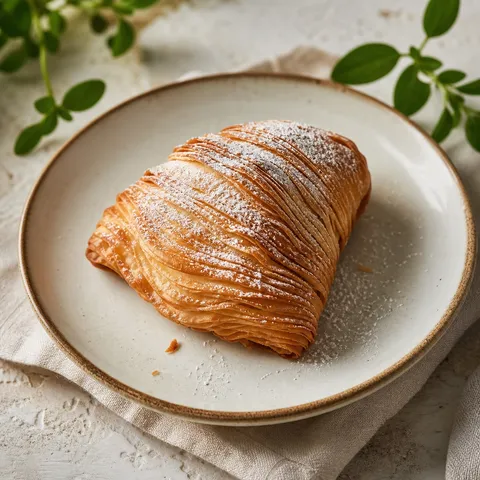
 Sfogliatella
Naples' iconic shell-shaped pastry with crisp, flaky layers wrapped around a sweet ricotta-semolina filling.
 Italian Lens Verified Images are for illustrative purposes only, may be inaccurate, and do not guarantee the presence or absence of specific ingredients.
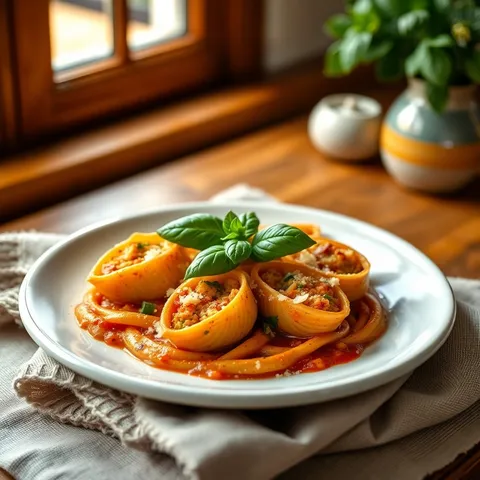
 Stuffed Shells (Conchiglioni Ripieni)
Jumbo pasta shells filled with a creamy ricotta-spinach mixture and baked in tomato sauce.
 Italian Lens Verified Images are for illustrative purposes only, may be inaccurate, and do not guarantee the presence or absence of specific ingredients.
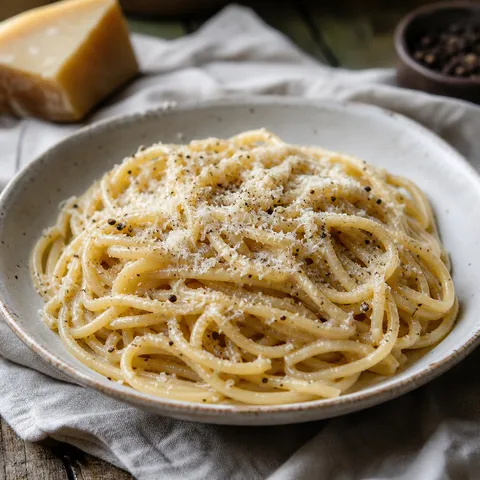
 Cacio e Pepe
A minimalist Roman pasta dish literally meaning "cheese and pepper."