 Italian Images are for illustrative purposes only, may be inaccurate, and do not guarantee the presence or absence of specific ingredients.
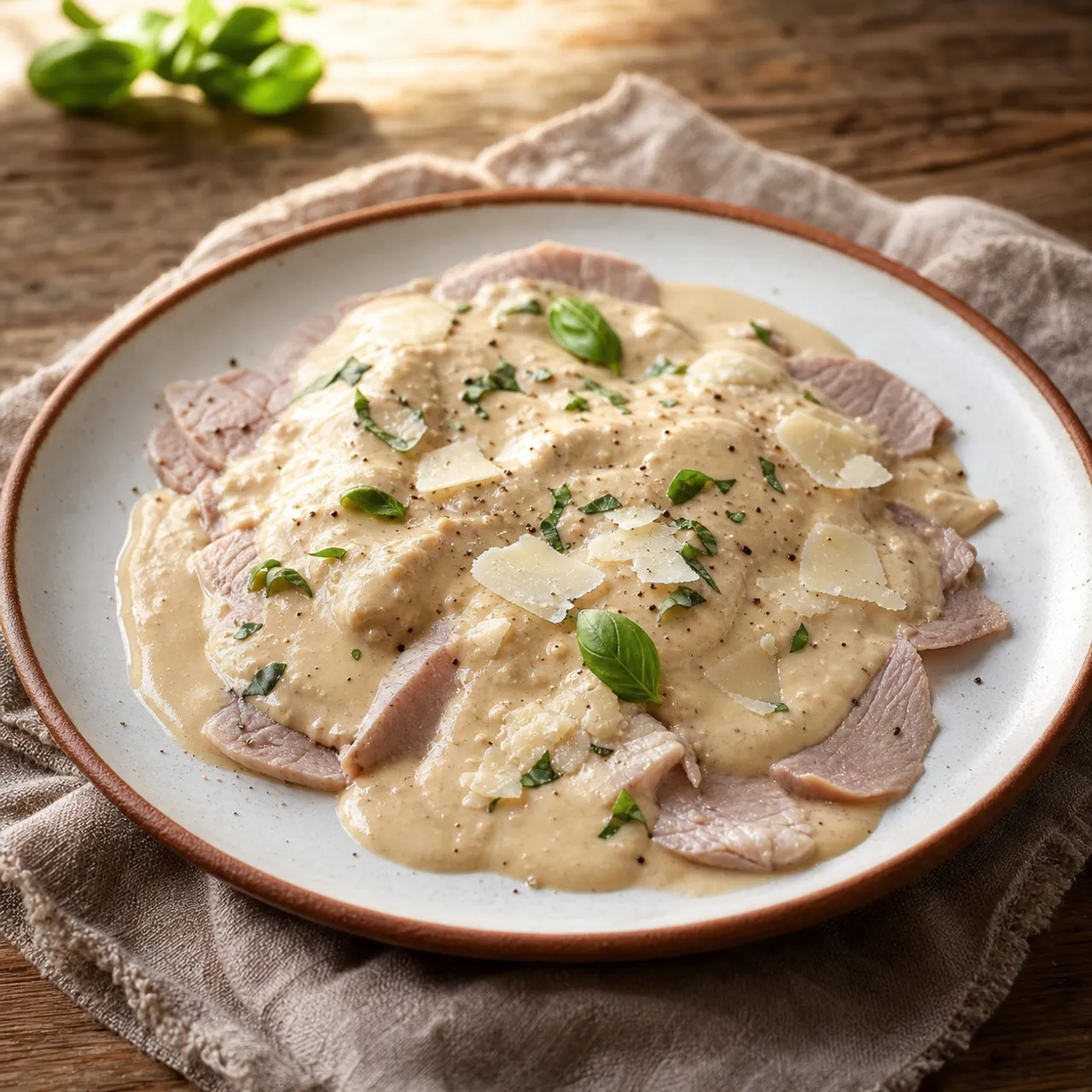
 Vitello Tonnato
A Piedmontese summer classic of cold sliced veal cloaked in a silky, savory tuna-caper sauce.
Contains common allergens
In the app, Listahan checks these against your household automatically.
Instructions
5 steps- 1
Place the veal in a pot with the roughly chopped carrot, celery, and onion, cover with cold water, bring to a gentle simmer, and poach uncovered for about 1 hour until the meat reaches 145°F at the center.
- 2
Remove the veal from the broth, let it cool to room temperature, then wrap tightly and refrigerate for at least 2 hours until fully chilled and firm enough to slice paper-thin.
- 3
While the veal chills, combine the drained tuna, mayonnaise, anchovy fillets, 2 tablespoons capers, and lemon juice in a blender, pulsing until completely smooth, and loosen with a tablespoon of the poaching broth if needed for a pourable consistency.
- 4
Using a sharp knife or slicer, cut the chilled veal across the grain into very thin slices and arrange them in a single overlapping layer on a serving platter.
- 5
Spoon the tuna sauce evenly over the veal to coat it fully, scatter with the extra capers, cover, and chill for 30 minutes more before serving cold.
Listahan Family Score™
60/100
Works for many families
Score reflects how well this recipe fits a typical busy household. In the app, your Family Score is personalized to your household's allergens, kids, and pantry.
Nutrition
per serving580
Calories
41 g
Protein
3 g
Carbs
44 g
Fat
Estimated per serving. Actual values depend on the brands and portions you use.
Listahan cooking guide
Chef notes & practical guide
Technique notes, ingredient swaps, serve-alongside ideas, storage guidance, and equipment for this recipe.
Cultural context
Vitello tonnato comes from Piedmont, where mountain cooking, veal, preserved fish, and capers meet in a dish that makes sense once you remember old trade routes. It is usually served cold as an antipasto or light summer main, with the meat sliced thin enough that the tuna-caper sauce becomes the main seasoning rather than a heavy topping.
Listahan note
This version keeps the cooking plain and gentle, then spends the effort on chilling, slicing, and blending the sauce until it is smooth enough to coat every slice. The practical goal is a platter that can be made ahead and served cold without last-minute cooking.
Technique cues
- Poach the veal at a gentle simmer, not a rolling boil. A quiet pot keeps the roast from tightening up and gives you cleaner slices later.
- Chilling is part of the technique, not downtime. Cold veal is much easier to cut thinly, and thin slices are what let the sauce season the meat evenly.
- The sauce should be loose enough to spread but not run off the platter. Add poaching broth a spoonful at a time so the tuna flavor stays concentrated.
Kitchen flow
- Parallel prep
- Start the sauce while the veal chills; the blender work is quick, and the sauce benefits from a short rest before coating the meat.
- Make-ahead
- Poach and chill the veal a day ahead, then slice and sauce the platter a few hours before serving.
- Leftover move
- Layer extra sliced veal and tuna sauce onto toasted bread with arugula and a few capers for a cold sandwich.
- Cleanup rhythm
- Rinse the blender right after pouring the sauce, then wipe the poaching pot while the broth is still warm.
Ingredient brief
Role, handling, and swap guidance for each key ingredient.
Veal eye of round or top round roast
Lean centerpiece
Purpose: These cuts slice neatly after chilling and give the tuna sauce a clean, mild base.
Handling: Poach whole with the vegetables, then chill tightly wrapped before slicing across the grain.
Adaptation: Beef top round gives a stronger flavor and darker color, while turkey breast makes a lighter-tasting version.
Tuna packed in oil
Sauce body
Purpose: Oil-packed tuna blends into a smoother, richer sauce than water-packed tuna.
Handling: Drain it well before blending so the mayonnaise and lemon can control the final texture.
Adaptation: Water-packed tuna works in a pinch, but the sauce may need a little extra mayonnaise or broth to feel silky.
Mayonnaise
Creamy binder
Purpose: It gives the sauce body and helps the tuna, anchovy, capers, and lemon blend into one coating.
Handling: Blend until fully smooth, scraping the blender if needed so no tuna flakes remain.
Adaptation: A mayonnaise-style alternative can be used, though the sauce may taste tangier or thinner depending on the base.
Anchovy fillets
Savory depth
Purpose: Anchovies make the tuna sauce taste rounded and seasoned without making it taste separately fishy when blended well.
Handling: Blend them completely into the sauce rather than chopping by hand.
Adaptation: Use a smaller amount if you want a milder sauce, then adjust with capers and lemon for balance.
Capers
Briny accent
Purpose: Capers cut through the creamy sauce and add the sharp little pops expected in vitello tonnato.
Handling: Drain before blending, and save extra capers for the garnish so the platter has texture.
Adaptation: Chopped green olives give a similar salty bite, but they make the sauce heavier and more olive-forward.
Fresh lemon juice
Bright finish
Purpose: Lemon keeps the tuna-mayonnaise sauce from tasting flat against the chilled veal.
Handling: Add the measured juice before blending, then taste after the sauce rests because the capers and anchovies continue to season it.
Adaptation: A small splash of white wine vinegar can stand in, but use less at first because it reads sharper.
Technique notes
- Use the sharpest knife you have, and take your time. Thick slices make the dish feel like cold roast with sauce instead of vitello tonnato.
- Arrange the veal in a shallow overlapping layer so every piece gets sauce. A tall pile hides dry spots underneath.
- Taste the sauce after blending, not before. Anchovies and capers need a minute in the mayonnaise to settle into the right balance.
Ingredient swaps
- No slicer method
- Chill the roast until very firm, then use a long slicing knife and steady strokes instead of sawing.
- Sauce texture adjustment
- For a lighter coating, loosen the sauce with poaching broth one tablespoon at a time; for a thicker coating, hold back the broth.
- Different roast path
- Use beef top round if veal is hard to find, knowing the finished platter will taste more robust and less delicate.
Serve alongside
- Grissini breadsticks
- Arugula and shaved fennel salad
- Roasted pepper antipasto
- Boiled new potatoes with parsley
- Gavi di Gavi
- Dry vermouth spritz
- Sparkling mineral water with lemon
Serving suggestions only — check pairings for your household's allergens.
Storage & reheating
- Refrigerate the sauced veal in a sealed container for up to 2 days.
- Serve cold from the refrigerator or let it stand briefly at cool room temperature; this dish is not meant to be reheated for the table.
- Freeze the cooked veal unsauced if needed, then thaw overnight and make a fresh tuna-caper sauce before serving.
Equipment
- Medium poaching pot
- Blender or food processor
- Sharp slicing knife or meat slicer
- Shallow serving platter
Make this household-aware
Listahan Pro checks this recipe against your household's allergens, finds pantry-aware swaps, builds the shopping list, and helps you plan the week around it.
Plan it in Listahan
Add Vitello Tonnato to your week, check it against your household's allergens, and build the shopping list automatically.
More Italian recipes
 Italian Lens Verified Images are for illustrative purposes only, may be inaccurate, and do not guarantee the presence or absence of specific ingredients.
 Sfogliatella
Naples' iconic shell-shaped pastry with crisp, flaky layers wrapped around a sweet ricotta-semolina filling.
 Italian Lens Verified Images are for illustrative purposes only, may be inaccurate, and do not guarantee the presence or absence of specific ingredients.
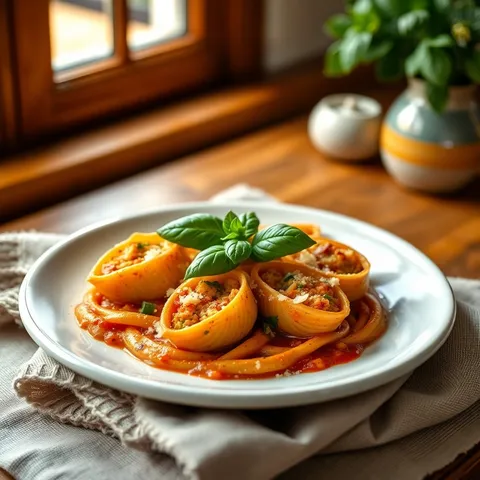
 Stuffed Shells (Conchiglioni Ripieni)
Jumbo pasta shells filled with a creamy ricotta-spinach mixture and baked in tomato sauce.
 Italian Lens Verified Images are for illustrative purposes only, may be inaccurate, and do not guarantee the presence or absence of specific ingredients.
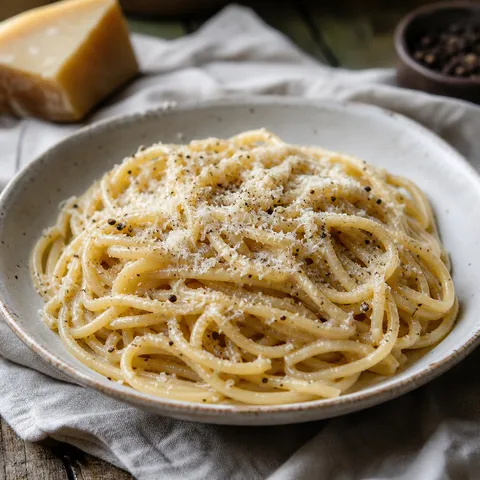
 Cacio e Pepe
A minimalist Roman pasta dish literally meaning "cheese and pepper."