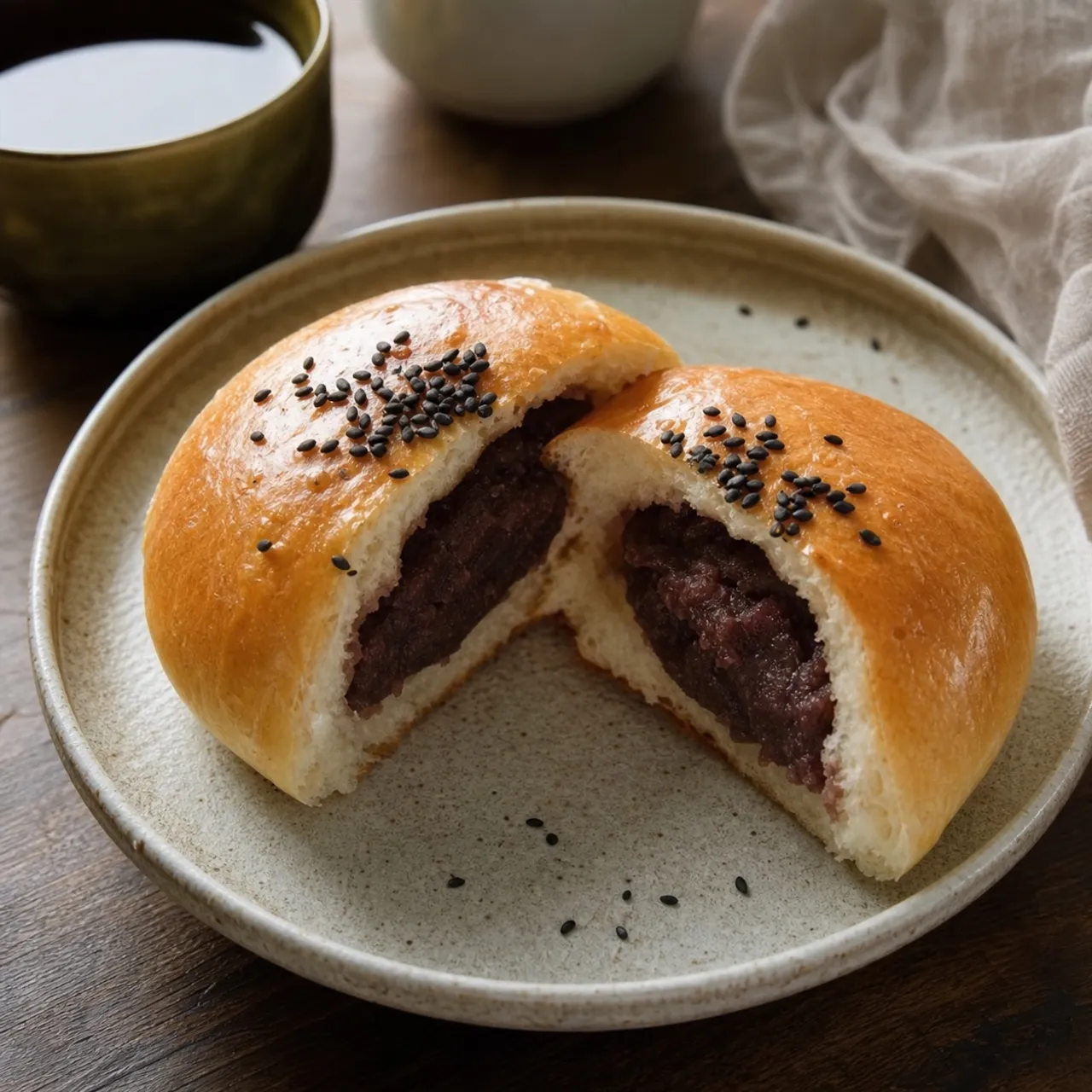
 Japanese Images are for illustrative purposes only, may be inaccurate, and do not guarantee the presence or absence of specific ingredients.
 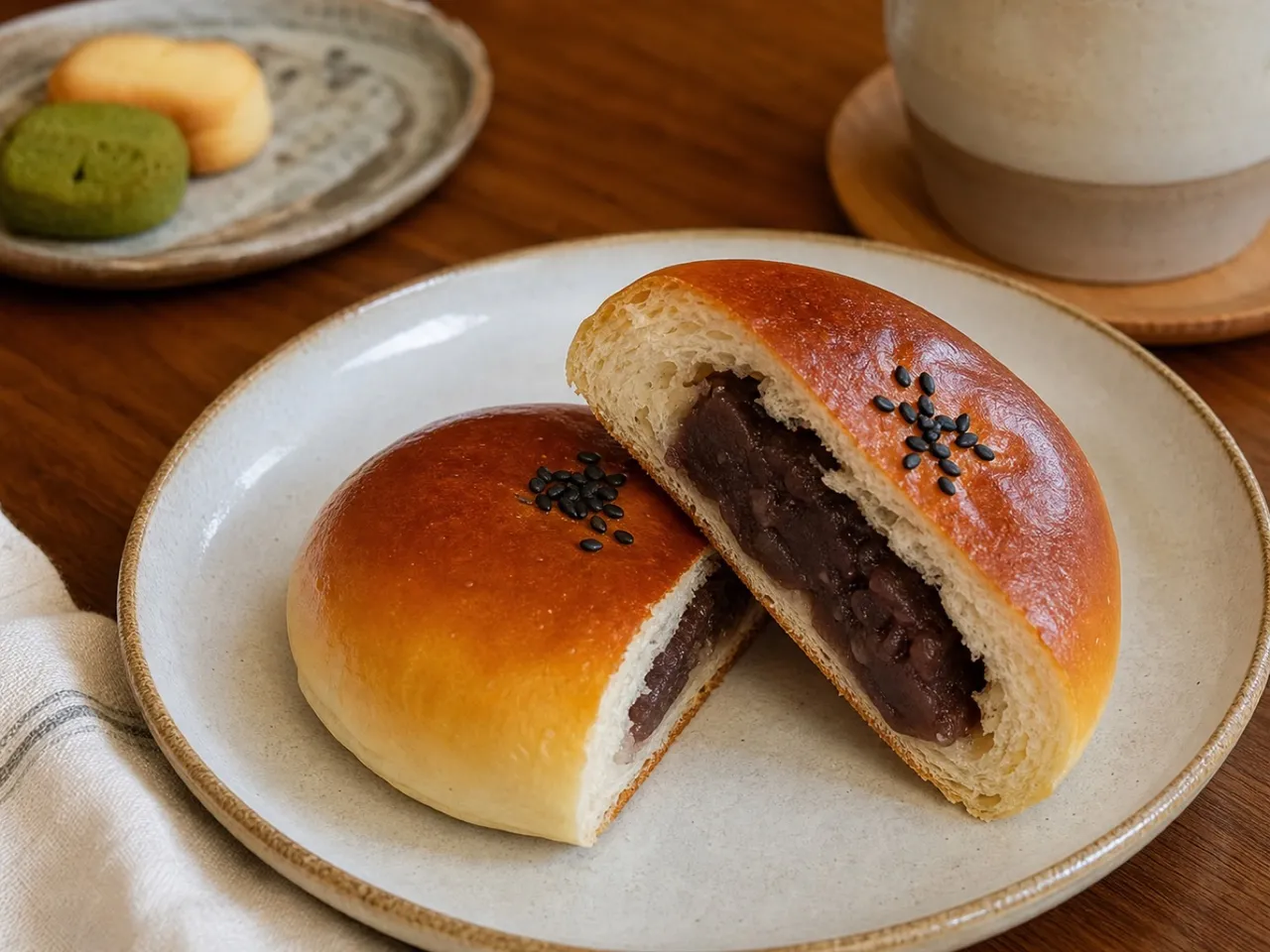 Serving Images are for illustrative purposes only, may be inaccurate, and do not guarantee the presence or absence of specific ingredients.
 Anpan
Soft Japanese milk bread buns filled with sweet red bean paste, brushed with egg wash and sesame seeds before baking.
Contains common allergens
In the app, Listahan checks these against your household automatically.
Instructions
6 steps- 1
In a stand mixer fitted with a dough hook, combine the bread flour, yeast, sugar, salt, and warm milk. Knead for 5 minutes until a rough dough forms.
- 2
Add the softened butter and continue kneading for 10-15 minutes until the dough is incredibly smooth, elastic, and passes the windowpane test. Cover and let rise in a warm place for 1-1.5 hours until doubled in size.
- 3
While the dough rises, divide the anko into 8 equal portions and roll them into firm balls.
- 4
Punch down the dough to deflate it, divide it into 8 equal pieces, and roll them into smooth balls. Cover and let rest for 15 minutes.
- 5
Flatten a dough ball into a 3-inch disk, leaving the center slightly thicker than the edges. Place an anko ball in the center, pull the dough edges up over the filling, and pinch tightly to seal. Place seam-side down on a baking sheet.
- 6
Cover the buns and let them rise for 45 minutes until puffy. Preheat the oven to 375°F (190°C). Brush the tops with egg wash, sprinkle the centers with black sesame seeds, and bake for 12-15 minutes until deeply golden brown and glossy.
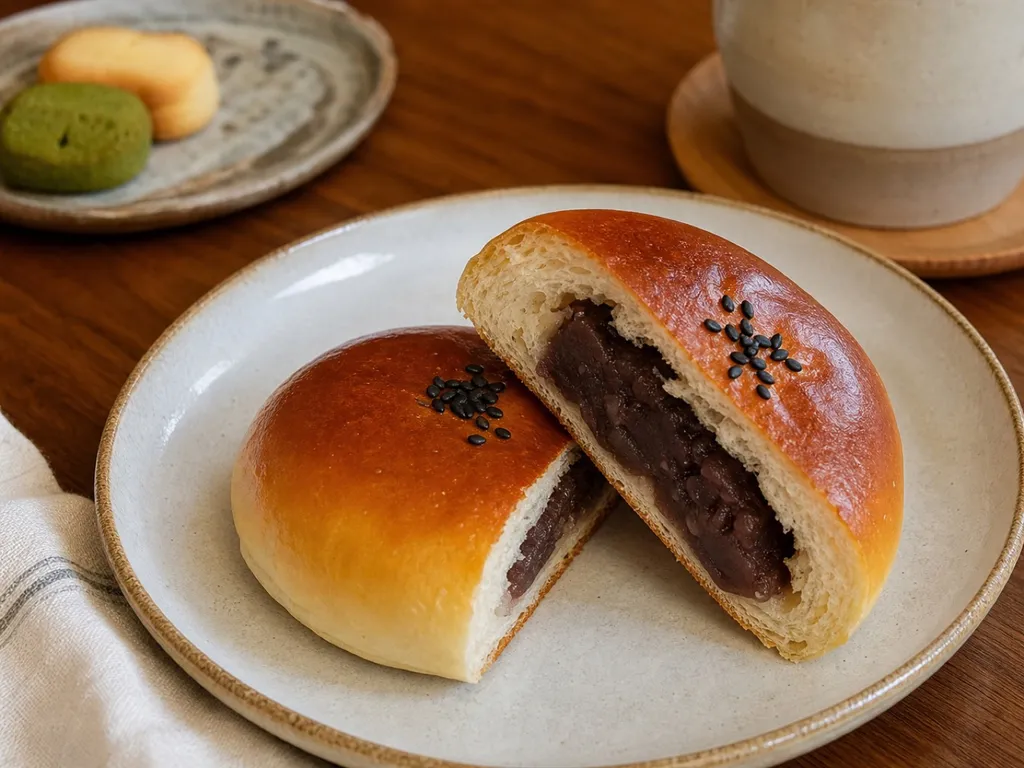 Images are for illustrative purposes only, may be inaccurate, and do not guarantee the presence or absence of specific ingredients.
 Listahan Family Score™
64/100
Works for many families
Score reflects how well this recipe fits a typical busy household. In the app, your Family Score is personalized to your household's allergens, kids, and pantry.
Nutrition
per serving175
Calories
5 g
Protein
28 g
Carbs
5 g
Fat
Estimated per serving. Actual values depend on the brands and portions you use.
Listahan cooking guide
Chef notes & practical guide
Technique notes, ingredient swaps, serve-alongside ideas, storage guidance, and equipment for this recipe.
Cultural context
Anpan is a soft, slightly sweet milk-bread bun filled with red bean paste, invented in 1874 by a former samurai turned baker as a Japanese answer to Western bread. Topped with a sprinkle of sesame, it became one of the country's most enduring everyday treats.
Listahan note
This version uses an enriched milk-and-butter dough kneaded to the windowpane stage for a pillowy crumb, then walks through sealing the anko so it stays centered.
Technique cues
- Knead until the dough passes the windowpane test (it stretches thin without tearing); that gluten development is what gives anpan its cloud-soft crumb.
- Leave the center of each flattened disk slightly thicker than the edges so the filling does not blow out the bottom.
- Pinch the seam tightly and bake seam-side down so the bun holds its round, filled shape.
Kitchen flow
- Parallel prep
- Roll the anko into balls while the dough does its first rise so filling is ready when you shape.
- Make-ahead
- Bake ahead and store airtight; anpan stay soft for a day or two thanks to the enriched dough.
- Leftover move
- Warm a day-old anpan briefly, or split and toast it with butter.
- Cleanup rhythm
- Soak the mixing bowl and dough hook right away before the dough dries on.
Ingredient brief
Role, handling, and swap guidance for each key ingredient.
Bread flour
The structure
Purpose: Its higher protein builds the gluten that makes a soft but resilient bun.
Handling: Knead well to develop the dough fully.
Adaptation: All-purpose flour gives a slightly less chewy crumb.
Yeast, sugar, warm milk
The enriched base
Purpose: Milk and sugar make a tender, faintly sweet dough, and yeast gives the rise.
Handling: Combine and knead, then proof until doubled.
Adaptation: Plant-based milk makes it dairy-free in the dough, though the texture shifts slightly.
Butter
Richness and softness
Purpose: Added after the initial knead, it makes the crumb plush and keeps it soft longer.
Handling: Knead in once the dough comes together.
Adaptation: A neutral oil works for a dairy-free crumb with less richness.
Anko (sweet red bean paste)
The filling
Purpose: Sweet, earthy bean paste is the defining heart of anpan.
Handling: Roll into firm balls so it seals cleanly inside the dough.
Adaptation: White bean paste, custard, or chestnut cream are common alternatives.
Egg wash and sesame seeds
The finish
Purpose: Egg wash gives the glossy brown top and sesame is the traditional marker.
Handling: Brush the tops and press a few seeds into the center before baking.
Adaptation: Milk wash works for an egg-free shine; poppy seeds can replace sesame.
Technique notes
- Do not rush the kneading; the windowpane stage is what separates pillowy anpan from a dense roll.
- Seal the filling completely and bake seam-down, or the anko leaks and the bun deflates.
- Watch the first golden color and pull them; enriched doughs brown fast and can dry out if overbaked.
Ingredient swaps
- Dairy-free direction
- Use a plant-based milk and oil in the dough; the crumb will be slightly less rich.
- Egg-free direction
- Brush the tops with milk or plant milk instead of egg wash.
- Sesame-free direction
- Skip the sesame topping or use poppy seeds instead.
Serve alongside
- Fresh fruit
- Matcha sweets
- Whipped cream
- Yogurt
- Green tea
- Coffee
- Milk
Serving suggestions only — check pairings for your household's allergens.
Storage & reheating
- Store airtight at room temperature up to 2 days; the enriched crumb stays soft.
- Warm briefly to refresh, or split and toast.
- Freeze baked anpan up to 1 month; thaw at room temperature and warm before serving.
Equipment
- Stand mixer with dough hook
- Baking sheet
- Pastry brush
- Bench scraper
Make this household-aware
Listahan Pro checks this recipe against your household's allergens, finds pantry-aware swaps, builds the shopping list, and helps you plan the week around it.
Plan it in Listahan
Add Anpan to your week, check it against your household's allergens, and build the shopping list automatically.
More Japanese recipes
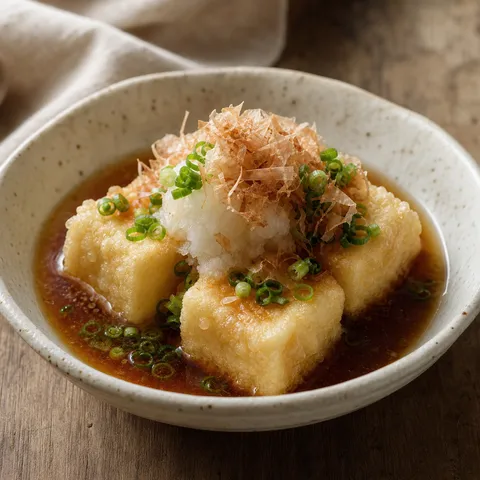 Japanese Lens Verified Images are for illustrative purposes only, may be inaccurate, and do not guarantee the presence or absence of specific ingredients.
 Agedashi Tofu
Lightly fried tofu dusted in potato starch and served in a warm dashi-soy-mirin broth, topped with grated daikon and bonito flakes, a classic Japanese izakaya starter.
 Japanese Lens Verified Images are for illustrative purposes only, may be inaccurate, and do not guarantee the presence or absence of specific ingredients.
 Katsu Curry
A Japanese recipe: Katsu Curry.
 Japanese Lens Verified Images are for illustrative purposes only, may be inaccurate, and do not guarantee the presence or absence of specific ingredients.
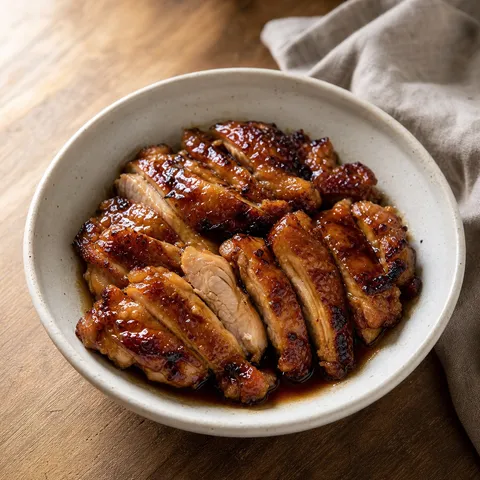
 Chicken Teriyaki
Enjoy tender, juicy chicken glazed in a deeply flavorful, glossy sweet soy sauce, perfectly caramelized to sticky perfection.