 Japanese Images are for illustrative purposes only, may be inaccurate, and do not guarantee the presence or absence of specific ingredients.
  Serving Images are for illustrative purposes only, may be inaccurate, and do not guarantee the presence or absence of specific ingredients.
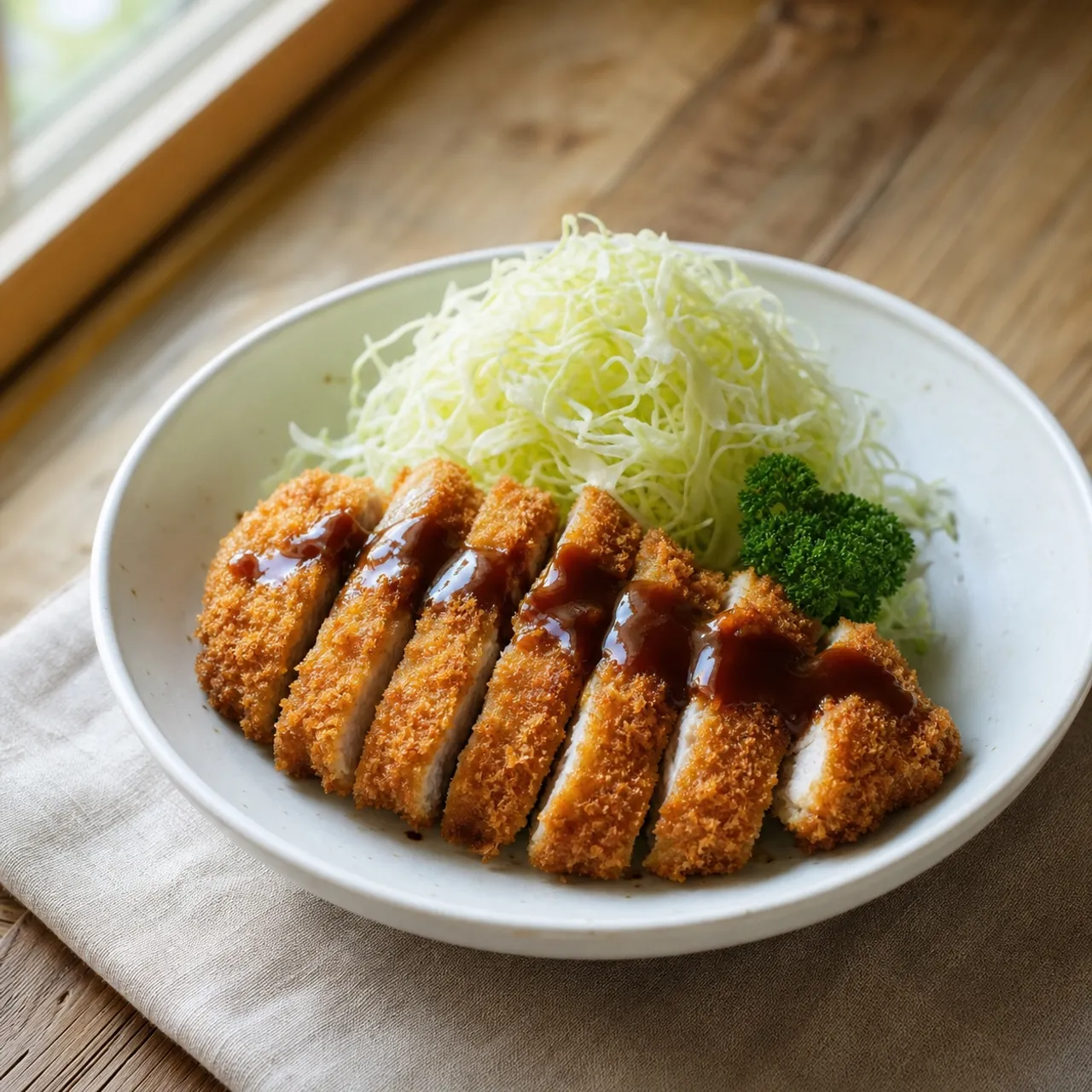
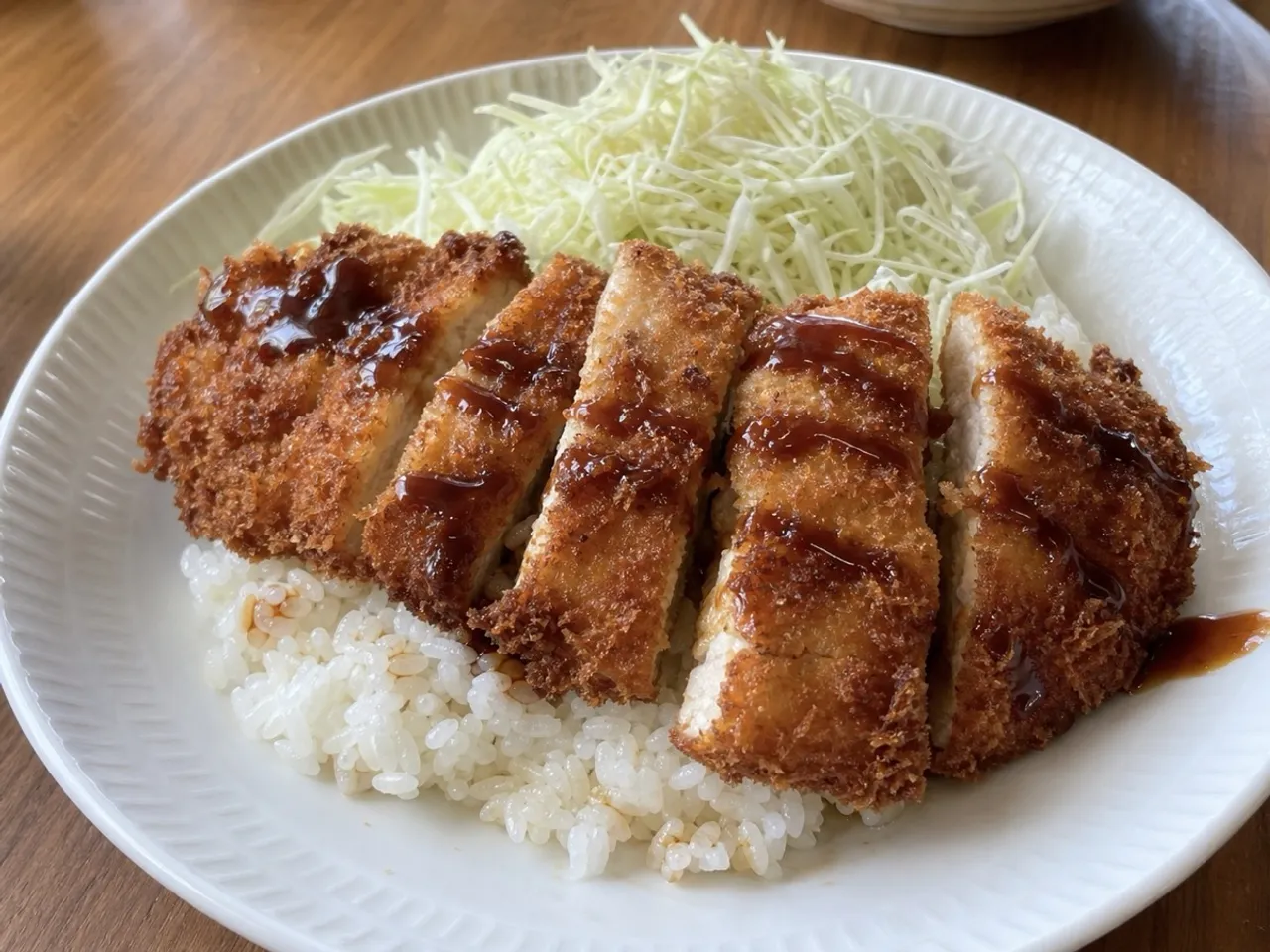
 Chicken Katsu
A golden, panko-crusted fried chicken cutlet that shatters at the bite, served sliced over rice with tangy katsu sauce.
Contains common allergens
In the app, Listahan checks these against your household automatically.
Good to know
- Crispy
Matched from this dish's own ingredients and timing. Browse more: crispy recipes
Instructions
5 steps- 1
Butterfly each chicken breast horizontally to an even 1/2-inch thickness, then pound lightly between plastic wrap and season both sides with 3/4 tsp salt and 1/4 tsp white pepper.
- 2
Set up a breading station of flour, beaten eggs, and panko in three shallow dishes, then dredge each cutlet in flour, dip fully in egg, and press firmly into the panko to coat completely.
- 3
Heat the oil in a deep skillet to 340°F, verifying the temperature with a thermometer or by dropping in a few crumbs that should sizzle steadily without browning instantly.
- 4
Fry the cutlets one or two at a time for 3 to 4 minutes per side, turning once, until deep golden brown and the internal temperature reaches 165°F.
- 5
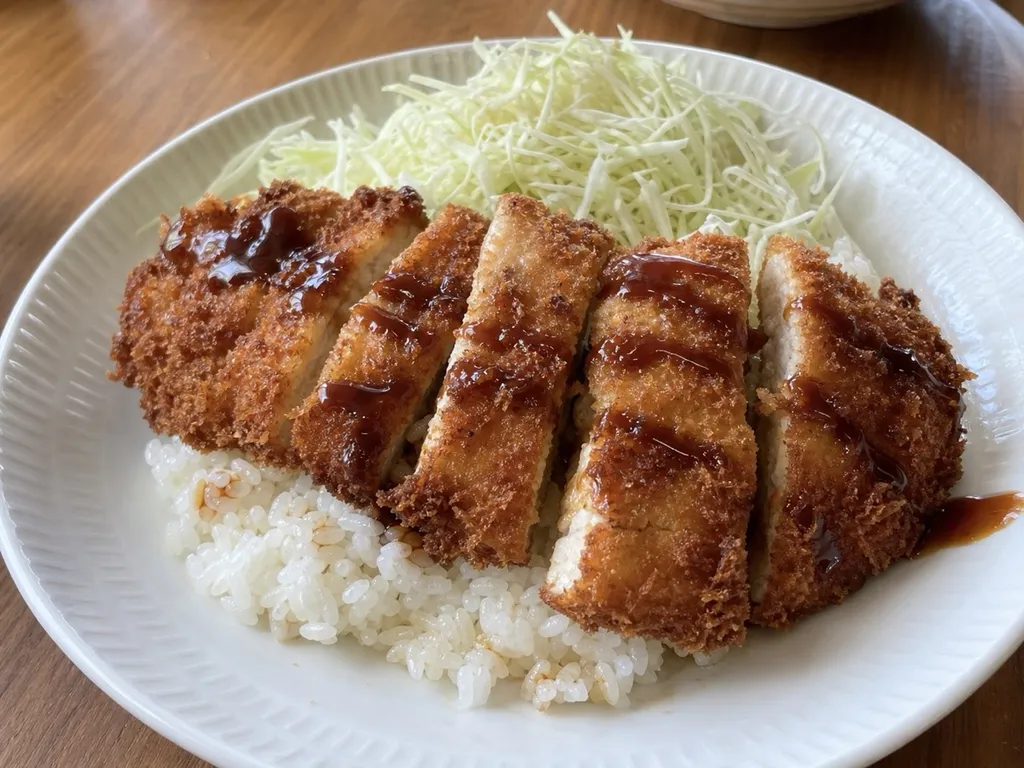
Drain on a wire rack set over paper towels for 2 minutes, then slice crosswise into 3/4-inch strips, keeping the cutlet shape intact, and serve fanned over rice with tonkatsu sauce drizzled on top.
 Images are for illustrative purposes only, may be inaccurate, and do not guarantee the presence or absence of specific ingredients.
 Listahan Family Score™
65/100
Works for many families
Score reflects how well this recipe fits a typical busy household. In the app, your Family Score is personalized to your household's allergens, kids, and pantry.
Nutrition
per serving405
Calories
30 g
Protein
23 g
Carbs
21 g
Fat
Estimated per serving. Actual values depend on the brands and portions you use.
Listahan cooking guide
Chef notes & practical guide
Technique notes, ingredient swaps, serve-alongside ideas, storage guidance, and equipment for this recipe.
Cultural context
Chicken katsu is the poultry version of tonkatsu, a panko-breaded fried chicken cutlet sliced and served with shredded cabbage and tonkatsu sauce. Lighter than the pork original, it is a yoshoku and bento favorite and the base of katsu curry.
Listahan note
This version butterflies and pounds the breast to an even thickness so it cooks through before the panko over-browns, then rests it for a crisp bottom.
Technique cues
- Butterfly and pound the breast even; an uneven cutlet either burns the crust or leaves the thick part underdone.
- Press the panko on firmly so it forms a thick, standing-flake crust.
- Rest on a wire rack after frying so steam escapes and the underside stays crunchy.
Kitchen flow
- Parallel prep
- Set up the breading station and shred the cabbage before the oil heats; frying is quick.
- Make-ahead
- Bread the cutlets a few hours ahead and chill; fry just before serving for the crispest crust.
- Leftover move
- Turn leftover chicken katsu into katsu curry or a katsu sando the next day.
- Cleanup rhythm
- Let the oil cool to strain; wipe the breading station before the egg dries on.
Ingredient brief
Role, handling, and swap guidance for each key ingredient.
Chicken breasts
The cutlet
Purpose: Lean breast stays tender when pounded thin and fried quickly.
Handling: Butterfly to even thickness, pound, and season.
Adaptation: Boneless thighs are juicier and more forgiving if you prefer dark meat.
Panko breadcrumbs
The crust
Purpose: Coarse panko gives the light, crisp, signature coating.
Handling: Press on firmly after flour and egg.
Adaptation: Gluten-free panko works; fine breadcrumbs give a denser crust.
Flour and eggs
Breading anchors
Purpose: Flour grips the chicken and egg glues the panko so the crust holds.
Handling: Dredge in flour, dip in egg, then panko.
Adaptation: A flour-water slurry replaces egg for an egg-free version.
Neutral frying oil
The cooking medium
Purpose: A clean oil at a steady 340F gives an even golden crust.
Handling: Verify with a thermometer or test crumbs.
Adaptation: Any neutral high-heat oil works.
Tonkatsu sauce
The condiment
Purpose: The sweet-savory brown sauce is the classic partner.
Handling: Drizzle over the sliced cutlet or serve alongside.
Adaptation: A homemade mix of Worcestershire, ketchup, and a little sugar approximates it; use gluten-free versions as needed.
Technique notes
- Even thickness is everything; a pounded cutlet fries evenly where an uneven one cannot.
- Hot-oil safety first: keep the pot under half full and fry one or two cutlets at a time.
- Slice crosswise into strips so the cutlet stays juicy and is easy to eat with chopsticks.
Ingredient swaps
- Gluten-free direction
- Use gluten-free flour and panko and a gluten-free tonkatsu sauce.
- Juicier direction
- Use boneless thighs instead of breast for more forgiving, juicier cutlets.
- Lighter cooking direction
- Spray the breaded cutlet with oil and bake or air-fry at high heat.
Serve alongside
- Steamed rice
- Shredded cabbage
- Miso soup
- Japanese curry (for katsu curry)
- Cold barley tea
- Light lager
- Green tea
Serving suggestions only — check pairings for your household's allergens.
Storage & reheating
- Refrigerate up to 2 days; the crust softens but reheats reasonably.
- Re-crisp in a hot oven or air fryer rather than the microwave.
- Freeze fried cutlets up to 1 month; reheat from frozen in a hot oven.
Equipment
- Deep skillet for frying
- Frying thermometer
- Wire resting rack
- Meat mallet
Make this household-aware
Listahan Pro checks this recipe against your household's allergens, finds pantry-aware swaps, builds the shopping list, and helps you plan the week around it.
Plan it in Listahan
Add Chicken Katsu to your week, check it against your household's allergens, and build the shopping list automatically.
More Japanese recipes
 Japanese Lens Verified Images are for illustrative purposes only, may be inaccurate, and do not guarantee the presence or absence of specific ingredients.
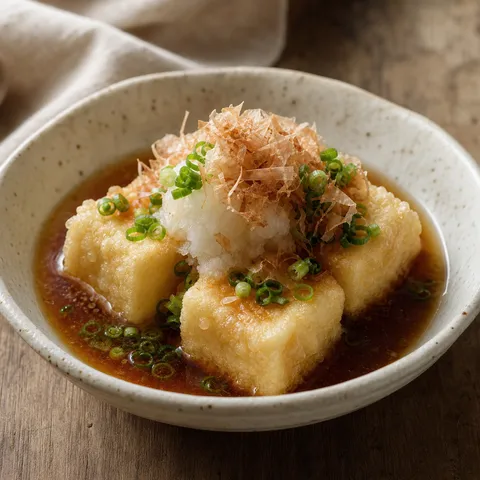
 Agedashi Tofu
Lightly fried tofu dusted in potato starch and served in a warm dashi-soy-mirin broth, topped with grated daikon and bonito flakes, a classic Japanese izakaya starter.
 Japanese Lens Verified Images are for illustrative purposes only, may be inaccurate, and do not guarantee the presence or absence of specific ingredients.
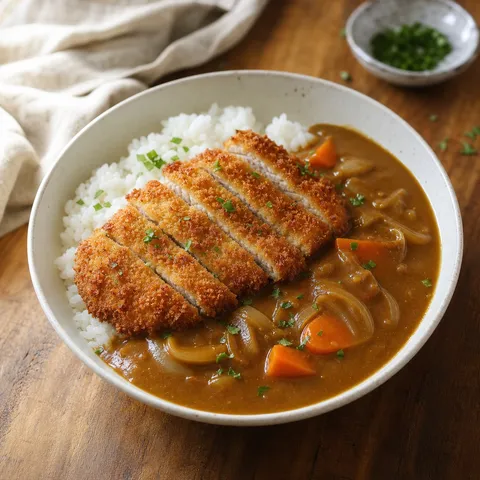
 Katsu Curry
A Japanese recipe: Katsu Curry.
 Japanese Lens Verified Images are for illustrative purposes only, may be inaccurate, and do not guarantee the presence or absence of specific ingredients.
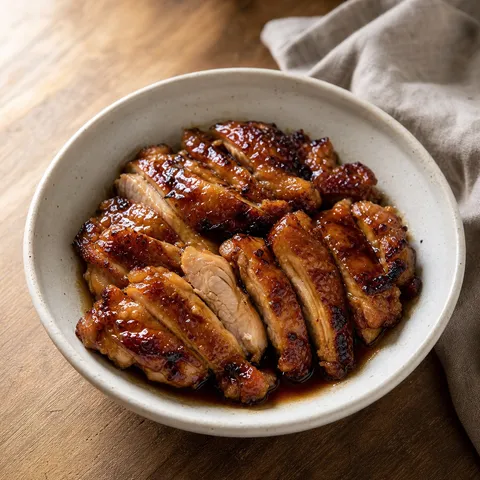
 Chicken Teriyaki
Enjoy tender, juicy chicken glazed in a deeply flavorful, glossy sweet soy sauce, perfectly caramelized to sticky perfection.