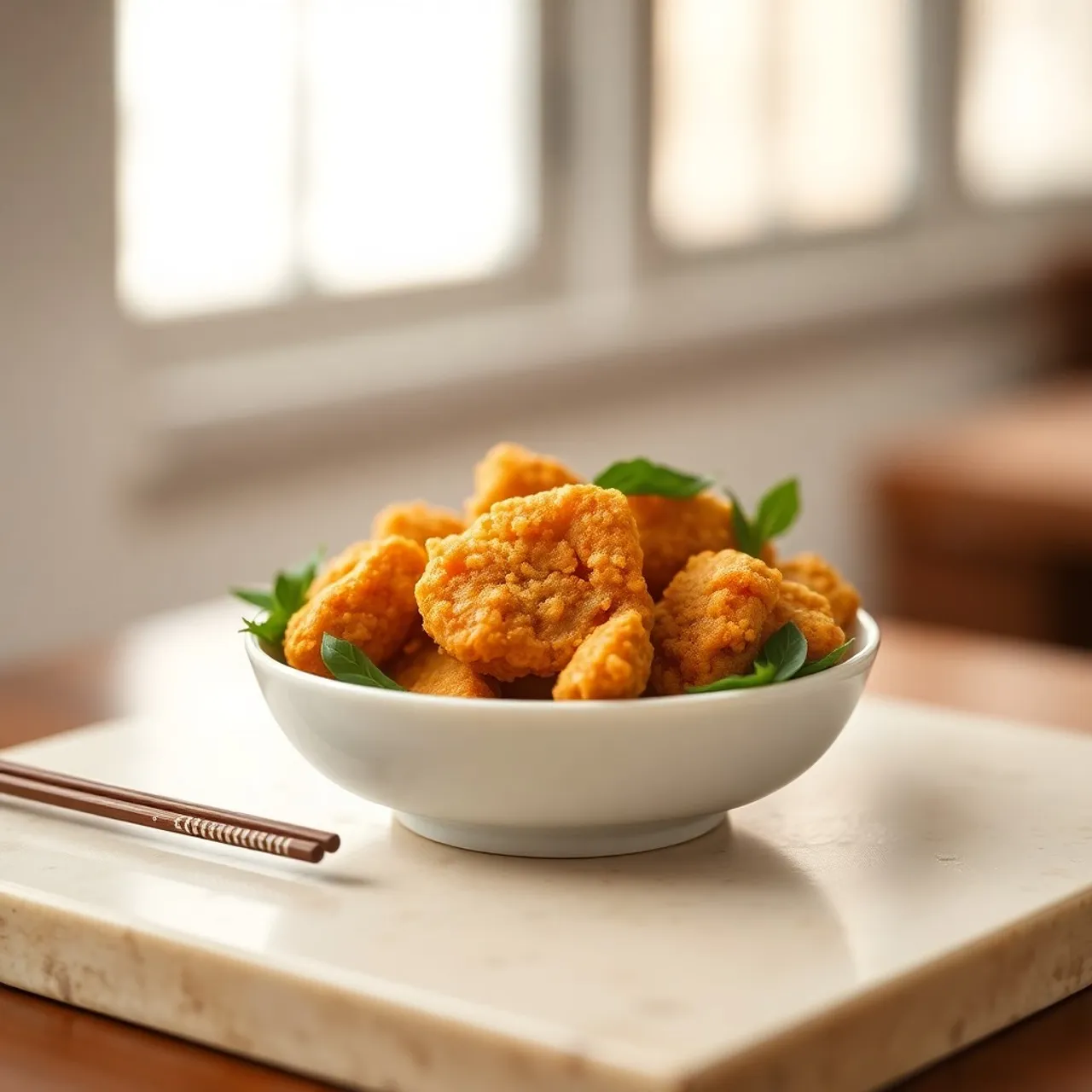
 Japanese Images are for illustrative purposes only, may be inaccurate, and do not guarantee the presence or absence of specific ingredients.
 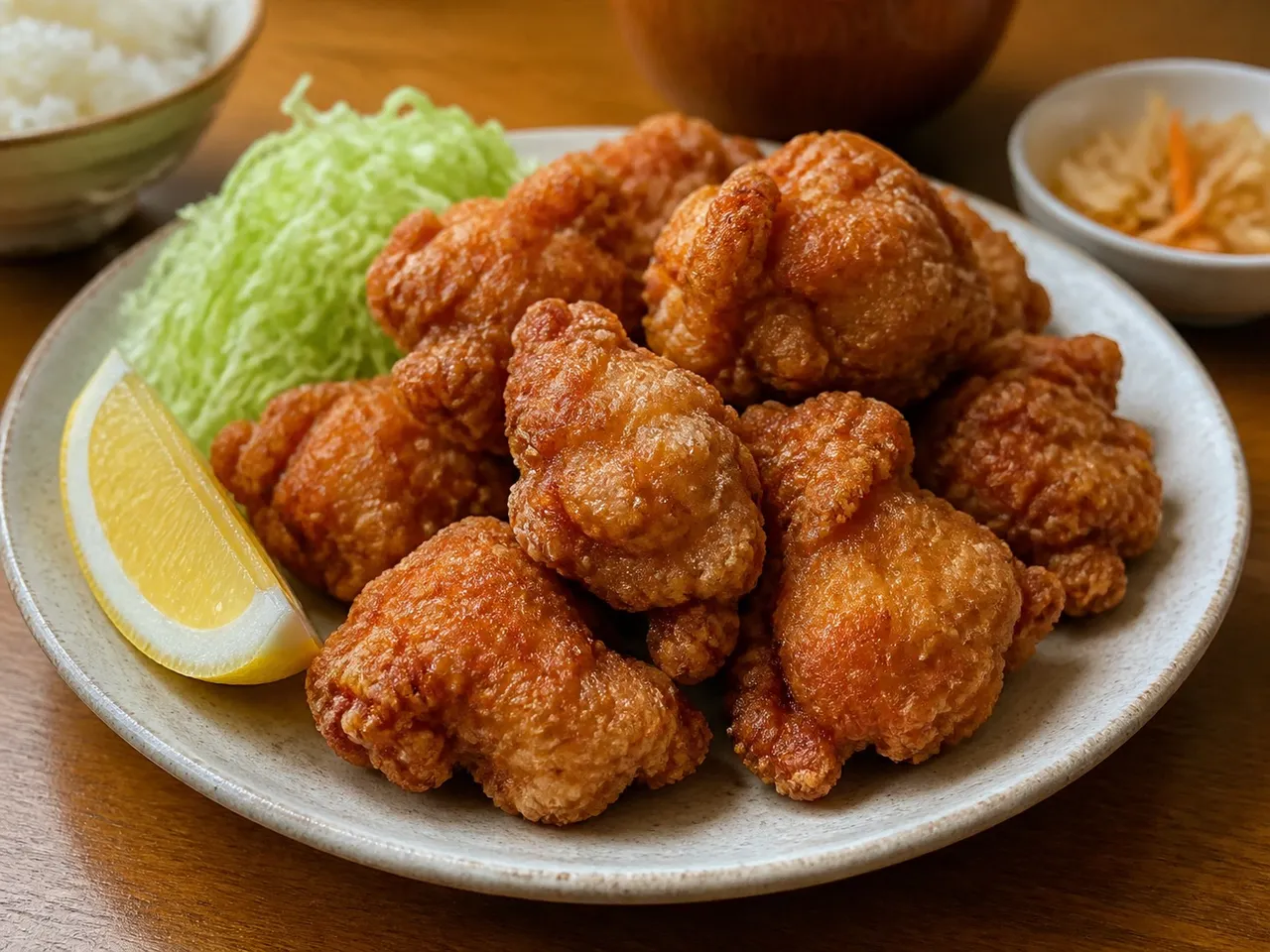 Serving Images are for illustrative purposes only, may be inaccurate, and do not guarantee the presence or absence of specific ingredients.
 Karaage
Japanese-style deep-fried chicken, marinated and coated in starch.
Contains common allergens
In the app, Listahan checks these against your household automatically.
Good to know
- Crispy
Matched from this dish's own ingredients and timing. Browse more: crispy recipes
Instructions
6 steps- 1
Cut the chicken thighs into uniform 1.5-inch bite-sized chunks, keeping the skin attached to each piece for maximum juiciness and crunch.
- 2
In a bowl, vigorously mix the chicken with the soy sauce, sake, grated garlic, and grated ginger. Massage the marinade into the meat. Let it rest at room temperature for 30 minutes.
- 3
Drain any excess liquid from the bowl. Add the potato starch directly to the chicken and toss until every piece is thickly and irregularly coated. The starch should look slightly damp.
- 4
Heat 2 inches of neutral oil in a heavy pot to 320°F (160°C). Deep fry the chicken in small batches for 3 minutes until pale and cooked through. Remove and let rest on a wire rack for 4 minutes.
- 5
Increase the oil temperature to 375°F (190°C).
- 6
Return the rested chicken to the hot oil for a second fry. Cook for 1-2 minutes until the crust turns a deep, beautiful mahogany brown and is exceptionally shatteringly crisp. Drain and serve immediately with a lemon wedge.
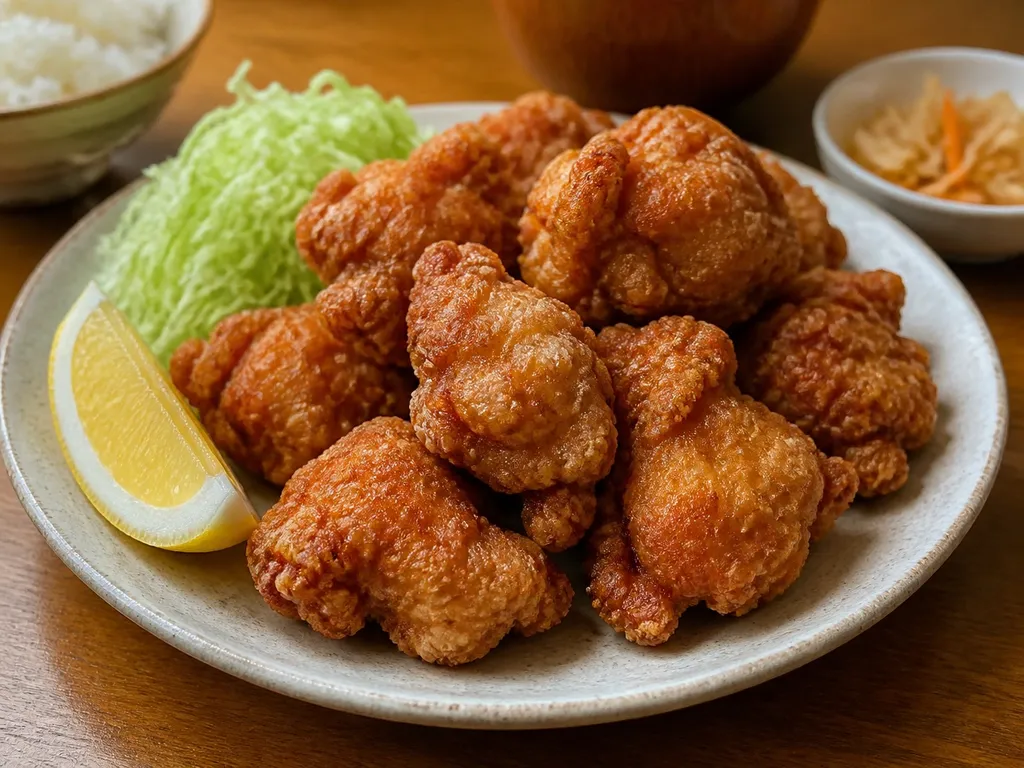 Images are for illustrative purposes only, may be inaccurate, and do not guarantee the presence or absence of specific ingredients.
 Listahan Family Score™
67/100
Works for many families
Score reflects how well this recipe fits a typical busy household. In the app, your Family Score is personalized to your household's allergens, kids, and pantry.
Nutrition
per serving360
Calories
39 g
Protein
6 g
Carbs
20 g
Fat
Estimated per serving. Actual values depend on the brands and portions you use.
Listahan cooking guide
Chef notes & practical guide
Technique notes, ingredient swaps, serve-alongside ideas, storage guidance, and equipment for this recipe.
Cultural context
Karaage is Japanese fried chicken: bite-sized thigh marinated in soy, sake, garlic, and ginger, coated in potato starch, and double-fried to a shattering crisp. It is an izakaya and bento staple, beloved for staying crunchy even at room temperature.
Listahan note
This version uses potato starch and a two-stage fry, the combination that gives karaage its signature light, glassy crust.
Technique cues
- Coat in potato starch, not flour; it fries up far lighter and crisper and stays crunchy as it cools.
- Double-fry, low then high, so the chicken cooks through gently first, then the crust sets glassy and deep golden.
- Rest the chicken between fries; carryover heat finishes the inside while the surface dries for the second fry.
Kitchen flow
- Parallel prep
- Marinate the chicken first; coat and fry just before serving while rice or sides finish.
- Make-ahead
- Marinate up to a day ahead; karaage holds its crunch well, so it is great fried ahead for a bento.
- Leftover move
- Re-crisp leftover karaage in a hot oven or air fryer, or toss it in a sweet-sour sauce for nanban-style chicken.
- Cleanup rhythm
- Let the oil cool, then strain and store; wipe the starch station before it cakes on.
Ingredient brief
Role, handling, and swap guidance for each key ingredient.
Skin-on chicken thighs
The protein
Purpose: Dark meat with the skin on stays juicy and adds extra crunch.
Handling: Cut into even bite-sized chunks, keeping skin on each piece.
Adaptation: Boneless skinless thighs work; breast dries out faster.
Soy sauce, sake, garlic, ginger
The marinade
Purpose: This quartet seasons the meat deeply in just half an hour.
Handling: Massage into the chicken and rest 30 minutes at room temperature.
Adaptation: Use tamari for gluten-free; the aromatics are flexible to taste.
Potato starch (katakuriko)
The crust
Purpose: It creates the light, glassy, shatteringly crisp coating that defines karaage.
Handling: Toss on right before frying so it stays slightly damp and clings irregularly.
Adaptation: Cornstarch is the closest substitute; flour gives a heavier, less crisp crust.
Neutral frying oil
The cooking medium
Purpose: A clean high-smoke-point oil holds temperature through two fries.
Handling: Hold at 320F for the first fry and 375F for the second.
Adaptation: Any neutral high-heat oil works.
Technique notes
- Hot-oil safety first: dry the surface, keep the pot under half full, and fry in small batches.
- Coat in starch right before frying; sitting in starch turns the coating gummy.
- The rest between fries matters; it lets the inside finish so the second fry can focus on the crust.
Ingredient swaps
- Gluten-free direction
- Use tamari in the marinade; potato starch is already gluten-free.
- Lighter cooking direction
- Coat and spray with oil, then air-fry at high heat for a lighter crust.
- Lower-sodium direction
- Use low-sodium soy and lean on the garlic and ginger for flavor.
Serve alongside
- Steamed rice
- Shredded cabbage
- Miso soup
- Japanese potato salad
- Cold lager
- Barley tea
- Lemon sour
Serving suggestions only — check pairings for your household's allergens.
Storage & reheating
- Refrigerate up to 3 days; karaage keeps its crunch better than most fried foods.
- Re-crisp in a hot oven or air fryer rather than the microwave.
- Freeze cooked karaage up to 1 month; reheat from frozen in a hot oven.
Equipment
- Heavy deep pot
- Frying thermometer
- Wire resting rack
- Slotted spoon or spider
Make this household-aware
Listahan Pro checks this recipe against your household's allergens, finds pantry-aware swaps, builds the shopping list, and helps you plan the week around it.
Plan it in Listahan
Add Karaage to your week, check it against your household's allergens, and build the shopping list automatically.
More Japanese recipes
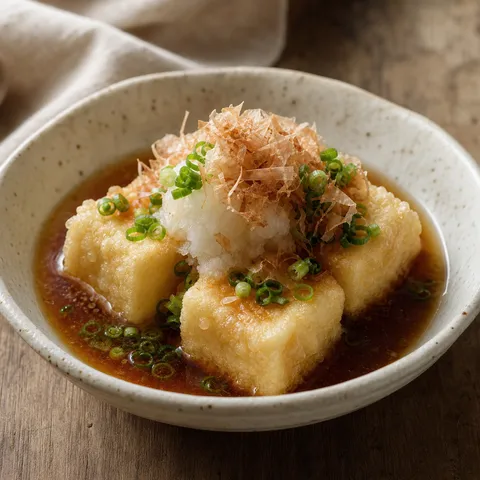 Japanese Lens Verified Images are for illustrative purposes only, may be inaccurate, and do not guarantee the presence or absence of specific ingredients.
 Agedashi Tofu
Lightly fried tofu dusted in potato starch and served in a warm dashi-soy-mirin broth, topped with grated daikon and bonito flakes, a classic Japanese izakaya starter.
 Japanese Lens Verified Images are for illustrative purposes only, may be inaccurate, and do not guarantee the presence or absence of specific ingredients.
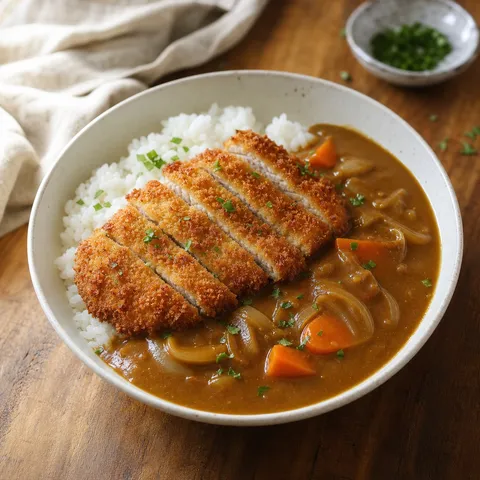
 Katsu Curry
A Japanese recipe: Katsu Curry.
 Japanese Lens Verified Images are for illustrative purposes only, may be inaccurate, and do not guarantee the presence or absence of specific ingredients.
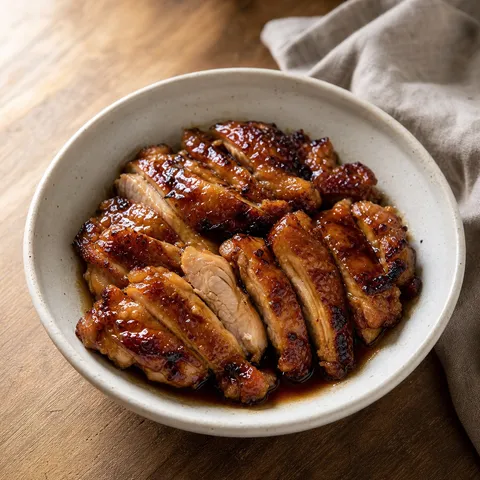
 Chicken Teriyaki
Enjoy tender, juicy chicken glazed in a deeply flavorful, glossy sweet soy sauce, perfectly caramelized to sticky perfection.