 Japanese Images are for illustrative purposes only, may be inaccurate, and do not guarantee the presence or absence of specific ingredients.
 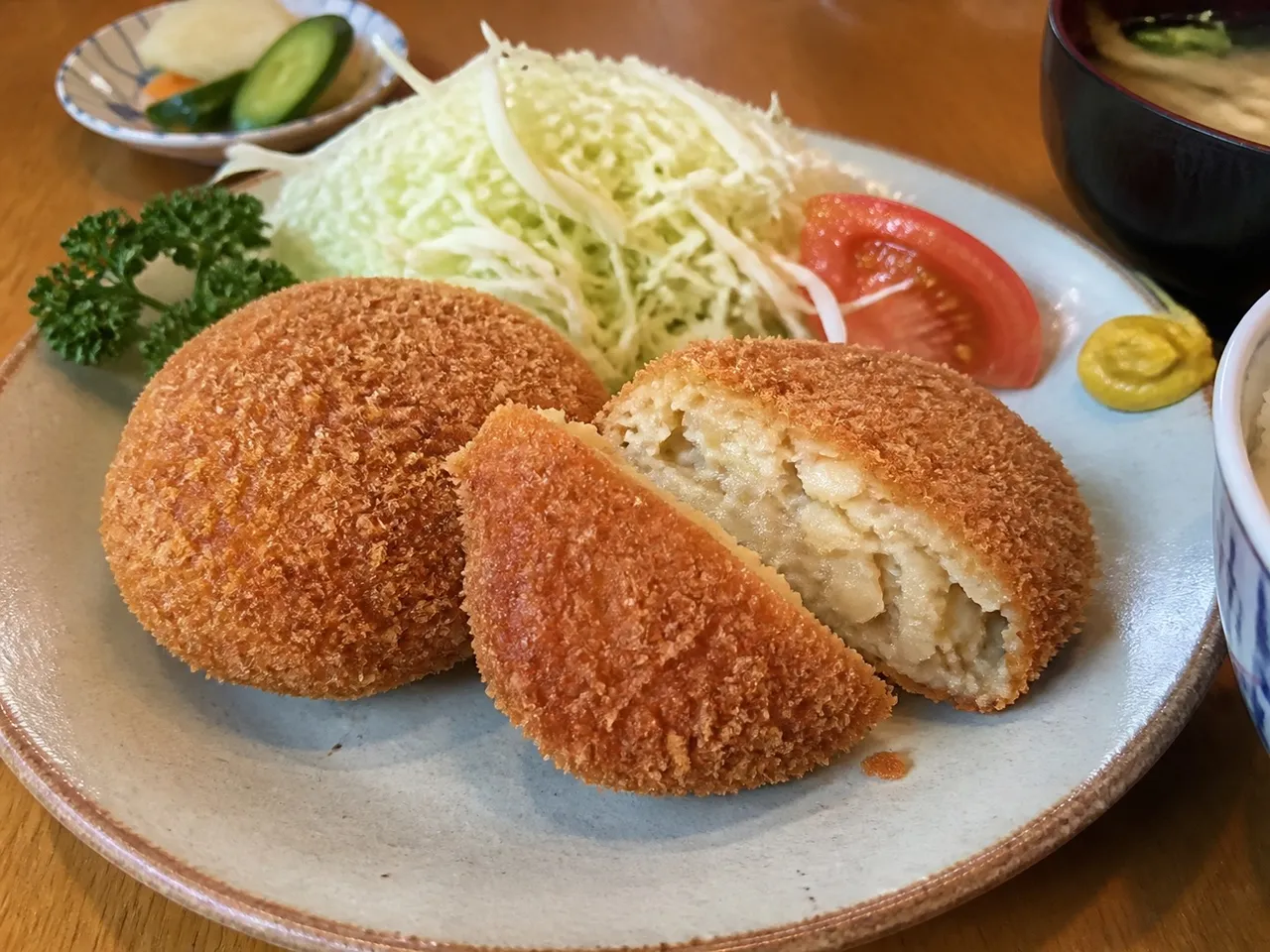 Serving Images are for illustrative purposes only, may be inaccurate, and do not guarantee the presence or absence of specific ingredients.
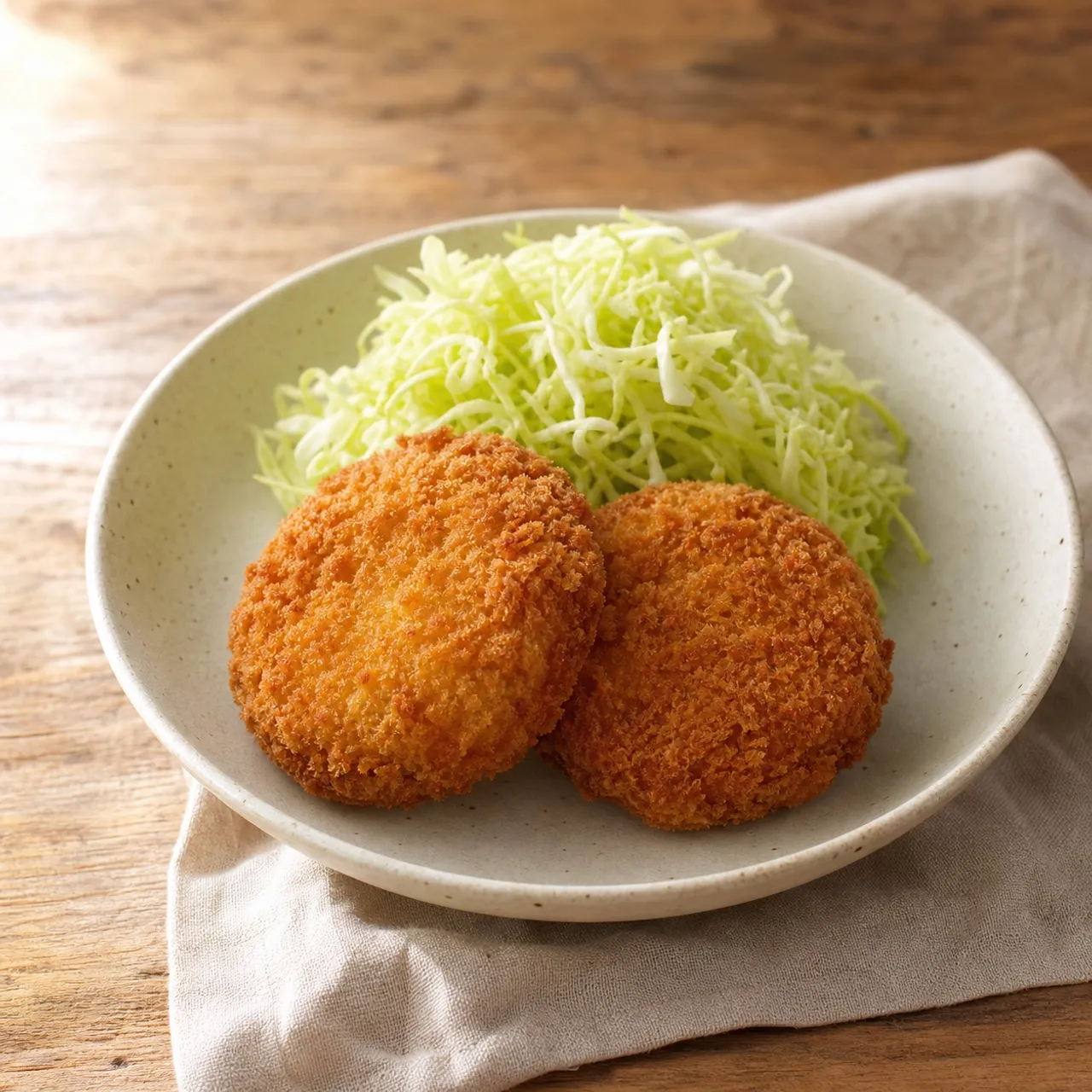
 Korokke (Croquette)
Deep-fried breaded patties made of mashed potatoes and ground meat.
Contains common allergens
In the app, Listahan checks these against your household automatically.
Good to know
- Crispy
Matched from this dish's own ingredients and timing. Browse more: crispy recipes
Instructions
6 steps- 1
Boil the potatoes until completely tender. Drain the water, then return the potatoes to the hot, empty pot for 1 minute to evaporate any remaining moisture. Mash them thoroughly.
- 2
In a skillet, melt the butter and sauté the minced onions until translucent. Add the ground beef, seasoning generously with salt and pepper, and cook until browned.
- 3
Fold the beef and onion mixture into the mashed potatoes. Let the mixture chill in the refrigerator for 20 minutes so it's easier to handle.
- 4
Shape the chilled mixture into 6-8 uniform oval patties, about 3/4-inch thick.
- 5
Dredge each patty in flour, dip in the beaten egg, and coat heavily with panko breadcrumbs.
- 6
Heat 2 inches of neutral oil to 350°F (175°C). Fry the korokke for 3-4 minutes per side until the panko is deeply golden brown and crunchy. Serve hot with tonkatsu sauce.
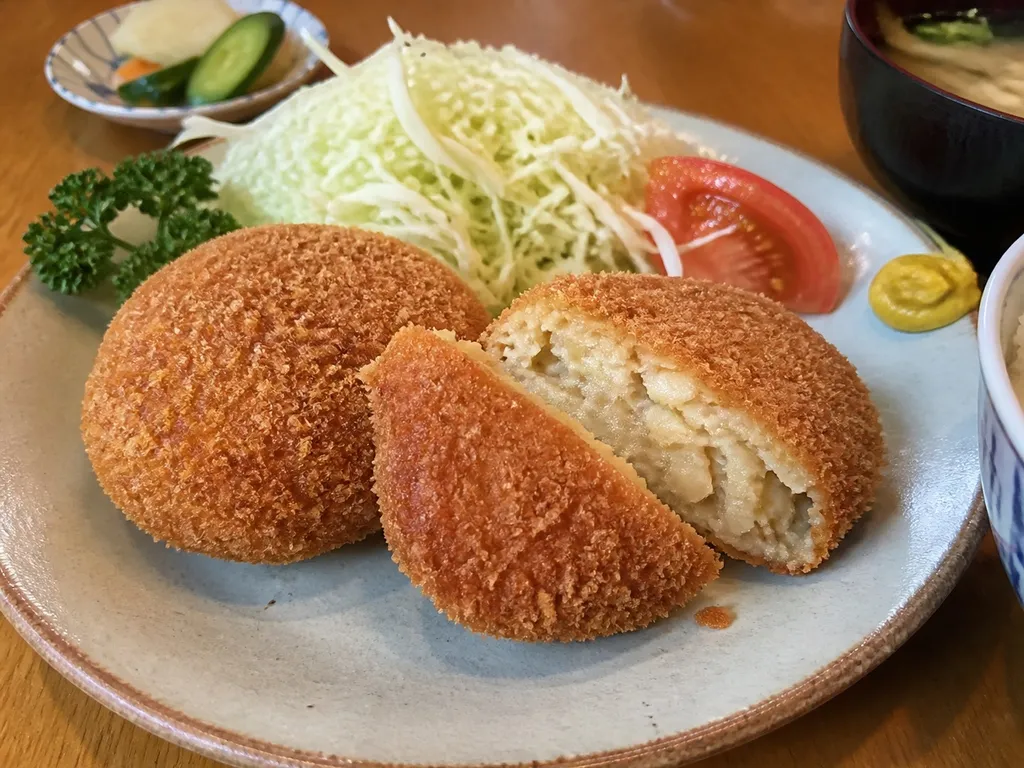 Images are for illustrative purposes only, may be inaccurate, and do not guarantee the presence or absence of specific ingredients.
 Listahan Family Score™
75/100
Good fit for most families
Score reflects how well this recipe fits a typical busy household. In the app, your Family Score is personalized to your household's allergens, kids, and pantry.
Nutrition
per serving1565
Calories
89 g
Protein
177 g
Carbs
52 g
Fat
Estimated per serving. Actual values depend on the brands and portions you use.
Listahan cooking guide
Chef notes & practical guide
Technique notes, ingredient swaps, serve-alongside ideas, storage guidance, and equipment for this recipe.
Cultural context
Korokke is the Japanese potato croquette, a yoshoku dish of mashed potato and seasoned ground meat, breaded in panko and fried golden. A butcher-shop and home favorite, it is humble comfort food with a crackling shell and a soft, savory center.
Listahan note
This version dries the mashed potato well and chills the mixture before shaping, the two steps that keep the croquettes from bursting open in the oil.
Technique cues
- Dry the boiled potatoes in the hot empty pot before mashing; wet mash makes a loose mixture that splits while frying.
- Chill the shaped mixture so it firms up and holds together in the oil.
- Fry at a steady temperature and do not crowd; a temperature drop makes greasy, pale korokke.
Kitchen flow
- Parallel prep
- Boil and mash the potatoes and cook the beef-onion, then chill the mix while you set up the breading station.
- Make-ahead
- Shape and bread korokke ahead and chill or freeze; fry just before serving for the crispest shell.
- Leftover move
- Tuck a leftover korokke into a split roll with cabbage and sauce for a korokke sandwich.
- Cleanup rhythm
- Let the oil cool to strain; wipe the breading station before egg and flour dry on.
Ingredient brief
Role, handling, and swap guidance for each key ingredient.
Russet potatoes
The body
Purpose: Starchy potatoes mash fluffy and bind the filling.
Handling: Boil tender, dry in the hot pot, then mash.
Adaptation: Yukon gold work but are less fluffy; russets are ideal.
Ground beef and onion
Savory filling
Purpose: Browned beef and sweet softened onion give the croquette its flavor.
Handling: Saute the onion in butter, brown the beef, and fold into the potato.
Adaptation: Ground pork, a pork-beef mix, or corn and vegetables for a meat-free version.
Panko breadcrumbs
The crust
Purpose: Coarse panko fries into the signature craggy, crunchy shell.
Handling: Coat heavily after flour and egg.
Adaptation: Gluten-free panko works; regular breadcrumbs give a denser crust.
Flour and egg
Breading anchors
Purpose: They glue the panko to the soft potato so it does not slough off.
Handling: Dredge in flour, dip in egg, then panko.
Adaptation: A flour-water slurry can replace egg for an egg-free version.
Butter
Richness
Purpose: It enriches the onion and the potato base.
Handling: Use to saute the onion and mash into the potato.
Adaptation: Use oil for a dairy-free version.
Technique notes
- The biggest korokke failure is bursting; drying the potato and chilling the mix prevents it.
- Hot-oil safety first: keep the pot under half full and fry in batches to hold temperature.
- Bread firmly and seal any cracks so the soft center stays enclosed in the oil.
Ingredient swaps
- Gluten-free direction
- Use gluten-free flour and panko and a gluten-free sauce.
- Vegetarian direction
- Skip the beef and fold in corn, peas, and extra onion (a popular variant).
- Egg-free option
- Use a thin flour-water slurry to anchor the panko.
Serve alongside
- Steamed rice
- Shredded cabbage
- Miso soup
- Japanese potato salad
- Cold barley tea
- Light lager
- Green tea
Serving suggestions only — check pairings for your household's allergens.
Storage & reheating
- Refrigerate cooked korokke up to 3 days; freeze breaded raw ones up to 1 month.
- Re-crisp cooked korokke in a hot oven or air fryer.
- Fry breaded frozen korokke straight from the freezer at a slightly lower temperature so the center heats through.
Equipment
- Pot for boiling
- Potato masher
- Deep skillet for frying
- Frying thermometer
Make this household-aware
Listahan Pro checks this recipe against your household's allergens, finds pantry-aware swaps, builds the shopping list, and helps you plan the week around it.
Plan it in Listahan
Add Korokke (Croquette) to your week, check it against your household's allergens, and build the shopping list automatically.
More Japanese recipes
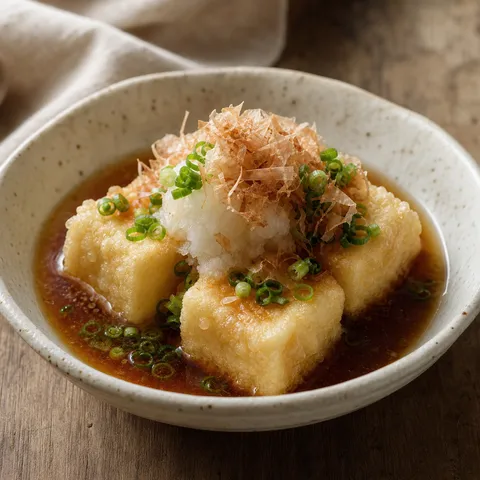 Japanese Lens Verified Images are for illustrative purposes only, may be inaccurate, and do not guarantee the presence or absence of specific ingredients.
 Agedashi Tofu
Lightly fried tofu dusted in potato starch and served in a warm dashi-soy-mirin broth, topped with grated daikon and bonito flakes, a classic Japanese izakaya starter.
 Japanese Lens Verified Images are for illustrative purposes only, may be inaccurate, and do not guarantee the presence or absence of specific ingredients.
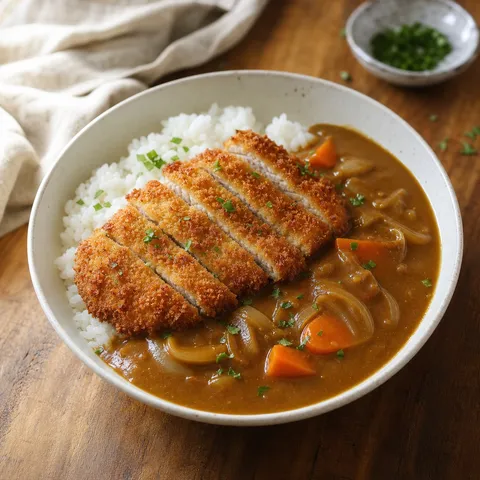
 Katsu Curry
A Japanese recipe: Katsu Curry.
 Japanese Lens Verified Images are for illustrative purposes only, may be inaccurate, and do not guarantee the presence or absence of specific ingredients.
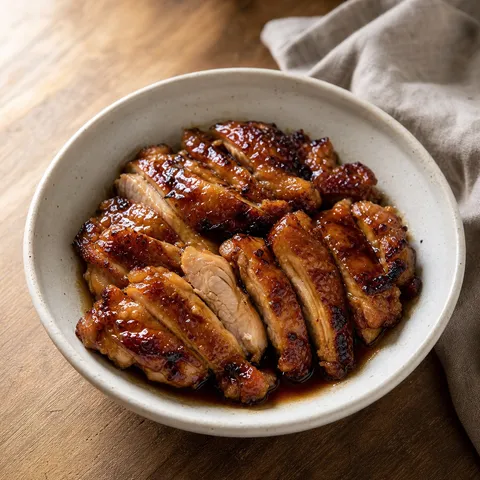
 Chicken Teriyaki
Enjoy tender, juicy chicken glazed in a deeply flavorful, glossy sweet soy sauce, perfectly caramelized to sticky perfection.