 Japanese Images are for illustrative purposes only, may be inaccurate, and do not guarantee the presence or absence of specific ingredients.
  Serving Images are for illustrative purposes only, may be inaccurate, and do not guarantee the presence or absence of specific ingredients.
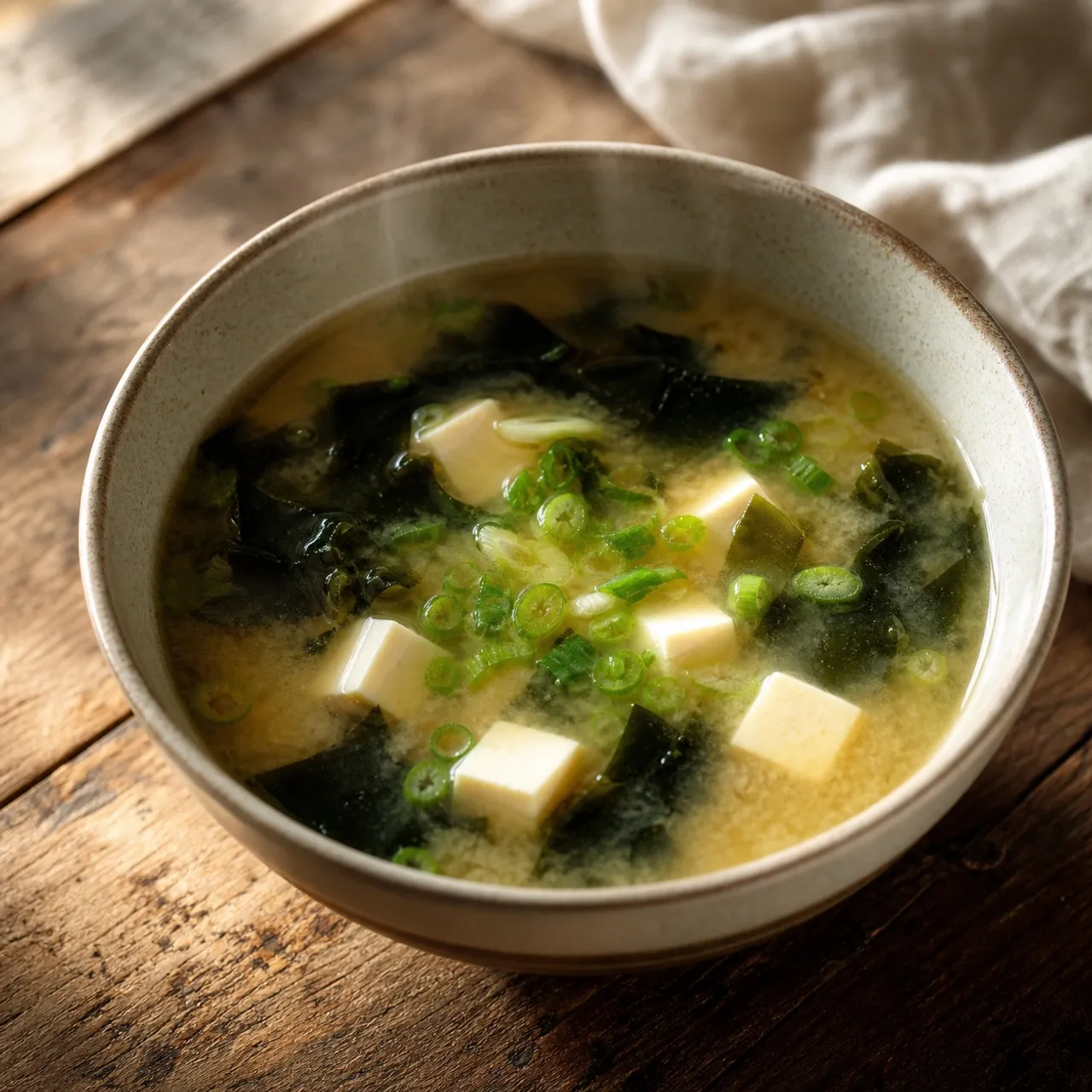
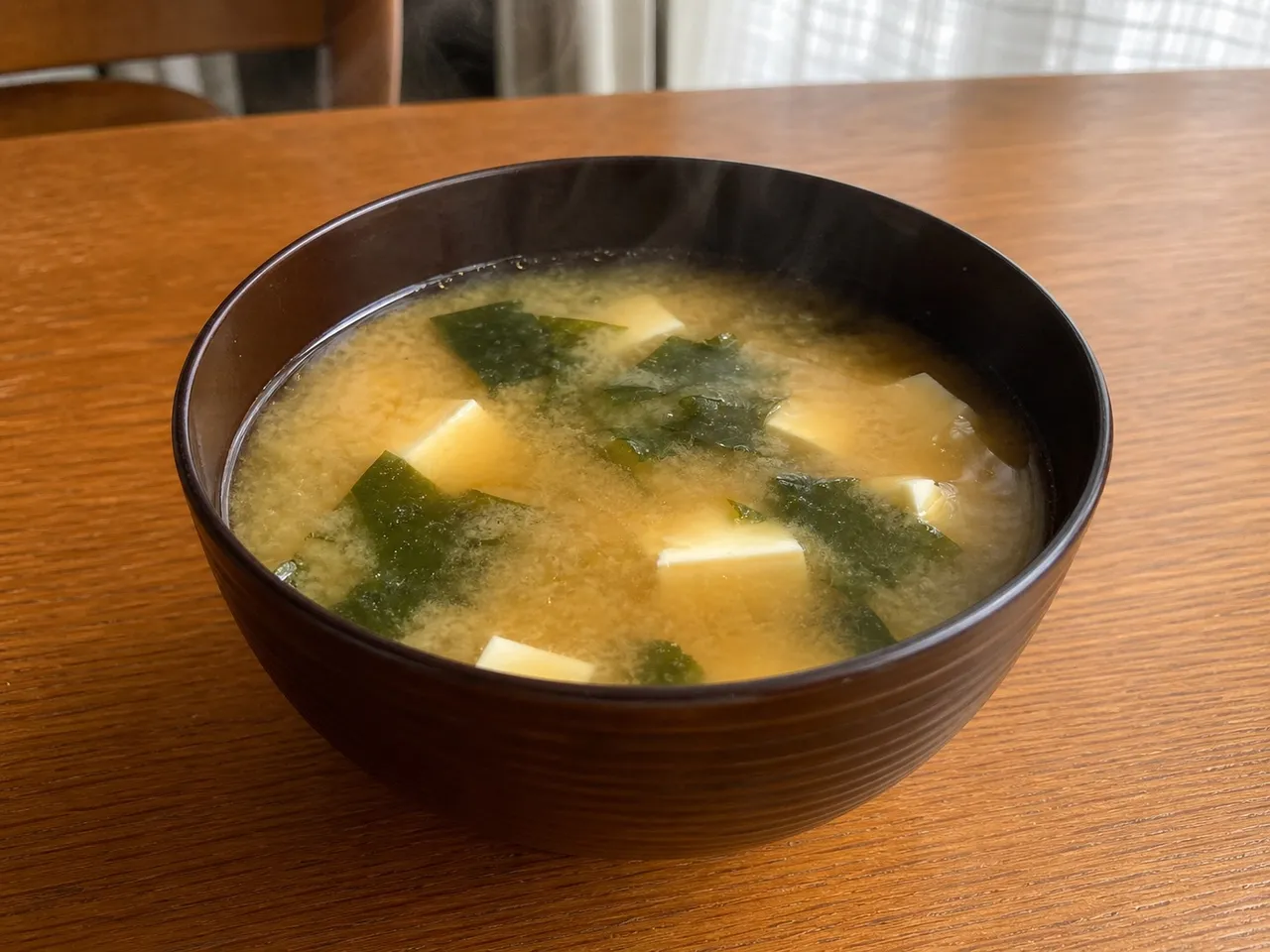
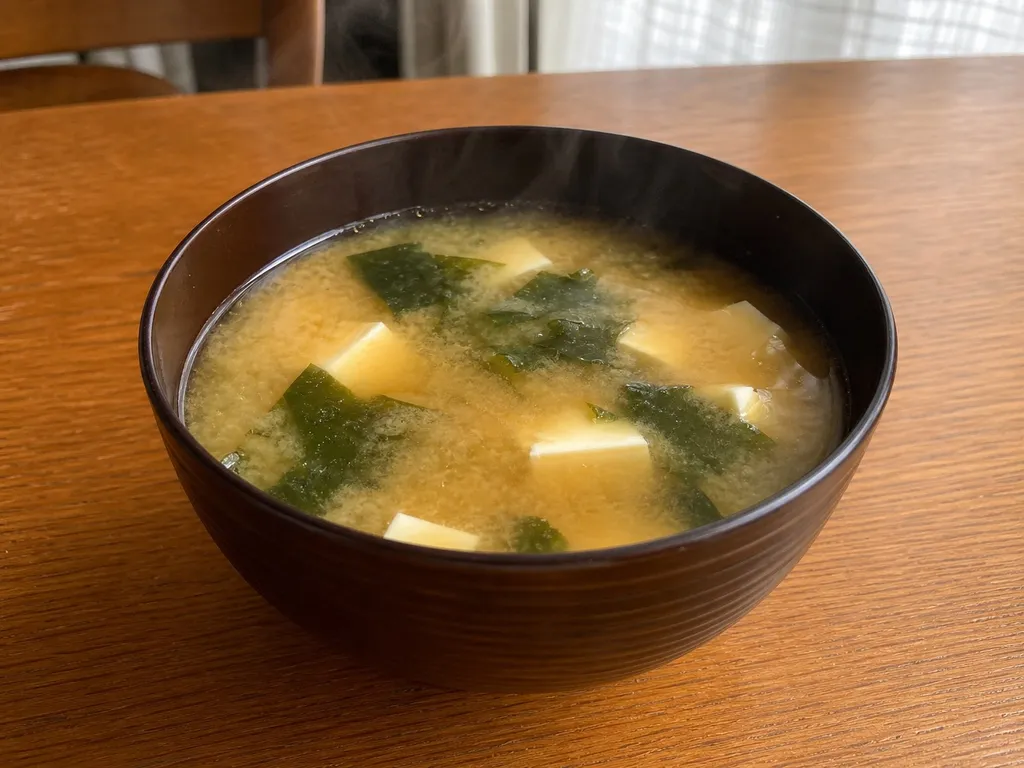
 Miso Soup
A traditional soup made of a dashi stock mixed with softened miso paste.
Contains common allergens
In the app, Listahan checks these against your household automatically.
Good to know
- One-pot
- Ready in under 30 minutes
Matched from this dish's own ingredients and timing. Browse more: one-pot dinners30-minute meals
Instructions
6 steps- 1
Rehydrate the dried wakame in a small bowl of cold water for 5 minutes until expanded, then drain well.
- 2
In a medium saucepan, bring the prepared dashi stock to a gentle simmer over medium heat. Do not let it boil violently.
- 3
Carefully slide the cubed silken tofu into the hot dashi to heat through for about 1 minute.
- 4
Turn off the heat completely. This is critical to preserve the delicate aroma and beneficial probiotics of the fermented miso.
- 5
Place the miso paste into a ladle or small mesh strainer lowered partially into the broth. Use chopsticks or a whisk to dissolve the miso completely into the soup so there are no lumps.
- 6
Stir in the drained wakame. Ladle the soup immediately into small bowls and garnish with a generous pinch of finely sliced scallions.
 Images are for illustrative purposes only, may be inaccurate, and do not guarantee the presence or absence of specific ingredients.
 Listahan Family Score™
66/100
Works for many families
Score reflects how well this recipe fits a typical busy household. In the app, your Family Score is personalized to your household's allergens, kids, and pantry.
Nutrition
per serving35
Calories
3 g
Protein
4 g
Carbs
1 g
Fat
Estimated per serving. Actual values depend on the brands and portions you use.
Listahan cooking guide
Chef notes & practical guide
Technique notes, ingredient swaps, serve-alongside ideas, storage guidance, and equipment for this recipe.
Cultural context
Miso soup is the quiet backbone of the Japanese table, a daily bowl that pairs fermented soybean paste with dashi. Its character shifts by region and household, from light white (shiro) miso to deep red (aka), but the rhythm is always the same: build the dashi, then add the miso off the heat.
Listahan note
This version puts the attention on the one rule that matters most, dissolving the miso after the heat is off so its aroma and live cultures survive.
Technique cues
- Never boil the soup once the miso is in; high heat dulls its aroma and kills the fermented complexity that is the whole point.
- Dissolve the miso through a small strainer or ladle so it disperses evenly with no chalky lumps.
- Add delicate ingredients like tofu and wakame near the end so they warm through without falling apart or going slimy.
Kitchen flow
- Parallel prep
- Rehydrate the wakame and cube the tofu while the dashi heats; the soup comes together in minutes once the broth is hot.
- Make-ahead
- Make the dashi ahead and refrigerate it, but add the miso only when serving; reheated miso soup loses its aroma.
- Leftover move
- Use leftover soup as a quick braising liquid for greens or as the base for a light noodle bowl.
- Cleanup rhythm
- One saucepan; rinse it right away before the miso dries on the sides.
Ingredient brief
Role, handling, and swap guidance for each key ingredient.
Awase dashi (kombu and bonito stock)
The broth foundation
Purpose: Kombu and bonito give the savory umami base that miso seasons rather than replaces.
Handling: Have it at a gentle simmer before the miso goes in.
Adaptation: Kombu-only or shiitake dashi keeps it vegetarian and fish-free; instant dashi is the everyday shortcut.
Miso paste
Seasoning and soul
Purpose: The fermented soybean paste provides salt, depth, and the soup's identity.
Handling: Whisk it in off the heat through a strainer, and taste as you go since brands vary widely in salt.
Adaptation: White miso is mild and sweet, red is deeper and saltier; blend them (awase) for balance.
Silken tofu
Soft protein
Purpose: Its custardy texture is a gentle contrast to the savory broth.
Handling: Cube it small and slide it in to warm through, not to boil.
Adaptation: Firm tofu holds its shape better; fried tofu (abura-age) adds richness.
Dried wakame
Sea-vegetable note
Purpose: It adds a clean, briny green element and a little chew.
Handling: Rehydrate it in cold water first and drain, since it expands several times over.
Adaptation: A little spinach or other chopped greens can stand in.
Technique notes
- Turn the heat off before the miso goes in; this single step is the difference between fragrant and flat.
- Taste before adding all the miso, since brands range widely in salt and you can always add more.
- Slice the scallions just before serving so they stay bright and sharp on top.
Ingredient swaps
- Fish-free, vegetarian direction
- Use a kombu-and-shiitake dashi instead of bonito-based awase dashi.
- Lower-sodium direction
- Use less miso and a low-sodium variety, leaning on the dashi for depth.
- Heartier bowl
- Add cooked vegetables, mushrooms, or a handful of noodles to turn it into a light meal.
Serve alongside
- Steamed rice
- Grilled fish
- Pickled vegetables (tsukemono)
- Onigiri
- Green tea
- Barley tea
Serving suggestions only — check pairings for your household's allergens.
Storage & reheating
- Refrigerate up to 2 days; store it without the scallions and add fresh ones when reheating.
- Reheat gently to a bare simmer; do not boil, which flattens the miso.
- Not suitable for freezing, since the tofu turns spongy.
Equipment
- Medium saucepan
- Small fine-mesh strainer or miso muddler
- Ladle
- Sharp knife for the scallions
Make this household-aware
Listahan Pro checks this recipe against your household's allergens, finds pantry-aware swaps, builds the shopping list, and helps you plan the week around it.
Plan it in Listahan
Add Miso Soup to your week, check it against your household's allergens, and build the shopping list automatically.
More Japanese recipes
 Japanese Lens Verified Images are for illustrative purposes only, may be inaccurate, and do not guarantee the presence or absence of specific ingredients.
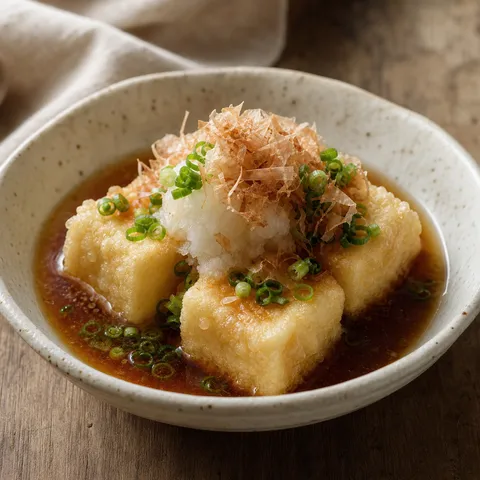
 Agedashi Tofu
Lightly fried tofu dusted in potato starch and served in a warm dashi-soy-mirin broth, topped with grated daikon and bonito flakes, a classic Japanese izakaya starter.
 Japanese Lens Verified Images are for illustrative purposes only, may be inaccurate, and do not guarantee the presence or absence of specific ingredients.
 Katsu Curry
A Japanese recipe: Katsu Curry.
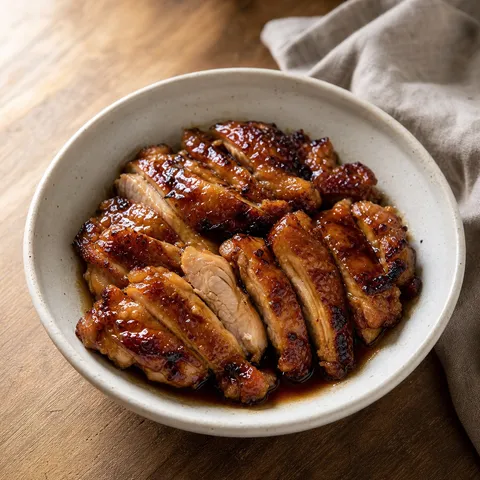 Japanese Lens Verified Images are for illustrative purposes only, may be inaccurate, and do not guarantee the presence or absence of specific ingredients.
 Chicken Teriyaki
Enjoy tender, juicy chicken glazed in a deeply flavorful, glossy sweet soy sauce, perfectly caramelized to sticky perfection.