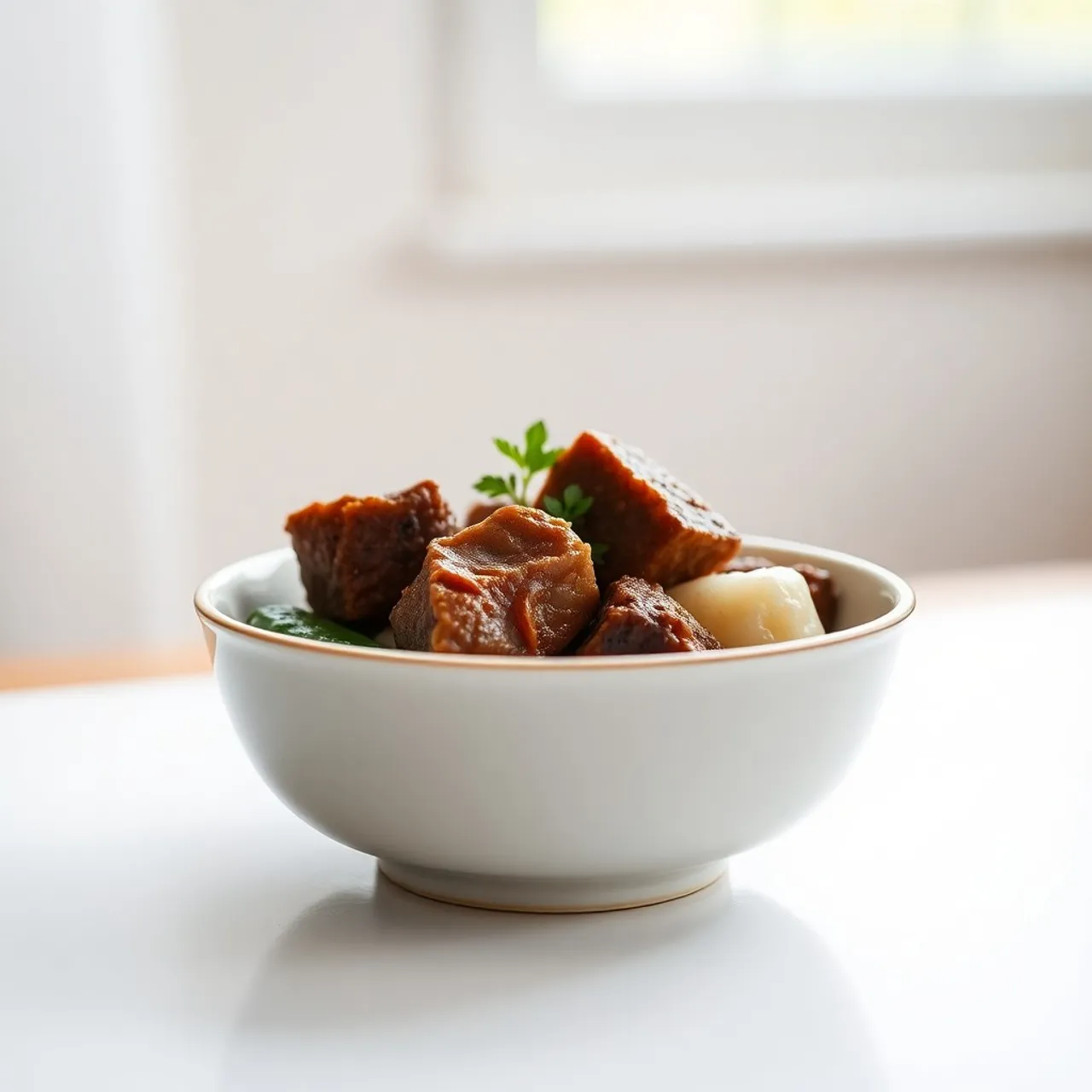
 Japanese Images are for illustrative purposes only, may be inaccurate, and do not guarantee the presence or absence of specific ingredients.
 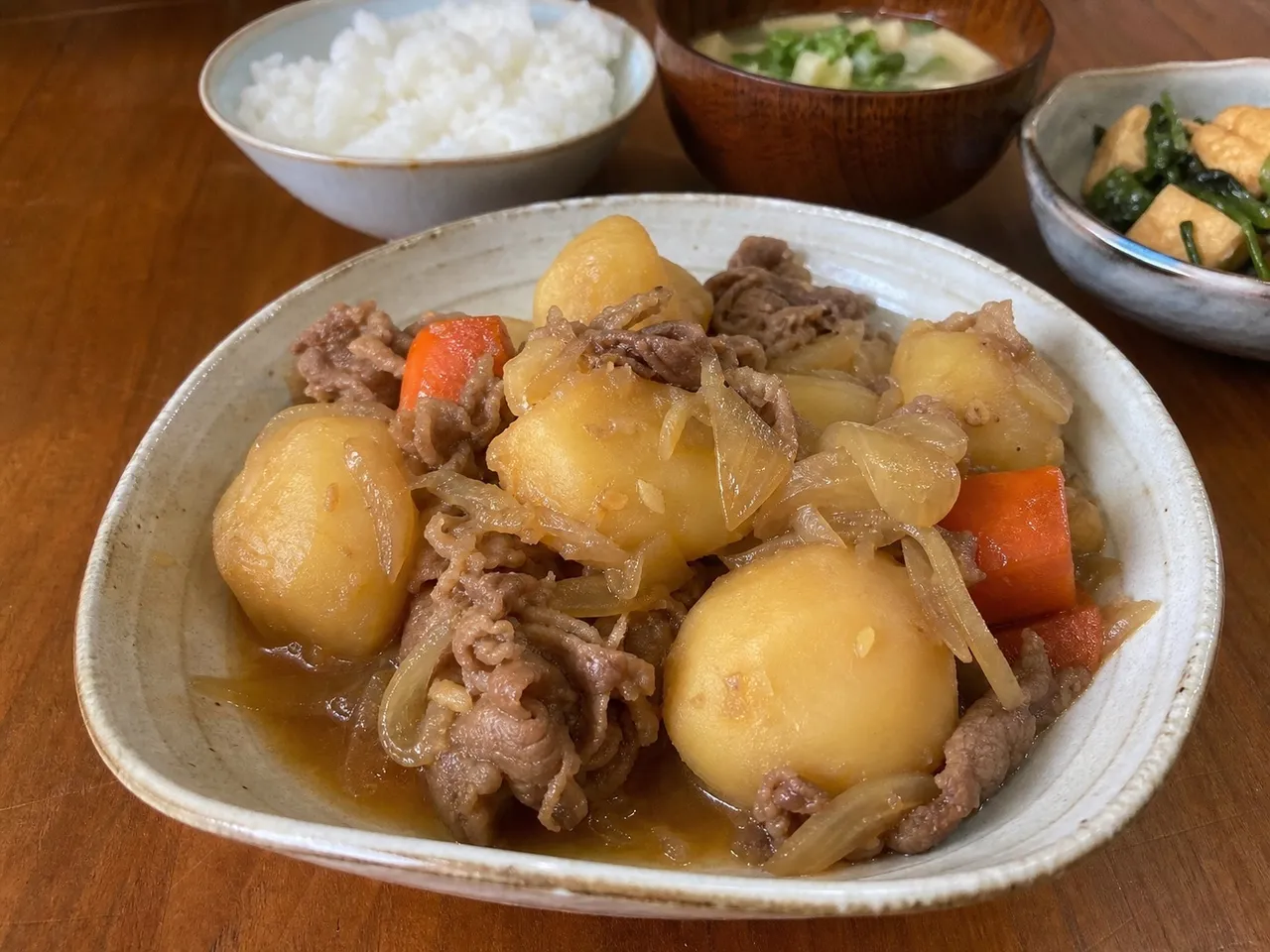 Serving Images are for illustrative purposes only, may be inaccurate, and do not guarantee the presence or absence of specific ingredients.
 Nikujaga
Thinly sliced beef or pork simmered with potatoes, onion, and carrot in a sweet soy-dashi broth, a Japanese home-cooking staple.
Contains common allergens
In the app, Listahan checks these against your household automatically.
Good to know
- One-pot
Matched from this dish's own ingredients and timing. Browse more: one-pot dinners
Instructions
6 steps- 1
Heat the oil in a medium, heavy-bottomed pot. Add the sliced meat and sauté quickly until it loses its pink color.
- 2
Add the onion wedges, sautéing for 2 minutes, then toss in the chunky potatoes and carrots, stirring them to coat in the oils.
- 3
Pour in the dashi, sake, and sugar. Bring the pot to a boil and skim off any foam or fat that rises to the surface.
- 4
Stir in the soy sauce and mirin.
- 5
Create a drop lid (otoshibuta) using a piece of parchment paper cut to the size of the pot with a small hole in the center. Place it directly on top of the liquid.
- 6
Lower the heat to a gentle simmer and cook for 20-25 minutes. The drop lid will circulate the liquid, preventing the potatoes from breaking apart while infusing them with flavor. Serve when the potatoes are fork-tender and the liquid is mostly reduced.
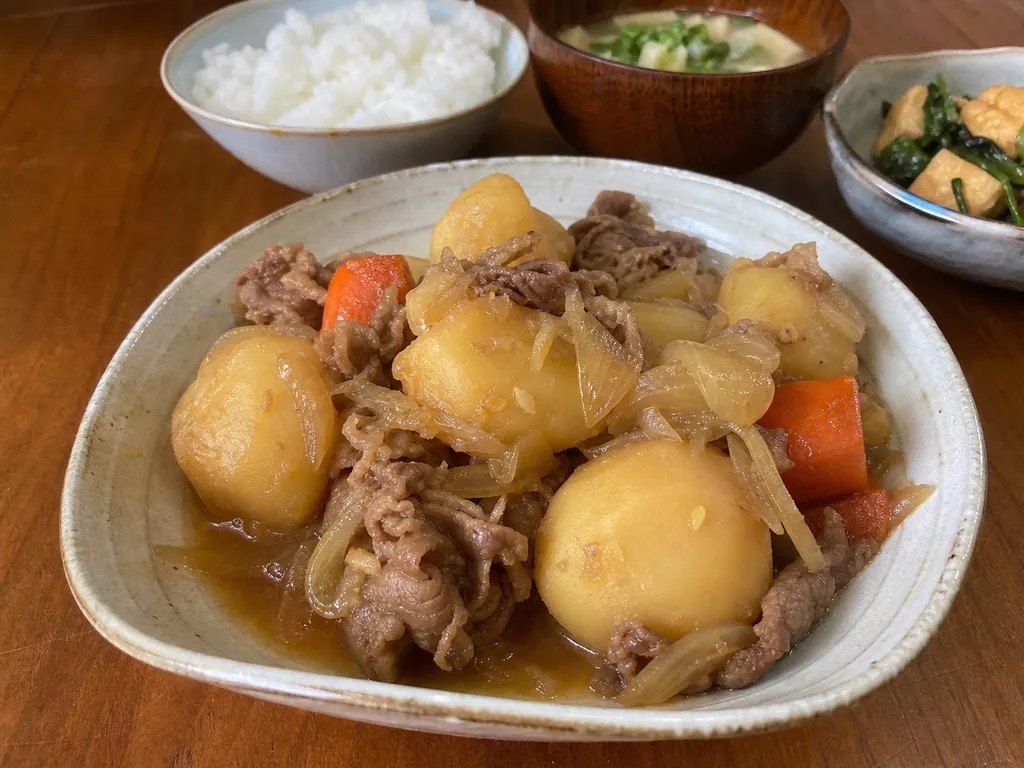 Images are for illustrative purposes only, may be inaccurate, and do not guarantee the presence or absence of specific ingredients.
 Listahan Family Score™
60/100
Works for many families
Score reflects how well this recipe fits a typical busy household. In the app, your Family Score is personalized to your household's allergens, kids, and pantry.
Nutrition
per serving1365
Calories
78 g
Protein
140 g
Carbs
49 g
Fat
Estimated per serving. Actual values depend on the brands and portions you use.
Listahan cooking guide
Chef notes & practical guide
Technique notes, ingredient swaps, serve-alongside ideas, storage guidance, and equipment for this recipe.
Cultural context
Nikujaga, literally 'meat and potatoes', is Japanese home cooking at its most everyday, said to have started in the navy as a comforting stew adapted from a British beef dish. It is the meal many Japanese cooks name first when asked what tastes like home.
Listahan note
This version keeps the seasoning simple and leans on a drop lid so the potatoes soak up flavor and stay whole instead of turning to mush.
Technique cues
- Use a paper drop lid (otoshibuta) so the small amount of liquid circulates over everything without a hard boil that would break the potatoes.
- Add the sugar and sake before the soy sauce; sweetness penetrates the potatoes first, then the salt seasons them.
- Cook the thin-sliced meat just until it loses its pink, since long simmering makes it tough.
Kitchen flow
- Parallel prep
- Start the rice before the stew, and cut all the vegetables while the meat browns.
- Make-ahead
- Nikujaga is better the next day; cook it ahead, chill it, and reheat so the potatoes fully absorb the broth.
- Leftover move
- Mash leftovers with a little dashi into a savory potato side, or fold them into a croquette filling.
- Cleanup rhythm
- One pot; soak it right away so the sugary broth does not harden on the bottom.
Ingredient brief
Role, handling, and swap guidance for each key ingredient.
Thinly sliced beef or pork
Flavor and richness
Purpose: Thin slices release savory fat into the broth quickly and stay tender.
Handling: Saute just until the color turns, then build the stew around it.
Adaptation: Beef chuck or pork belly both work; thinly sliced is what matters most.
Potatoes
The heart of the stew
Purpose: They absorb the sweet-savory broth and give the dish its comforting body.
Handling: Cut into large chunks so they hold together through the simmer.
Adaptation: Yukon gold or other medium-starch potatoes hold shape best; very starchy ones fall apart.
Dashi
Broth base
Purpose: It carries a gentle, savory depth that plain water cannot.
Handling: Use it as the simmering liquid from the start.
Adaptation: Kombu or shiitake dashi keeps it fish-free and vegetarian.
Onion
Sweet aromatic
Purpose: Onion wedges melt down and round out the broth.
Handling: Cut into wedges so they hold some shape rather than dissolving completely.
Adaptation: Any yellow or sweet onion works.
Soy sauce, sugar, mirin, and sake
The seasoning quartet
Purpose: Together they make the signature sweet-savory simmered flavor.
Handling: Add the sugar and sake first, the soy and mirin after, to layer the seasoning.
Adaptation: Use tamari for gluten-free; a pinch more sugar can stand in for mirin.
Technique notes
- The drop lid is the trick; if you do not have one, cut a circle of parchment with a small hole in the center.
- Resist stirring once the potatoes are in; gentle circulation under the drop lid is enough, and stirring breaks them.
- Stop while a little glossy liquid remains; the stew should be moist, not dry.
Ingredient swaps
- Gluten-free direction
- Replace the soy sauce with tamari or a certified gluten-free soy sauce — check that any other packaged ingredients here are labeled gluten-free too. This one leans on the potatoes.
- Fish-free, vegetarian direction
- Use a kombu or shiitake dashi and skip the meat, adding mushrooms and extra root vegetables.
- Lower-sodium direction
- Reduce the soy sauce and let the sweetness and dashi carry the flavor.
Serve alongside
- Steamed rice
- Miso soup
- Quick spinach with sesame
- Japanese pickles
- Green tea
- Barley tea
- Light sake
Serving suggestions only — check pairings for your household's allergens.
Storage & reheating
- Refrigerate up to 3 days in a sealed container; the flavor deepens overnight.
- Reheat gently on the stove with a splash of dashi or water to loosen the broth.
- Freezing is possible but the potatoes turn grainy, so it is better eaten fresh or next-day.
Equipment
- Medium heavy-bottomed pot
- Drop lid (otoshibuta) or a parchment round
- Wooden spoon
- Rice cooker or pot
Make this household-aware
Listahan Pro checks this recipe against your household's allergens, finds pantry-aware swaps, builds the shopping list, and helps you plan the week around it.
Plan it in Listahan
Add Nikujaga to your week, check it against your household's allergens, and build the shopping list automatically.
More Japanese recipes
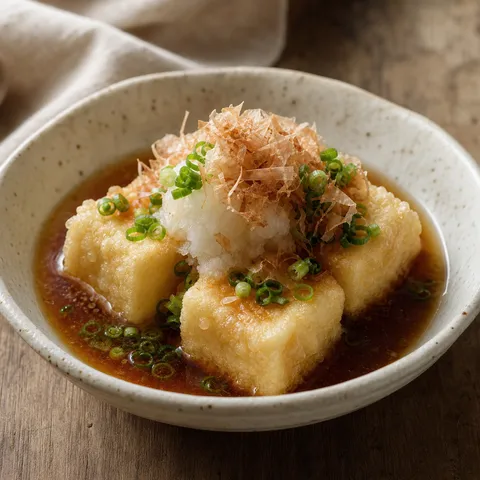 Japanese Lens Verified Images are for illustrative purposes only, may be inaccurate, and do not guarantee the presence or absence of specific ingredients.
 Agedashi Tofu
Lightly fried tofu dusted in potato starch and served in a warm dashi-soy-mirin broth, topped with grated daikon and bonito flakes, a classic Japanese izakaya starter.
 Japanese Lens Verified Images are for illustrative purposes only, may be inaccurate, and do not guarantee the presence or absence of specific ingredients.
 Katsu Curry
A Japanese recipe: Katsu Curry.
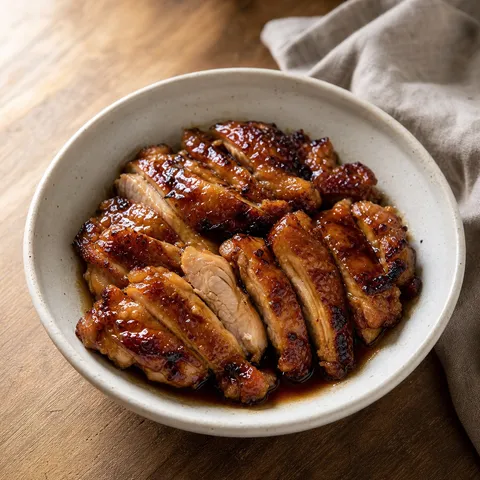 Japanese Lens Verified Images are for illustrative purposes only, may be inaccurate, and do not guarantee the presence or absence of specific ingredients.
 Chicken Teriyaki
Enjoy tender, juicy chicken glazed in a deeply flavorful, glossy sweet soy sauce, perfectly caramelized to sticky perfection.