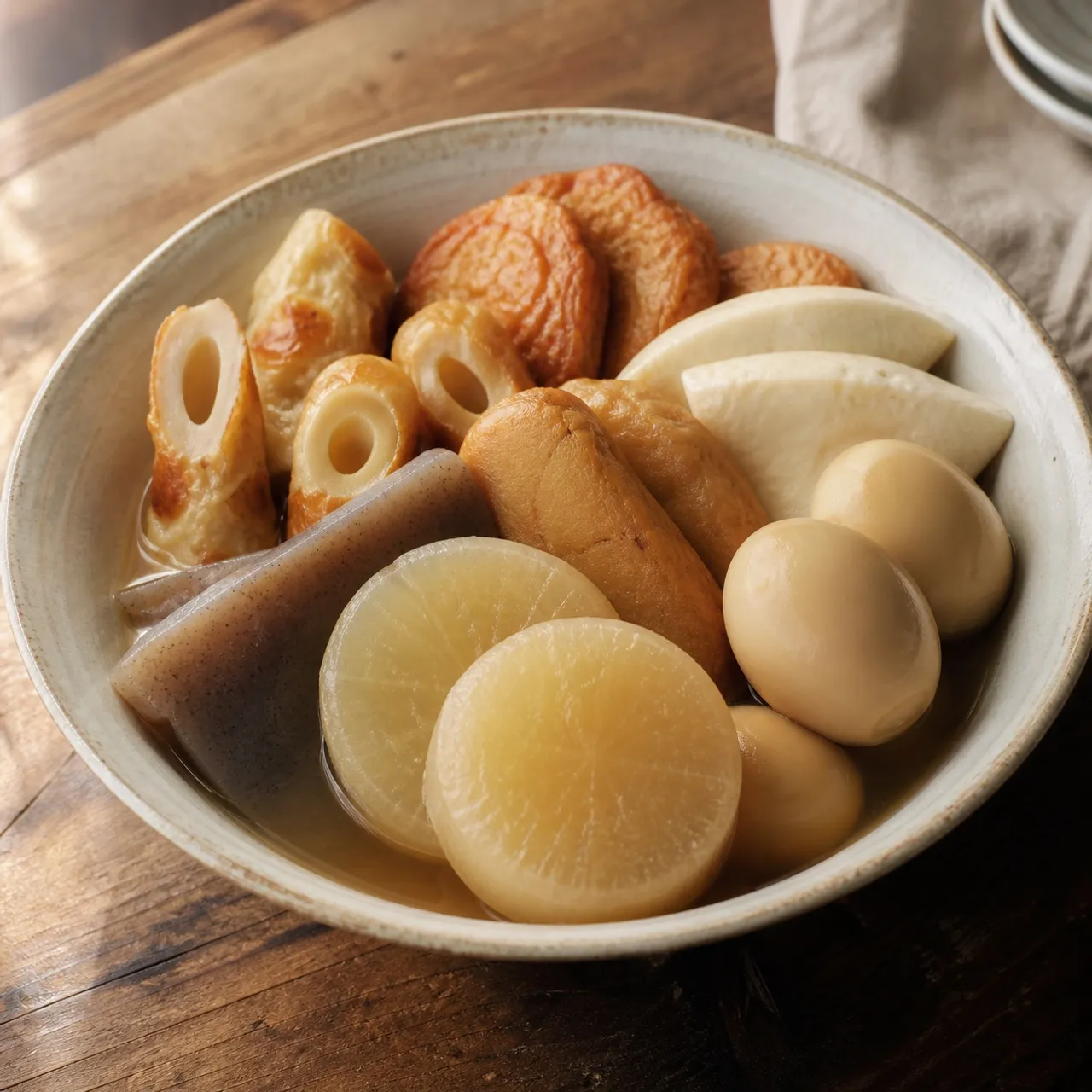
 Japanese Images are for illustrative purposes only, may be inaccurate, and do not guarantee the presence or absence of specific ingredients.
 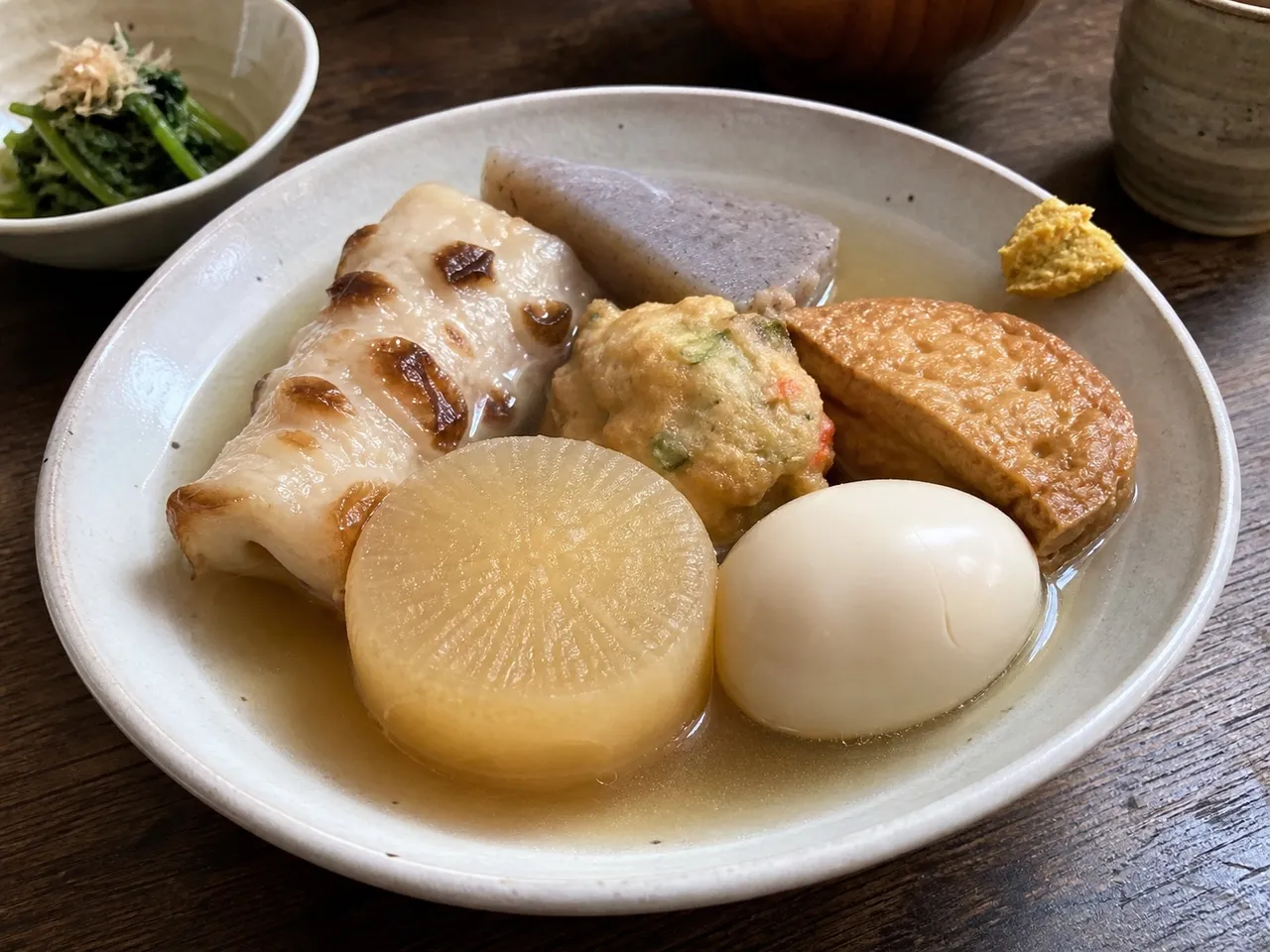 Serving Images are for illustrative purposes only, may be inaccurate, and do not guarantee the presence or absence of specific ingredients.
 Oden
A winter comfort food consisting of various ingredients simmered in a light soy-dashi broth.
Contains common allergens
In the app, Listahan checks these against your household automatically.
Instructions
6 steps- 1
Prepare the daikon: slice it into thick 1-inch rounds, peel them thickly, and bevel the sharp edges to prevent them from breaking apart. Parboil the daikon in rice water for 15 minutes to remove bitterness.
- 2
Prepare the konnyaku: score the surface in a crosshatch pattern so it absorbs flavor, then blanch it in boiling water for 3 minutes to remove its smell.
- 3
Prepare the fish cakes: pour boiling water over the deep-fried fish cakes to remove excess surface oil.
- 4
In a large, deep pot, combine the dashi, soy sauce, mirin, and sake. Bring to a gentle simmer.
- 5
Add the daikon, konnyaku, and hard-boiled eggs. Simmer on low heat for 45-60 minutes. Do not let the broth boil, or it will become cloudy.
- 6
Add the fish cakes in the last 15-20 minutes of cooking. Serve hot directly from the broth with a small dab of sharp karashi mustard.
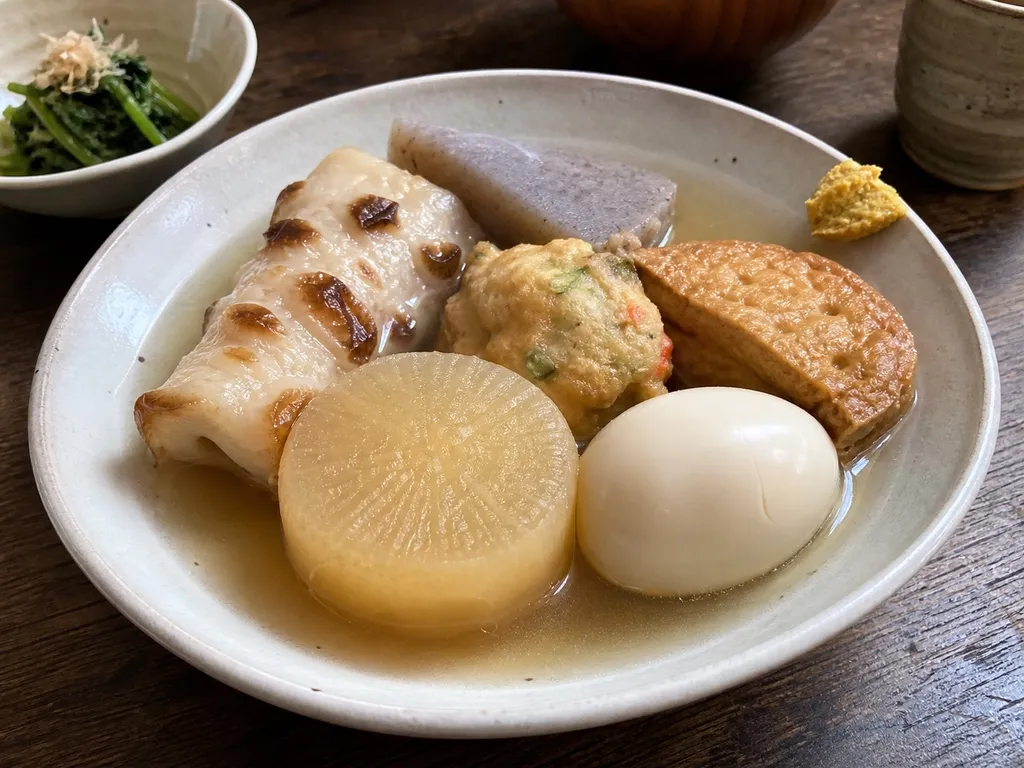 Images are for illustrative purposes only, may be inaccurate, and do not guarantee the presence or absence of specific ingredients.
 Listahan Family Score™
56/100
Works for many families
Score reflects how well this recipe fits a typical busy household. In the app, your Family Score is personalized to your household's allergens, kids, and pantry.
Nutrition
per serving115
Calories
10 g
Protein
5 g
Carbs
5 g
Fat
Estimated per serving. Actual values depend on the brands and portions you use.
Listahan cooking guide
Chef notes & practical guide
Technique notes, ingredient swaps, serve-alongside ideas, storage guidance, and equipment for this recipe.
Cultural context
Oden is a winter hot pot of daikon, eggs, konnyaku, and fish cakes slowly simmered in a light dashi, sold from convenience-store counters and street carts across Japan. Its charm is gentleness: humble ingredients steeped for hours until each one is saturated with savory broth.
Listahan note
This version focuses on the prep steps that make oden taste clean, beveling and parboiling the daikon, scoring the konnyaku, and de-oiling the fish cakes, then a long, never-boiling simmer.
Technique cues
- Keep the broth at a bare simmer; a real boil turns the delicate dashi cloudy and muddy.
- Bevel the daikon edges and parboil it first, so the rounds stay intact and lose their raw bitterness.
- Add the fish cakes only in the last 15 to 20 minutes; long simmering makes them swell and go mushy.
Kitchen flow
- Parallel prep
- Parboil the daikon, score and blanch the konnyaku, and de-oil the fish cakes before the broth even goes on.
- Make-ahead
- Oden is famously better reheated; make it a day ahead and let everything steep overnight for the deepest flavor.
- Leftover move
- Cook udon or rice in the leftover broth, or chop the daikon and cakes into a quick rice bowl.
- Cleanup rhythm
- One big pot; strain and save the broth, then soak the pot right away.
Ingredient brief
Role, handling, and swap guidance for each key ingredient.
Daikon radish
The star vegetable
Purpose: Slowly simmered daikon turns translucent and soaks up the broth like a sponge.
Handling: Cut thick, bevel the edges, and parboil to remove bitterness before the main simmer.
Adaptation: There is no real substitute; daikon is the heart of oden.
Konnyaku (konjac)
Chewy texture
Purpose: Its springy bite is a classic oden contrast, and it carries broth once scored.
Handling: Crosshatch the surface and blanch to remove its odor.
Adaptation: Shirataki knots give a similar chew if konnyaku blocks are unavailable.
Assorted fish cakes
Savory protein
Purpose: Chikuwa, satsuma-age, and hanpen add umami and variety.
Handling: Pour boiling water over them to wash off surface oil before adding late.
Adaptation: Use whatever fish cakes you can find; tofu puffs are a non-fish alternative.
Hard-boiled eggs
Comforting staple
Purpose: Eggs soak up the broth and are an essential oden item.
Handling: Peel and add early so they absorb flavor through the long simmer.
Adaptation: Omit for an egg-free pot.
Dashi with soy, mirin, sake
The broth
Purpose: A light, savory-sweet broth is what all the ingredients steep in.
Handling: Simmer gently and never let it boil.
Adaptation: Use tamari for gluten-free; a kombu-shiitake dashi keeps it fish-free.
Technique notes
- Never boil oden; the difference between a clear, elegant broth and a cloudy one is keeping it at a whisper.
- Stagger the additions by cook time so the daikon is tender and the fish cakes are not overdone.
- Serve with a dab of sharp karashi mustard, the traditional bright counterpoint to the mild broth.
Ingredient swaps
- Gluten-free direction
- Use tamari and choose fish cakes without wheat binders, or substitute tofu and vegetables.
- Fish-free, vegetarian direction
- Use a kombu-shiitake dashi and build the pot from daikon, konnyaku, tofu, and eggs (or skip eggs for vegan).
- Mustard-free direction
- Skip the karashi or offer a little grated ginger instead.
Serve alongside
- Steamed rice
- Japanese pickles
- Karashi mustard
- Sake-steamed greens
- Warm sake
- Barley tea
- Green tea
Serving suggestions only — check pairings for your household's allergens.
Storage & reheating
- Refrigerate up to 3 days; the flavor deepens with time.
- Reheat gently to a bare simmer; do not boil, which clouds the broth.
- Freezing is not ideal; daikon and konnyaku change texture, so eat it fresh or next-day.
Equipment
- Large deep pot
- Ladle
- Skimmer
- Small dish for the karashi
Make this household-aware
Listahan Pro checks this recipe against your household's allergens, finds pantry-aware swaps, builds the shopping list, and helps you plan the week around it.
Plan it in Listahan
Add Oden to your week, check it against your household's allergens, and build the shopping list automatically.
More Japanese recipes
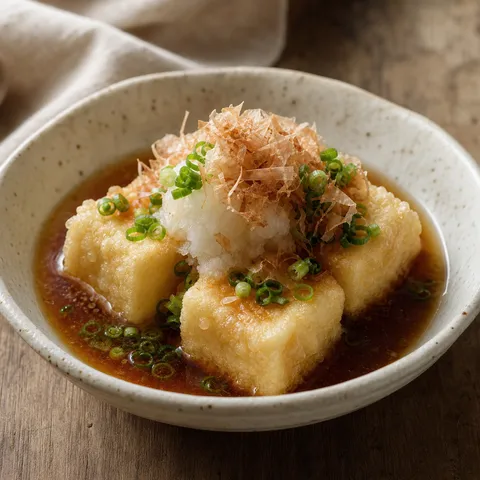 Japanese Lens Verified Images are for illustrative purposes only, may be inaccurate, and do not guarantee the presence or absence of specific ingredients.
 Agedashi Tofu
Lightly fried tofu dusted in potato starch and served in a warm dashi-soy-mirin broth, topped with grated daikon and bonito flakes, a classic Japanese izakaya starter.
 Japanese Lens Verified Images are for illustrative purposes only, may be inaccurate, and do not guarantee the presence or absence of specific ingredients.
 Katsu Curry
A Japanese recipe: Katsu Curry.
 Japanese Lens Verified Images are for illustrative purposes only, may be inaccurate, and do not guarantee the presence or absence of specific ingredients.
 Chicken Teriyaki
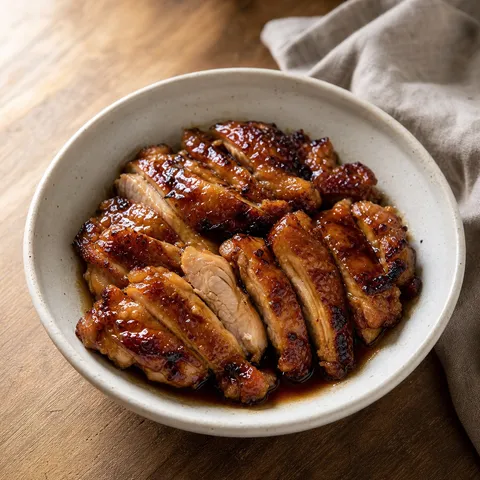
Enjoy tender, juicy chicken glazed in a deeply flavorful, glossy sweet soy sauce, perfectly caramelized to sticky perfection.