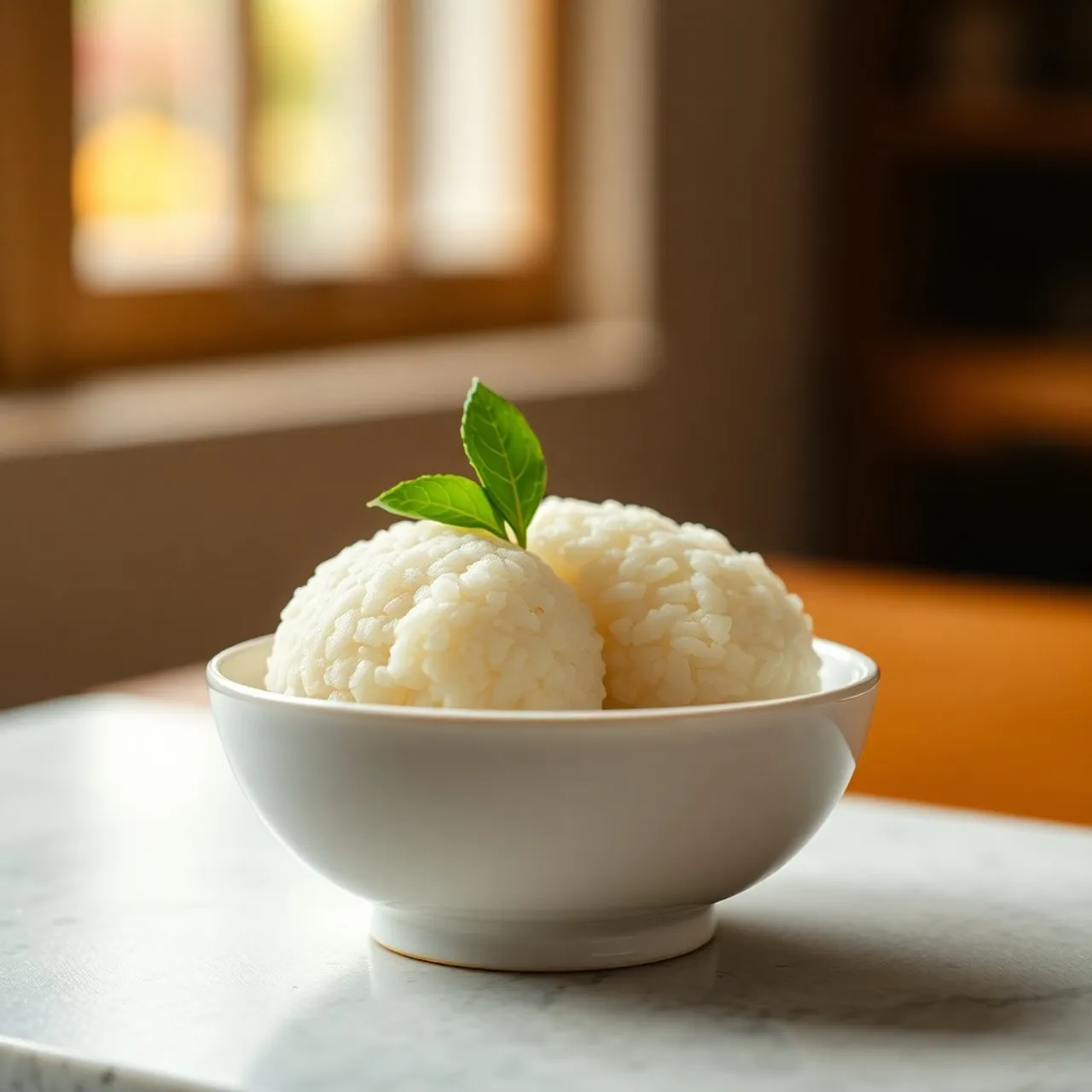
 Japanese Images are for illustrative purposes only, may be inaccurate, and do not guarantee the presence or absence of specific ingredients.
 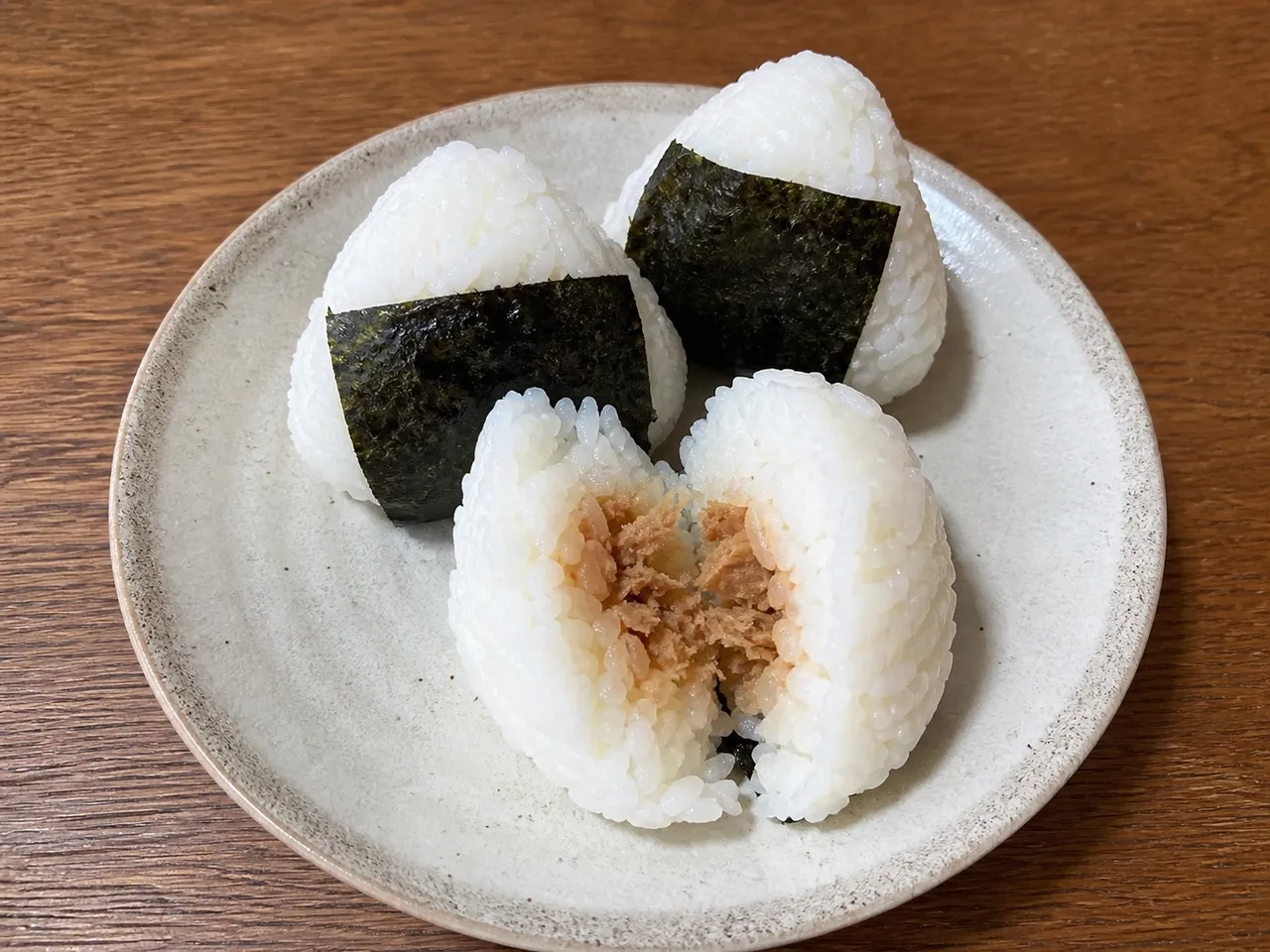 Serving Images are for illustrative purposes only, may be inaccurate, and do not guarantee the presence or absence of specific ingredients.
 Onigiri (Rice Balls)
Triangles of white rice, often with a filling and wrapped in seaweed.
Contains common allergens
In the app, Listahan checks these against your household automatically.
Good to know
- Ready in under 30 minutes
Matched from this dish's own ingredients and timing. Browse more: 30-minute meals
Instructions
6 steps- 1
Prepare your fillings (flake the salmon, pit the umeboshi) and set up a workstation with a bowl of warm water, a small dish of kosher salt, and the warm rice.
- 2
Wet your hands thoroughly in the bowl of water to prevent the sticky rice from clinging to your skin.
- 3
Dip two fingers into the kosher salt and rub the salt evenly over both palms (this flavors the rice and acts as a natural preservative).
- 4
Scoop roughly 1/2 cup of warm rice into one hand. Gently flatten it slightly and press an indentation into the center.
- 5
Place 1 tablespoon of your chosen filling into the indent, then fold the surrounding rice over the filling to completely encase it.
- 6
Cup your hands into a 'V' shape and gently press and rotate the rice ball 5-6 times to form a firm, neat triangle. Do not squeeze too hard, or the rice will become mushy. Wrap the bottom edge with a strip of crisp nori just before eating.
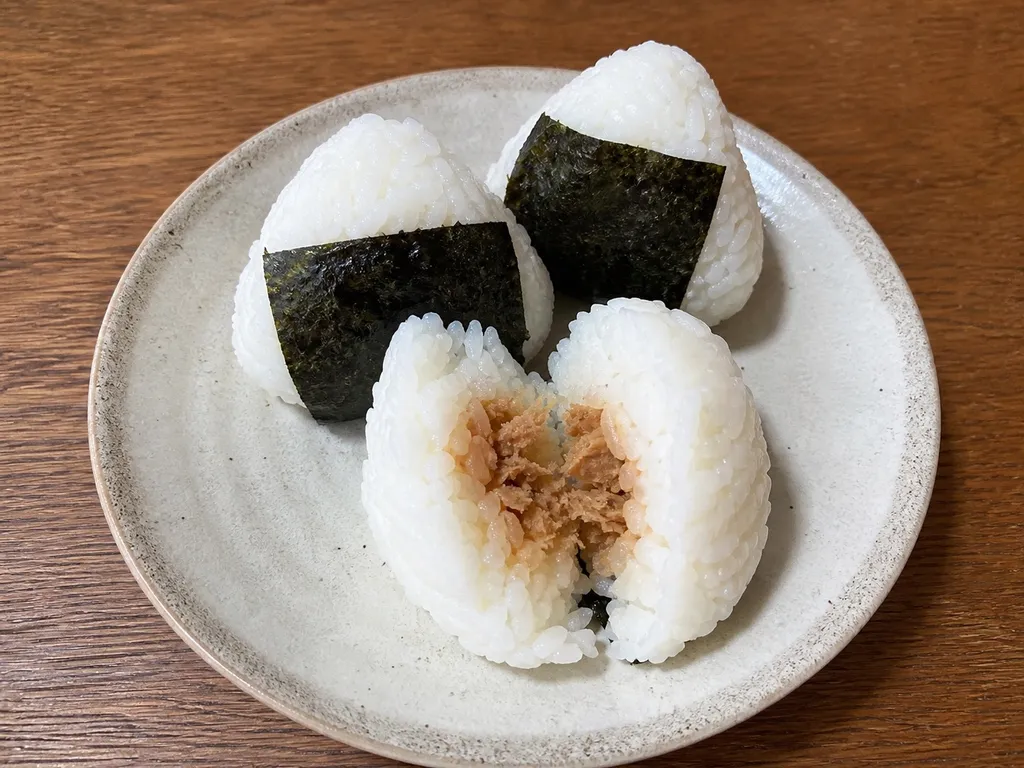 Images are for illustrative purposes only, may be inaccurate, and do not guarantee the presence or absence of specific ingredients.
 Listahan Family Score™
69/100
Works for many families
Score reflects how well this recipe fits a typical busy household. In the app, your Family Score is personalized to your household's allergens, kids, and pantry.
Nutrition
per serving0
Calories
0 g
Protein
0 g
Carbs
0 g
Fat
Estimated per serving. Actual values depend on the brands and portions you use.
Listahan cooking guide
Chef notes & practical guide
Technique notes, ingredient swaps, serve-alongside ideas, storage guidance, and equipment for this recipe.
Cultural context
Onigiri, hand-pressed rice triangles often wrapped in nori and tucked with a savory or sour filling, are Japan's original portable meal, carried for centuries in lunchboxes and on journeys. Simple as they look, they live or die on the rice and a light, even hand.
Listahan note
This version focuses on the feel of shaping: warm rice, salted wet hands, and a gentle press, so the triangle holds without turning dense.
Technique cues
- Salt your wet palms rather than the rice; it seasons the surface evenly and acts as a light preservative.
- Shape while the rice is warm; cold rice will not bind into a neat triangle.
- Press gently and rotate a few times; squeezing hard makes the rice gummy instead of fluffy.
Kitchen flow
- Parallel prep
- Prep the fillings and set up a bowl of water, a dish of salt, and the warm rice before you start shaping.
- Make-ahead
- Onigiri keep at cool room temperature for a few hours, which is the point; wrap the nori separately so it stays crisp.
- Leftover move
- Pan-fry or grill leftover onigiri with a brush of soy for crisp yaki onigiri.
- Cleanup rhythm
- Keep the water bowl close and rinse your hands as needed; there is almost nothing to clean.
Ingredient brief
Role, handling, and swap guidance for each key ingredient.
Warm short-grain rice
The whole body
Purpose: Sticky, warm short-grain rice is the only thing that will hold the shape.
Handling: Use freshly cooked, still-warm rice for binding.
Adaptation: Any short-grain Japanese rice; do not use long-grain, which will not hold.
Kosher salt
Seasoning and preservation
Purpose: A light salting flavors the rice and helps it keep at room temperature.
Handling: Rub a pinch over wet palms before shaping each ball.
Adaptation: Fine sea salt works; use a touch less since it is denser.
Nori
Wrapper and handle
Purpose: A strip of nori keeps fingers clean and adds a sea note.
Handling: Wrap just before eating so it stays crisp.
Adaptation: Skip for a plain salted ball, or use a sesame coating instead.
Grilled salted salmon or umeboshi
The filling
Purpose: A savory salmon flake or a sour pickled plum is the classic hidden center that also helps preserve the ball.
Handling: Tuck a small amount into the indentation and seal the rice over it.
Adaptation: Tuna-mayo, kombu, or pickled vegetables are common alternatives.
Technique notes
- Wet, salted hands are the trick; dry hands stick and over-salted rice tastes harsh.
- Refrigeration hardens the rice; keep onigiri at cool room temperature and eat within a few hours.
- Wrap the nori only at the last moment, or it goes limp against the rice.
Ingredient swaps
- Vegetarian direction
- Fill with umeboshi, kombu, or pickled vegetables instead of salmon.
- Gluten-free direction
- Most fillings are naturally gluten-free; confirm any soy-based filling uses tamari.
- Plain direction
- Make simple salted rice balls with no filling, rolled in toasted sesame.
Serve alongside
- Miso soup
- Tamagoyaki
- Karaage
- Japanese pickles
- Green tea
- Barley tea
Serving suggestions only — check pairings for your household's allergens.
Storage & reheating
- Keep at cool room temperature and eat within a few hours; do not refrigerate, which hardens the rice.
- If you must store longer, refrigerate wrapped and let them come back toward room temperature before eating.
- Freeze plain (un-nori-wrapped) onigiri up to 1 month; microwave to reheat, then wrap fresh nori.
Equipment
- Rice cooker or pot
- Small bowl of water
- Small dish of salt
- Kitchen shears for nori
Make this household-aware
Listahan Pro checks this recipe against your household's allergens, finds pantry-aware swaps, builds the shopping list, and helps you plan the week around it.
Plan it in Listahan
Add Onigiri (Rice Balls) to your week, check it against your household's allergens, and build the shopping list automatically.
More Japanese recipes
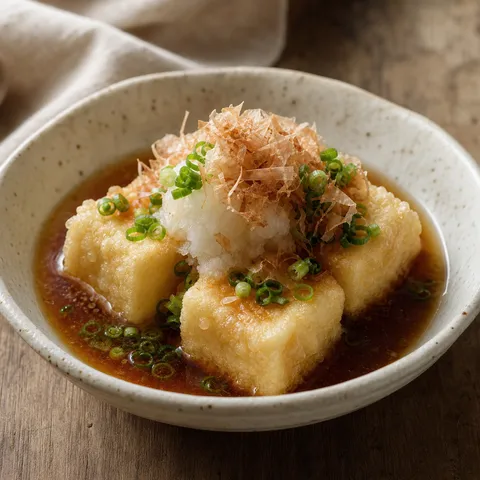 Japanese Lens Verified Images are for illustrative purposes only, may be inaccurate, and do not guarantee the presence or absence of specific ingredients.
 Agedashi Tofu
Lightly fried tofu dusted in potato starch and served in a warm dashi-soy-mirin broth, topped with grated daikon and bonito flakes, a classic Japanese izakaya starter.
 Japanese Lens Verified Images are for illustrative purposes only, may be inaccurate, and do not guarantee the presence or absence of specific ingredients.
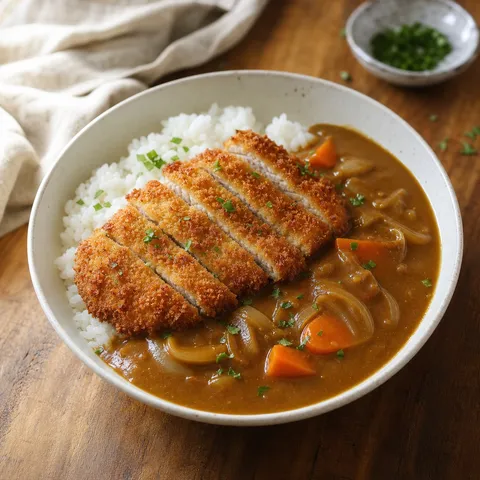
 Katsu Curry
A Japanese recipe: Katsu Curry.
 Japanese Lens Verified Images are for illustrative purposes only, may be inaccurate, and do not guarantee the presence or absence of specific ingredients.
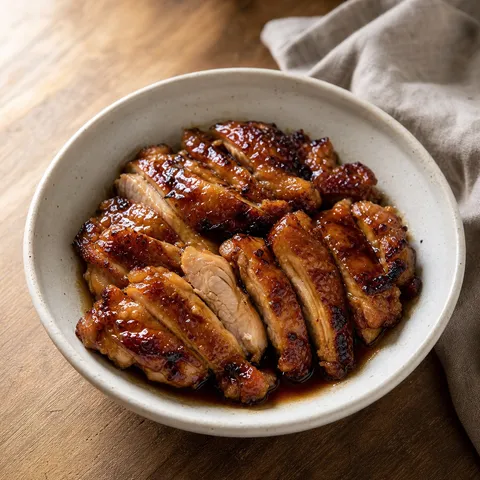
 Chicken Teriyaki
Enjoy tender, juicy chicken glazed in a deeply flavorful, glossy sweet soy sauce, perfectly caramelized to sticky perfection.