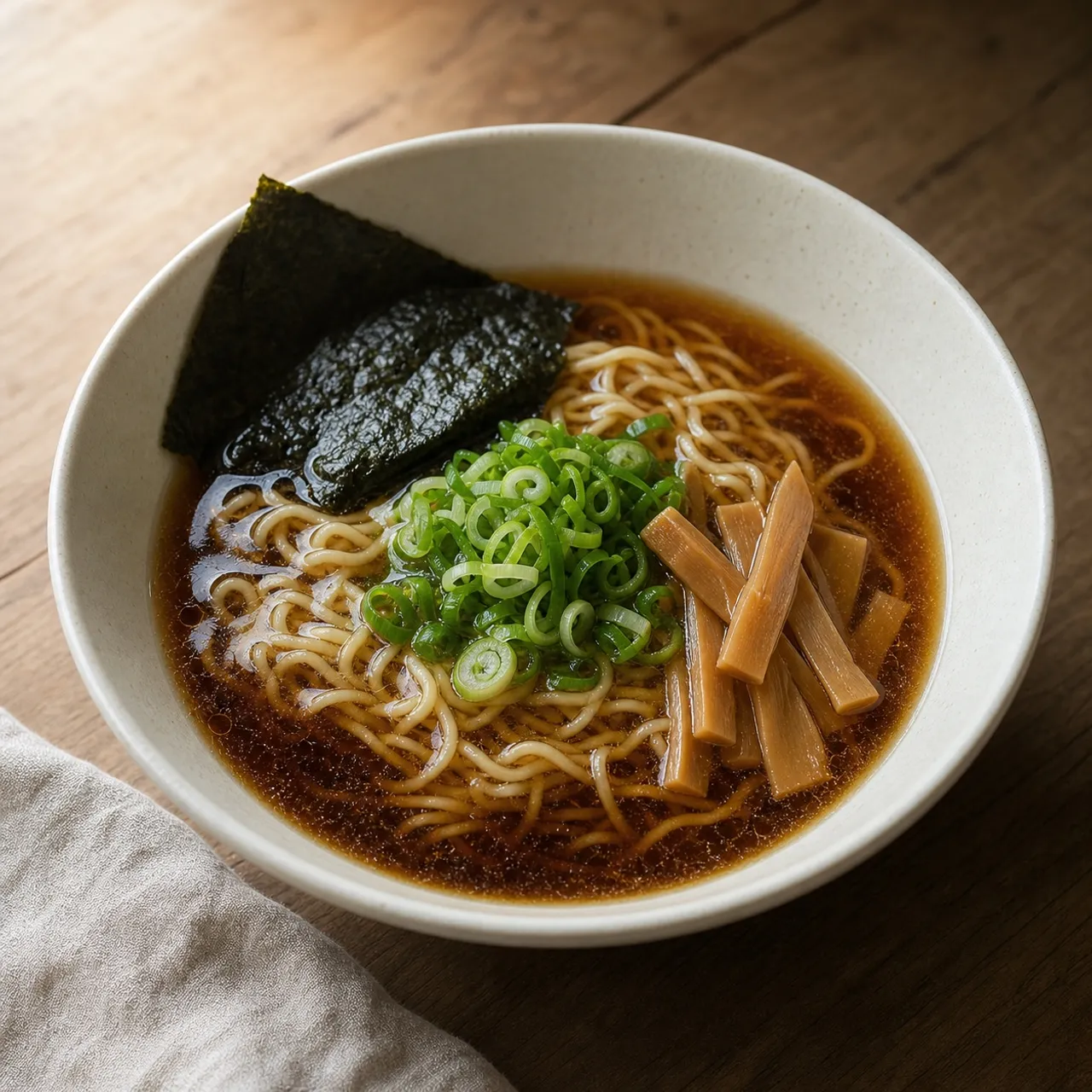
 Japanese Images are for illustrative purposes only, may be inaccurate, and do not guarantee the presence or absence of specific ingredients.
 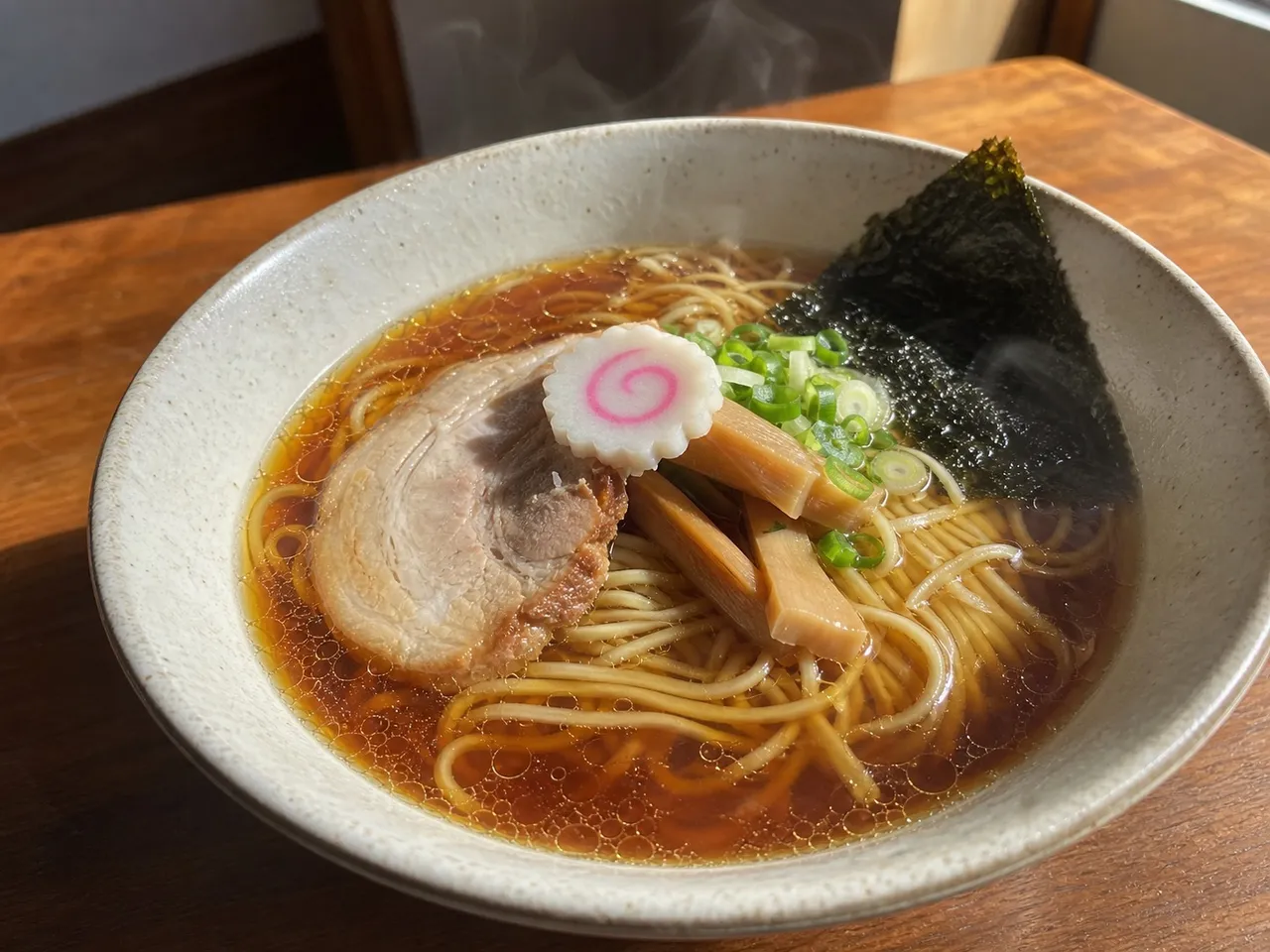 Serving Images are for illustrative purposes only, may be inaccurate, and do not guarantee the presence or absence of specific ingredients.
 Shoyu Ramen
Slurp up comforting joy with this umami-packed, soy-sauce-based ramen featuring a brilliantly clear, aromatic broth and perfectly chewy noodles.
Contains common allergens
In the app, Listahan checks these against your household automatically.
Instructions
6 steps- 1
Prepare a clear, light broth by simmering chicken carcasses or vegetables, skimming the surface constantly to keep it transparent.
- 2
Make the shoyu tare by gently heating high-quality soy sauce, mirin, sake, and a piece of kombu in a small saucepan.
- 3
Warm your serving bowls with hot water, then discard the water and add 2-3 tablespoons of the shoyu tare to each bowl.
- 4
Bring the clear broth to a near-boil and ladle it into the bowls, mixing it with the tare to create a fragrant, mahogany-colored soup.
- 5
Cook the fresh ramen noodles in a separate pot of rapidly boiling water for about 90 seconds until they retain a firm chew.
- 6
Drain the noodles well, slide them into the soup, fold them neatly with chopsticks, and garnish delicately with menma, sliced scallions, and nori.
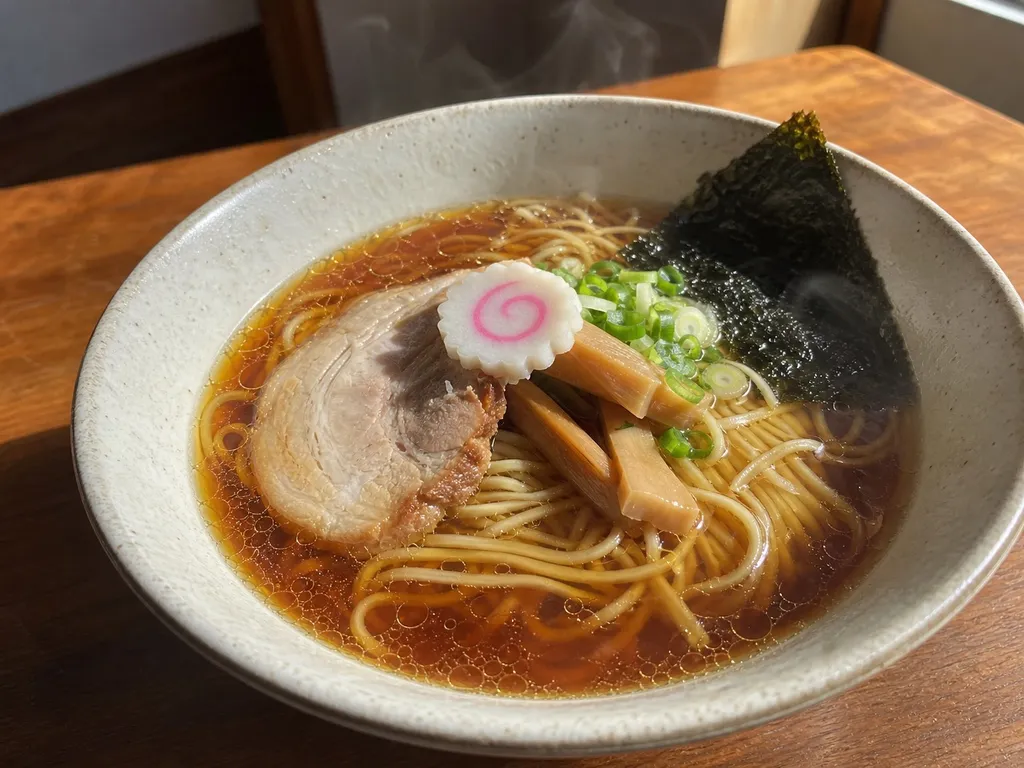 Images are for illustrative purposes only, may be inaccurate, and do not guarantee the presence or absence of specific ingredients.
 Listahan Family Score™
76/100
Good fit for most families
Score reflects how well this recipe fits a typical busy household. In the app, your Family Score is personalized to your household's allergens, kids, and pantry.
Nutrition
per serving535
Calories
63 g
Protein
2 g
Carbs
31 g
Fat
Estimated per serving. Actual values depend on the brands and portions you use.
Listahan cooking guide
Chef notes & practical guide
Technique notes, ingredient swaps, serve-alongside ideas, storage guidance, and equipment for this recipe.
Cultural context
Shoyu (soy sauce) ramen is the Tokyo classic, built on a clear chicken or vegetable broth seasoned with a soy-based tare into a fragrant, mahogany-colored soup. Where tonkotsu is about richness, shoyu is about clarity and balance.
Listahan note
This version keeps the broth clear and lets the soy tare do the seasoning, so the soup tastes clean and layered rather than heavy.
Technique cues
- Skim the broth constantly while it simmers; a clear soup is the whole point of shoyu ramen and a rolling boil clouds it.
- Season the bowl with tare first, then pour in the hot broth, so the soy flavor distributes evenly.
- Cook the noodles about 90 seconds for a firm chew and drain them hard before they hit the soup.
Kitchen flow
- Parallel prep
- Have the tare made and the toppings ready before noodles go in; assembly should take under five minutes once broth is hot.
- Make-ahead
- Broth and tare keep for days and the menma can be prepped ahead; boil noodles fresh per bowl.
- Leftover move
- Use extra clear broth and tare as a base for a quick udon or rice porridge.
- Cleanup rhythm
- Rinse the noodle pot right away so starch does not set, and warm bowls in the sink with hot water as you cook.
Ingredient brief
Role, handling, and swap guidance for each key ingredient.
Clear chicken or vegetable broth
The base
Purpose: A light, transparent broth is what sets shoyu ramen apart from richer styles.
Handling: Simmer gently and skim the surface often to keep it clear.
Adaptation: A good store-bought low-sodium broth works; keep it clear and unsalted so the tare seasons it.
Soy sauce tare
Seasoning concentrate
Purpose: This soy, mirin, sake, and kombu blend gives the soup its color and savory backbone.
Handling: Warm it gently to meld, then spoon into each bowl before the broth.
Adaptation: A tamari-based tare keeps it gluten-free; adjust salt since tamari can be stronger.
Ramen noodles
The body
Purpose: Springy alkaline noodles hold their chew in the hot broth.
Handling: Boil about 90 seconds and shake off all water.
Adaptation: Dried ramen works; rice noodles make it gluten-free but change the texture.
Menma (braised bamboo shoots)
Savory topping
Purpose: Their gentle crunch and umami are a traditional counterpoint to the soft noodles.
Handling: Warm briefly and lay on at the end.
Adaptation: Thin-sliced sauteed mushrooms give a similar savory bite.
Nori and scallions
Finishing garnish
Purpose: Nori adds a sea note and scallions a fresh sharpness to the rich soup.
Handling: Add nori at the edge and scallions on top just before serving.
Adaptation: A soft-boiled egg adds richness if you want more body.
Technique notes
- Keep the broth at a bare simmer, never a hard boil, to protect its clarity.
- Taste the tare before committing; soy brands vary widely in salt and the tare carries all the seasoning.
- Warm the bowls first so the clear, delicate broth does not lose heat the moment it is poured.
Ingredient swaps
- Gluten-free direction
- Use a tamari-based tare and rice noodles, and confirm the menma seasoning is gluten-free.
- Vegetarian direction
- Use a kombu-shiitake-vegetable broth and skip any animal-based tare additions.
- Lower-sodium direction
- Use less tare and a low-sodium broth, finishing with scallions and nori for flavor instead of salt.
Serve alongside
- Gyoza
- Edamame
- Quick cucumber sunomono
- Menma
- Cold barley tea
- Crisp lager
- Green tea
Serving suggestions only — check pairings for your household's allergens.
Storage & reheating
- Store broth and tare separately in the fridge for up to 4 days; never store noodles in broth.
- Reheat the broth to a gentle simmer and boil fresh noodles each time.
- Freeze the clear broth in portions up to 2 months; thaw and reheat gently to keep it clear.
Equipment
- Stockpot for broth
- Fine-mesh skimmer
- Sieve for noodles
- Warmed deep ramen bowls
Make this household-aware
Listahan Pro checks this recipe against your household's allergens, finds pantry-aware swaps, builds the shopping list, and helps you plan the week around it.
Plan it in Listahan
Add Shoyu Ramen to your week, check it against your household's allergens, and build the shopping list automatically.
More Japanese recipes
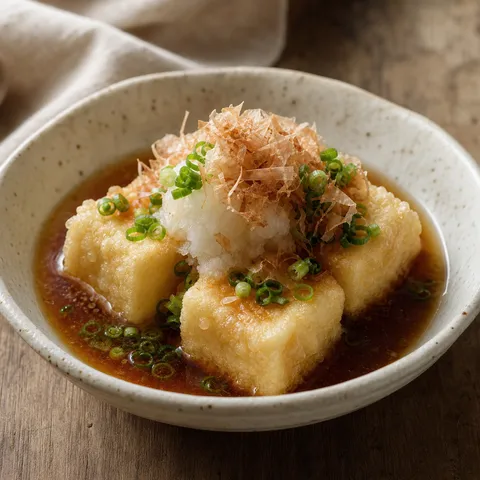 Japanese Lens Verified Images are for illustrative purposes only, may be inaccurate, and do not guarantee the presence or absence of specific ingredients.
 Agedashi Tofu
Lightly fried tofu dusted in potato starch and served in a warm dashi-soy-mirin broth, topped with grated daikon and bonito flakes, a classic Japanese izakaya starter.
 Japanese Lens Verified Images are for illustrative purposes only, may be inaccurate, and do not guarantee the presence or absence of specific ingredients.
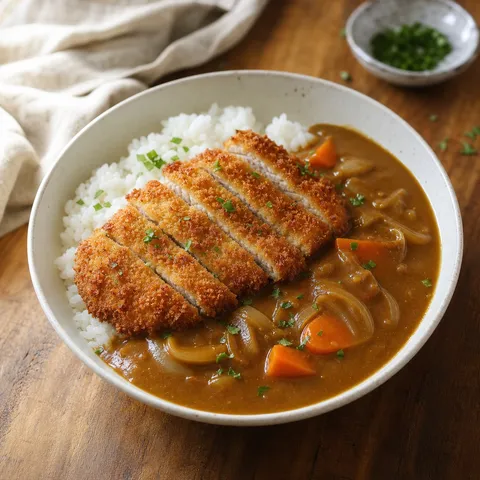
 Katsu Curry
A Japanese recipe: Katsu Curry.
 Japanese Lens Verified Images are for illustrative purposes only, may be inaccurate, and do not guarantee the presence or absence of specific ingredients.
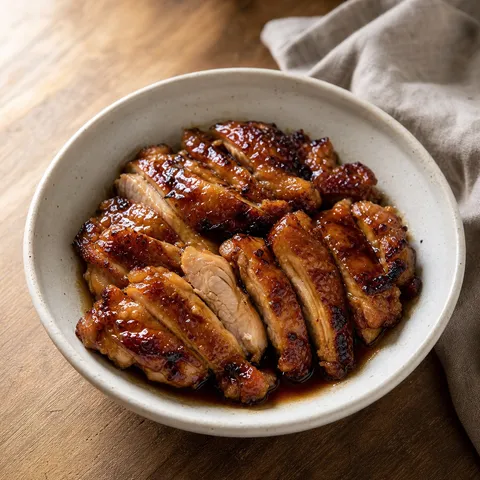
 Chicken Teriyaki
Enjoy tender, juicy chicken glazed in a deeply flavorful, glossy sweet soy sauce, perfectly caramelized to sticky perfection.