 Japanese Images are for illustrative purposes only, may be inaccurate, and do not guarantee the presence or absence of specific ingredients.
  Serving Images are for illustrative purposes only, may be inaccurate, and do not guarantee the presence or absence of specific ingredients.
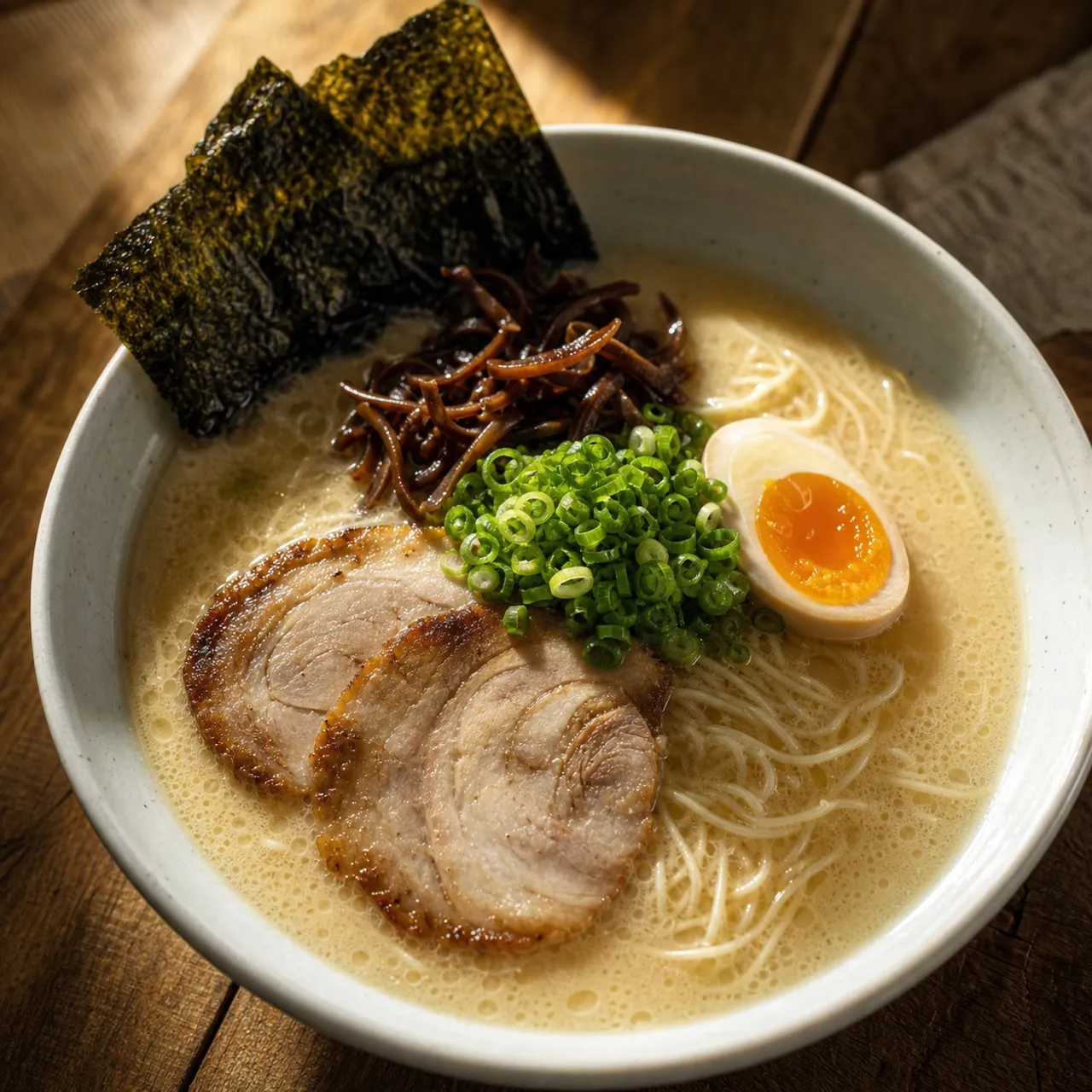
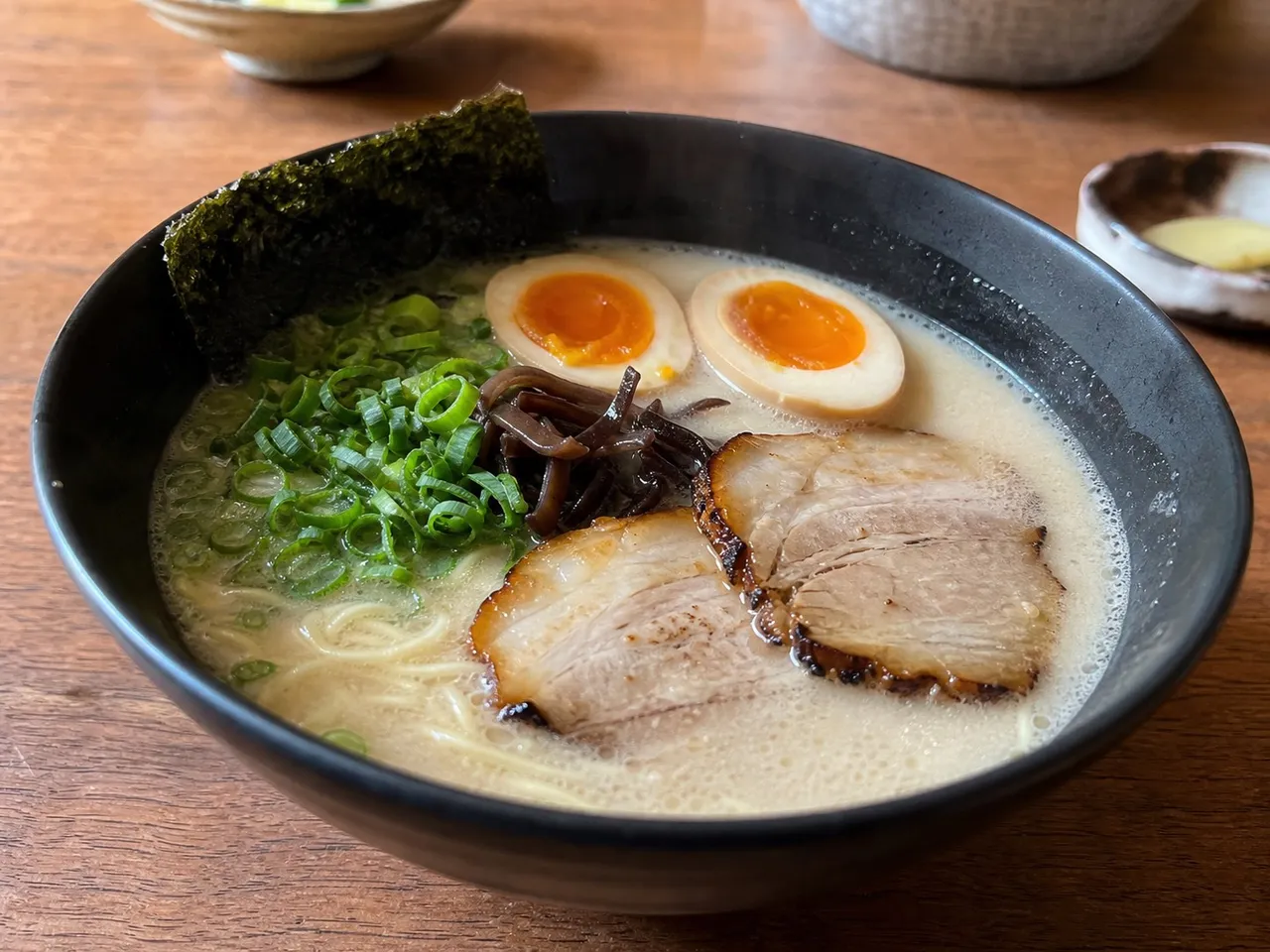
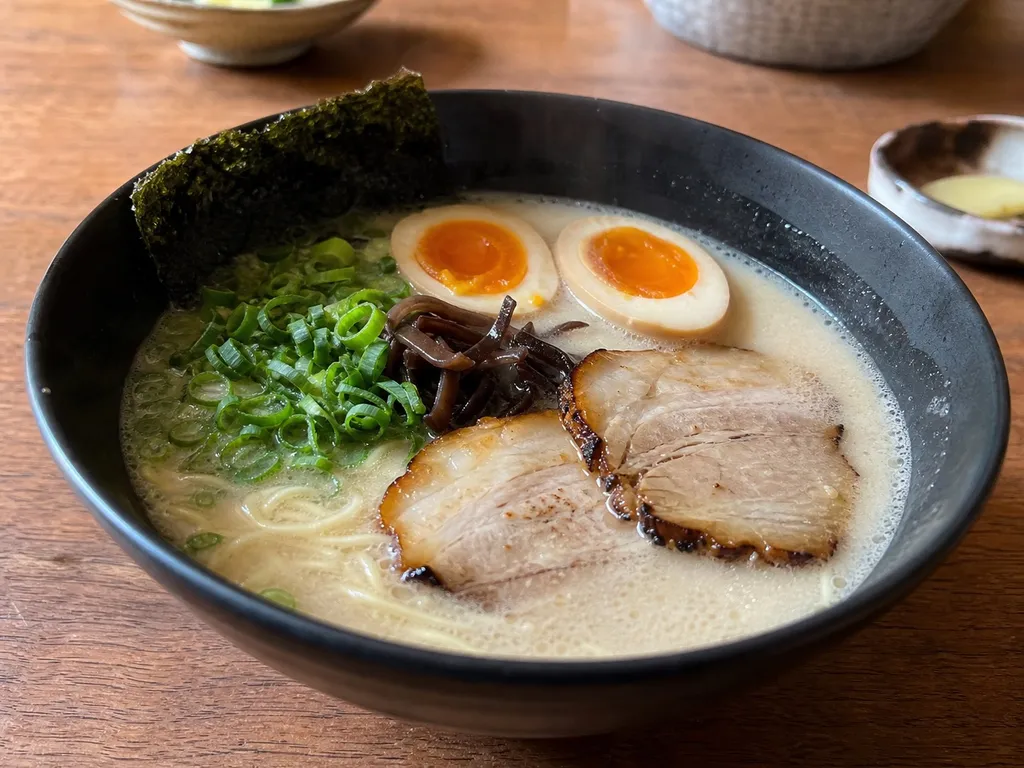
 Tonkotsu Ramen
Dive into a deeply comforting, rich, and creamy pork bone broth packed with chewy noodles and melt-in-your-mouth chashu.
Contains common allergens
In the app, Listahan checks these against your household automatically.
Instructions
6 steps- 1
Blanch the pork bones in boiling water for 10 minutes to remove impurities, then rinse them clean under cold water.
- 2
Place the cleaned bones in a large stockpot, cover with water, and boil vigorously at a rolling boil for 10-12 hours, topping up water as needed until the broth is milky white and rich with emulsified fat.
- 3
Strain the broth through a fine-mesh sieve into a clean pot and keep it at a rolling simmer.
- 4
Prepare bowls by adding 2 tablespoons of tare (seasoning sauce) to the bottom of each warmed bowl.
- 5
Boil the fresh ramen noodles in a separate pot of rapidly boiling water for 1-2 minutes until al dente, then drain them vigorously.
- 6
Pour the piping hot tonkotsu broth into the bowls, gently fold in the noodles, and carefully arrange sliced chashu, halved soft-boiled eggs, green onions, and a sheet of nori on top before serving.
 Images are for illustrative purposes only, may be inaccurate, and do not guarantee the presence or absence of specific ingredients.
 Listahan Family Score™
68/100
Works for many families
Score reflects how well this recipe fits a typical busy household. In the app, your Family Score is personalized to your household's allergens, kids, and pantry.
Nutrition
per serving900
Calories
99 g
Protein
1 g
Carbs
52 g
Fat
Estimated per serving. Actual values depend on the brands and portions you use.
Listahan cooking guide
Chef notes & practical guide
Technique notes, ingredient swaps, serve-alongside ideas, storage guidance, and equipment for this recipe.
Cultural context
Tonkotsu, meaning 'pork bone', is the ramen of Fukuoka on the southern island of Kyushu, where stall cooks boiled pork bones hard enough to emulsify their fat and collagen into an opaque, milky broth. Unlike the clear soups of Tokyo, its richness is a texture as much as a flavor, and it is built over many hours rather than from a long ingredient list.
Listahan note
This version is honest about where the time goes: almost all the work is the long, hard boil that turns bones into a creamy broth, while the noodles and toppings come together in a five-minute sprint at the end.
Technique cues
- Keep the broth at a true rolling boil, not a gentle simmer; the violent motion is what emulsifies the fat into the water and turns the soup white.
- Season the bowl with tare first, then add the unsalted broth, so one batch of broth can carry shio, shoyu, or miso seasonings.
- Cook the noodles a few seconds short and drain them hard; they keep cooking in the hot broth, and a wet tangle dilutes the soup.
Kitchen flow
- Parallel prep
- The broth runs unattended for hours; make the chashu, eggs, and green onions during that window so final assembly takes minutes.
- Make-ahead
- Broth, tare, chashu, and eggs all keep for days and only improve; make them ahead and boil noodles fresh to order.
- Leftover move
- Use extra broth as a base for a quick noodle bowl or to braise vegetables; it freezes well in portions.
- Cleanup rhythm
- The stockpot is the main job; fill it with hot water to soak the moment it is empty so the fat does not set.
Ingredient brief
Role, handling, and swap guidance for each key ingredient.
Pork trotters and neck bones
Broth foundation
Purpose: Their collagen and marrow are what emulsify into the signature milky, full-bodied broth.
Handling: Blanch for 10 minutes and scrub them clean first, or the broth turns gray and muddy instead of white.
Adaptation: Pork feet alone work; add a chicken carcass for a lighter body if trotters are hard to find.
Tare (seasoning base)
Salt and umami concentrate
Purpose: It carries all the seasoning so the long-cooked broth can stay neutral and reusable.
Handling: Spoon it into the warmed bowl before the broth, not into the pot.
Adaptation: A shio (salt) tare keeps it light; a shoyu tare adds depth but also adds wheat.
Fresh ramen noodles
The body of the bowl
Purpose: Their alkaline (kansui) chew stands up to the heavy broth where soft noodles would go limp.
Handling: Boil only 1 to 2 minutes and shake off every drop of water before they hit the soup.
Adaptation: Dried ramen works in a pinch; avoid spaghetti-style noodles, which lack the springy bite.
Chashu (braised pork belly)
Rich protein topping
Purpose: The soft, fatty slices echo the broth and soften further against the heat.
Handling: Slice thin and lay it on last so it warms through without falling apart.
Adaptation: Leftover roast pork or a soy-braised chicken thigh both stand in well.
Marinated soft-boiled eggs
Creamy contrast
Purpose: The jammy yolk and seasoned white are a cool, rich counterpoint to the hot soup.
Handling: Halve them just before serving so the yolk stays glossy.
Adaptation: A plain soft-boiled egg is fine; omit for an egg-free bowl.
Technique notes
- Do not drop the pot to a simmer to save energy; a simmer gives you clear broth, not the white emulsion that defines tonkotsu.
- Top up with boiling, not cold, water during the long cook so the boil never stalls.
- Warm the bowls before plating; a cold bowl pulls heat from the broth fast and the fat congeals at the rim.
Ingredient swaps
- Gluten-free direction
- Use rice or buckwheat noodles and a shio or miso tare made with gluten-free soy, and braise the chashu with tamari instead of regular soy sauce.
- Lighter weeknight path
- Build a quick chicken-and-pork broth in a pressure cooker for about 90 minutes; it will not be as thick but captures the spirit.
- Egg-free option
- Skip the marinated egg and add corn or beansprouts for the missing richness and crunch.
Serve alongside
- Gyoza
- Quick cucumber sunomono
- Menma (seasoned bamboo shoots)
- Edamame
- Cold barley tea (mugicha)
- Crisp lager
- Sparkling water
Serving suggestions only — check pairings for your household's allergens.
Storage & reheating
- Store broth, chashu, and eggs separately in the fridge for up to 4 days, and never store noodles sitting in broth.
- Reheat the broth to a hard simmer on the stove and boil fresh noodles each time rather than reheating them.
- Freeze broth in portioned containers up to 2 months; thaw and return to a rolling boil before serving.
Equipment
- Large heavy stockpot
- Fine-mesh strainer
- Spider skimmer or sieve for noodles
- Warmed deep ramen bowls
Make this household-aware
Listahan Pro checks this recipe against your household's allergens, finds pantry-aware swaps, builds the shopping list, and helps you plan the week around it.
Plan it in Listahan
Add Tonkotsu Ramen to your week, check it against your household's allergens, and build the shopping list automatically.
More Japanese recipes
 Japanese Lens Verified Images are for illustrative purposes only, may be inaccurate, and do not guarantee the presence or absence of specific ingredients.
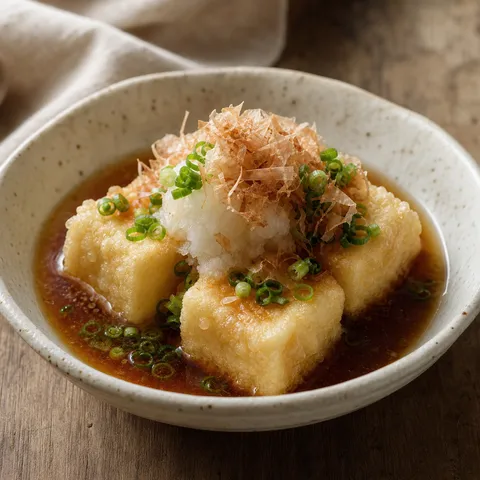
 Agedashi Tofu
Lightly fried tofu dusted in potato starch and served in a warm dashi-soy-mirin broth, topped with grated daikon and bonito flakes, a classic Japanese izakaya starter.
 Japanese Lens Verified Images are for illustrative purposes only, may be inaccurate, and do not guarantee the presence or absence of specific ingredients.
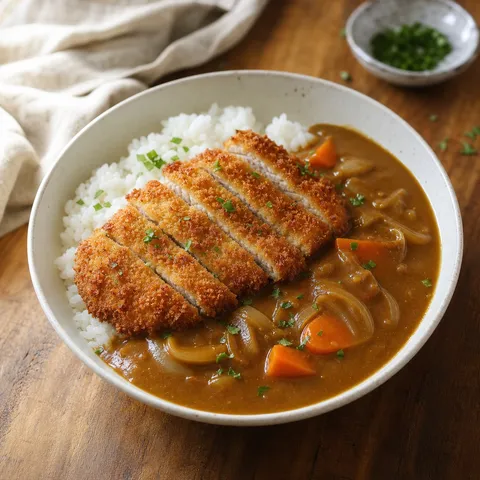
 Katsu Curry
A Japanese recipe: Katsu Curry.
 Japanese Lens Verified Images are for illustrative purposes only, may be inaccurate, and do not guarantee the presence or absence of specific ingredients.
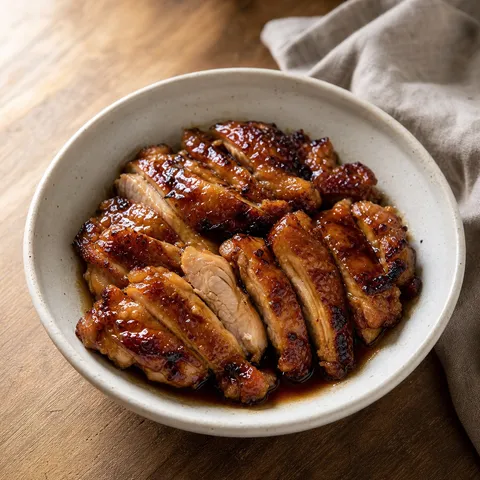
 Chicken Teriyaki
Enjoy tender, juicy chicken glazed in a deeply flavorful, glossy sweet soy sauce, perfectly caramelized to sticky perfection.