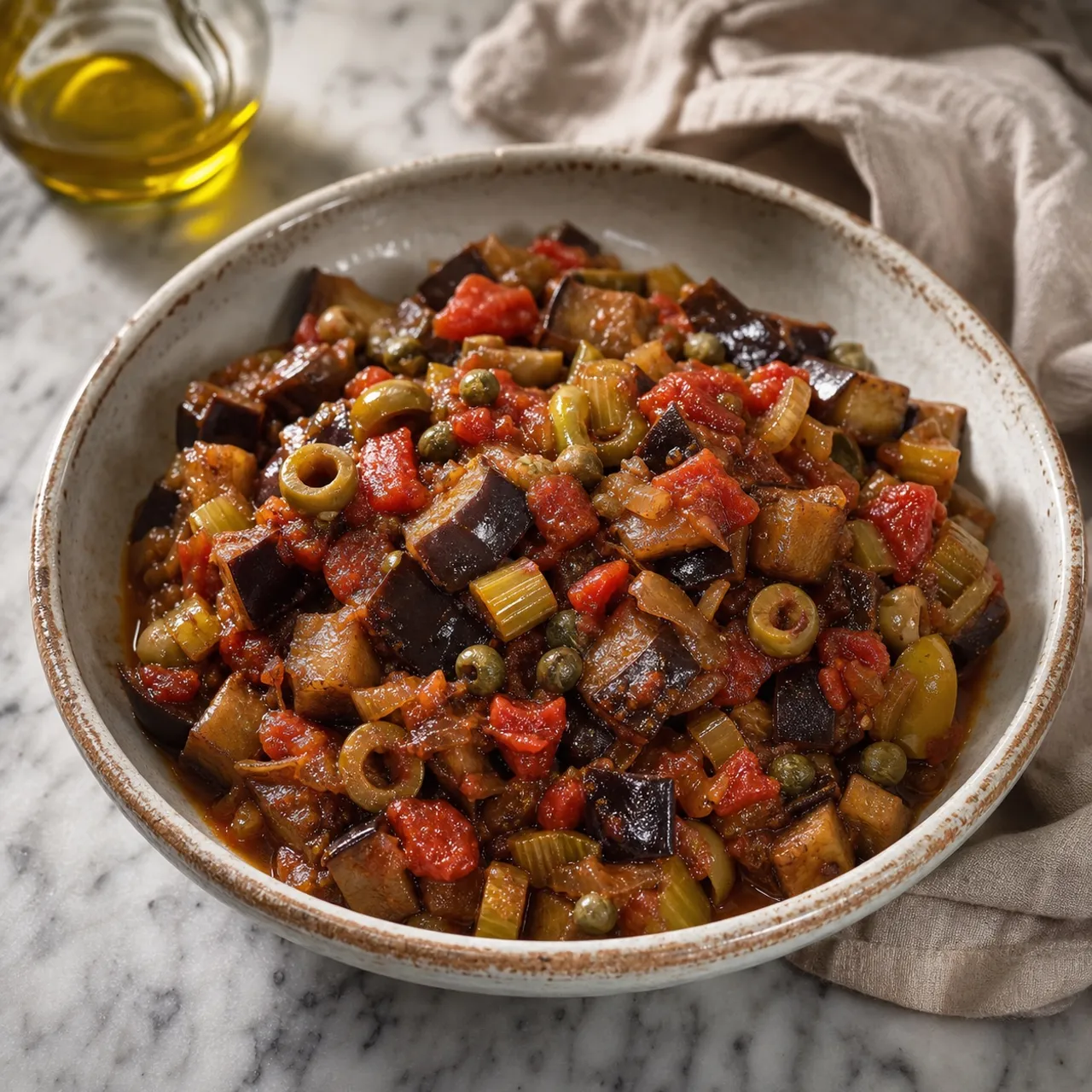
 Mediterranean Images are for illustrative purposes only, may be inaccurate, and do not guarantee the presence or absence of specific ingredients.
 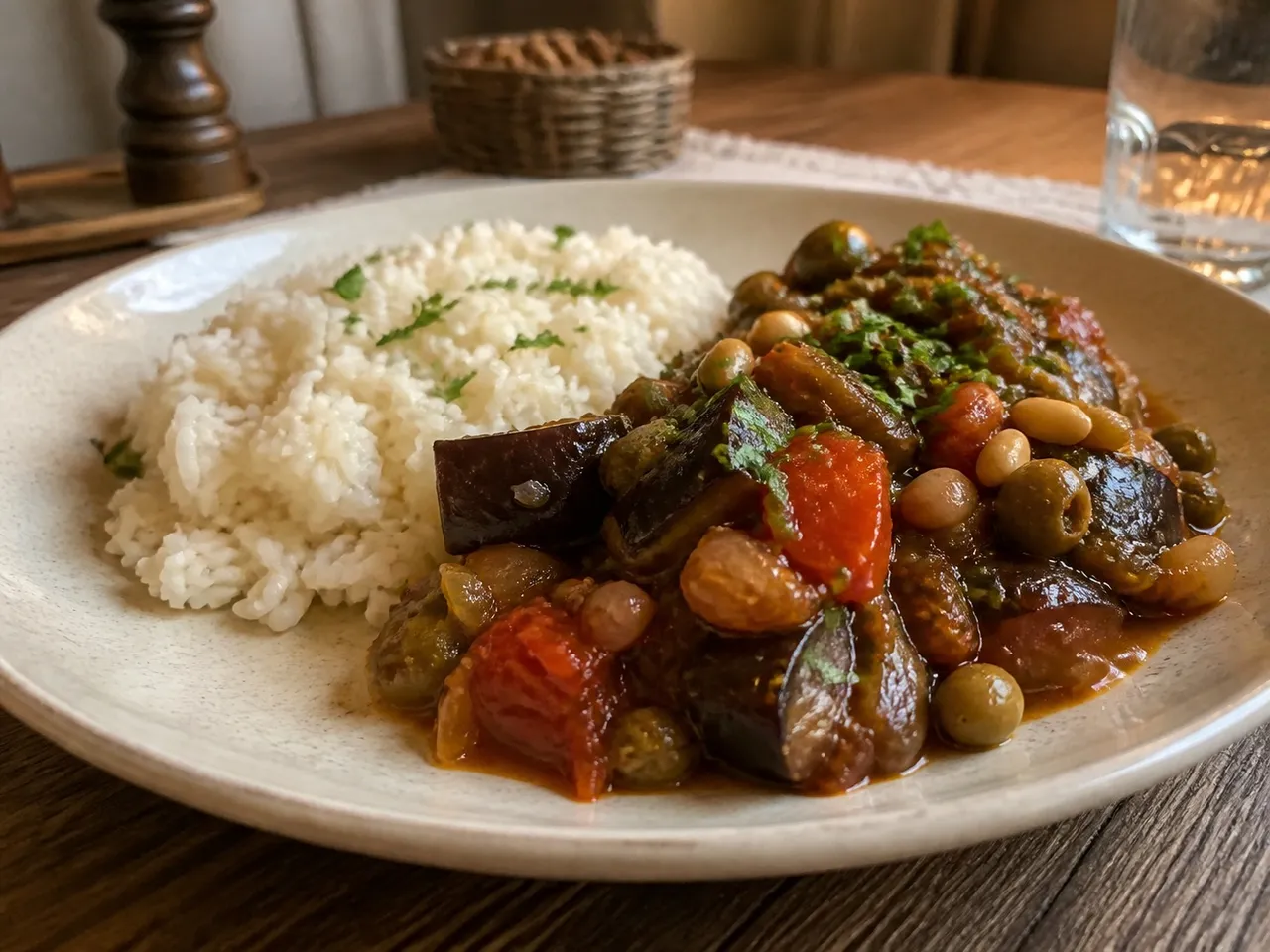 Serving Images are for illustrative purposes only, may be inaccurate, and do not guarantee the presence or absence of specific ingredients.
 Caponata
A sweet-and-sour Sicilian eggplant dish simmered with celery, tomatoes, olives, and capers in a red wine vinegar agrodolce, finished with fresh basil.
Contains common allergens
In the app, Listahan checks these against your household automatically.
Instructions
6 steps- 1
Place the eggplant cubes in a colander, sprinkle generously with salt, and let sit for 30 minutes to draw out bitterness. Rinse and pat completely dry with paper towels.
- 2
Heat 3 tbsp of the olive oil in a large skillet over medium-high heat. Fry the eggplant cubes in batches until browned and tender. Remove to a paper towel-lined plate.
- 3
In the same skillet, add the remaining 1 tbsp olive oil. Add the chopped onion and celery, sautéing for 5-7 minutes until softened.
- 4
Stir in the diced tomatoes, chopped olives, capers, red wine vinegar, and sugar. Bring the mixture to a simmer.
- 5
Return the fried eggplant to the skillet. Reduce the heat to low, cover, and let the mixture simmer gently for 15-20 minutes, stirring occasionally, until it thickens into a rich relish.
- 6
Season with salt and pepper to taste. Let the caponata cool to room temperature before serving (it tastes best at room temp or slightly chilled), garnished with fresh basil.
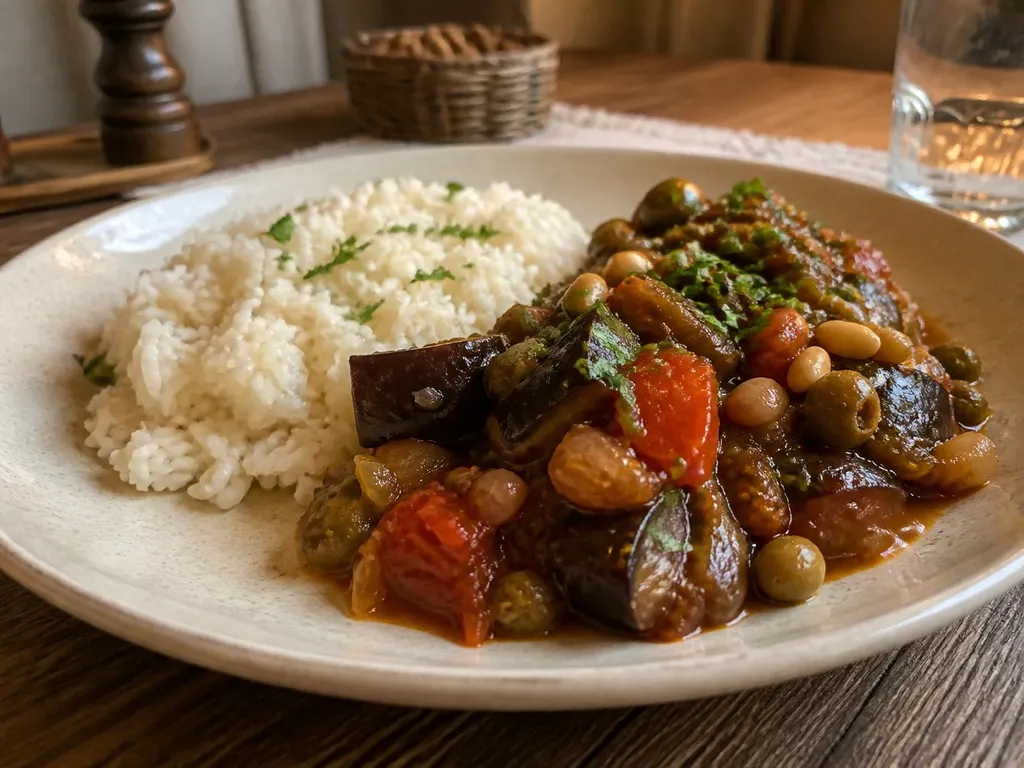 Images are for illustrative purposes only, may be inaccurate, and do not guarantee the presence or absence of specific ingredients.
 Listahan Family Score™
70/100
Good fit for most families
Score reflects how well this recipe fits a typical busy household. In the app, your Family Score is personalized to your household's allergens, kids, and pantry.
Nutrition
per serving210
Calories
2 g
Protein
16 g
Carbs
16 g
Fat
Estimated per serving. Actual values depend on the brands and portions you use.
Listahan cooking guide
Chef notes & practical guide
Technique notes, ingredient swaps, serve-alongside ideas, storage guidance, and equipment for this recipe.
Cultural context
Caponata is a Sicilian sweet-and-sour eggplant relish, its agrodolce balance of vinegar and sugar a legacy of the island's Arab culinary influence layered over Italian cooking. Traditionally served at room temperature as an antipasto or side, it pairs the silky richness of fried eggplant with sharp capers, olives, and a sweet-tart tomato base. Every Sicilian family guards its own ratio of sweet to sour.
Listahan note
This version salts and roasts the eggplant instead of deep-frying it, keeping the silky texture while cutting the oil, then balances the agrodolce by tasting at the end.
Technique cues
- Salt the diced eggplant and let it drain before cooking, which draws out bitterness and excess water so it turns silky rather than spongy.
- Add the vinegar and sugar near the end and let them bubble together for a minute so the agrodolce mellows from sharp into rounded.
- Cook each vegetable to its own readiness before combining, since eggplant, celery, and onion all soften at different rates.
Kitchen flow
- Parallel prep
- Salt the eggplant first and let it drain while you dice and saute the celery and onion, then combine everything.
- Make-ahead
- Caponata is best made a day ahead so the agrodolce flavors meld and deepen overnight in the fridge.
- Leftover move
- Spoon leftovers onto toasted bread, fold into an omelet, or toss with pasta for an instant second meal.
- Cleanup rhythm
- Roast the eggplant on parchment for an easy lift-off, and the one skillet wipes clean once the sweet glaze is soaked.
Ingredient brief
Role, handling, and swap guidance for each key ingredient.
Eggplant
the silky heart
Purpose: Eggplant is the soul of caponata, its melting texture carrying the sweet-sour sauce in every bite.
Handling: Dice, salt, and drain, then roast or fry until deeply tender and golden.
Adaptation: Zucchini works for a lighter, quicker version, though it lacks eggplant's richness.
Celery
the crunch
Purpose: Celery keeps a slight bite that contrasts the soft eggplant and adds a fresh, vegetal note.
Handling: Dice and briefly blanch or saute so it softens but keeps some snap.
Adaptation: Fennel gives a sweeter, more aromatic crunch in its place.
Red wine vinegar
the sour half of agrodolce
Purpose: Vinegar provides the essential tang that, balanced against sugar, defines caponata's signature flavor.
Handling: Add toward the end with the sugar and simmer briefly to soften the bite.
Adaptation: White wine vinegar or a splash of balsamic shifts the profile but keeps the acidity.
Capers
briny pop
Purpose: Capers add salty, floral bursts that brighten the rich vegetables and deepen the savory base.
Handling: Rinse if very salty and stir in near the end so they keep their punch.
Adaptation: Chopped green olives or caper berries give a similar briny lift.
Tomatoes
the saucy base
Purpose: Tomatoes bind everything into a cohesive relish and provide the sweet-acid backdrop for the agrodolce.
Handling: Use canned or fresh, cooked down until jammy and thick.
Adaptation: Tomato paste loosened with water concentrates the flavor when fresh tomatoes are pale.
Technique notes
- Cook the relish until the liquid reduces and the mixture holds its shape on a spoon, since a watery caponata tastes thin.
- Always serve at room temperature rather than hot, which is when the agrodolce balance reads clearest.
- Taste and adjust the vinegar-to-sugar ratio at the very end, since this balance is the whole point of the dish.
Ingredient swaps
- Lower-sodium direction
- Rinse the capers and olives well and reduce added salt, leaning on the vinegar for brightness.
- Lighter direction
- Roast all the vegetables instead of frying to cut the oil while keeping the silky texture.
- Nuttier direction
- Stir in a handful of toasted pine nuts and raisins at the end for the classic Palermo-style finish.
Serve alongside
- Grilled crusty bread or bruschetta
- Seared swordfish or white fish
- Creamy polenta
- Sicilian Nero d'Avola
- Sparkling water with orange
Serving suggestions only — check pairings for your household's allergens.
Storage & reheating
- Caponata keeps in an airtight container in the fridge for up to five days and improves with time.
- Serve cold or at room temperature with no reheating needed; it freezes well for up to three months and thaws cleanly in the fridge.
Equipment
- Large skillet or saute pan
- Sheet pan for roasting eggplant
- Colander for salting eggplant
- Wooden spoon
Make this household-aware
Listahan Pro checks this recipe against your household's allergens, finds pantry-aware swaps, builds the shopping list, and helps you plan the week around it.
Plan it in Listahan
Add Caponata to your week, check it against your household's allergens, and build the shopping list automatically.
More Mediterranean recipes
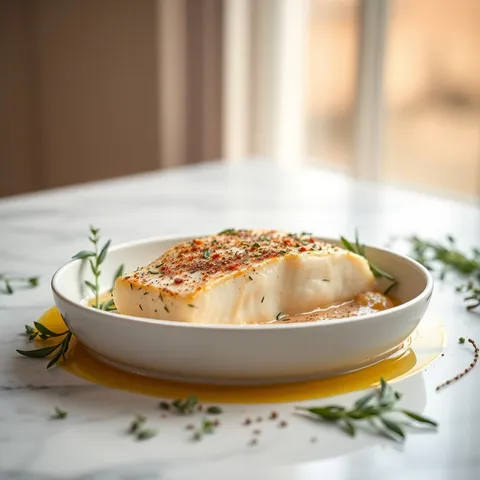 Mediterranean Lens Verified Images are for illustrative purposes only, may be inaccurate, and do not guarantee the presence or absence of specific ingredients.
 Mediterranean Baked Cod
Cod fillets baked with cherry tomatoes, Kalamata olives, and capers in garlicky olive oil, a bright one-pan Mediterranean fish dinner finished with parsley and lemon.
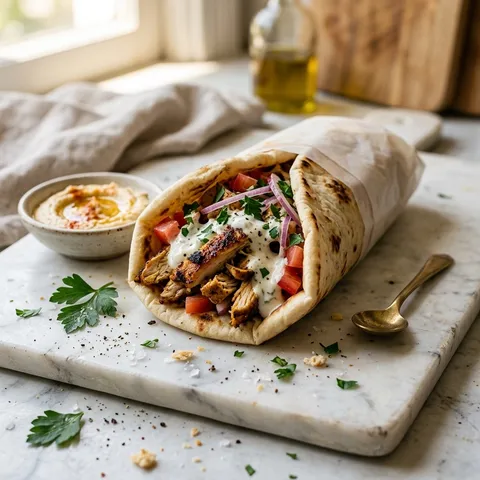 Mediterranean Lens Verified Images are for illustrative purposes only, may be inaccurate, and do not guarantee the presence or absence of specific ingredients.
 Shawarma Wraps
Marinated, thinly sliced meat wrapped in a flatbread with vegetables.
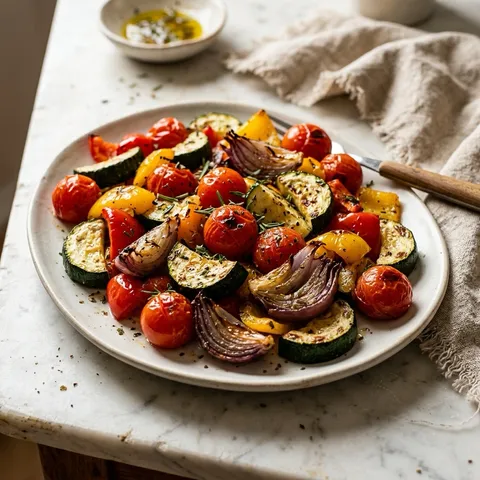 Mediterranean Lens Verified Images are for illustrative purposes only, may be inaccurate, and do not guarantee the presence or absence of specific ingredients.
 Mediterranean Roasted Vegetables
A colorful side dish or main of caramelized oven-roasted veggies.