 Mediterranean Images are for illustrative purposes only, may be inaccurate, and do not guarantee the presence or absence of specific ingredients.
  Serving Images are for illustrative purposes only, may be inaccurate, and do not guarantee the presence or absence of specific ingredients.
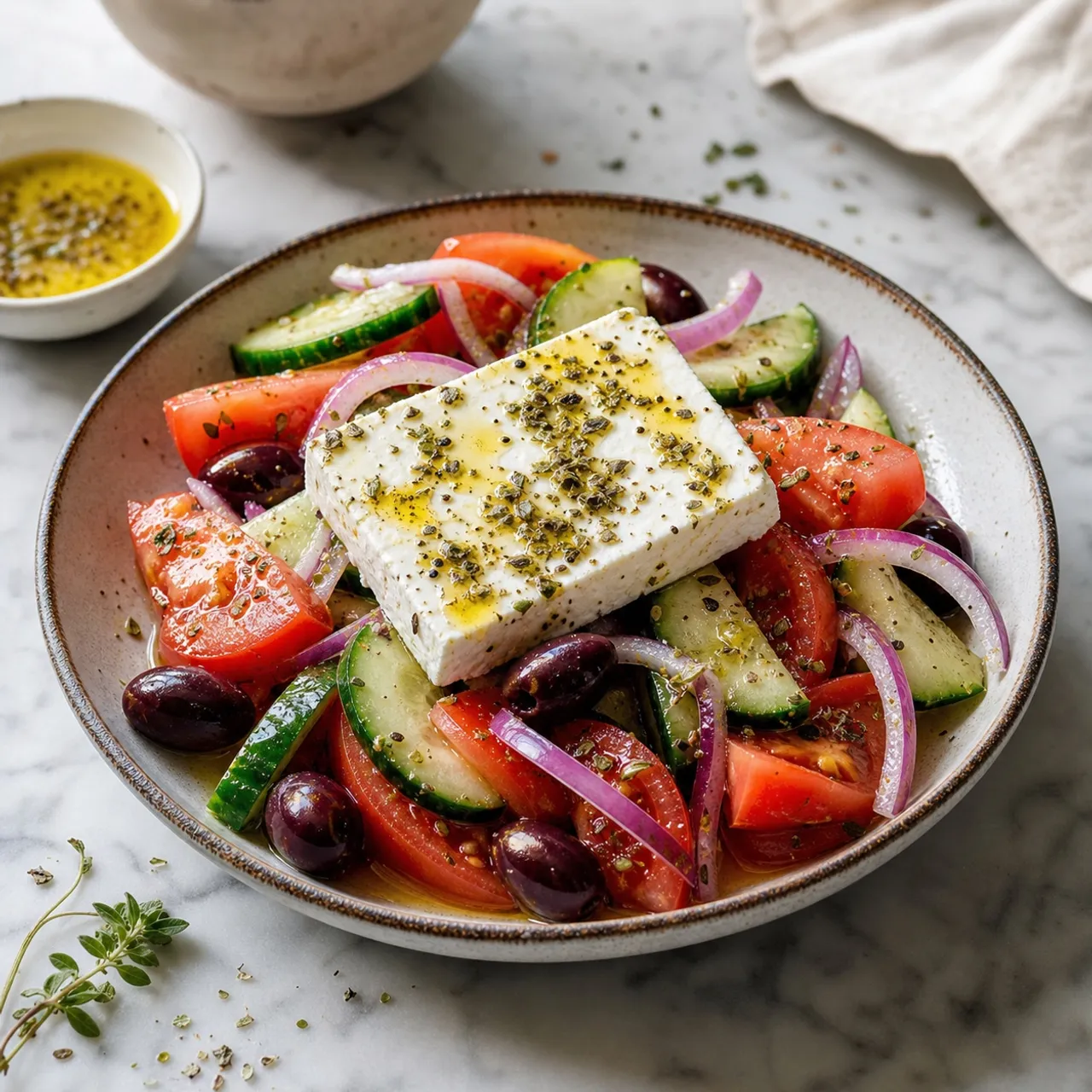
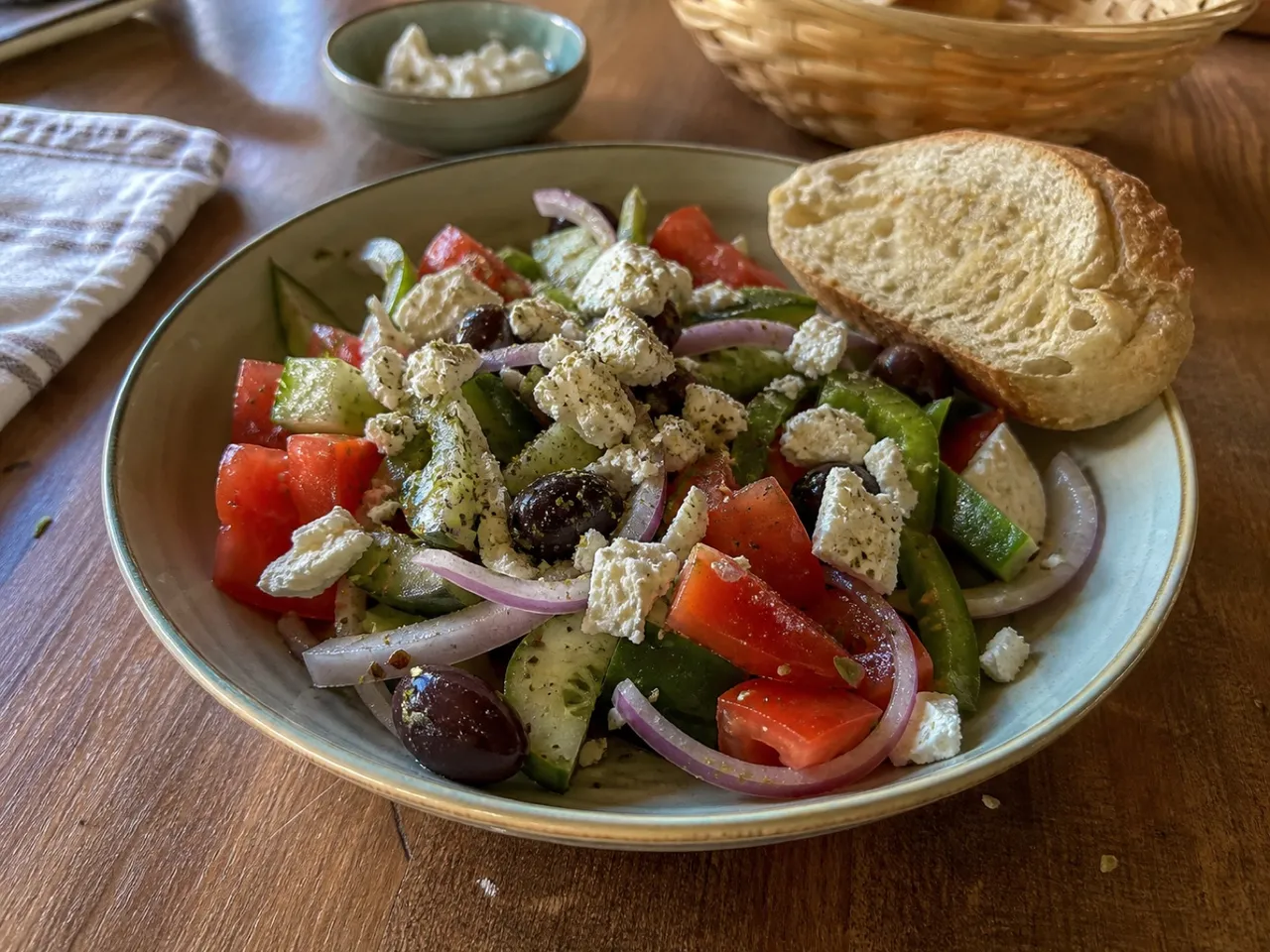
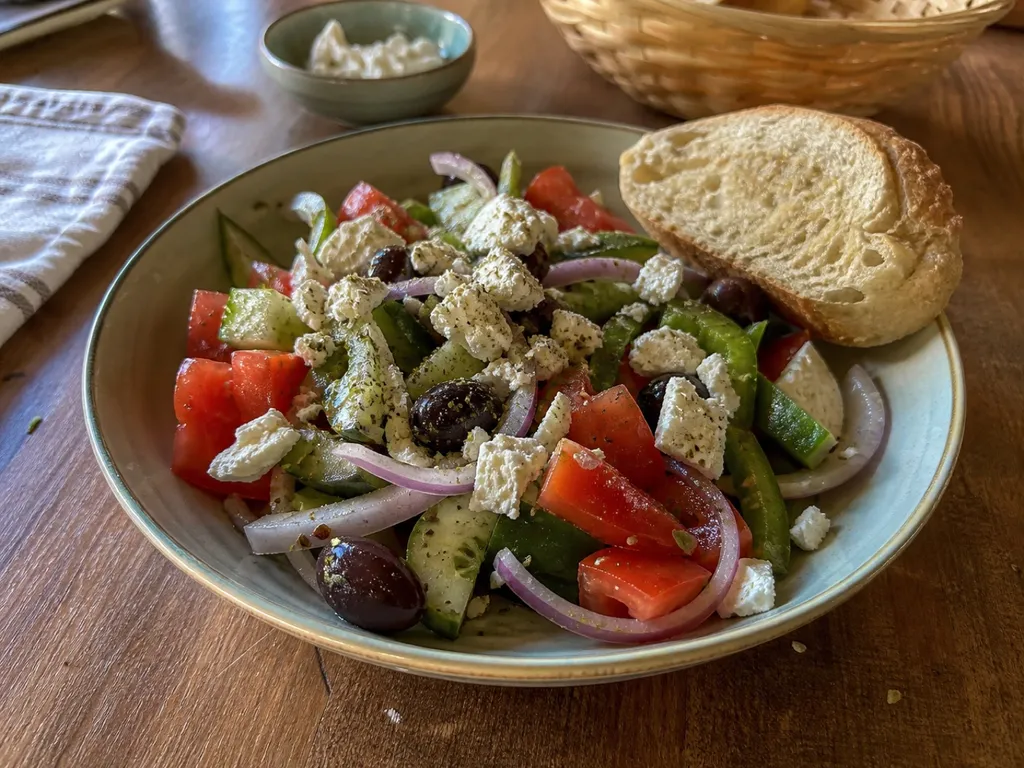
 Greek Salad (Horiatiki)
Transport yourself to the Mediterranean coast with this vibrant, crisp salad bursting with juicy tomatoes and briny olives. The creamy slab of feta on top makes every bite absolutely irresistible!
Contains common allergens
In the app, Listahan checks these against your household automatically.
Good to know
- Ready in under 30 minutes
Matched from this dish's own ingredients and timing. Browse more: 30-minute meals
Instructions
6 steps- 1
Wash and prep all vegetables. Cut tomatoes into bite-sized wedges, slice the cucumber into half-moons, and thinly slice the red onion.
- 2
In a large, shallow serving bowl, gently toss the tomatoes, cucumbers, and red onions together.
- 3
Scatter the pitted Kalamata olives evenly over the vegetable mixture.
- 4
In a small bowl, whisk together the extra virgin olive oil, red wine vinegar, salt, and black pepper to create the dressing. Drizzle this evenly over the salad.
- 5
Place the block of feta cheese directly on top of the salad (do not crumble it into the salad).
- 6
Sprinkle the dried oregano over the feta and the rest of the salad, and serve immediately.
 Images are for illustrative purposes only, may be inaccurate, and do not guarantee the presence or absence of specific ingredients.
 Listahan Family Score™
80/100
Good fit for most families
Score reflects how well this recipe fits a typical busy household. In the app, your Family Score is personalized to your household's allergens, kids, and pantry.
Nutrition
per serving180
Calories
2 g
Protein
10 g
Carbs
16 g
Fat
Estimated per serving. Actual values depend on the brands and portions you use.
Listahan cooking guide
Chef notes & practical guide
Technique notes, ingredient swaps, serve-alongside ideas, storage guidance, and equipment for this recipe.
Cultural context
Horiatiki means village salad, and in Greece it is exactly that: whatever ripe vegetables a household has, dressed simply with good olive oil. The defining detail is that it carries no lettuce and a slab of feta laid on top rather than crumbled, a peasant dish built around the quality of the tomatoes rather than any technique.
Listahan note
This version keeps the feta in a single slab the traditional way and leans on the best tomatoes you can find, since the salad lives or dies on them.
Technique cues
- Salt the tomatoes a few minutes before dressing so they weep a little juice that mingles with the oil into a light dressing at the bottom of the bowl.
- Use a fruity extra-virgin olive oil and pour it generously at the end rather than whisking a vinaigrette, since the oil is meant to taste like itself.
- Lay the feta on top as one piece and dust it with dried oregano so the herb perfumes the cheese instead of getting lost in the vegetables.
Kitchen flow
- Parallel prep
- While the tomatoes sit salted, slice the cucumber, onion, and pepper so everything lands in the bowl at once.
- Make-ahead
- Chop the vegetables a few hours ahead and keep them separate, but do not dress or add feta until serving.
- Leftover move
- Spoon leftovers and their juices over toasted bread the next day for a quick panzanella-style snack.
- Cleanup rhythm
- One bowl and a cutting board, so wipe the board as you go and you are nearly done before you eat.
Ingredient brief
Role, handling, and swap guidance for each key ingredient.
ripe tomatoes
the heart of the salad
Purpose: Everything else supports the tomatoes, so their ripeness sets the ceiling for the whole dish.
Handling: Cut into thick wedges rather than small dice so they hold their juice.
Adaptation: In winter, cherry or grape tomatoes halved are sweeter than pale slicing tomatoes.
feta cheese
salty, creamy anchor
Purpose: A block of real brined feta brings the tang and salt that ties the raw vegetables together.
Handling: Keep it as one slab and set it on top just before serving.
Adaptation: A firm ricotta salata works if you want something milder and less salty.
cucumber
cooling crunch
Purpose: It lightens the salad and balances the richness of the oil and cheese.
Handling: Half-peel in stripes and cut into thick half-moons so it stays crisp.
Adaptation: Persian or English cucumbers skip the seeding step and stay crunchier.
red onion
sharp aromatic edge
Purpose: Thin slices add bite that cuts the sweetness of the tomatoes.
Handling: Slice paper-thin and, if it is very strong, soak briefly in cold water.
Adaptation: Shallot is a gentler option for onion-sensitive eaters.
Kalamata olives
briny depth
Purpose: Their winey saltiness is part of the classic flavor signature.
Handling: Leave them whole with pits, or buy pitted for easier eating.
Adaptation: Any good brined black olive stands in well.
extra-virgin olive oil
the dressing itself
Purpose: Here the oil is a flavor, not a vehicle, so its quality is felt directly.
Handling: Pour it on generously at the table just before serving.
Adaptation: A robust, peppery oil is ideal, but any fresh fruity extra-virgin works.
Technique notes
- Tear in a few sprigs of fresh oregano or dill on top of the dried for a layered herb note.
- A splash of red wine vinegar is optional and regional; many cooks rely on the tomato juices and oil alone.
- Serve it at cool room temperature rather than fridge-cold so the olive oil stays fluid and fragrant.
Ingredient swaps
- Dairy-free option
- Skip the feta and add extra olives plus a pinch more salt to keep the briny balance.
- Lower-sodium direction
- Rinse the olives and use a reduced amount of feta, leaning on herbs and onion for flavor.
- Heartier direction
- Fold in cooked chickpeas or torn day-old bread to turn the salad into a light meal.
Serve alongside
- Warm pita bread
- Grilled chicken souvlaki
- Lemon roasted potatoes
- Tzatziki with crudites
- Chilled Assyrtiko white wine
- Sparkling water with lemon
- Iced mint tea
Serving suggestions only — check pairings for your household's allergens.
Storage & reheating
- Best eaten the day it is made. Undressed components keep in the fridge up to two days in separate containers. Once dressed, the vegetables soften within a few hours, so dress only what you will eat.
Equipment
- A sharp chef knife
- A wide shallow serving bowl
- A good vegetable peeler
- A small dish for the olive oil
Make this household-aware
Listahan Pro checks this recipe against your household's allergens, finds pantry-aware swaps, builds the shopping list, and helps you plan the week around it.
Plan it in Listahan
Add Greek Salad (Horiatiki) to your week, check it against your household's allergens, and build the shopping list automatically.
More Mediterranean recipes
 Mediterranean Lens Verified Images are for illustrative purposes only, may be inaccurate, and do not guarantee the presence or absence of specific ingredients.
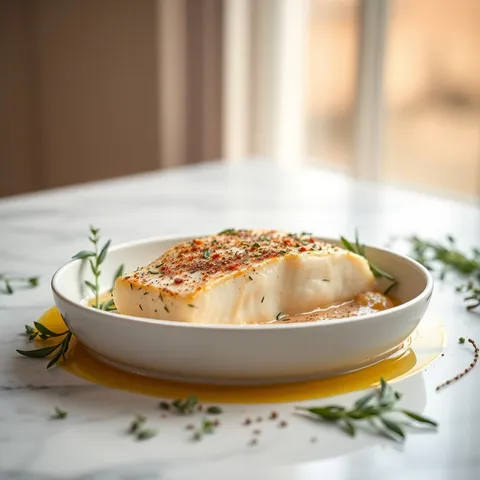
 Mediterranean Baked Cod
Cod fillets baked with cherry tomatoes, Kalamata olives, and capers in garlicky olive oil, a bright one-pan Mediterranean fish dinner finished with parsley and lemon.
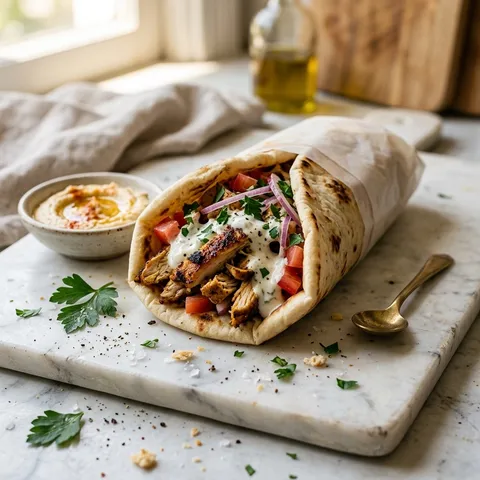 Mediterranean Lens Verified Images are for illustrative purposes only, may be inaccurate, and do not guarantee the presence or absence of specific ingredients.
 Shawarma Wraps
Marinated, thinly sliced meat wrapped in a flatbread with vegetables.
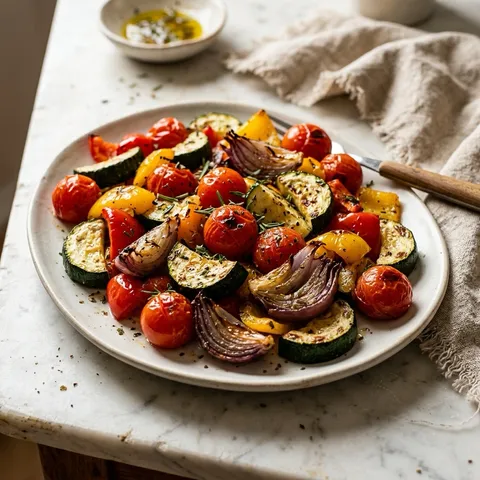 Mediterranean Lens Verified Images are for illustrative purposes only, may be inaccurate, and do not guarantee the presence or absence of specific ingredients.
 Mediterranean Roasted Vegetables
A colorful side dish or main of caramelized oven-roasted veggies.