 Food Lens Images are for illustrative purposes only, may be inaccurate, and do not guarantee the presence or absence of specific ingredients.
 Food Lens · Recipe ingredients
Kalamata Olives
Rich, fruity, and wine-like with a briny, pleasantly bitter finish — meatier and more complex than ordinary canned black olives, with an almost jammy depth.
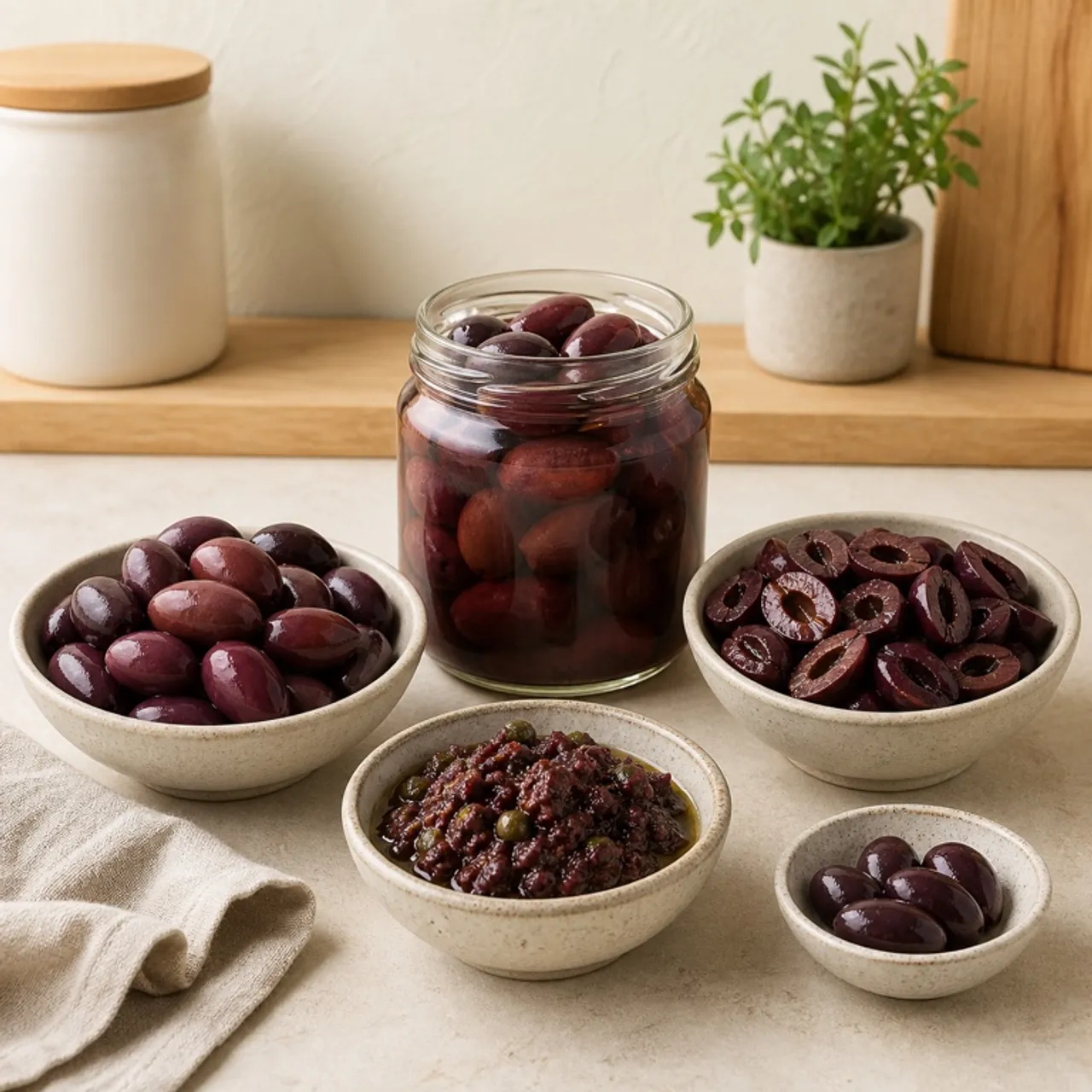
Lens VerifiedDark purple-black, meaty olives from the Kalamata region of southern Greece — brined and cured to a rich, wine-tinged depth. They are the essential olive in Greek salad, tapenade, and Mediterranean pasta.
Where it comes from
Olive cultivation in the Kalamata region dates back at least 3,500 years, and the large, almond-shaped olive unique to this area was always prized for its flavor and meaty flesh. PDO protection granted in 1994 ensures that the Kalamata olive label on any jar in a North American grocery store traces back to trees growing in the stony hillsides of the Peloponnese. They became widely available in North America through Greek immigrant communities and are now a standard item in most supermarket olive bars and jarred olive sections.
Varieties — Whole Kalamata olives (pitted or unpitted), Kalamata olive halves (ready for salads), and Kalamata olive tapenade (blended with capers, garlic, and olive oil). The Amphissa olive is a close Greek cousin but rounder and milder.
The Greek salad (horiatiki) without Kalamata olives is simply not a Greek salad — the olives provide the briny, meaty depth that ties the entire dish together.
In a modern kitchen — Store leftover Kalamata olives submerged in their brine in the refrigerator — they keep for weeks and the brine itself is excellent in vinaigrettes and marinades.
Buying it
Look for whole or halved olives in brine or olive oil rather than packed in brine with added acidity. A good Kalamata should be plump, dark purple-brown, and firm — not shriveled. Olives from a deli olive bar tend to be fresher and more complex than shelf-stable jarred versions.
Storing it
An unopened jar of brined kalamata olives keeps well in the pantry. Once opened, keep the olives submerged in their brine, seal the jar, and refrigerate — they'll hold for a couple of weeks that way.
Keeps about 1 year in the pantry.
Out of kalamata olives? Good swaps
- Niçoise olives — 1:1; smaller and earthier, less meaty — the French equivalent, excellent in salads
- Castelvetrano olives — 1:1; bright green, buttery, and mild — less brine-forward, better for those who find Kalamata too intense
- Black olives (canned) — 1:1; significantly milder and less complex — adequate in a pinch but will noticeably reduce depth of flavor
General cooking guidance — always check the labels on the products you use. Listahan’s allergen checks run automatically when you plan a recipe in the app. Not medical advice.
Recipes that use kalamata olives
Common questions about kalamata olives
Is kalamata olives vegan?
Kalamata Olives is generally plant-based and suitable for a vegan diet, but brands differ — confirm on the label.
What can I use instead of kalamata olives?
Good swaps include Niçoise olives, Castelvetrano olives, Black olives (canned). Each behaves a little differently — see the swaps above for notes, and always check labels for allergens.
How do I store kalamata olives?
An unopened jar of brined kalamata olives keeps well in the pantry. Once opened, keep the olives submerged in their brine, seal the jar, and refrigerate — they'll hold for a couple of weeks that way. It keeps about 1 year in the pantry.
More recipe ingredients
See all


Make kalamata olives about your kitchen — with Listahan Pro
Everything above is free, forever. Pro adds the Household Lens — the same food, seen for your family:
-
Checked for each member
Flags kalamata olives per person against your household's allergies and school rules — not just a generic "contains" tag.
-
Pantry-aware
Knows whether you already have it, what is running low, and the best swap from what is in your kitchen tonight.
-
What it costs near you
A real price from the Presyo community index, so you can plan the budget — not guess.
-
Your household memory
Who likes it, plus your own private notes — brand, where you keep it, who skips it.
Allergen safety is always free — Pro adds the automation, never the safety.
Cook with kalamata olives — safely
Plan a recipe in Listahan and the household allergen check runs automatically — every plan, every swap, every lunchbox. Safety is never paywalled.