 Greek Images are for illustrative purposes only, may be inaccurate, and do not guarantee the presence or absence of specific ingredients.
  Serving Images are for illustrative purposes only, may be inaccurate, and do not guarantee the presence or absence of specific ingredients.
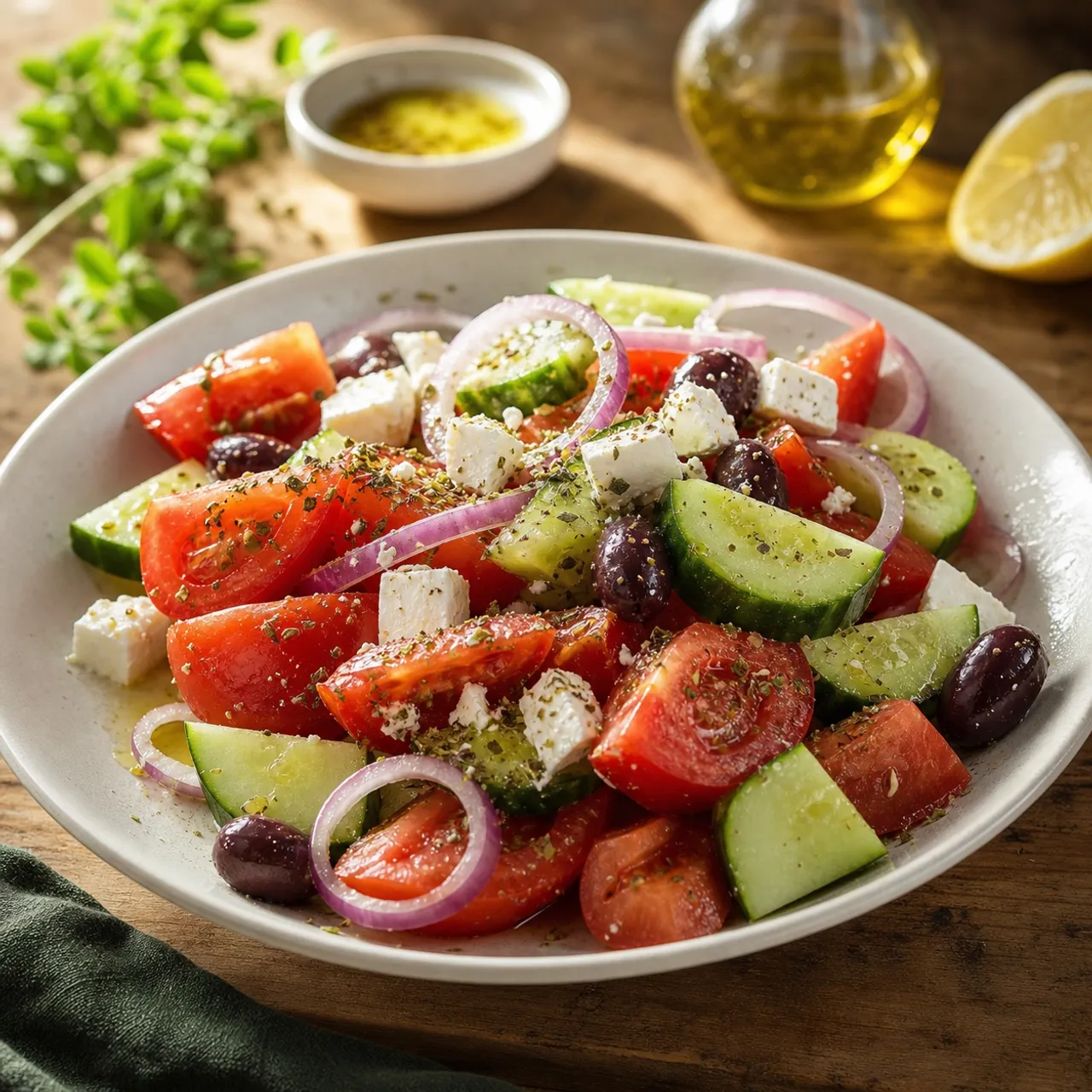
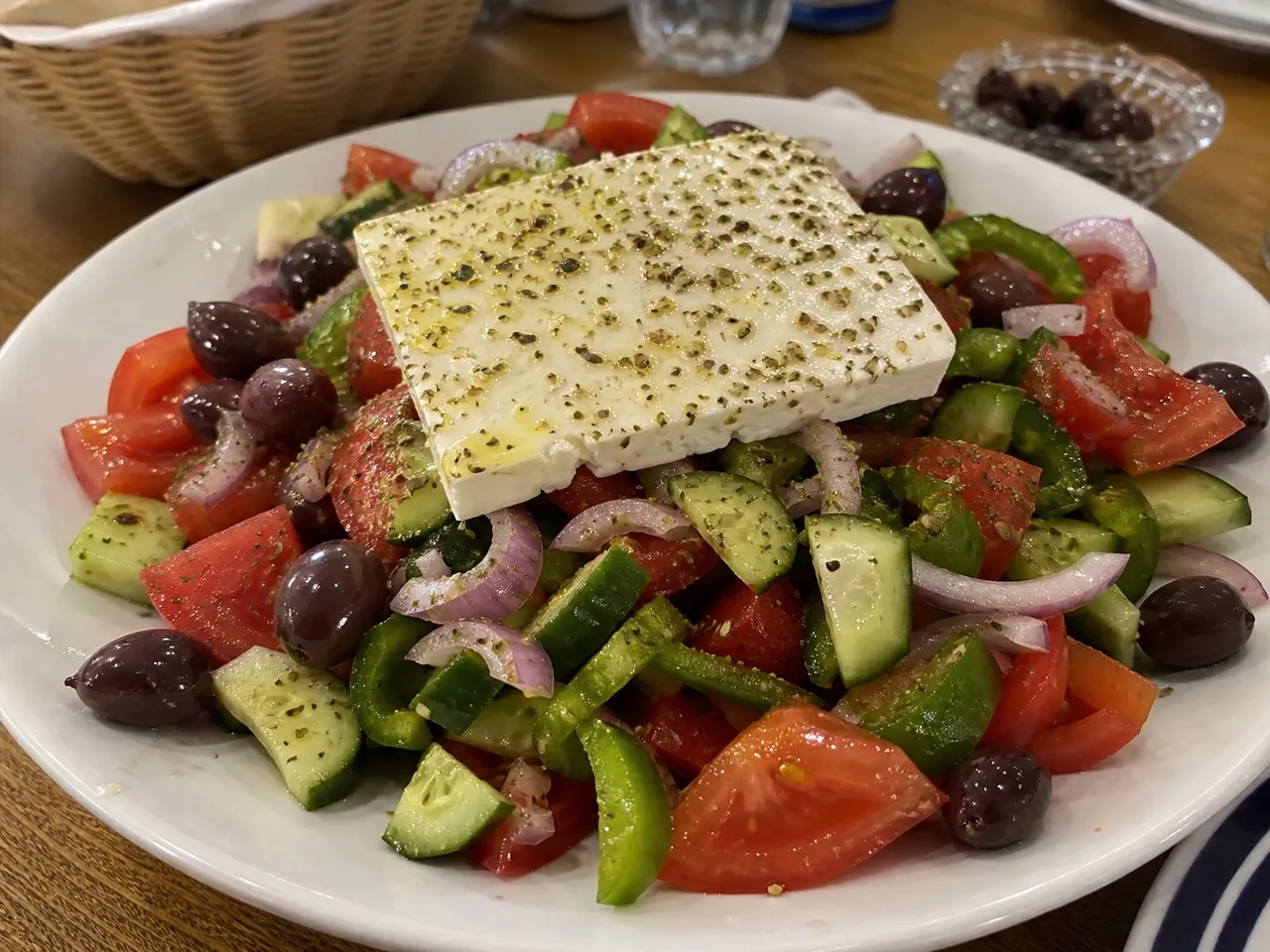
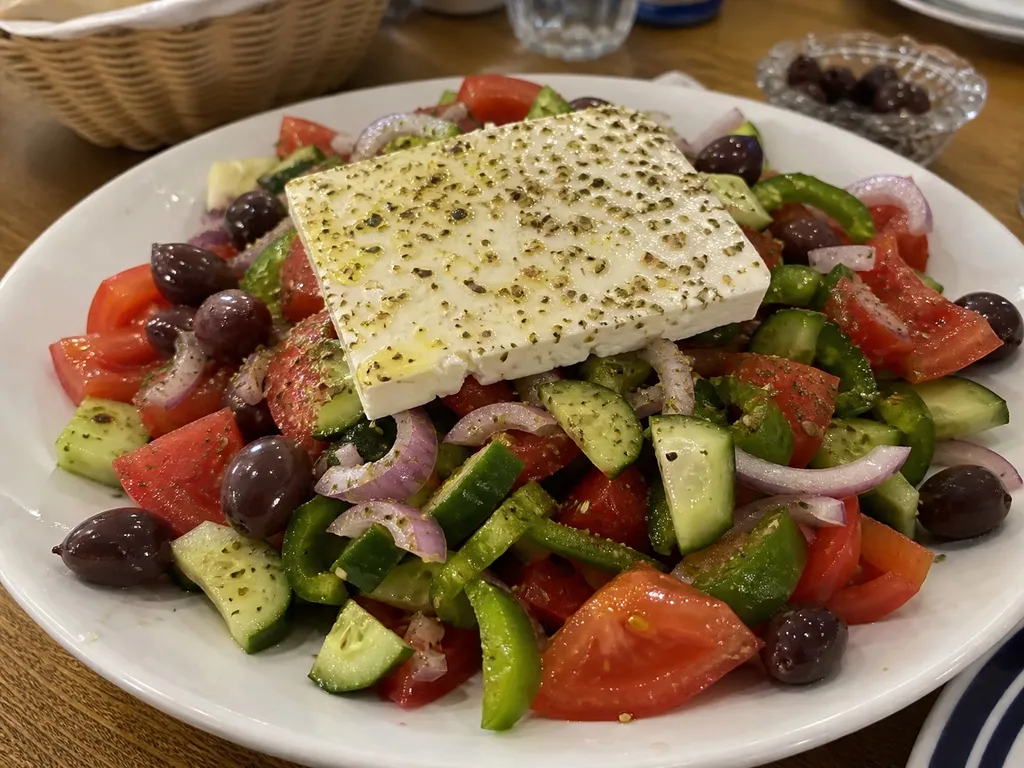
 Horiatiki Salata (Classic Greek Village Salad)
Crisp tomatoes, cucumber, green pepper, red onion, and olives topped with a thick slab of feta and drizzled with olive oil.
Contains common allergens
In the app, Listahan checks these against your household automatically.
Good to know
- Ready in under 30 minutes
Matched from this dish's own ingredients and timing. Browse more: 30-minute meals
Instructions
6 steps- 1
In a large bowl, combine the tomato wedges, cucumber, green pepper, red onion, and olives.
- 2
Toss the vegetables gently with olive oil, red wine vinegar, salt, and pepper.
- 3
Transfer the salad to a serving platter and place the whole slab of feta on top.
- 4
Sprinkle the oregano generously over the feta and vegetables.
- 5
Drizzle with a little extra olive oil just before serving.
- 6
Serve at room temperature with crusty bread to soak up the juices.
 Images are for illustrative purposes only, may be inaccurate, and do not guarantee the presence or absence of specific ingredients.
 Listahan Family Score™
80/100
Good fit for most families
Score reflects how well this recipe fits a typical busy household. In the app, your Family Score is personalized to your household's allergens, kids, and pantry.
Nutrition
per serving400
Calories
13 g
Protein
13 g
Carbs
34 g
Fat
Estimated per serving. Actual values depend on the brands and portions you use.
Listahan cooking guide
Chef notes & practical guide
Technique notes, ingredient swaps, serve-alongside ideas, storage guidance, and equipment for this recipe.
Cultural context
Horiatiki means village style, and this salad reflects the way rural Greek cooks built a plate from what the garden and pantry offered that day, with no lettuce at all, since leafy greens were less common in home gardens than tomatoes, cucumbers, and onions. The whole slab of feta on top, rather than crumbled, is the traditional presentation, letting diners break off pieces themselves.
Listahan note
This version keeps the feta as a whole slab rather than crumbling it in, staying true to how it is served in most Greek villages and letting the vegetables marinate briefly in their own juices before the feta goes on.
Technique cues
- Cutting the tomatoes into wedges rather than dicing them lets the juices pool at the bottom of the bowl, which becomes part of the dressing along with the olive oil rather than needing a separate vinaigrette.
- Keeping the feta as a whole slab on top, instead of crumbling it into the salad, is the traditional village presentation and also keeps the cheese from getting soggy in the tomato juices.
- Letting the tossed vegetables sit for a few minutes before plating allows the salt and oil to draw out some tomato liquid, which is exactly the light, juicy dressing the salad relies on.
Kitchen flow
- Parallel prep
- Chop all the vegetables first since there is no cooking involved, then toss and dress right before the feta and oregano go on top.
- Make-ahead
- The vegetables can be cut a few hours ahead and refrigerated separately, but wait to toss with oil and add the feta until just before serving so nothing gets watery.
- Leftover move
- Chopped leftover salad with the feta broken in makes a good quick lunch the next day, though it is best eaten within a day since the vegetables release more liquid over time.
- Cleanup rhythm
- Use one large bowl for chopping and tossing to minimize dishes, since nothing here needs to be cooked.
Ingredient brief
Role, handling, and swap guidance for each key ingredient.
tomatoes
base vegetable
Purpose: ripe, in-season tomatoes are the backbone of the salad, providing both texture and the juices that dress it
Handling: cut into thick wedges so they hold up under the other vegetables
Adaptation: use the ripest tomatoes available, even slightly overripe ones, since sweetness matters more than firmness here
feta cheese, in a slab
finishing cheese
Purpose: the salty, tangy block is meant to be broken apart at the table, contrasting with the juicy vegetables
Handling: pat it dry and place it whole on top rather than crumbling
Adaptation: a young, mild sheep's milk feta gives the most traditional flavor; a drier cow's milk feta is a common substitute but slightly less creamy
Kalamata olives
briny accent
Purpose: their dark, meaty brine ties the vegetables and feta together with a salty, slightly fruity note
Handling: use whole, unpitted olives if possible for the best flavor, warning guests about the pits
Adaptation: another oil-cured black olive works if Kalamata is unavailable, though the flavor will be milder
olive oil
dressing
Purpose: a generous pour of good extra-virgin olive oil is really the only dressing the salad needs
Handling: drizzle both during tossing and again just before serving for maximum flavor
Adaptation: there is no good substitute here, since the oil's flavor is central to the dish
dried oregano
signature seasoning
Purpose: sprinkled generously over the feta and vegetables, it is the herb that instantly reads as Greek
Handling: crumble it between your fingers over the top just before serving so its oils release
Adaptation: fresh oregano can be used but in a smaller quantity since it is more delicate in flavor
Technique notes
- Do not refrigerate the tomatoes before making the salad if avoidable, since cold storage dulls their flavor and sweetness.
- Season the vegetables with salt before adding the feta, not after, since the feta itself is salty and can make the dish taste over-seasoned if salted twice.
- Serve the salad at room temperature, never chilled, since cold mutes both the tomatoes' sweetness and the olive oil's flavor.
Ingredient swaps
- Dairy-free option
- Omit the feta or use a dairy-free feta-style block; the salad still works well as a vegetable dish with olives and oil.
- Weeknight shortcut
- Use good-quality jarred Kalamata olives and pre-crumbled feta to cut prep time to under 10 minutes.
- Lower-sodium direction
- Use fewer olives and a lighter hand with the feta, since both are naturally high in sodium.
Serve alongside
- Grilled pita or crusty bread
- Grilled chicken souvlaki
- Baked fish
- Tzatziki for dipping bread
- A chilled Assyrtiko or other crisp Greek white
- Sparkling water with lemon
Serving suggestions only — check pairings for your household's allergens.
Storage & reheating
- Best eaten the day it is made; refrigerate leftovers up to 1 day in an airtight container
- No real reheating needed, serve cold or at room temperature
- Not suitable for freezing
Equipment
- Large mixing bowl
- Sharp chef's knife
- Cutting board
- Serving platter
Make this household-aware
Listahan Pro checks this recipe against your household's allergens, finds pantry-aware swaps, builds the shopping list, and helps you plan the week around it.
Plan it in Listahan
Add Horiatiki Salata (Classic Greek Village Salad) to your week, check it against your household's allergens, and build the shopping list automatically.
More Greek recipes
 Greek Lens Verified Images are for illustrative purposes only, may be inaccurate, and do not guarantee the presence or absence of specific ingredients.
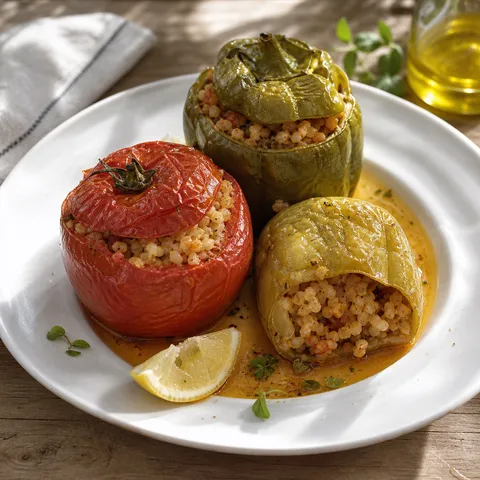
 Gemista (Stuffed Tomatoes and Peppers with Rice)
Ripe tomatoes and bell peppers hollowed out and stuffed with a savory herbed rice filling, then baked until tender and caramelized.
 Greek Lens Verified Images are for illustrative purposes only, may be inaccurate, and do not guarantee the presence or absence of specific ingredients.
 Kourabiedes (Greek Almond Butter Cookies)
Buttery, crumbly shortbread cookies studded with toasted almonds and generously dusted with powdered sugar.
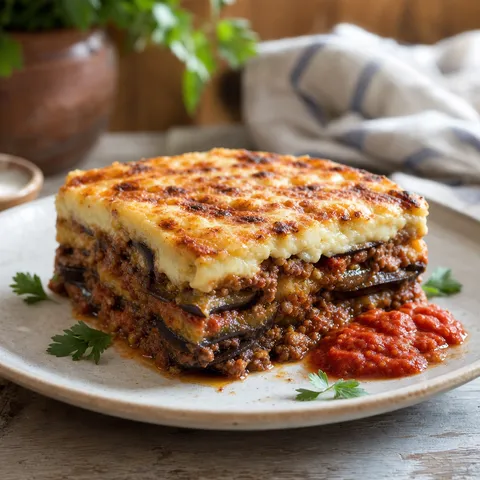 Greek Lens Verified Images are for illustrative purposes only, may be inaccurate, and do not guarantee the presence or absence of specific ingredients.
 Classic Moussaka
A rich, layered Greek casserole featuring roasted eggplant, a hearty spiced meat sauce, and a thick, creamy béchamel topping.