 Greek Images are for illustrative purposes only, may be inaccurate, and do not guarantee the presence or absence of specific ingredients.
  Serving Images are for illustrative purposes only, may be inaccurate, and do not guarantee the presence or absence of specific ingredients.
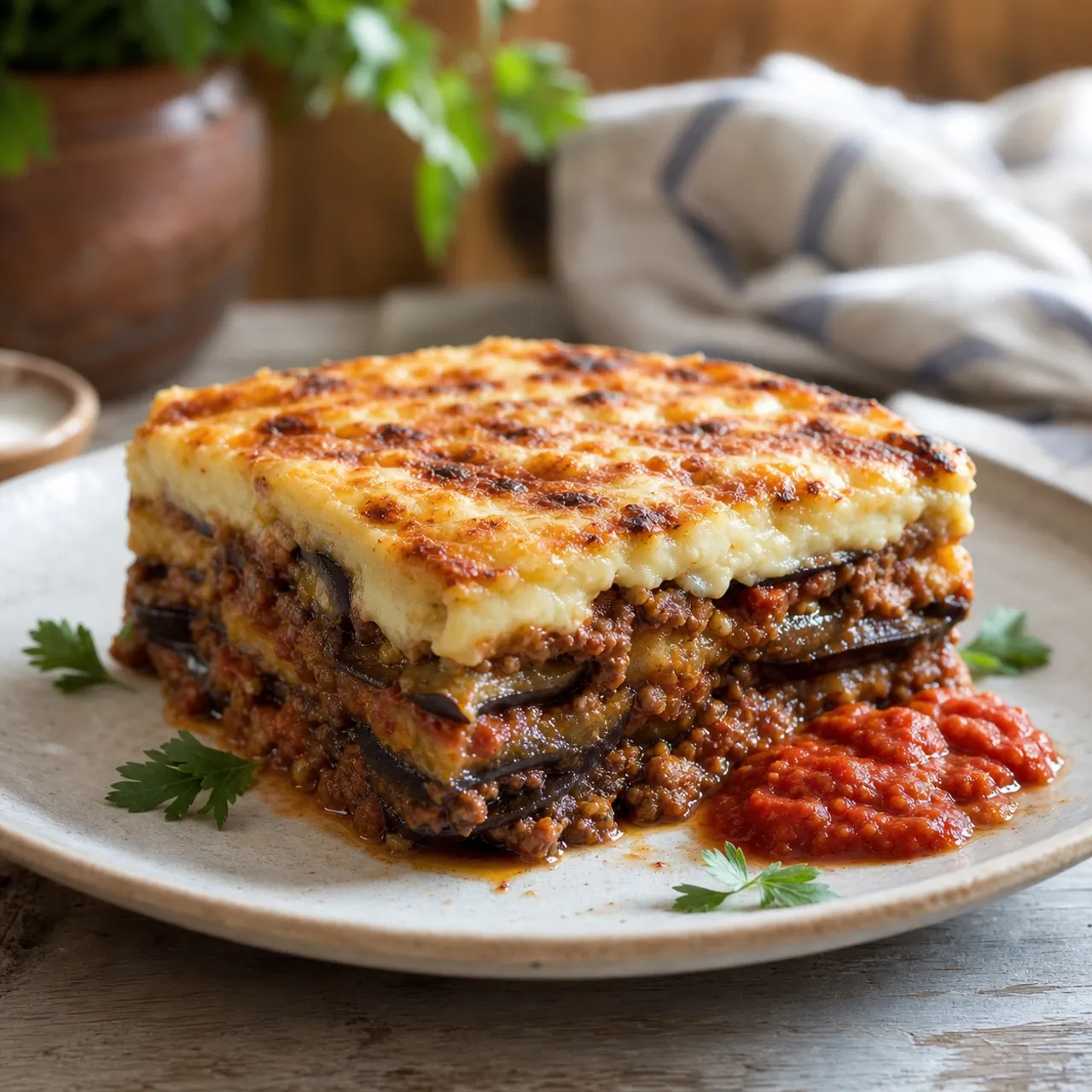
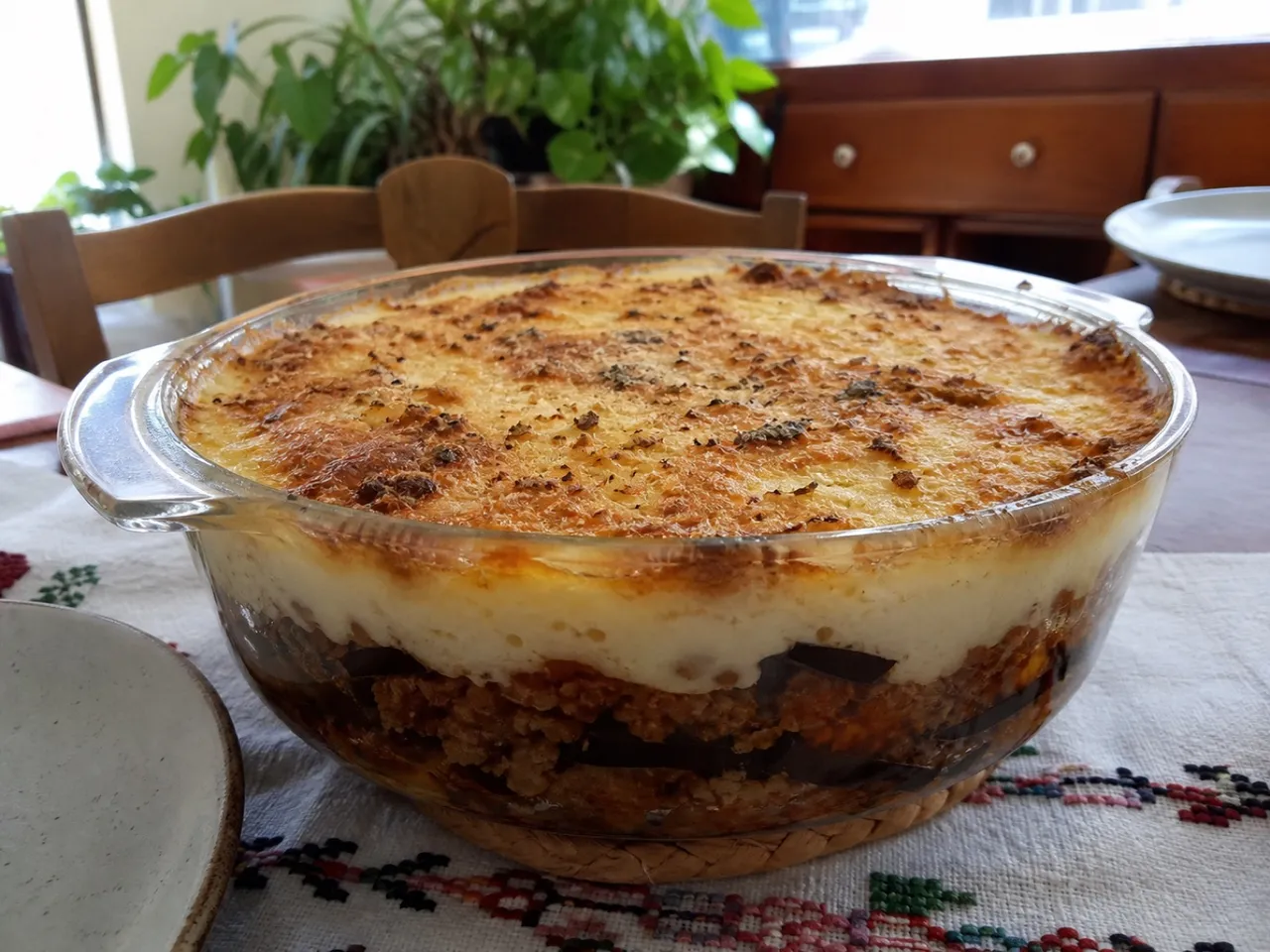
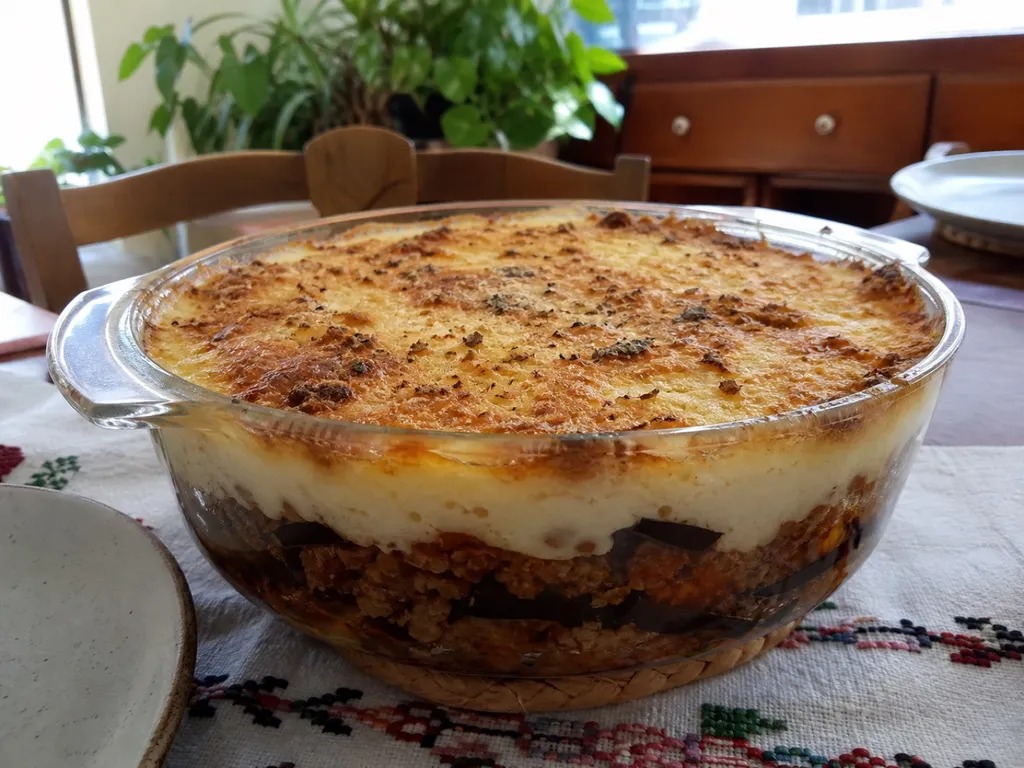
 Classic Moussaka
A rich, layered Greek casserole featuring roasted eggplant, a hearty spiced meat sauce, and a thick, creamy béchamel topping.
Contains common allergens
In the app, Listahan checks these against your household automatically.
Instructions
5 steps- 1
Prep Eggplant: Salt the eggplant slices and let them sit for 30 minutes to draw out moisture. Pat dry, brush with olive oil, and roast at 400°F (200°C) for 20 minutes until tender.
- 2
Make Meat Sauce: Sauté the onion and garlic until soft. Add the ground meat and brown. Stir in the cinnamon, nutmeg, tomatoes, and wine. Simmer for 30 minutes until thick.
- 3
Make Béchamel: Melt butter in a saucepan, whisk in flour, and cook for 1 minute. Gradually whisk in the milk until smooth and thickened. Remove from heat and temper in the egg yolks and cheese.
- 4
Assemble: In a 9x13 baking dish, layer half the eggplant, then all the meat sauce, then the remaining eggplant. Pour the béchamel evenly over the top.
- 5
Bake: Bake at 350°F (175°C) for 45 minutes until the top is golden brown and bubbly. Let rest for at least 15 minutes before slicing.
 Images are for illustrative purposes only, may be inaccurate, and do not guarantee the presence or absence of specific ingredients.
 Listahan Family Score™
60/100
Works for many families
Score reflects how well this recipe fits a typical busy household. In the app, your Family Score is personalized to your household's allergens, kids, and pantry.
Nutrition
per serving935
Calories
59 g
Protein
52 g
Carbs
53 g
Fat
Estimated per serving. Actual values depend on the brands and portions you use.
Listahan cooking guide
Chef notes & practical guide
Technique notes, ingredient swaps, serve-alongside ideas, storage guidance, and equipment for this recipe.
Cultural context
The béchamel-topped moussaka familiar today is credited to Greek chef Nikolaos Tselementes in the 1920s, whose training in French kitchens led him to add a béchamel layer to an older Ottoman-influenced eggplant and meat dish, giving Greek moussaka its now-signature baked top.
Listahan note
This version salts the eggplant before it ever touches the pan and rests the finished bake before slicing, the two steps that keep moussaka's layers distinct instead of collapsing into a watery casserole.
Technique cues
- Salting the sliced eggplant and letting it sit for twenty to thirty minutes draws out excess moisture; skip that step and the layers can turn watery once baked.
- Browning the ground meat with the onion and garlic until any liquid it releases has fully cooked off keeps the meat layer from making the whole casserole soggy.
- Simmering the meat sauce with the crushed tomatoes until it thickens to a jammy consistency, rather than staying loose, is what keeps each layer distinct once the dish is sliced.
- The béchamel top needs to set fully before slicing; a moussaka cut too soon collapses into the meat layer instead of holding a clean cross-section.
Kitchen flow
- Parallel prep
- Prep any side dishes while Classic Moussaka finishes with the beef or lamb — the hands-off cook time is the window to use. Plan around the bake; that's the slow part.
- Make-ahead
- Classic Moussaka reheats well, so cooking it a day ahead and finishing it just before serving is a reasonable way to spread out the work. This one leans on the beef or lamb. The bake step is what sets the pace here.
- Leftover move
- Leftover Classic Moussaka reheats well covered on the stove or in the oven with a splash of liquid; avoid the microwave, which tends to toughen the beef or lamb on a fast reheat. Everything else is quick — the bake is the one step that takes real time.
- Cleanup rhythm
- Deglaze the pan used for Classic Moussaka with a splash of water or broth right after cooking — it lifts the browned bits before they dry on and saves scrubbing later. This one leans on the beef or lamb. Everything else is quick — the bake is the one step that takes real time.
Ingredient brief
Role, handling, and swap guidance for each key ingredient.
3 large eggplants, sliced into 1/2-inch rounds
Main protein or body
Purpose: large eggplants, sliced into 1/2-inch rounds gives Classic Moussaka its main substance and carries the seasoning.
Handling: Prep before heat is high so the cooking step can move without rushing.
Adaptation: Use an egg-free substitute only when binding or glazing is not the main structure.
1 lb ground beef or lamb
Main protein or body
Purpose: lb ground beef or lamb gives Classic Moussaka its main substance and carries the seasoning.
Handling: Pat dry, cut evenly, and season before cooking so browning or sauce coverage is consistent.
Adaptation: Use the closest fresh equivalent and expect a modest shift in flavor or texture.
1 large onion, finely chopped
Aromatic base
Purpose: large onion, finely chopped creates the savory foundation before stronger ingredients are added.
Handling: Wash, trim, and cut evenly so the pieces cook at the same pace.
Adaptation: Use the closest fresh equivalent and expect a modest shift in flavor or texture.
2 cloves garlic, minced
Aromatic base
Purpose: cloves garlic, minced creates the savory foundation before stronger ingredients are added.
Handling: Wash, trim, and cut evenly so the pieces cook at the same pace.
Adaptation: Use the closest fresh equivalent and expect a modest shift in flavor or texture.
1 can crushed tomatoes
Acid and brightness
Purpose: can crushed tomatoes balances richness and keeps the finished dish lively.
Handling: Wash, trim, and cut evenly so the pieces cook at the same pace.
Adaptation: Use the closest fresh equivalent and expect a modest shift in flavor or texture.
Technique notes
- Let the baked moussaka rest for at least twenty to thirty minutes out of the oven before cutting, the layers firm up considerably as it cools.
- Grilling or pan-searing the eggplant slices instead of frying them cuts down on how much oil the layers soak up.
- Moussaka reheats well the next day, and many cooks think it tastes better after a night in the fridge lets the layers fully settle.
Ingredient swaps
- Gluten-free direction
- Replace the all-purpose flour with a certified gluten-free 1:1 flour blend or gluten-free noodles/breadcrumbs — check that any other packaged ingredients here are labeled gluten-free too. This one leans on the beef or lamb.
- Dairy-free direction
- Swap the butter for a neutral dairy-free butter or oil and a full-fat plant milk (oat or coconut work best for body) — the texture shifts slightly but the dish holds together. This one leans on the beef or lamb.
- Egg-aware direction
- Replace the egg yolks with a flax or chia egg (1 tbsp ground seed + 3 tbsp water, rested 5 minutes) for binding, best when eggs are there for binding rather than structure or rise. This one leans on the beef or lamb.
- Nut-aware direction
- Skip the nut garnish or use toasted seeds (sunflower or pumpkin) instead. This one leans on the beef or lamb.
Serve alongside
- Fresh fruit
- Cucumber slices
- Plain rice crackers
- Cold water
- Sparkling water
Serving suggestions only — check pairings for your household's allergens.
Storage & reheating
- Refrigerate covered for up to 3 days when the drink is brewed, blended, or mixed ahead.
- Stir or shake before serving over fresh ice.
- Do not freeze unless the recipe is meant to become pops or granita.
Equipment
- Pitcher or blender
- Measuring cup
- Long spoon
Make this household-aware
Listahan Pro checks this recipe against your household's allergens, finds pantry-aware swaps, builds the shopping list, and helps you plan the week around it.
Plan it in Listahan
Add Classic Moussaka to your week, check it against your household's allergens, and build the shopping list automatically.
More Greek recipes
 Greek Lens Verified Images are for illustrative purposes only, may be inaccurate, and do not guarantee the presence or absence of specific ingredients.
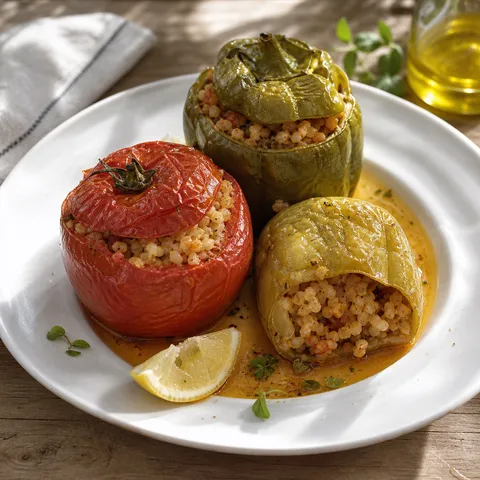
 Gemista (Stuffed Tomatoes and Peppers with Rice)
Ripe tomatoes and bell peppers hollowed out and stuffed with a savory herbed rice filling, then baked until tender and caramelized.
 Greek Lens Verified Images are for illustrative purposes only, may be inaccurate, and do not guarantee the presence or absence of specific ingredients.
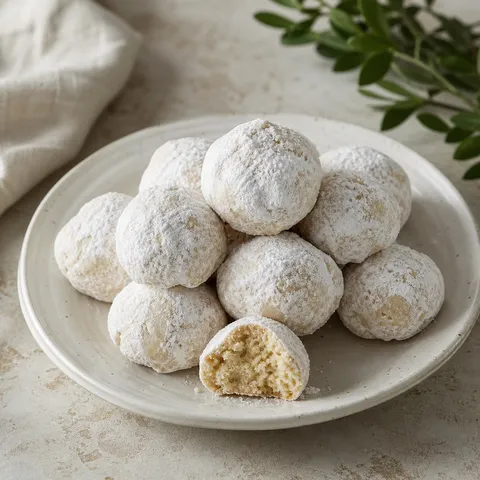
 Kourabiedes (Greek Almond Butter Cookies)
Buttery, crumbly shortbread cookies studded with toasted almonds and generously dusted with powdered sugar.
 Greek Lens Verified Images are for illustrative purposes only, may be inaccurate, and do not guarantee the presence or absence of specific ingredients.
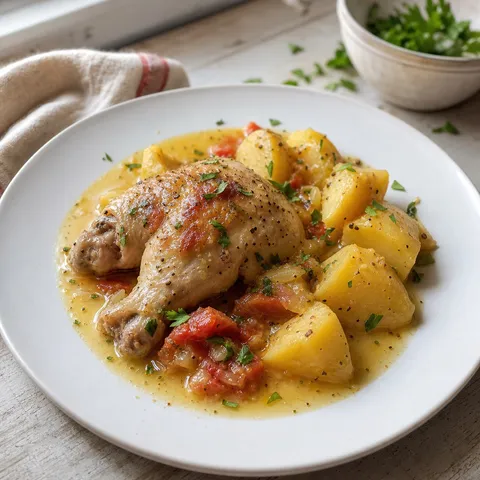
 Kotopoulo Lemonato (Greek Lemon Chicken with Potatoes)
Bone-in chicken and potatoes roasted together in a bright lemon, garlic, and oregano sauce until golden and tender.