 Greek Images are for illustrative purposes only, may be inaccurate, and do not guarantee the presence or absence of specific ingredients.
  Serving Images are for illustrative purposes only, may be inaccurate, and do not guarantee the presence or absence of specific ingredients.
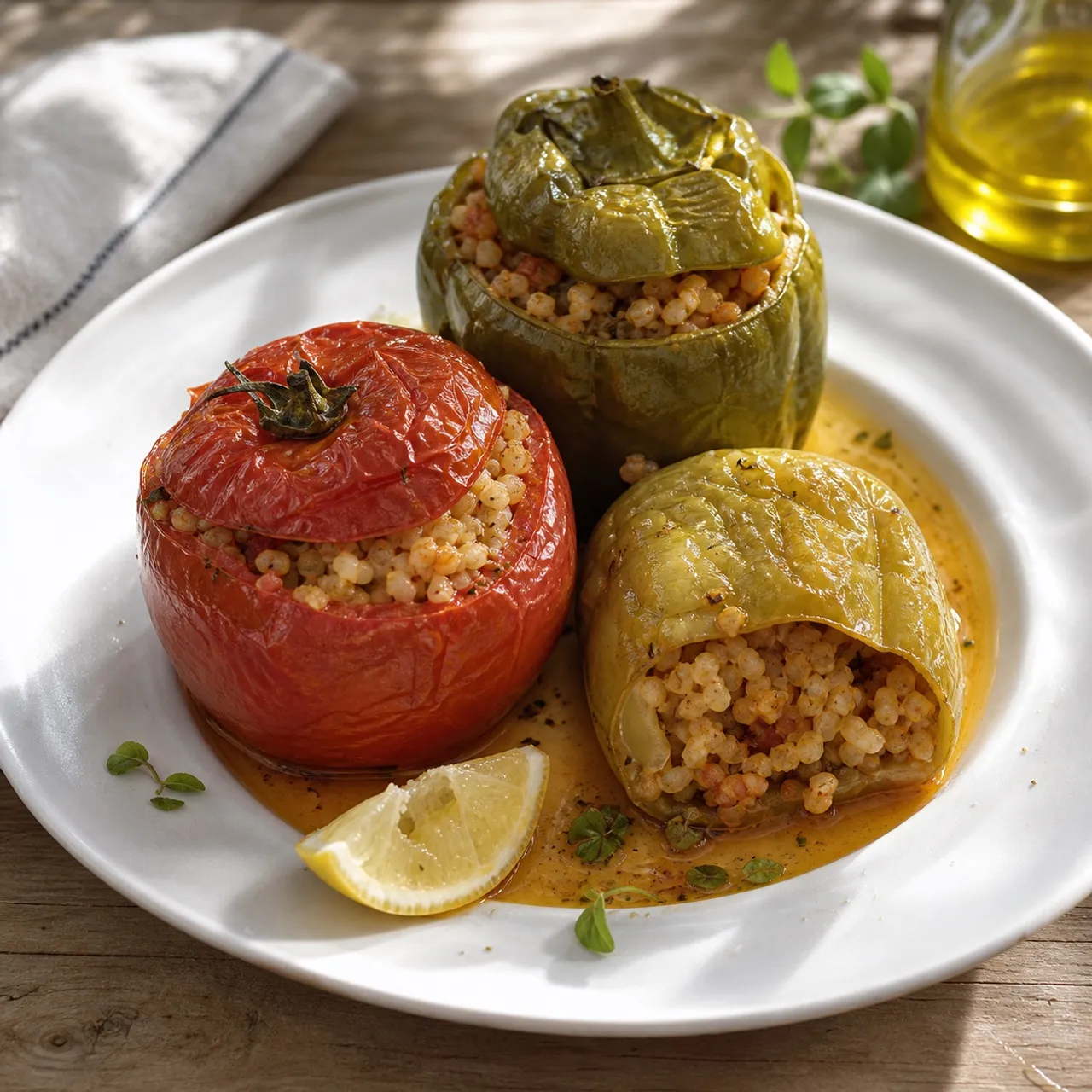
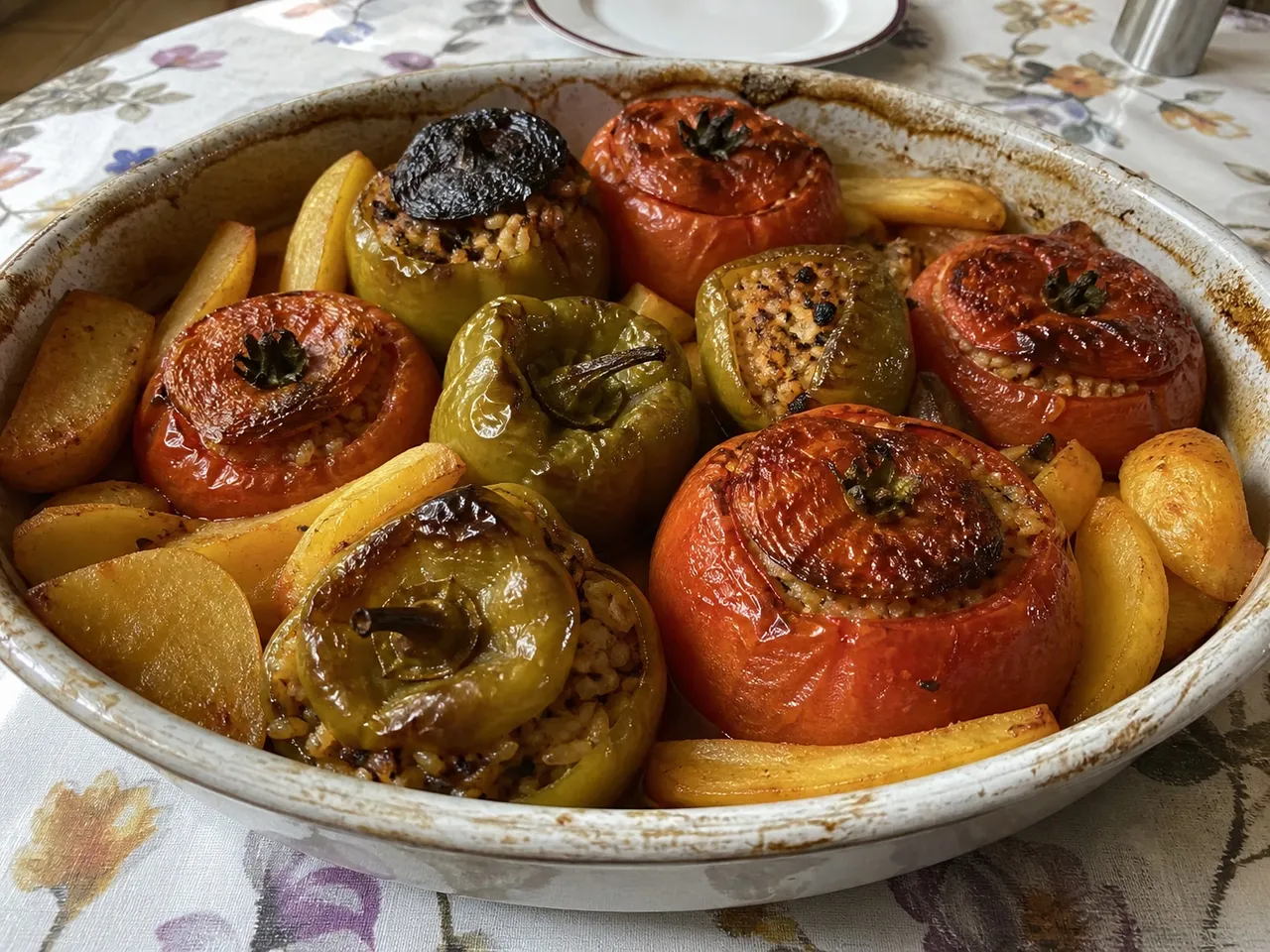
 Gemista (Stuffed Tomatoes and Peppers with Rice)
Ripe tomatoes and bell peppers hollowed out and stuffed with a savory herbed rice filling, then baked until tender and caramelized.
No common allergens detected
Based on this recipe's ingredient list. Always verify with your own brands and labels.
Instructions
7 steps- 1
Slice the tops off the tomatoes and peppers and reserve as lids; scoop out the tomato flesh and pepper seeds, reserving the tomato pulp and chopping it finely.
- 2
Heat olive oil in a pan and saute the onion until soft, then add garlic and cook for 1 minute.
- 3
Stir in the rice, chopped tomato pulp, parsley, mint, oregano, sugar, salt, and pepper, and cook for 3-4 minutes to combine.
- 4
Spoon the rice filling into the hollowed tomatoes and peppers, filling only about three-quarters full to allow the rice to expand, then replace the lids.
- 5
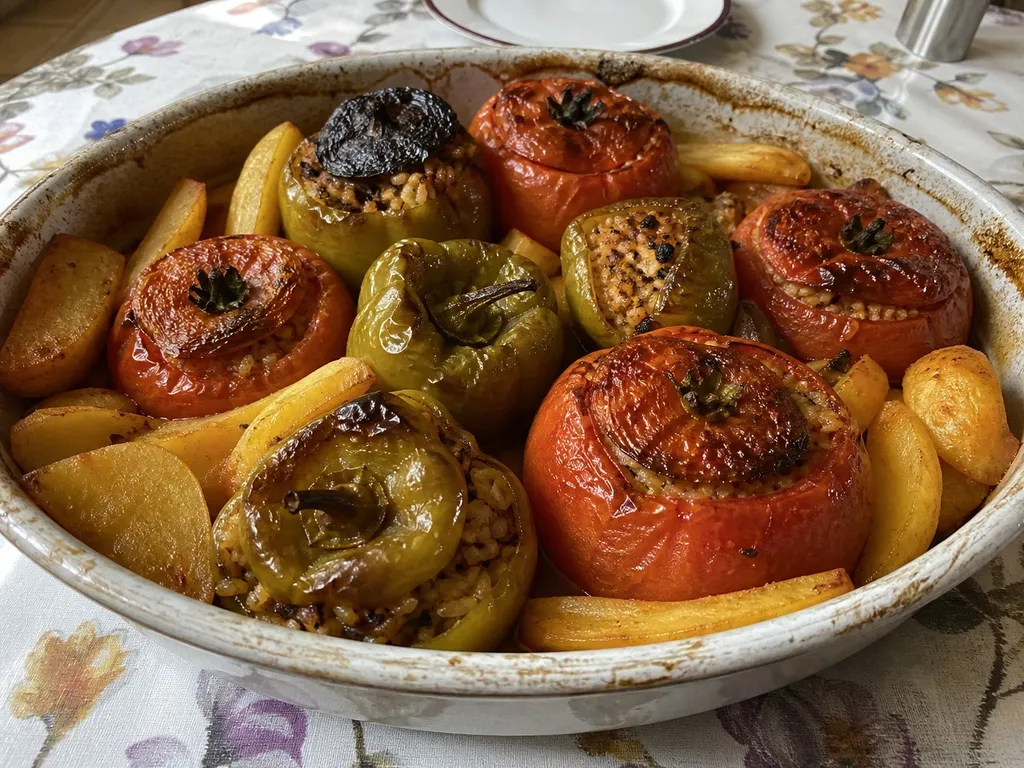
Arrange the stuffed vegetables in a baking dish, tuck the potato wedges around them, drizzle everything generously with olive oil, and add a splash of water to the dish.
- 6
Bake at 375°F for 60-70 minutes, until the vegetables are tender and the tops are lightly caramelized, basting once with the pan juices.
- 7
Serve warm or at room temperature.
 Images are for illustrative purposes only, may be inaccurate, and do not guarantee the presence or absence of specific ingredients.
 Listahan Family Score™
73/100
Good fit for most families
Score reflects how well this recipe fits a typical busy household. In the app, your Family Score is personalized to your household's allergens, kids, and pantry.
Nutrition
per serving325
Calories
6 g
Protein
47 g
Carbs
13 g
Fat
Estimated per serving. Actual values depend on the brands and portions you use.
Listahan cooking guide
Chef notes & practical guide
Technique notes, ingredient swaps, serve-alongside ideas, storage guidance, and equipment for this recipe.
Cultural context
Gemista, meaning simply stuffed things, is a late-summer dish built around the peak-season tomatoes and peppers of the Greek harvest, when vegetables are at their sweetest and most abundant. Potato wedges tucked around the stuffed vegetables in the same pan is a distinctly Greek addition that roasts in the vegetables' juices.
Listahan note
This version hollows the tomatoes and peppers to use their own pulp in the filling, so nothing about the vegetable is wasted, and bakes everything together with potatoes so one pan does double duty.
Technique cues
- Filling the vegetables only about three-quarters full leaves room for the rice to expand as it absorbs moisture during baking, an overstuffed vegetable can split its skin.
- Reserving and chopping the scooped tomato pulp into the rice filling keeps that flavor in the dish instead of discarding it, and adds moisture the rice needs to cook through in the oven.
- A generous amount of olive oil and a splash of water in the baking dish are essential, not optional, they braise the vegetables from below while the tops caramelize.
Kitchen flow
- Parallel prep
- Hollow out the tomatoes and peppers while the rice-and-onion filling cooks on the stovetop, so both are ready to combine at the same time.
- Make-ahead
- Gemista is traditionally served warm or at room temperature, so it can be baked a few hours ahead without any loss of quality.
- Leftover move
- Leftovers actually taste very good cold or at room temperature the next day, straight from the fridge, no reheating required.
- Cleanup rhythm
- Line the baking dish with foil before assembling if cleanup matters, the oil and tomato juices caramelize onto the pan during the long bake.
Ingredient brief
Role, handling, and swap guidance for each key ingredient.
tomatoes and bell peppers
the edible vessels
Purpose: as they bake, both release and absorb juices that season the rice filling from the inside out while the vegetable itself becomes fork-tender
Handling: slice off the tops to use as lids, then scoop out the tomato flesh and pepper seeds carefully to avoid puncturing the walls
Adaptation: zucchini works as a mixed-in vessel option for those who want a milder, less acidic result, though it holds less liquid than tomato
rice
the filling's structure
Purpose: unlike pilaf, the rice here finishes cooking inside the vegetable using only the moisture from the tomato pulp and a little added water, so it must be able to absorb liquid slowly during a long bake
Handling: toast briefly in the oil with the aromatics before stuffing so it starts the bake already partly hydrated
Adaptation: a short-grain rice gives a slightly stickier, more traditional result than long-grain
reserved tomato pulp
moisture and sweetness
Purpose: this pulp, which many recipes discard, is actually what keeps the rice from drying out inside a hollowed vegetable during a long bake
Handling: chop it finely and stir it directly into the sauteed onion and rice before stuffing
Adaptation: if a tomato yields very little pulp, a spoonful of canned crushed tomato can top it up
olive oil
braising fat
Purpose: a generous amount poured over the stuffed vegetables before baking is what keeps them from drying out at the edges over a long roast
Handling: drizzle generously over the top of the assembled dish along with a splash of water just before it goes into the oven
Adaptation: there isn't a good substitute here, the oil is part of what makes gemista taste rich rather than merely baked
potatoes
the pan's second act
Purpose: tucked around the stuffed vegetables, the potato wedges roast in the same olive oil and tomato juices, picking up flavor while the tomatoes and peppers cook
Handling: cut into wedges of similar size so they roast at the same rate as the vegetables around them
Adaptation: sweet potato wedges work for a different but pleasant sweetness, though the texture softens faster so watch the timing
Technique notes
- Don't skip basting the vegetables with the pan juices partway through baking, it's what keeps the tops from drying out before the rice inside finishes cooking.
- Choose tomatoes and peppers of a similar size so everything finishes baking at roughly the same time.
- Test doneness by piercing a tomato or pepper wall with a knife, it should give easily; the rice inside should be tender, not crunchy, when you check a spoonful.
Ingredient swaps
- Vegan direction
- Wherever dairy shows up here, a neutral dairy-free butter or oil and a full-fat plant milk (oat or coconut work best for body) is the straightforward stand-in. This one leans on the bell peppers.
- Gluten-free direction
- Use a certified gluten-free 1:1 flour blend or gluten-free noodles/breadcrumbs in place of any wheat-based ingredient, and double-check packaged items for hidden wheat. This one leans on the bell peppers.
- Lower-carb direction
- Swap half the rice for finely chopped cauliflower rice, added toward the end of the stovetop step rather than at the start, to reduce the starch without losing the stuffed format.
Serve alongside
- crusty bread for mopping up juices
- Greek salad
- tzatziki
- feta cheese
- a dry rose wine
- a light Greek white
- sparkling water with lemon
Serving suggestions only — check pairings for your household's allergens.
Storage & reheating
- Keeps refrigerated for up to 4 days.
- Reheat covered in a low oven, or serve cold or at room temperature as is traditional.
- Freezes reasonably well for up to 2 months, though the vegetable walls soften further after thawing.
Equipment
- large baking dish
- small spoon (for hollowing)
- sharp paring knife
- basting brush or spoon
Make this household-aware
Listahan Pro checks this recipe against your household's allergens, finds pantry-aware swaps, builds the shopping list, and helps you plan the week around it.
Plan it in Listahan
Add Gemista (Stuffed Tomatoes and Peppers with Rice) to your week, check it against your household's allergens, and build the shopping list automatically.
More Greek recipes
 Greek Lens Verified Images are for illustrative purposes only, may be inaccurate, and do not guarantee the presence or absence of specific ingredients.
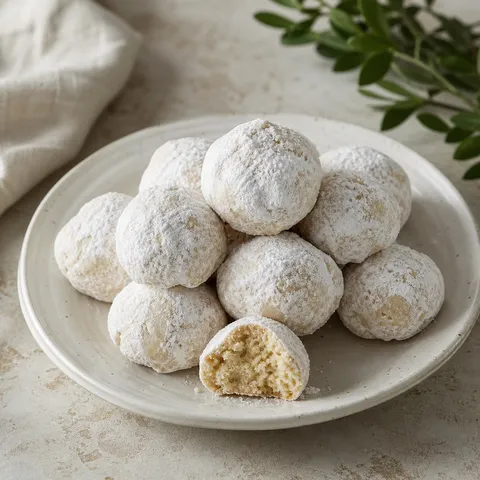
 Kourabiedes (Greek Almond Butter Cookies)
Buttery, crumbly shortbread cookies studded with toasted almonds and generously dusted with powdered sugar.
 Greek Lens Verified Images are for illustrative purposes only, may be inaccurate, and do not guarantee the presence or absence of specific ingredients.
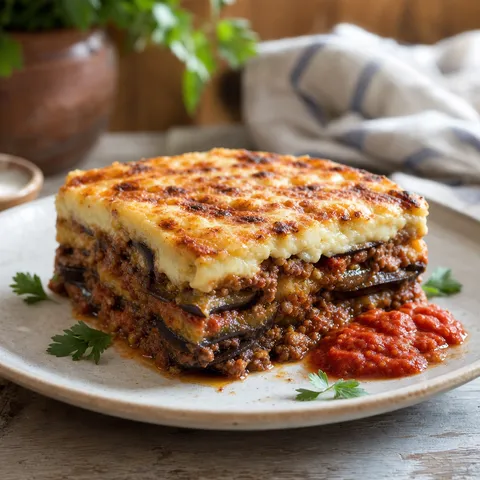
 Classic Moussaka
A rich, layered Greek casserole featuring roasted eggplant, a hearty spiced meat sauce, and a thick, creamy béchamel topping.
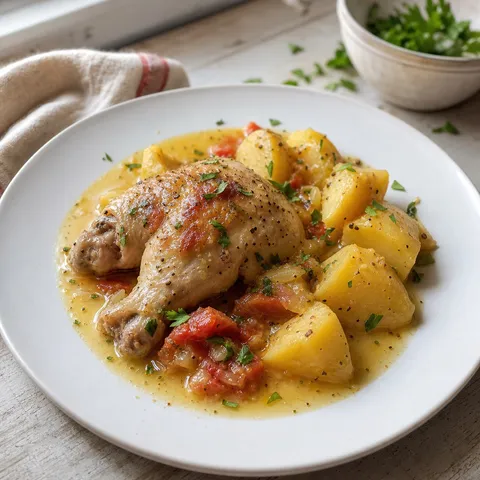 Greek Lens Verified Images are for illustrative purposes only, may be inaccurate, and do not guarantee the presence or absence of specific ingredients.
 Kotopoulo Lemonato (Greek Lemon Chicken with Potatoes)
Bone-in chicken and potatoes roasted together in a bright lemon, garlic, and oregano sauce until golden and tender.