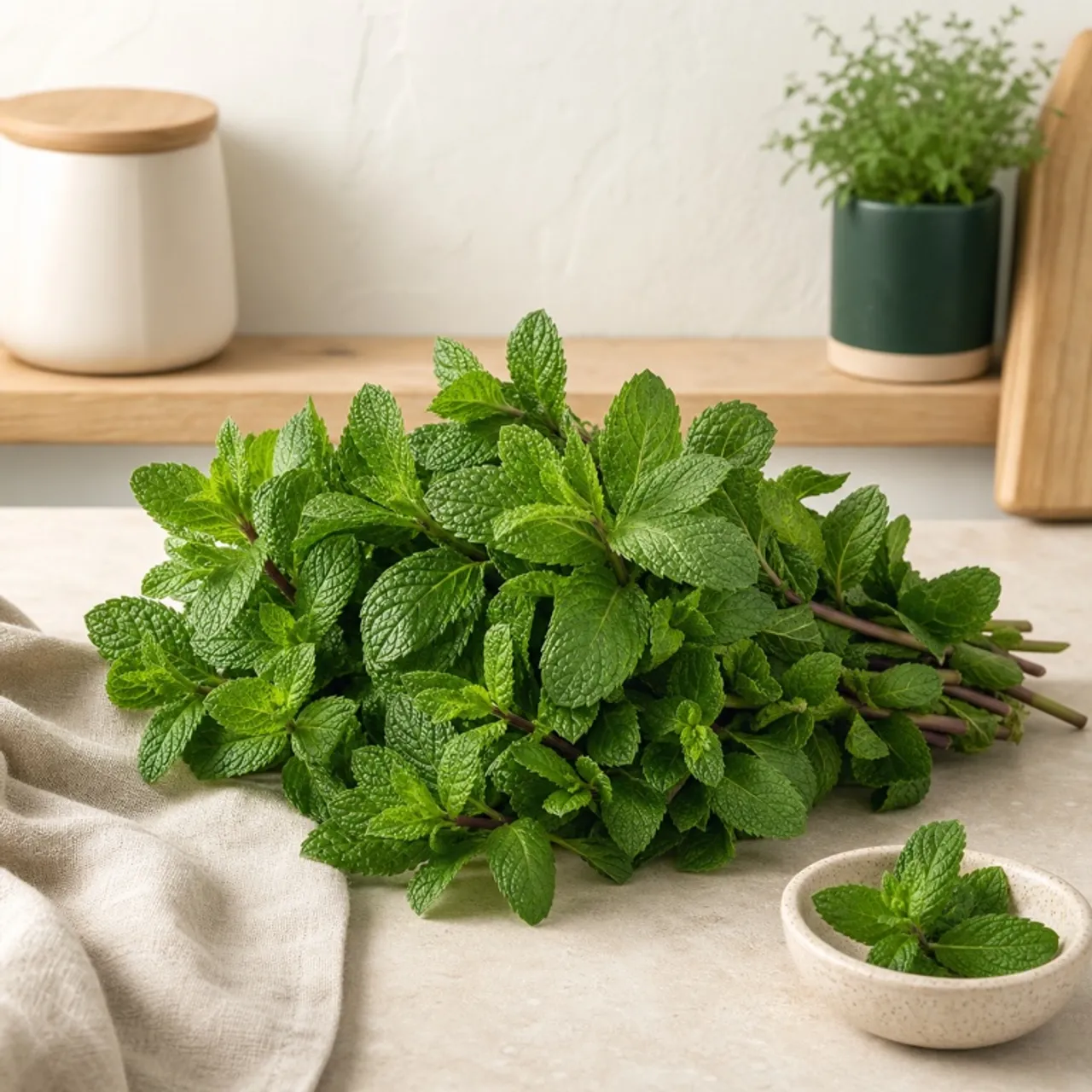
 Food Lens Images are for illustrative purposes only, may be inaccurate, and do not guarantee the presence or absence of specific ingredients.
 Food Lens · Produce
Mint
Bright, cool, and refreshing with a clean menthol note (stronger in peppermint, gentler and sweeter in spearmint); slightly sweet on the finish.
Lens VerifiedMint is a cool, intensely aromatic herb with a clean, refreshing flavor used across Middle Eastern, South Asian, Southeast Asian, and Mediterranean cuisines in teas, salads, sauces, desserts, and cocktails.
Where it comes from
Mint has been used for thousands of years around the Mediterranean and Middle East — found in Egyptian tombs and described in ancient Greek and Roman texts as a symbol of hospitality and cleanliness. It spread with trade routes and colonization to virtually every corner of the world, adapting to local cuisines with ease. In North America, mint arrived with European settlers as a garden and medicinal herb and later became embraced by all the cultures that settled the continent, from Moroccan immigrants' tea traditions to Vietnamese herb plates and Southern American iced tea.
Varieties — Spearmint is the mild, sweet, classic culinary mint — used in most savory dishes, salads, cocktails, and herbal teas. Peppermint has a stronger menthol note and is more commonly used in candies, teas, and desserts than as a fresh cooking herb. Chocolate mint, apple mint, and eau de cologne mint are specialty varieties used for teas and desserts.
Mint is essential in Moroccan mint tea (a ceremony of hospitality), Lebanese tabbouleh, Persian herb rice (sabzi polo), Vietnamese pho and herb plates, and the Mojito; in Indian raita and chutney it provides cooling contrast to spiced dishes.
In a modern kitchen — Mint wilts very quickly once cut — add to dishes just before serving. For cocktails, slap the leaves between your palms to release the oils without bruising and turning them black. Store sprigs upright in a jar of water at room temperature for up to a week.
Buying it
Look for bright green, perky leaves with no black spots, wilting, or sliminess. The smell test is essential — fresh mint should be powerfully aromatic when the leaves are pinched. Avoid any bunch with yellowed, damaged, or wet-looking stems.
Storing it
Store mint like cut flowers — stems in a jar of water, loosely covered, in the fridge — or wrap leaves in a damp paper towel inside a sealed bag. Pick out blackened or slimy leaves promptly.
Keeps about 5 days in the fridge.
In season
Peak season is June–August, though it's available year-round.
Local field mint is strongest in summer, while greenhouse and imported bunches keep it available year-round.
Out of mint? Good swaps
- Fresh basil — For Southeast Asian herb plates and some salads; sweet and aromatic but without the cool menthol — use 1:1
- Fresh cilantro — Brighter and more citrusy; works in tabbouleh and salads if mint is unavailable — use ½ the amount
- Dried mint — Use ⅓ the amount; loses brightness but works in cooked sauces, raita, and stews
General cooking guidance — always check the labels on the products you use. Listahan’s allergen checks run automatically when you plan a recipe in the app. Not medical advice.
Recipes that use mint
- Gemista (Stuffed Tomatoes and Peppers with Rice)
- Cau Cau (Peruvian Tripe Stew)
- Bò Nhúng Dấm (Beef Fondue)
- Bánh Xèo (Crispy Vietnamese Pancake)
- Bún Chả (Grilled Pork with Rice Noodles)
- Nem Nướng (Grilled Pork Sausage)
- Vegan Spring Rolls
- Dolmas (Stuffed Grape Leaves)
- Bánh Khọt (Mini Savory Pancakes)
- Mì Quảng (Turmeric Noodle Soup)
- Virgin Mojito
- Tabbouleh
Common questions about mint
Is mint vegan?
Mint is generally plant-based and suitable for a vegan diet, but brands differ — confirm on the label.
What can I use instead of mint?
Good swaps include Fresh basil, Fresh cilantro, Dried mint. Each behaves a little differently — see the swaps above for notes, and always check labels for allergens.
How do I store mint?
Store mint like cut flowers — stems in a jar of water, loosely covered, in the fridge — or wrap leaves in a damp paper towel inside a sealed bag. Pick out blackened or slimy leaves promptly. It keeps about 5 days in the fridge.
More produce
See all


Make mint about your kitchen — with Listahan Pro
Everything above is free, forever. Pro adds the Household Lens — the same food, seen for your family:
-
Checked for each member
Flags mint per person against your household's allergies and school rules — not just a generic "contains" tag.
-
Pantry-aware
Knows whether you already have it, what is running low, and the best swap from what is in your kitchen tonight.
-
What it costs near you
A real price from the Presyo community index, so you can plan the budget — not guess.
-
Your household memory
Who likes it, plus your own private notes — brand, where you keep it, who skips it.
Allergen safety is always free — Pro adds the automation, never the safety.
Cook with mint — safely
Plan a recipe in Listahan and the household allergen check runs automatically — every plan, every swap, every lunchbox. Safety is never paywalled.