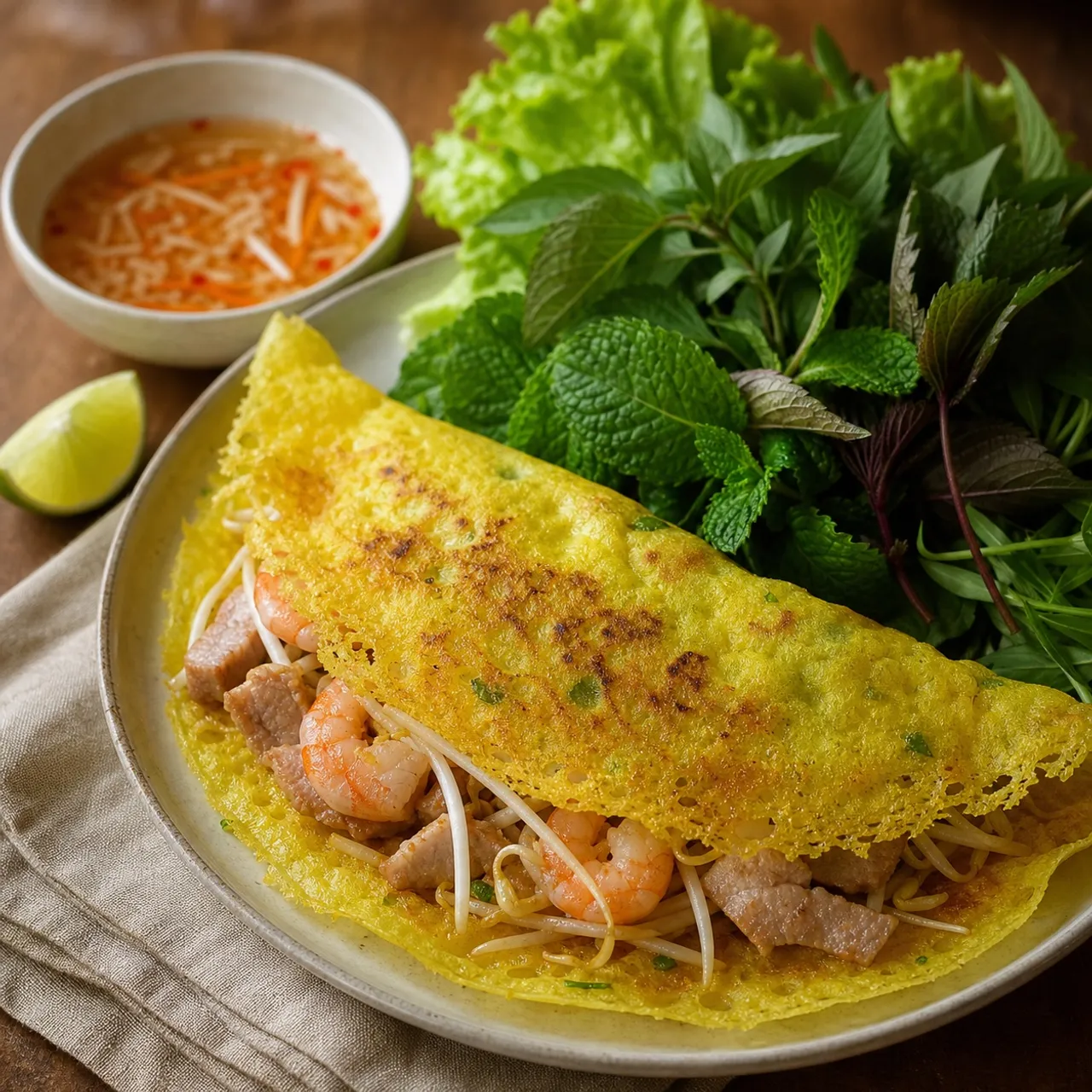
 Vietnamese Images are for illustrative purposes only, may be inaccurate, and do not guarantee the presence or absence of specific ingredients.
 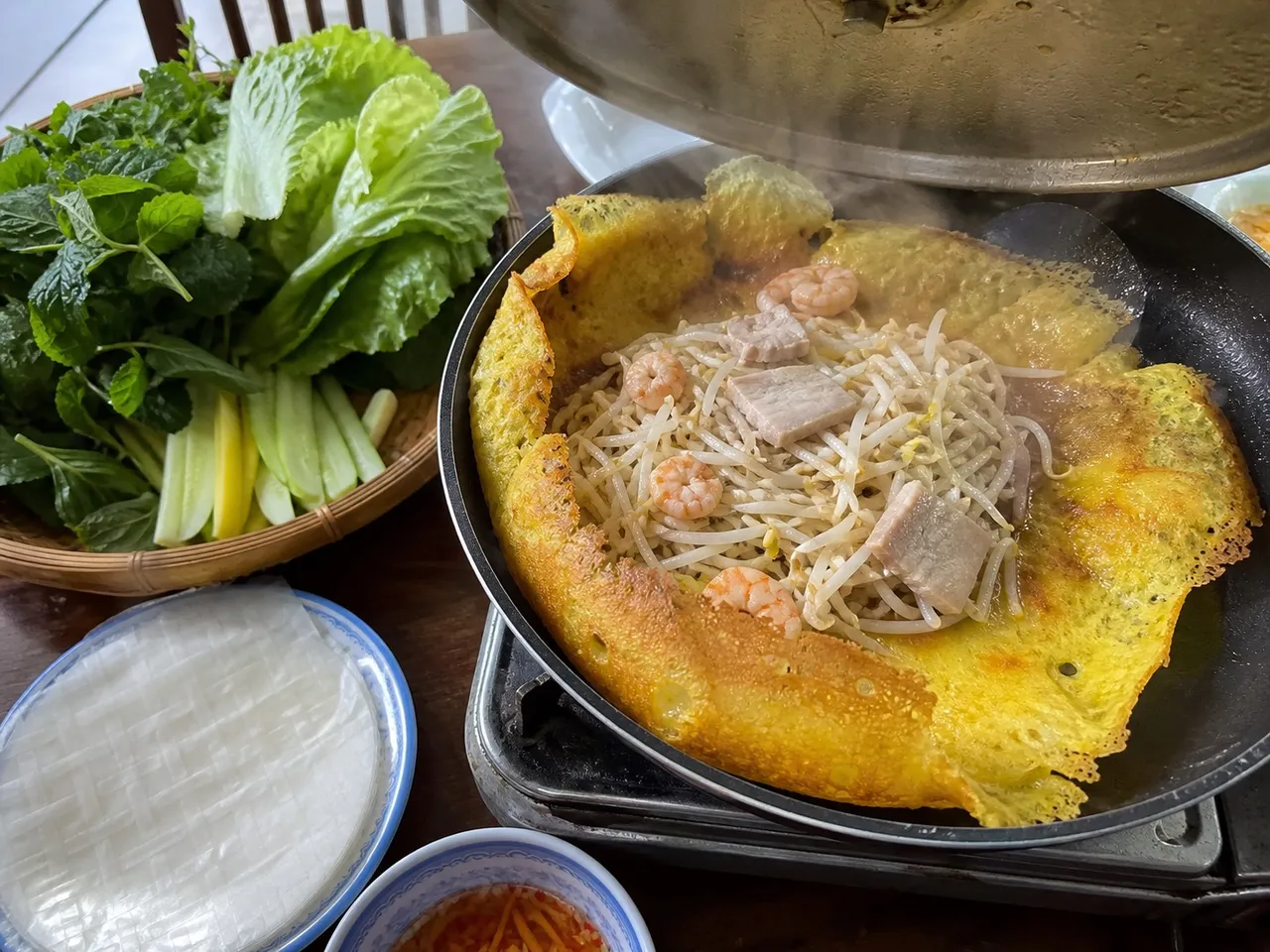 Serving Images are for illustrative purposes only, may be inaccurate, and do not guarantee the presence or absence of specific ingredients.
 Bánh Xèo (Crispy Vietnamese Pancake)
Savory fried pancakes made of rice flour, water, and turmeric powder.
Contains common allergens
In the app, Listahan checks these against your household automatically.
Good to know
- Crispy
Matched from this dish's own ingredients and timing. Browse more: crispy recipes
Instructions
6 steps- 1
Prepare Batter: Whisk together rice flour, turmeric powder, coconut milk, water, and a pinch of salt until perfectly smooth. Stir in the sliced scallions. Let the batter rest for 30 minutes.
- 2
Cook Fillings: Heat a large non-stick skillet over medium-high heat with a drizzle of oil. Quickly sauté a few slices of pork belly and shrimp until just pink.
- 3
Pour Batter: Give the batter a quick stir. Pour a thin layer (about 1/3 cup) into the hot skillet, swirling the pan immediately to coat the entire bottom evenly.
- 4
Add Sprouts and Cover: Scatter a handful of bean sprouts over one half of the pancake. Cover the skillet with a lid and steam for 2-3 minutes.
- 5
Crisp the Pancake: Remove the lid, lower the heat to medium, and drizzle a little extra oil around the edges. Cook uncovered for another 3-4 minutes until the bottom is deeply golden and very crispy.
- 6
Fold and Serve: Fold the pancake in half over the fillings like an omelet. Slide it onto a plate. Serve immediately with fresh lettuce, herbs, and Nước Chấm. To eat, wrap a piece of the crispy pancake in lettuce with herbs and dip.
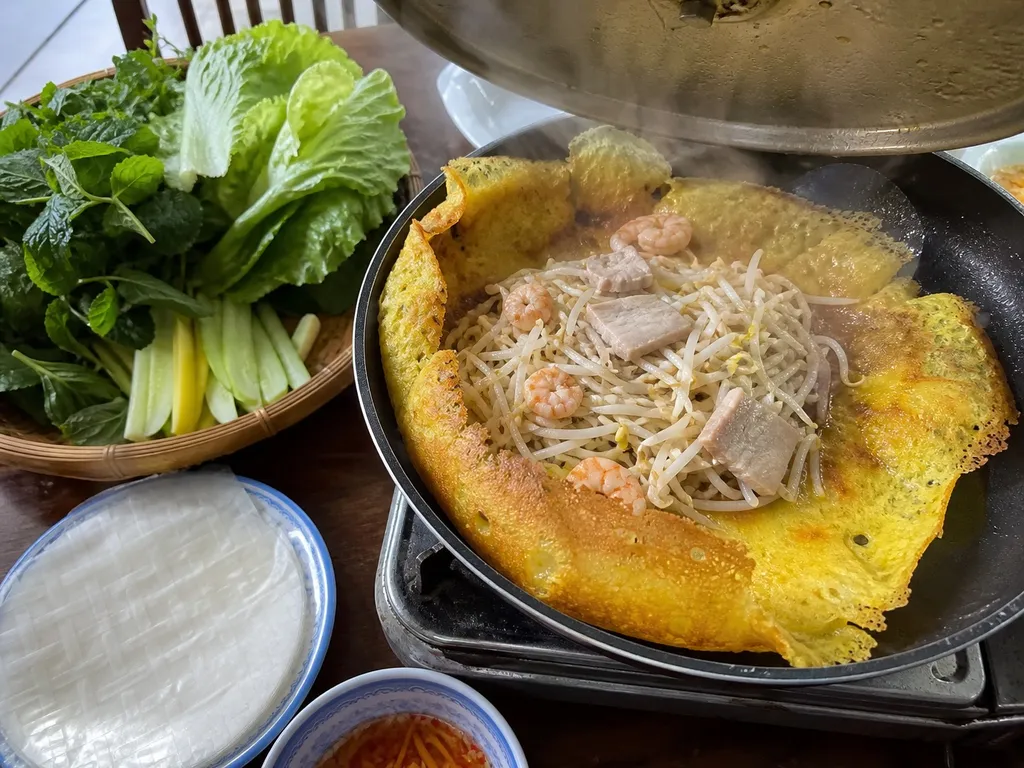 Images are for illustrative purposes only, may be inaccurate, and do not guarantee the presence or absence of specific ingredients.
 Listahan Family Score™
72/100
Good fit for most families
Score reflects how well this recipe fits a typical busy household. In the app, your Family Score is personalized to your household's allergens, kids, and pantry.
Nutrition
per serving470
Calories
44 g
Protein
36 g
Carbs
16 g
Fat
Estimated per serving. Actual values depend on the brands and portions you use.
Listahan cooking guide
Chef notes & practical guide
Technique notes, ingredient swaps, serve-alongside ideas, storage guidance, and equipment for this recipe.
Cultural context
Banh xeo -- its name onomatopoeia for the sizzling sound the batter makes when it hits the hot pan -- is a central Vietnamese dish most closely associated with the city of Da Nang and the coastal regions of Hoi An and Quang Nam province, though versions exist throughout Vietnam. The turmeric-yellow crepe filled with shrimp, pork, and bean sprouts is eaten communally, torn into pieces and wrapped in lettuce leaves with herbs before dipping in nuoc cham -- a format that reflects the central Vietnamese tradition of wrapping and dipping that also appears in banh hoi and mi quang.
Listahan note
This version focuses on getting the batter right and the pan hot enough to produce the audible sizzle and lacy, crisp edges that distinguish banh xeo from a flat, rubbery pancake -- the coconut milk-to-water ratio is the key variable.
Technique cues
- The pan must be ripping hot before the batter goes in -- medium heat produces a steamed, soft crepe rather than a crispy one; heat the pan over high heat until a drop of water flicked in evaporates instantly, then add oil, swirl, and pour the batter in one motion and immediately tilt the pan to spread it thin.
- The coconut milk in the batter is not just for flavor: its fat content creates the golden, crispy, lacy edges as it fries against the hot oil; replacing it entirely with water produces a pale, less crisp result, while too much coconut milk makes the crepe greasy and difficult to fold.
- Cover the pan with a lid for the first 2 minutes after adding the filling to steam the shrimp and pork through without flipping, then remove the lid and cook uncovered until the edges curl and turn deep golden -- the uncovered phase is what drives off the remaining moisture and achieves the crisp.
Kitchen flow
- Parallel prep
- Rest the batter while you prep the fillings -- shrimp, pork, and sprouts -- so the batter has the 15 minutes minimum hydration time without any extra wait.
- Make-ahead
- The batter can be made up to 4 hours ahead and refrigerated; whisk again before cooking and let it come to room temperature for 10 minutes so the cold batter does not seize against the hot pan.
- Leftover move
- Leftover cooked banh xeo loses its crisp quickly; reheat in a dry nonstick pan over medium-high heat for 3-4 minutes rather than the microwave to partially restore the crispy texture.
- Cleanup rhythm
- Banh xeo is a one-pan dish; wipe the skillet between crepes with a folded paper towel held with tongs, re-oil, and cook the next one -- the pan stays on the stove for the full cooking session.
Ingredient brief
Role, handling, and swap guidance for each key ingredient.
1 cup rice flour
batter base and crunch
Purpose: Rice flour produces a crispier, lighter crepe than wheat flour because it has no gluten to create chewiness; it fries rather than steams.
Handling: Whisk with turmeric, coconut milk, and water until completely smooth with no lumps, then rest for at least 15 minutes before cooking to allow the starch to fully hydrate.
Adaptation: A 50/50 mix of rice flour and tapioca starch makes an even lacier, crispier crepe common in some central Vietnamese restaurant versions.
1/4 cup coconut milk
fat source for crisping and flavor
Purpose: The fat in coconut milk fries against the hot pan and creates the golden, lacy edges; it also adds a very subtle sweetness that balances the savory filling.
Handling: Shake the can vigorously before measuring to ensure the fat and water are combined; use full-fat coconut milk, not coconut cream or light varieties.
Adaptation: For a dairy-free version (which this already is), the coconut milk is essential and should not be replaced with water; however, for a coconut-free version, a small amount of vegetable oil whisked into the batter can partially substitute.
1/2 tsp turmeric powder
color and mild earthiness
Purpose: Turmeric gives banh xeo its signature yellow color and adds a faint, earthy warmth to the batter that complements the shrimp and pork.
Handling: Whisk evenly into the dry rice flour before adding the liquids to prevent streaking in the finished crepe.
Adaptation: Turmeric is both the coloring agent and a flavor component; saffron approximates the color but changes the flavor entirely and is not a traditional substitute.
1/2 lb small shrimp, peeled
primary seafood protein
Purpose: Small shrimp cook quickly during the steaming phase under the lid and add a sweet, briny bite that contrasts with the rich pork belly.
Handling: Pat dry before adding to the crepe; excess moisture from wet shrimp steams the bottom of the crepe and prevents it from crisping.
Adaptation: Crab meat is a premium central Vietnamese variation; baby oysters or clams are used in some coastal regional versions.
1 cup mung bean sprouts
texture and freshness inside the crepe
Purpose: Bean sprouts add a crunchy, juicy texture that contrasts with the crisp batter and the tender proteins, and they stay slightly crunchy even after steaming.
Handling: Add the sprouts to the crepe at the same time as the shrimp and pork so they steam together; do not pre-cook them or they lose their crunch.
Adaptation: Thinly sliced jicama or water chestnuts can replace sprouts for a similar crunch without the brassica flavor.
Technique notes
- Make a test crepe first to calibrate your heat and batter consistency -- if the crepe is pale and soft, the pan needs to be hotter or the batter needs less water; if it burns before the filling cooks through, lower the heat slightly.
- The traditional eating method -- tearing a piece of crepe and wrapping it in lettuce with herbs before dipping -- is not just presentation; the lettuce provides structural crunch and the herbs balance the rich, oily crepe, so serve them generously rather than as a garnish.
- A 10-inch or 12-inch carbon steel or cast-iron skillet holds heat better than a nonstick pan and gives better color; use a nonstick only if that is what you have, accepting slightly less golden edges.
Ingredient swaps
- Gluten-free direction
- Rice flour is naturally gluten-free; the entire dish is gluten-free as written -- verify only the fish sauce in the nuoc cham dipping sauce, as most are already gluten-free.
- Vegan direction
- Replace shrimp and pork with sliced king oyster mushrooms and firm tofu; add extra bean sprouts for bulk, and use a soy-lime dipping sauce in place of nuoc cham.
- Dairy-free direction
- The recipe is already dairy-free; coconut milk is the fat source and no butter or cream is involved.
Serve alongside
- whole lettuce leaves and mixed herb platter (mint, perilla, Thai basil) for wrapping
- simple nuoc cham dipping sauce with lime, fish sauce, sugar, garlic, and chili
- pickled daikon and carrot (do chua) for cutting through the richness
- cold Vietnamese iced tea (tra da)
- light lager or pilsner
- sparkling water with lime wedges
Serving suggestions only — check pairings for your household's allergens.
Storage & reheating
- Banh xeo is best eaten immediately after cooking; the crisp degrades significantly within 15-20 minutes.
- Leftover cooked crepes can be refrigerated for up to 1 day; reheat in a dry skillet over medium-high heat for partial crispiness restoration.
- Uncooked batter keeps refrigerated for up to 4 hours; do not freeze the batter as the starch structure breaks down.
Equipment
- 10- or 12-inch carbon steel or cast-iron skillet (or heavy nonstick)
- lid that fits the skillet for the steaming phase
- whisk and medium mixing bowl for the batter
- wide spatula or fish spatula for folding the crepe
Make this household-aware
Listahan Pro checks this recipe against your household's allergens, finds pantry-aware swaps, builds the shopping list, and helps you plan the week around it.
Plan it in Listahan
Add Bánh Xèo (Crispy Vietnamese Pancake) to your week, check it against your household's allergens, and build the shopping list automatically.
More Vietnamese recipes
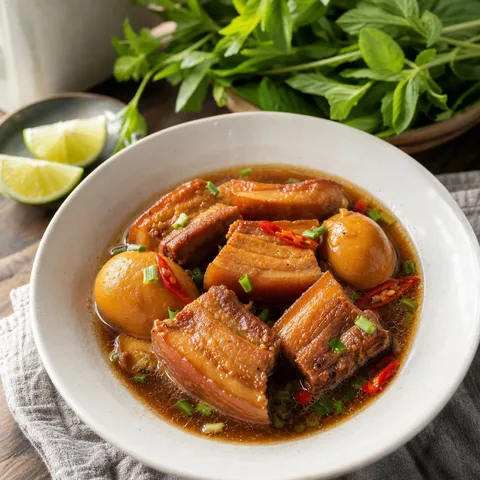 Vietnamese Lens Verified Images are for illustrative purposes only, may be inaccurate, and do not guarantee the presence or absence of specific ingredients.
 Thịt Kho Tàu (Caramelized Pork and Eggs)
Meltingly tender pork belly and hard-boiled eggs braised in a rich, sweet, and savory coconut juice caramel, perfect over steamed rice.
 Vietnamese Lens Verified Images are for illustrative purposes only, may be inaccurate, and do not guarantee the presence or absence of specific ingredients.
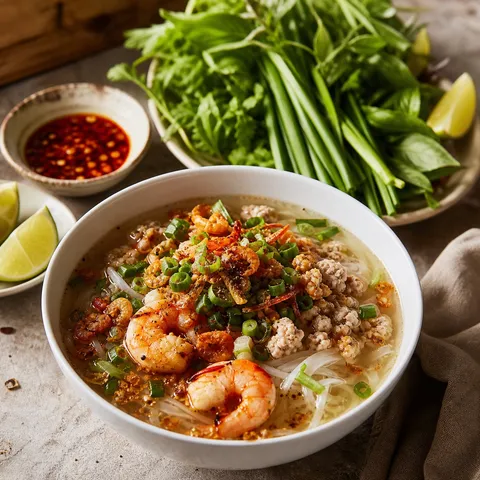
 Hủ Tiếu (Pork and Seafood Noodle Soup)
A Vietnamese pork-bone broth noodle soup loaded with ground pork, shrimp, and dried shrimp over chewy tapioca noodles, finished with garlic chives and fried garlic.
 Vietnamese Lens Verified Images are for illustrative purposes only, may be inaccurate, and do not guarantee the presence or absence of specific ingredients.
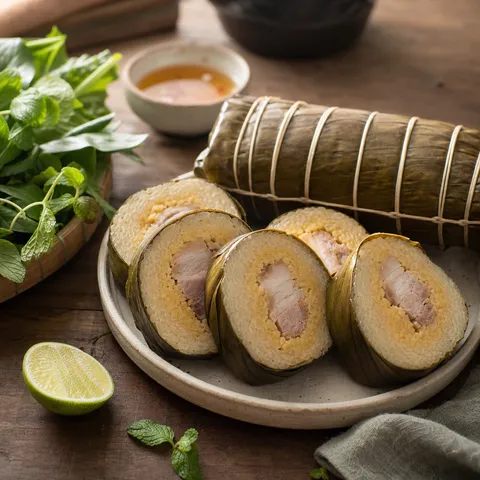
 Bánh Tét (Cylindrical Sticky Rice Cake)
The Southern equivalent of Bánh Chưng, rolled into a cylinder.