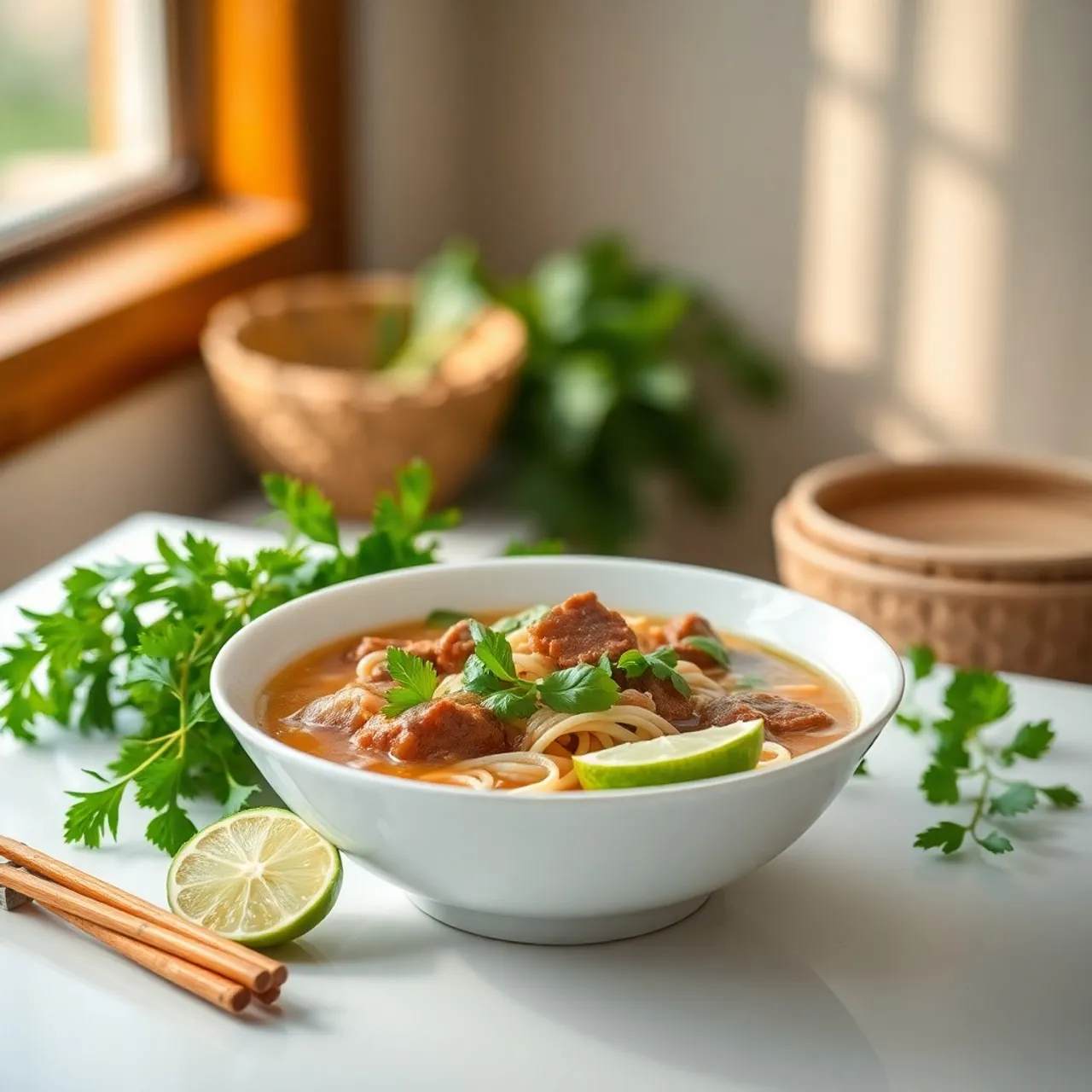
 Vietnamese Images are for illustrative purposes only, may be inaccurate, and do not guarantee the presence or absence of specific ingredients.
 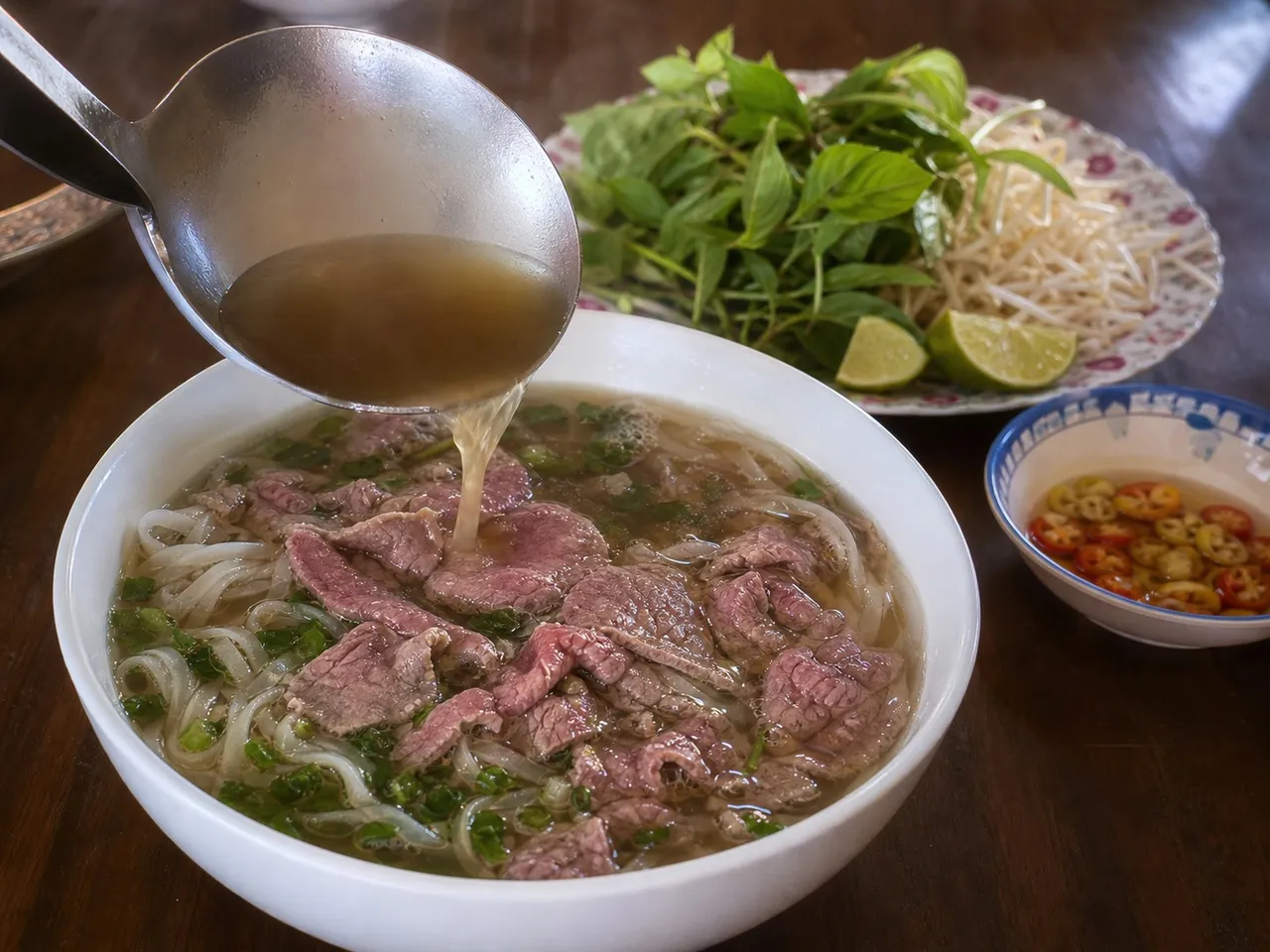 Serving Images are for illustrative purposes only, may be inaccurate, and do not guarantee the presence or absence of specific ingredients.
 Phở Bò (Beef Noodle Soup)
Traditional Vietnamese soup consisting of broth, rice noodles, herbs, and beef.
Contains common allergens
In the app, Listahan checks these against your household automatically.
Instructions
6 steps- 1
Clean the Bones: Parboil the beef bones in boiling water for 10 minutes to remove impurities. Drain, rinse the bones thoroughly under cold water, and clean the pot.
- 2
Char Aromatics: Char the onions and ginger over an open flame or under a broiler until blackened. Scrape off the burnt bits and rinse lightly.
- 3
Toast Spices: Toast star anise, cinnamon, coriander seeds, cardamom, and cloves in a dry skillet over medium heat for 3-4 minutes until fragrant. Place them in a spice bag or cheesecloth.
- 4
Simmer Broth: Return bones to the clean pot with 6 quarts of water. Add charred onions, ginger, spice bag, rock sugar, and fish sauce. Bring to a boil, then reduce to a gentle simmer. Cook uncovered for 4-6 hours, skimming scum regularly to keep the broth clear.
- 5
Prepare Noodles: Soak rice noodles in warm water for 30 minutes, then blanch in boiling water for 1-2 minutes until tender but chewy. Drain well.
- 6
Assemble Bowls: Divide cooked noodles among large bowls. Top with raw, thinly sliced beef sirloin. Pour boiling hot broth directly over the beef to cook it instantly. Garnish with cilantro, scallions, Thai basil, bean sprouts, lime wedges, and jalapeños.
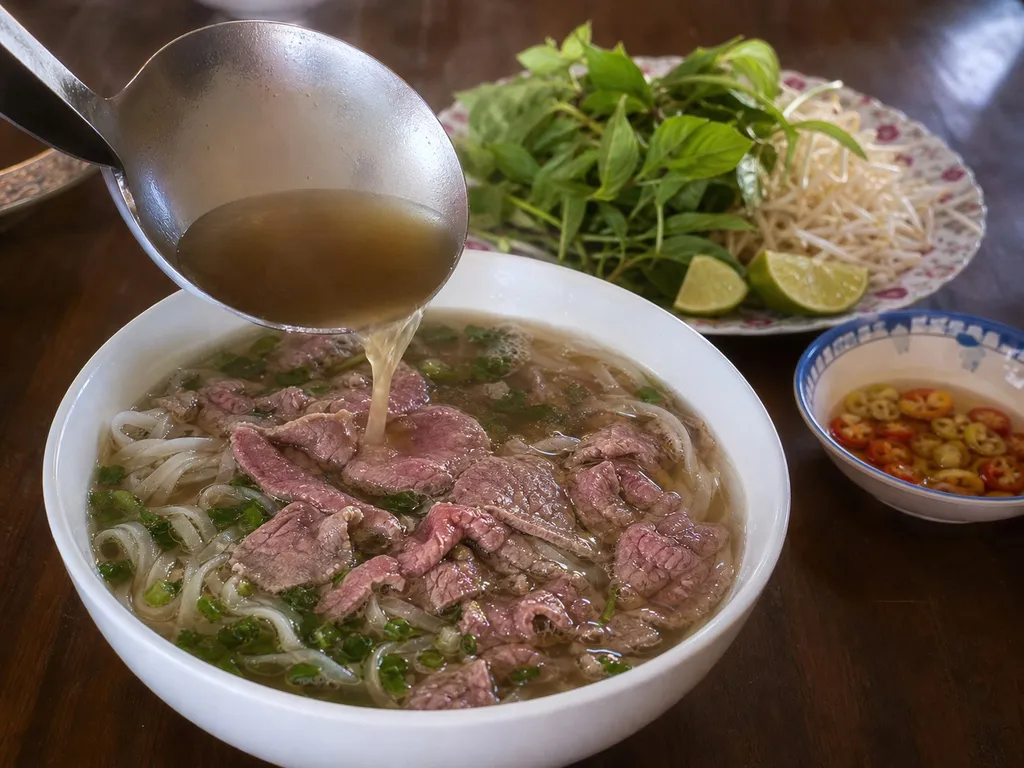 Images are for illustrative purposes only, may be inaccurate, and do not guarantee the presence or absence of specific ingredients.
 Listahan Family Score™
66/100
Works for many families
Score reflects how well this recipe fits a typical busy household. In the app, your Family Score is personalized to your household's allergens, kids, and pantry.
Nutrition
per serving585
Calories
59 g
Protein
4 g
Carbs
34 g
Fat
Estimated per serving. Actual values depend on the brands and portions you use.
Listahan cooking guide
Chef notes & practical guide
Technique notes, ingredient swaps, serve-alongside ideas, storage guidance, and equipment for this recipe.
Cultural context
Pho bo emerged in northern Vietnam in the early 20th century, likely around Hanoi and the Red River Delta, shaped by French colonial influence on beef consumption and Chinese spice trade routes. The dish was street food from the start, sold from mobile carts before dawn to laborers who needed a sustaining meal. Southern Vietnamese immigrants carried it to the United States after 1975, where it became one of the most recognized Vietnamese dishes in North America.
Listahan note
This version focuses on the broth-building fundamentals that separate pho from ordinary beef soup: charring the aromatics, toasting the spices dry before adding them to the pot, and skimming aggressively in the first hour to achieve a clear, clean-tasting stock.
Technique cues
- Charring onion and ginger directly over a gas flame or under the broiler until blackened in spots is not optional garnish prep -- it caramelizes sugars and drives off harsh raw allium bite, giving the broth its characteristic sweet depth and color without cloudiness.
- Toast whole spices (star anise, cinnamon, coriander, black cardamom, cloves) in a dry skillet until fragrant before adding to the pot; this volatilizes essential oils and keeps the spice flavor bright rather than musty and flat after hours of simmering.
- Keep the broth at a bare simmer -- just a few lazy bubbles -- never a rolling boil; aggressive boiling emulsifies the fat and collagen into the liquid, turning it murky and giving it a greasy mouthfeel instead of the crystal-clear, lightly silky finish that defines good pho.
Kitchen flow
- Parallel prep
- While the bones blanch and rinse, char the onion and ginger under the broiler and toast the spices in a skillet; all three steps take about the same time and can overlap so no time is lost.
- Make-ahead
- The broth is best made a day ahead: strain, cool, refrigerate overnight, then lift off the solid fat cap before reheating -- this removes almost all grease and makes the broth visibly cleaner.
- Leftover move
- Leftover broth freezes beautifully for up to 3 months; freeze in 2-cup portions so you can pull a quick weeknight bowl without committing to a full batch.
- Cleanup rhythm
- Tackle the blanching pot, broiler pan, and spice skillet during the long unattended simmer; by the time you strain the broth, the kitchen is nearly clean.
Ingredient brief
Role, handling, and swap guidance for each key ingredient.
5 lbs beef bones (knuckles and marrow)
broth base and body
Purpose: Knuckle bones deliver collagen that gives the broth its lip-coating texture, while marrow adds richness and a subtle meaty sweetness.
Handling: Blanch bones in boiling water for 10 minutes and rinse under cold water before the long simmer to remove impurities that would cloud the stock.
Adaptation: Oxtail can replace up to half the bones for even more gelatin and a beefier flavor profile.
1 lb beef sirloin, thinly sliced
raw protein topping
Purpose: Paper-thin slices of raw sirloin cook to just-done in the boiling broth poured tableside, staying tender rather than chewy.
Handling: Freeze the sirloin for 30 minutes before slicing against the grain on a very sharp knife to achieve the thin, even cuts needed.
Adaptation: Eye of round or flank steak works at a lower price point; avoid pre-cut stir-fry beef, which is usually too thick.
2 yellow onions, halved and charred
aromatic sweetness and color
Purpose: Charring the cut face of the onion develops Maillard compounds that give the broth its amber color and a round, almost smoky sweetness.
Handling: Place cut-side down on a foil-lined sheet pan under the broiler on high until deep brown with some blackened edges, about 10-12 minutes.
Adaptation: Shallots can substitute in a pinch, though they are milder; white onion also works.
4 inches ginger, halved lengthwise and charred
spice base and warmth
Purpose: Charred ginger mellows the raw sharpness and adds a smoky warmth that integrates into the broth over hours of simmering.
Handling: Smash the cut face against the flame or broiler the same way as the onion until the cut surfaces are dark and fragrant.
Adaptation: Galangal is not a substitute here -- it changes the flavor profile entirely; use only ginger.
1/4 cup fish sauce
primary seasoning and umami
Purpose: Fish sauce provides the fermented, saline depth that seasons the broth from within, a flavor that soy sauce or salt cannot replicate.
Handling: Add in stages during the last 30 minutes and taste, as fish sauce brands vary significantly in saltiness and funk.
Adaptation: For a gluten-free swap, most fish sauces are already gluten-free; check the label. For fish-free, use coconut aminos plus a pinch of MSG, though the flavor changes noticeably.
5 star anise, 1 cinnamon stick, 1 tbsp coriander seeds, 1 pod black cardamom, 5 whole cloves
signature spice bouquet
Purpose: This combination is the aromatic signature of pho; the anise and cinnamon provide the warm, slightly sweet top notes while coriander and cardamom add earthiness and smokiness.
Handling: Toast together in a dry skillet over medium heat, shaking constantly, until the coriander seeds are golden and the mixture is fragrant, then tie in cheesecloth or a spice sock.
Adaptation: Pre-made pho spice packets are available at Asian grocery stores and work reliably, though they may lack the black cardamom that distinguishes northern-style pho.
Technique notes
- The garnish plate is not optional -- the bean sprouts, basil, lime, and jalapeno served alongside let each diner tune the bowl's sweetness, acidity, and heat in real time, which is why pho tastes different to everyone at the same table.
- Add rock sugar in small increments near the end; pho broth should have just enough sweetness to round the salt, not enough to taste sweet -- if you can detect sweetness, you've gone too far.
- Warm the serving bowls in a low oven or fill them with hot water while you prep; cold bowls drop the broth temperature immediately and the thin-sliced beef won't cook through as you pour.
Ingredient swaps
- Gluten-free direction
- Most fish sauces and rice noodles are naturally gluten-free; verify the fish sauce label and skip any soy sauce additions to keep the bowl safe.
- Quicker weeknight version
- Use store-bought beef or chicken bone broth (32 oz) as a base, simmer with the charred aromatics and toasted spice pack for 45 minutes, then season with fish sauce and rock sugar -- the result lacks the deep body of a full broth but is genuinely good.
- Beef-free direction
- Substitute a whole roasted chicken carcass plus chicken feet for the bones and sliced chicken breast for the sirloin topping to make a clean pho ga variation.
Serve alongside
- bean sprout and herb plate with lime wedges and sliced jalapeno
- hoisin sauce and sriracha condiment tray
- simple cucumber salad with rice vinegar and sesame oil
- hot jasmine tea
- Vietnamese iced coffee with condensed milk
- sparkling water with lime
Serving suggestions only — check pairings for your household's allergens.
Storage & reheating
- Broth keeps refrigerated for up to 5 days in a sealed container; lift the fat cap before reheating.
- Reheat broth to a full boil before ladling over fresh noodles; never store noodles in the broth or they will turn to mush.
- Freeze broth in 2-cup portions for up to 3 months; thaw overnight in the refrigerator or in a pot over low heat.
Equipment
- large stockpot (8-quart minimum)
- fine-mesh strainer or cheesecloth
- dry skillet for toasting spices
- rimmed baking sheet and broiler for charring aromatics
Make this household-aware
Listahan Pro checks this recipe against your household's allergens, finds pantry-aware swaps, builds the shopping list, and helps you plan the week around it.
Plan it in Listahan
Add Phở Bò (Beef Noodle Soup) to your week, check it against your household's allergens, and build the shopping list automatically.
More Vietnamese recipes
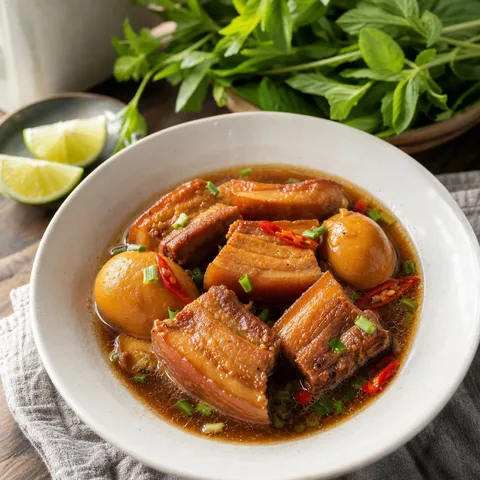 Vietnamese Lens Verified Images are for illustrative purposes only, may be inaccurate, and do not guarantee the presence or absence of specific ingredients.
 Thịt Kho Tàu (Caramelized Pork and Eggs)
Meltingly tender pork belly and hard-boiled eggs braised in a rich, sweet, and savory coconut juice caramel, perfect over steamed rice.
 Vietnamese Lens Verified Images are for illustrative purposes only, may be inaccurate, and do not guarantee the presence or absence of specific ingredients.
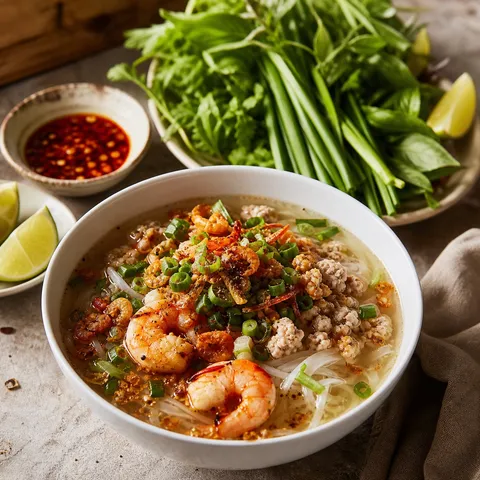
 Hủ Tiếu (Pork and Seafood Noodle Soup)
A Vietnamese pork-bone broth noodle soup loaded with ground pork, shrimp, and dried shrimp over chewy tapioca noodles, finished with garlic chives and fried garlic.
 Vietnamese Lens Verified Images are for illustrative purposes only, may be inaccurate, and do not guarantee the presence or absence of specific ingredients.
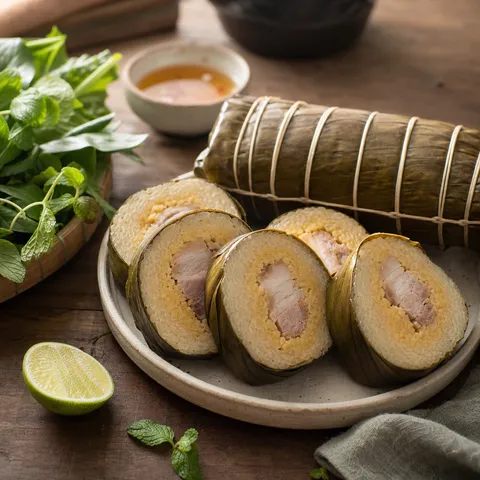
 Bánh Tét (Cylindrical Sticky Rice Cake)
The Southern equivalent of Bánh Chưng, rolled into a cylinder.