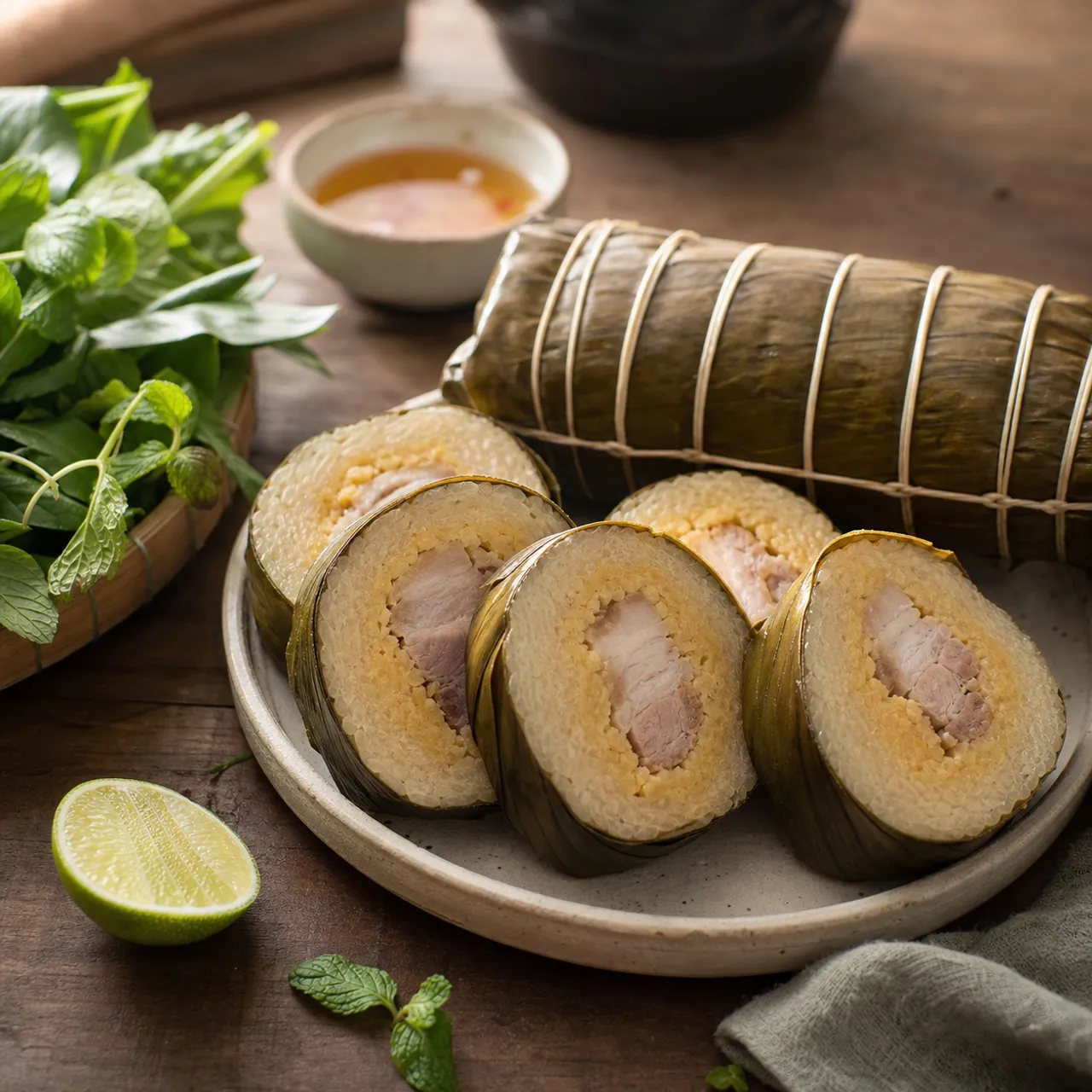
 Vietnamese Images are for illustrative purposes only, may be inaccurate, and do not guarantee the presence or absence of specific ingredients.
 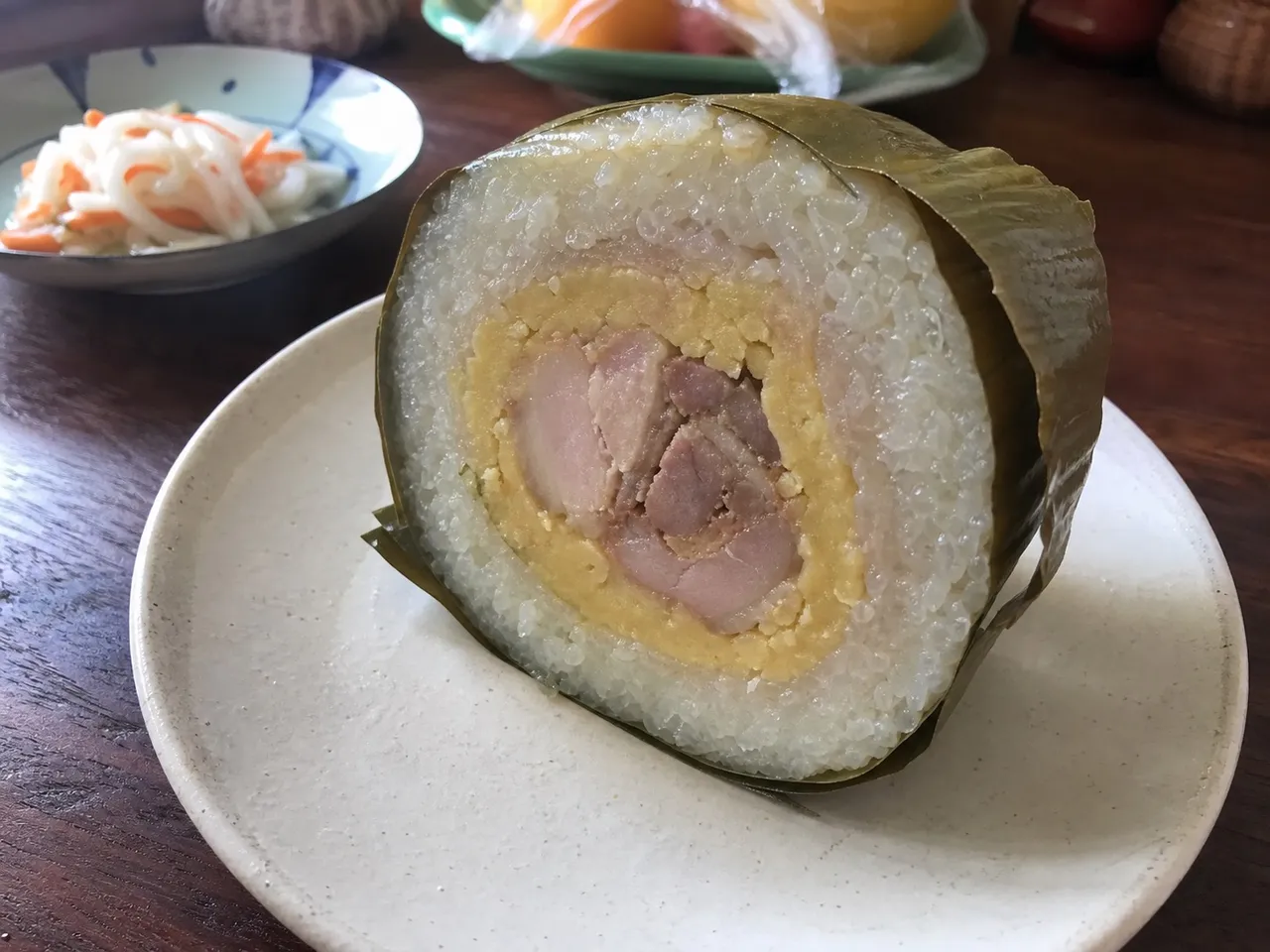 Serving Images are for illustrative purposes only, may be inaccurate, and do not guarantee the presence or absence of specific ingredients.
 Bánh Tét (Cylindrical Sticky Rice Cake)
The Southern equivalent of Bánh Chưng, rolled into a cylinder.
Contains common allergens
In the app, Listahan checks these against your household automatically.
Good to know
- One-pot
Matched from this dish's own ingredients and timing. Browse more: one-pot dinners
Instructions
6 steps- 1
Prepare Components: Drain the rice and mix with a little salt (and coconut milk if using). Mash the steamed mung beans. Marinate the pork belly logs with fish sauce and black pepper.
- 2
Form the Core: Take a handful of mashed mung beans and mold it completely around a log of marinated pork belly, creating a long, yellow cylinder.
- 3
Assemble: Lay out several layers of overlapping banana leaves. Spread a thick, even rectangle of sticky rice in the center. Place the mung bean/pork cylinder in the middle of the rice.
- 4
Roll: Carefully bring the edges of the banana leaves together, rolling the rice tightly around the filling to form a perfectly round log. Ensure no filling is exposed.
- 5
Fold and Tie: Fold the ends of the leaves in neatly to seal the cylinder. Tie the log very tightly with strings spaced about 1 inch apart to prevent water from seeping in during boiling.
- 6
Boil: Submerge the cakes in a large pot of boiling water. Boil continuously for 8-10 hours, replenishing with hot water as needed. Remove, press slightly to drain, and let cool before slicing into rounds.
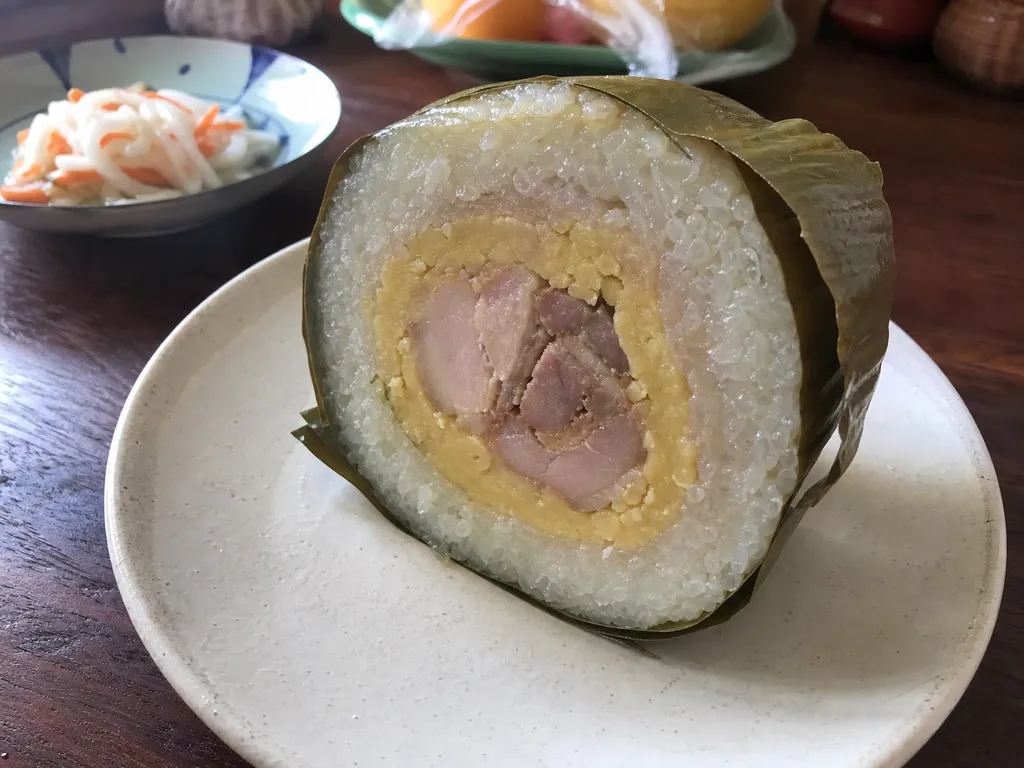 Images are for illustrative purposes only, may be inaccurate, and do not guarantee the presence or absence of specific ingredients.
 Listahan Family Score™
69/100
Works for many families
Score reflects how well this recipe fits a typical busy household. In the app, your Family Score is personalized to your household's allergens, kids, and pantry.
Nutrition
per serving595
Calories
22 g
Protein
100 g
Carbs
11 g
Fat
Estimated per serving. Actual values depend on the brands and portions you use.
Listahan cooking guide
Chef notes & practical guide
Technique notes, ingredient swaps, serve-alongside ideas, storage guidance, and equipment for this recipe.
Cultural context
Banh tet is the southern and central Vietnamese counterpart to the northern banh chung — both are cylindrical or square sticky rice cakes made for Tet (Lunar New Year) and wrapped in banana leaves, representing the earth in Vietnamese cosmology. The cylindrical shape of banh tet is specific to the south and center, where banana trees are more abundant year-round, and the cakes are tied with bamboo strings and boiled for 8-10 hours over outdoor fires. Making banh tet is a multigenerational household ritual that typically happens the night before Tet, with family members taking shifts to tend the fire through the night.
Listahan note
This version uses coconut milk-soaked glutinous rice for the southern style, and the mung bean layer is steamed separately before assembly to ensure it sets firmly inside the cake rather than blending with the rice during the long boil.
Technique cues
- The glutinous rice must be soaked overnight — at minimum 8 hours — to fully hydrate the grains; under-soaked rice will not cook evenly inside the leaf wrapper, leaving hard centers even after a 10-hour boil.
- Layering the banana leaves in two perpendicular directions before adding the rice creates a watertight seal that prevents the cooking water from penetrating and waterlogging the cake; a single-direction wrap always has a weak seam.
- The finished cakes should feel firm and dense when pressed gently after cooling — a soft or yielding cake has not cooked long enough and the rice will be gummy inside; 8-10 hours is not excessive.
Kitchen flow
- Parallel prep
- Soak the rice overnight and the mung beans for at least 4 hours; steam the mung beans while marinating the pork, then assemble all cakes before starting the 8-10 hour boil.
- Make-ahead
- Banh tet is by nature a make-ahead dish — it is made days before Tet and improves in flavor after 1-2 days as the layers settle and the banana leaf aroma deepens into the rice.
- Leftover move
- Slice leftover banh tet and pan-fry the slices in a thin film of oil until the outside is lightly golden and crispy — a popular post-Tet preparation that completely transforms the texture.
- Cleanup rhythm
- The boiling pot requires only rinsing; the primary cleanup is composting the banana leaves and string after unwrapping.
Ingredient brief
Role, handling, and swap guidance for each key ingredient.
3 lbs glutinous sticky rice, soaked overnight
outer cake layer
Purpose: Glutinous rice contains almost exclusively amylopectin starch, which gelatinizes into a dense, cohesive, sliceable mass during the long boil.
Handling: Drain and season with fish sauce and a pinch of salt before layering into the banana leaf; the seasoning must be in the rice itself, not just the filling.
Adaptation: There is no substitute for glutinous rice in this recipe — regular rice will not bind into a sliceable cake.
1 lb split mung beans, soaked and steamed
filling and interior layer
Purpose: Pre-steamed mung bean paste provides a dense, slightly sweet, yellow interior layer that contrasts with the rice and anchors the pork in the center of the cake.
Handling: Steam the soaked mung beans until fully soft, then mash or press into a firm paste that can be shaped around the pork log.
Adaptation: Pre-made mung bean paste from Asian grocery stores saves significant time and produces consistent results.
1 lb fatty pork belly, cut into thick logs
center filling protein
Purpose: Fatty pork belly renders slowly during the long boil, basting the surrounding mung bean paste and rice with pork fat that carries flavor throughout the cake.
Handling: Marinate the pork logs in fish sauce and black pepper for at least 1 hour (or overnight) before assembly for deeper flavor inside the cake.
Adaptation: Lean pork shoulder can substitute but produces a drier filling; do not use pre-cooked pork as it will dry out during the long boil.
Banana leaves, wiped clean and softened over a flame
wrapper and cooking vessel
Purpose: Banana leaves impart a subtle herbal, slightly grassy aroma to the outer rice layer during the long boil — a flavor impossible to replicate with aluminum foil.
Handling: Pass each leaf briefly over a gas flame or hot electric burner until it turns from bright green to a slightly darker, pliable state without scorching.
Adaptation: Aluminum foil keeps the structural shape but produces a cake with none of the banana leaf aroma; use as a last resort only.
1 cup coconut milk (optional, for the rice)
richness in the rice layer
Purpose: Coconut milk soaked into the glutinous rice adds a subtle tropical richness and slight sweetness specific to southern banh tet.
Handling: Use the coconut milk as part of the soaking liquid (mixed with water) rather than adding it at the end.
Adaptation: Plain water produces the northern-style neutral rice; both are authentic depending on regional preference.
Technique notes
- Keep the cakes fully submerged during the boil by weighing them down with a plate — cakes that float and cook partially above the water line will have unevenly cooked sections on the exposed side.
- Cool the finished cakes at room temperature before refrigerating; pressing them gently under a weighted plate while they cool helps the interior layers compact into the firm, sliceable texture expected of banh tet.
- When slicing, use a long thin knife or unwaxed dental floss pulled tight around the cake — the sticky rice grips a standard knife and smears rather than slicing cleanly.
Ingredient swaps
- Gluten-free note
- Glutinous rice, mung beans, and banana leaves are all naturally gluten-free; confirm the fish sauce contains no wheat additives.
- Vegetarian direction
- Replace the pork belly with a log of firm tofu pressed and marinated in soy sauce and five-spice, or use a dense filling of seasoned mushrooms; the rice and mung bean layers require no adjustment.
- Smaller batch option
- This recipe makes 4-6 large cakes; halve all quantities for a smaller household batch, and reduce the boil time to 6-7 hours for smaller-diameter cakes.
Serve alongside
- do chua (pickled daikon and carrot) to cut through the richness
- nuoc mam dipping sauce for sliced banh tet at the table
- fresh cucumber slices
- hot jasmine tea
- Vietnamese plum juice (nuoc man o) as a traditional Tet beverage
Serving suggestions only — check pairings for your household's allergens.
Storage & reheating
- Store uncut banh tet at room temperature for up to 3 days in cool weather, or refrigerate for up to 1 week wrapped in their banana leaves.
- Refrigerated banh tet firms considerably when cold; reheat slices in a dry pan, steamer, or microwave for 60-90 seconds before eating.
- Freeze sliced banh tet in airtight bags for up to 2 months; thaw overnight in the refrigerator and pan-fry or steam to reheat.
Equipment
- large deep stockpot (at least 12-quart) for boiling
- bamboo or cotton kitchen string for tying
- steamer basket for the mung beans
- long sharp knife or dental floss for slicing
Make this household-aware
Listahan Pro checks this recipe against your household's allergens, finds pantry-aware swaps, builds the shopping list, and helps you plan the week around it.
Plan it in Listahan
Add Bánh Tét (Cylindrical Sticky Rice Cake) to your week, check it against your household's allergens, and build the shopping list automatically.
More Vietnamese recipes
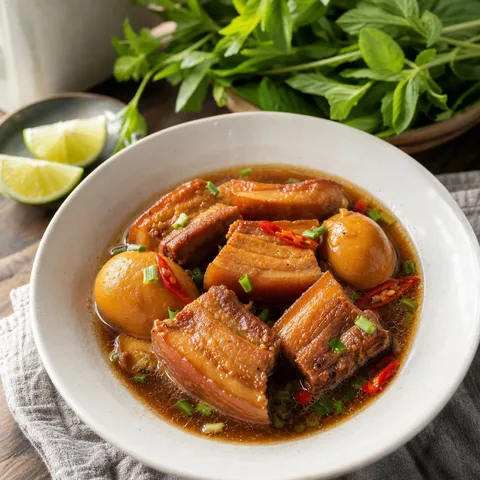 Vietnamese Lens Verified Images are for illustrative purposes only, may be inaccurate, and do not guarantee the presence or absence of specific ingredients.
 Thịt Kho Tàu (Caramelized Pork and Eggs)
Meltingly tender pork belly and hard-boiled eggs braised in a rich, sweet, and savory coconut juice caramel, perfect over steamed rice.
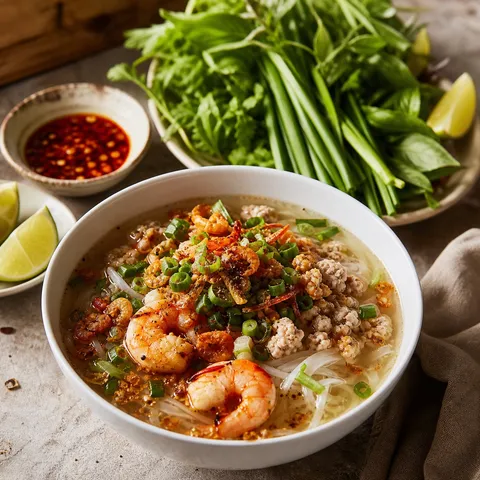 Vietnamese Lens Verified Images are for illustrative purposes only, may be inaccurate, and do not guarantee the presence or absence of specific ingredients.
 Hủ Tiếu (Pork and Seafood Noodle Soup)
A Vietnamese pork-bone broth noodle soup loaded with ground pork, shrimp, and dried shrimp over chewy tapioca noodles, finished with garlic chives and fried garlic.
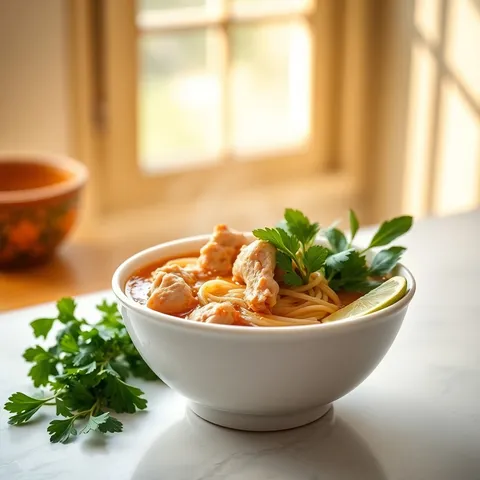 Vietnamese Lens Verified Images are for illustrative purposes only, may be inaccurate, and do not guarantee the presence or absence of specific ingredients.
 Phở Gà (Chicken Noodle Soup)
Chicken version of the famous Phở, with a lighter chicken broth.