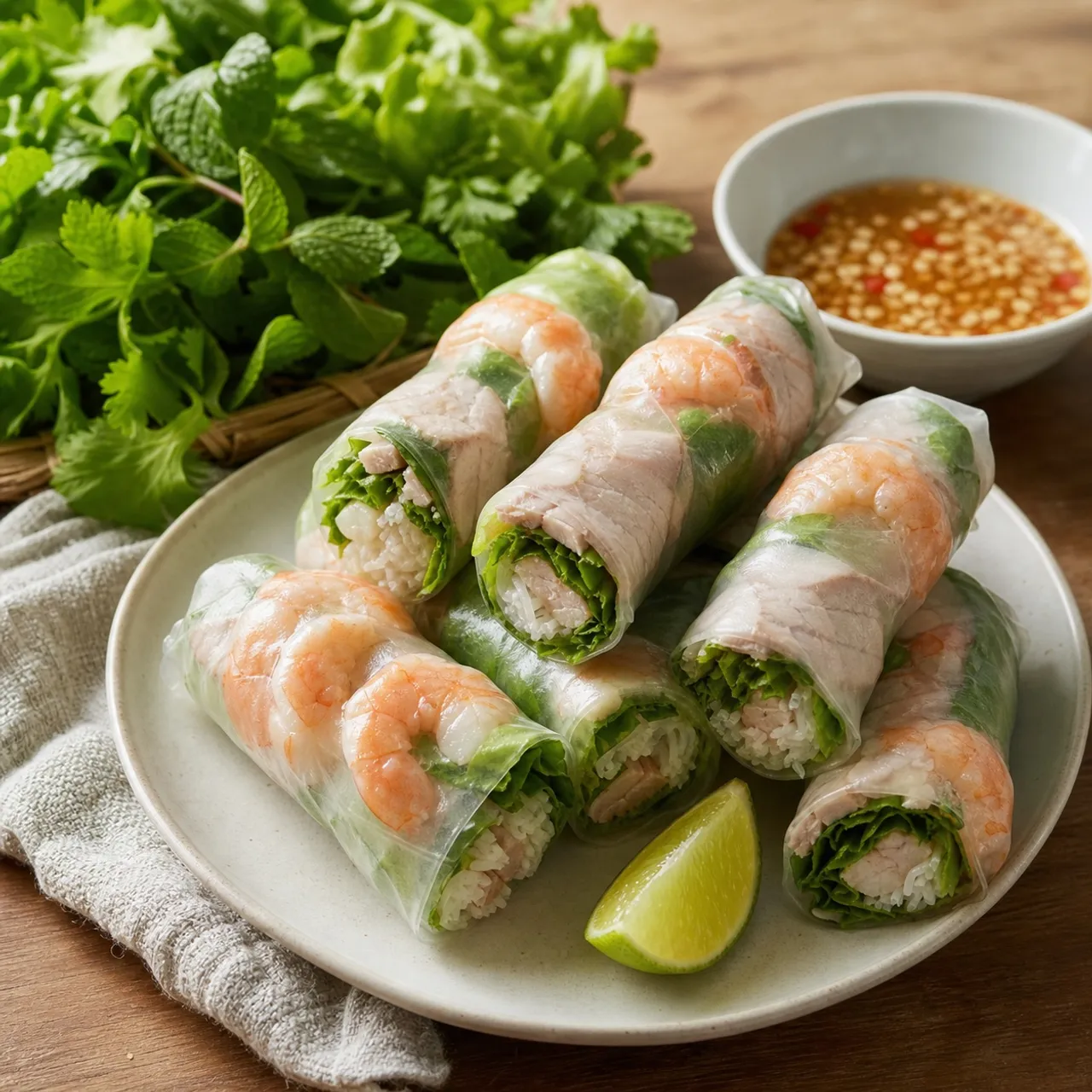
 Vietnamese Images are for illustrative purposes only, may be inaccurate, and do not guarantee the presence or absence of specific ingredients.
 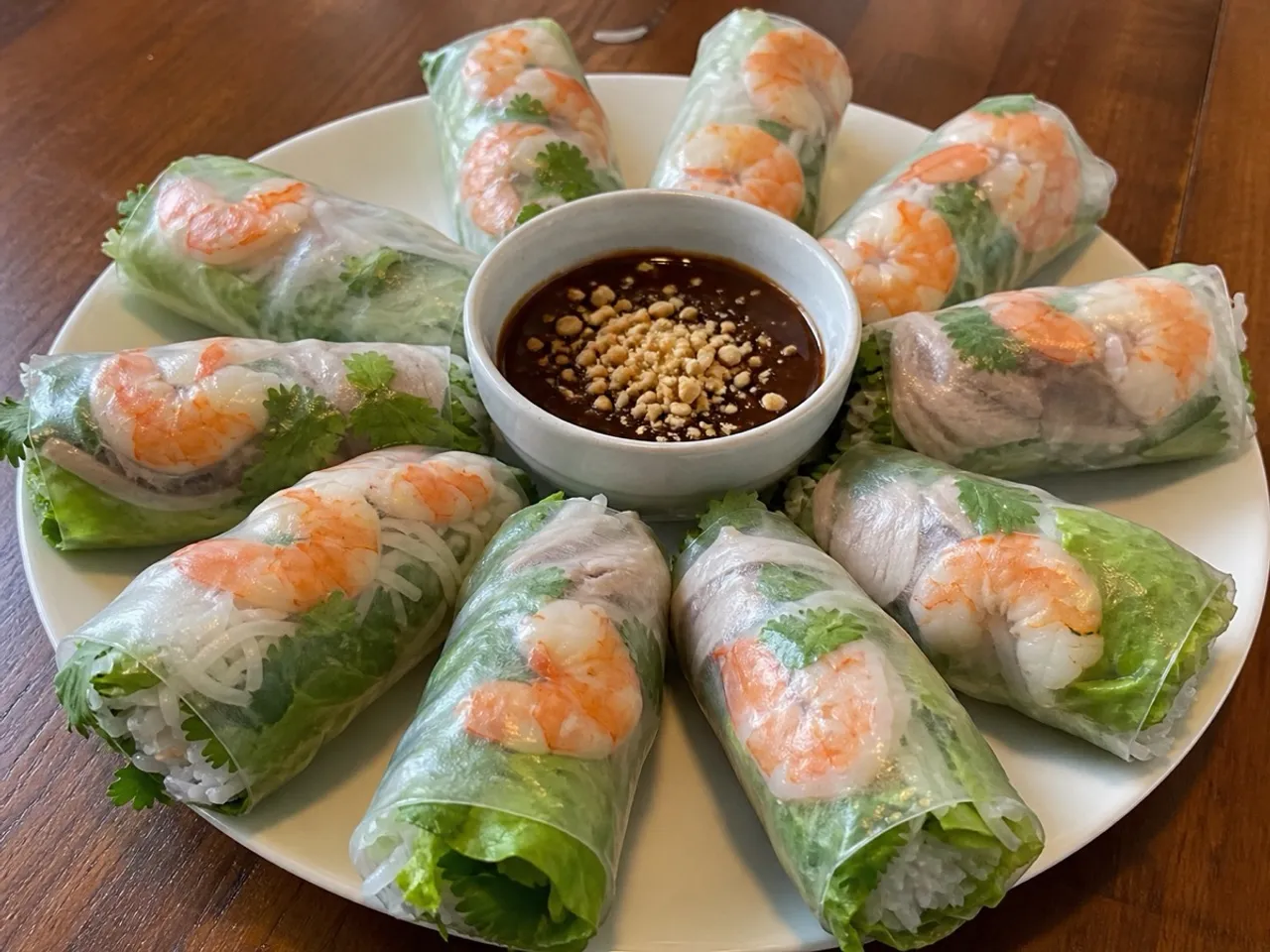 Serving Images are for illustrative purposes only, may be inaccurate, and do not guarantee the presence or absence of specific ingredients.
 Gỏi Cuốn (Spring Rolls)
Fresh spring rolls packed with greens, coriander, and various combinations of minced pork, shrimp or crab.
Contains common allergens
In the app, Listahan checks these against your household automatically.
Instructions
6 steps- 1
Prepare Noodles: Boil the rice vermicelli for 3-4 minutes until soft. Drain and rinse under cold water to stop cooking. Let air dry slightly to become sticky.
- 2
Slice Proteins: Slice the boiled shrimp in half laterally so they lay flat. Thinly slice the boiled pork belly.
- 3
Make Dipping Sauce: In a small saucepan, combine hoisin sauce, peanut butter, and 2 tbsp water. Heat gently until smooth and combined. Transfer to a bowl and top with crushed peanuts.
- 4
Soften Rice Paper: Fill a wide, shallow bowl with warm water. Briefly dip one piece of rice paper into the water, rotating it so the entire surface gets wet, and lay it flat on a damp cutting board or plate. Wait 30 seconds for it to become pliable.
- 5
Assemble Rolls: On the bottom third of the rice paper, place a piece of lettuce, a small pinch of noodles, herbs, and 2-3 slices of pork. Place 3 shrimp halves (pink side down) in a row slightly above the lettuce mixture.
- 6
Roll: Fold the sides of the rice paper inward over the filling. Tightly roll from the bottom up, ensuring the shrimp are visible on the outside of the final roll. Serve immediately with the peanut dipping sauce.
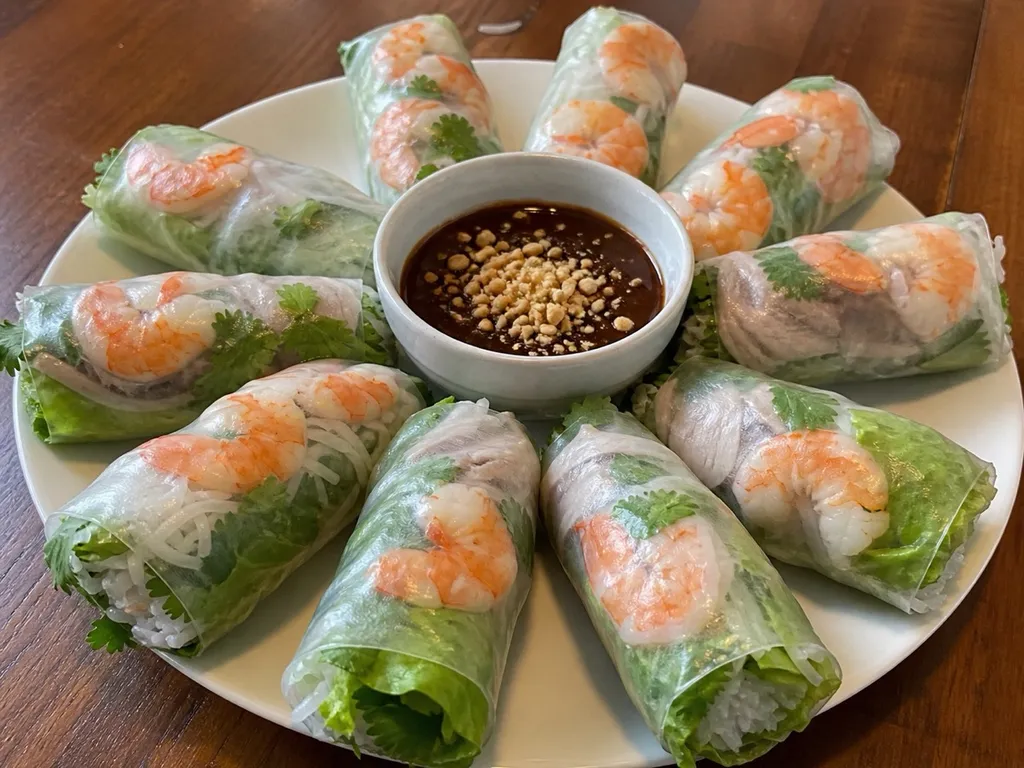 Images are for illustrative purposes only, may be inaccurate, and do not guarantee the presence or absence of specific ingredients.
 Listahan Family Score™
66/100
Works for many families
Score reflects how well this recipe fits a typical busy household. In the app, your Family Score is personalized to your household's allergens, kids, and pantry.
Nutrition
per serving580
Calories
49 g
Protein
52 g
Carbs
20 g
Fat
Estimated per serving. Actual values depend on the brands and portions you use.
Listahan cooking guide
Chef notes & practical guide
Technique notes, ingredient swaps, serve-alongside ideas, storage guidance, and equipment for this recipe.
Cultural context
Goi cuon, called fresh spring rolls to distinguish them from their fried counterpart cha gio, are a southern Vietnamese dish that became ubiquitous in Saigon and the Mekong Delta region. Unlike many Vietnamese dishes shaped by French or Chinese influence, goi cuon is thought to be distinctly Vietnamese in its combination of rice paper with abundant fresh herbs, a habit rooted in southern Vietnam's warmer climate and year-round herb gardens. The dish arrived in North America with post-1975 Vietnamese immigration and is now one of the most widely ordered Vietnamese appetizers in the country.
Listahan note
This version emphasizes the wrapping technique and the peanut-hoisin dipping sauce ratio, because a tight, translucent roll that holds together through the dip is more satisfying to eat than a loose one, and a well-balanced sauce carries the whole dish.
Technique cues
- Rice paper hydration is the critical variable: dip each wrapper in warm water (not hot, not cold) for exactly 8-10 seconds -- it should still feel slightly stiff when you pull it out, as it continues to soften on the work surface; fully soft rice paper tears during rolling and sticks to itself unmanageably.
- The shrimp are placed cut-side-up in a row near the bottom of the wrapper before adding noodles and herbs so the pink-and-white halves show through the finished roll as a visual indicator of quality -- this is the classic presentation that also tells the diner what's inside.
- Roll with firm, even pressure from the bottom up, tucking the sides in after the first roll to create a tight cylinder; loose rolls fall apart in the dipping sauce and the textures muddle together.
Kitchen flow
- Parallel prep
- Boil the shrimp and pork belly simultaneously in separate pots; while they cool, soak and cook the vermicelli and wash and spin the herbs dry so all components are ready at the same time.
- Make-ahead
- Cook all proteins and noodles up to 24 hours ahead and refrigerate separately; wrap rolls no more than 2 hours before serving and cover with a lightly damp paper towel to prevent drying.
- Leftover move
- Extra boiled pork belly and shrimp make an excellent cold noodle bowl with the leftover vermicelli, herb scraps, dipping sauce, and a splash of fish sauce and lime.
- Cleanup rhythm
- The rolling station generates almost no cooking mess; clean the boiling pots while the proteins cool, then wipe down the rolling surface between rolls with the same damp towel used for rolling.
Ingredient brief
Role, handling, and swap guidance for each key ingredient.
8-10 sheets round rice paper (banh trang)
edible wrapper
Purpose: Rice paper is the structural element and a neutral vehicle that lets the herbs and proteins remain the stars; the slight chew when properly hydrated gives goi cuon its distinctive texture.
Handling: Work with one sheet at a time and keep the remaining sheets dry; a damp rolling surface (a wet kitchen towel on the counter) prevents sticking.
Adaptation: There is no real substitute for rice paper in this dish; thinner brands (Three Ladies brand) are more pliable than thicker ones and recommended for beginners.
1/2 lb medium shrimp, peeled, deveined, and boiled
primary protein and visual element
Purpose: Boiled shrimp halved lengthwise create the visible pink stripe through the translucent rice paper that signals a well-made goi cuon.
Handling: Boil in salted water for 2-3 minutes until just pink, cool in ice water immediately to stop cooking, then halve lengthwise so the curved side shows through the wrapper.
Adaptation: Cooked and sliced tofu strips work in a vegan version; the visual presentation changes but the roll holds the same way.
1/2 lb pork belly, boiled and thinly sliced
richness and secondary protein
Purpose: Fatty pork belly adds the richness that makes goi cuon feel like a meal rather than a snack; the fat balances the acid and brightness of the fresh herbs.
Handling: Simmer whole in salted water with a piece of ginger for 20-25 minutes until just cooked through, cool, then slice thinly against the grain.
Adaptation: Lean pork shoulder can replace belly for a lower-fat version; char siu pork adds a roasted sweetness.
4 oz fine rice vermicelli noodles (bun)
structural filler and texture
Purpose: The noodles add heft and a soft, slightly chewy texture that fills the roll and prevents it from being too sparse.
Handling: Soak in room-temperature water for 30 minutes, then boil for 2-3 minutes, drain, and rinse with cold water; do not overcook or the noodles will clump and tear the wrapper.
Adaptation: Glass noodles (mung bean cellophane) can substitute for a slightly different chew and a more transparent appearance inside the roll.
1/2 cup hoisin sauce
dipping sauce base
Purpose: Hoisin provides the sweet, fermented, savory base of the dipping sauce that defines the dish's flavor profile in its southern Vietnamese version.
Handling: Thin with 2-3 tablespoons of warm water and a squeeze of lime before stirring in the peanut butter for a sauce that coats without being too thick to dip.
Adaptation: For a gluten-free version, use a gluten-free hoisin (check labels carefully) or a combination of tamari, sugar, and a drop of sesame oil.
Technique notes
- Keep a clean, damp (not wet) kitchen towel on your work surface when rolling; if the surface is too dry, the rice paper grips it and tears, and if it is too wet, the rice paper slides and you cannot roll tightly.
- Make the dipping sauce first and let it sit while you roll -- the peanut butter needs time to fully incorporate into the hoisin and the flavors meld in a way they don't when served immediately.
- Serve rolls seam-side-down on the platter; the seam is the weakest structural point and placing it against a surface prevents unrolling before the dip holds the roll together.
Ingredient swaps
- Vegan direction
- Replace shrimp and pork belly with marinated baked tofu slices and avocado; the avocado adds the richness that pork belly normally provides, and the tofu holds its shape well during rolling.
- Peanut-free direction
- Replace the peanut butter in the dipping sauce with sunflower seed butter or tahini; sunflower butter is the closest in texture, though the flavor is nuttier and less sweet.
- Gluten-free direction
- Rice paper and rice vermicelli are naturally gluten-free; use a certified gluten-free hoisin sauce for the dipping sauce, as many standard brands contain wheat.
Serve alongside
- pho bo or pho ga as a starter soup course
- banh mi for a fuller Vietnamese spread
- simple cucumber salad with rice vinegar and sesame oil
- Vietnamese iced coffee with condensed milk
- cold coconut water
- hot jasmine tea
Serving suggestions only — check pairings for your household's allergens.
Storage & reheating
- Finished rolls dry out and harden within 2-3 hours at room temperature; cover with a damp paper towel and plastic wrap to extend to 4 hours.
- Do not refrigerate finished rolls -- the cold makes rice paper turn brittle and opaque; store at room temperature and eat the same day.
- The dipping sauce keeps refrigerated for up to 5 days; stir before serving and thin with a little water if it thickens in the fridge.
Equipment
- wide shallow bowl or pie plate for hydrating rice paper
- two medium saucepots for boiling protein and noodles
- damp kitchen towel for rolling surface
- sharp knife for slicing pork belly and herbs
Make this household-aware
Listahan Pro checks this recipe against your household's allergens, finds pantry-aware swaps, builds the shopping list, and helps you plan the week around it.
Plan it in Listahan
Add Gỏi Cuốn (Spring Rolls) to your week, check it against your household's allergens, and build the shopping list automatically.
More Vietnamese recipes
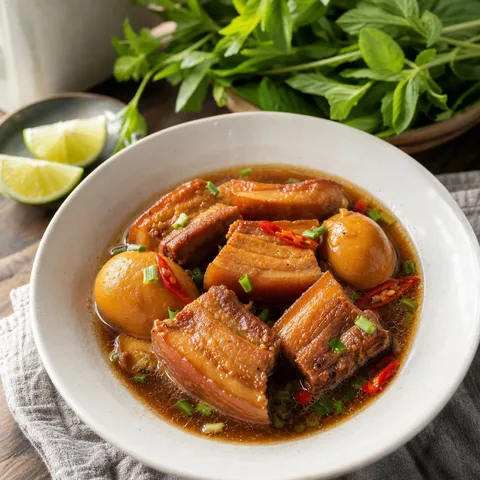 Vietnamese Lens Verified Images are for illustrative purposes only, may be inaccurate, and do not guarantee the presence or absence of specific ingredients.
 Thịt Kho Tàu (Caramelized Pork and Eggs)
Meltingly tender pork belly and hard-boiled eggs braised in a rich, sweet, and savory coconut juice caramel, perfect over steamed rice.
 Vietnamese Lens Verified Images are for illustrative purposes only, may be inaccurate, and do not guarantee the presence or absence of specific ingredients.
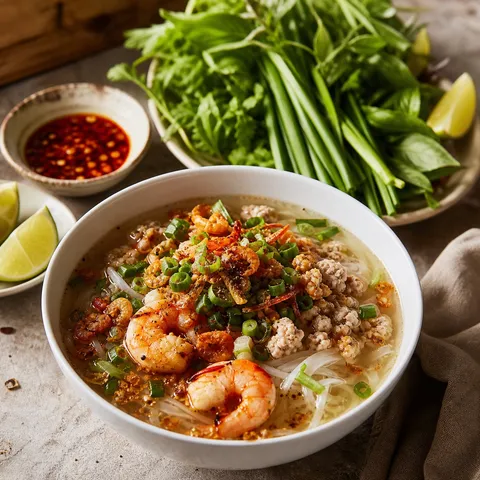
 Hủ Tiếu (Pork and Seafood Noodle Soup)
A Vietnamese pork-bone broth noodle soup loaded with ground pork, shrimp, and dried shrimp over chewy tapioca noodles, finished with garlic chives and fried garlic.
 Vietnamese Lens Verified Images are for illustrative purposes only, may be inaccurate, and do not guarantee the presence or absence of specific ingredients.
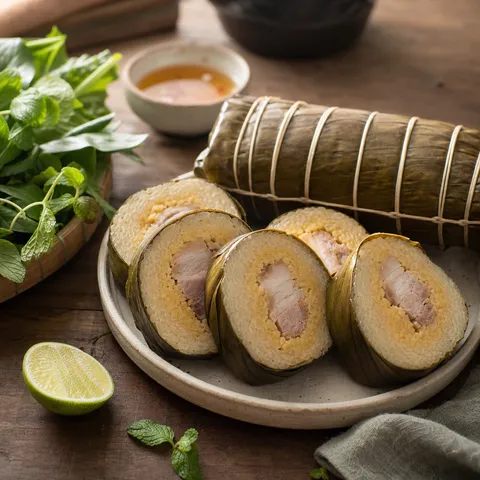
 Bánh Tét (Cylindrical Sticky Rice Cake)
The Southern equivalent of Bánh Chưng, rolled into a cylinder.