 Vietnamese Images are for illustrative purposes only, may be inaccurate, and do not guarantee the presence or absence of specific ingredients.
  Serving Images are for illustrative purposes only, may be inaccurate, and do not guarantee the presence or absence of specific ingredients.
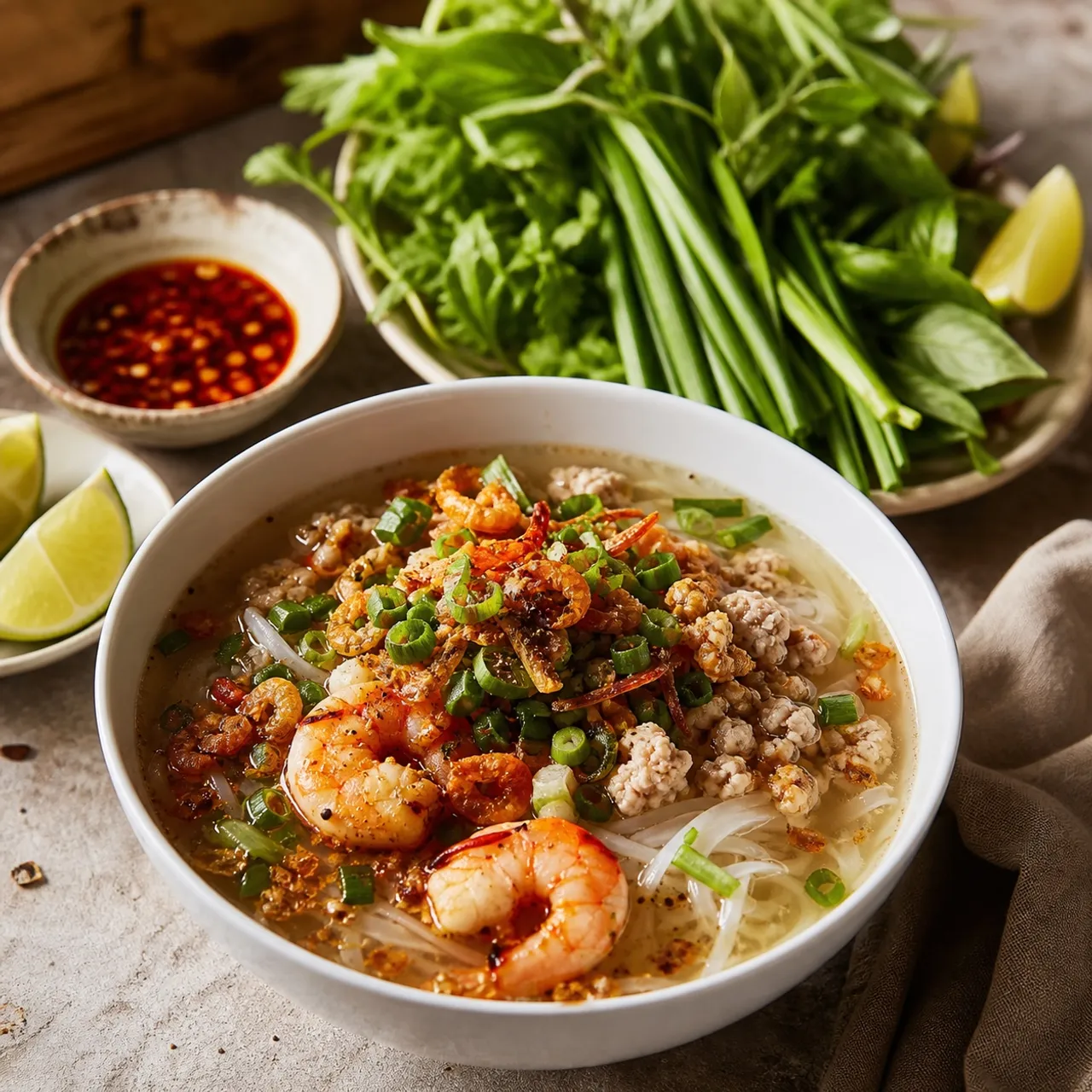
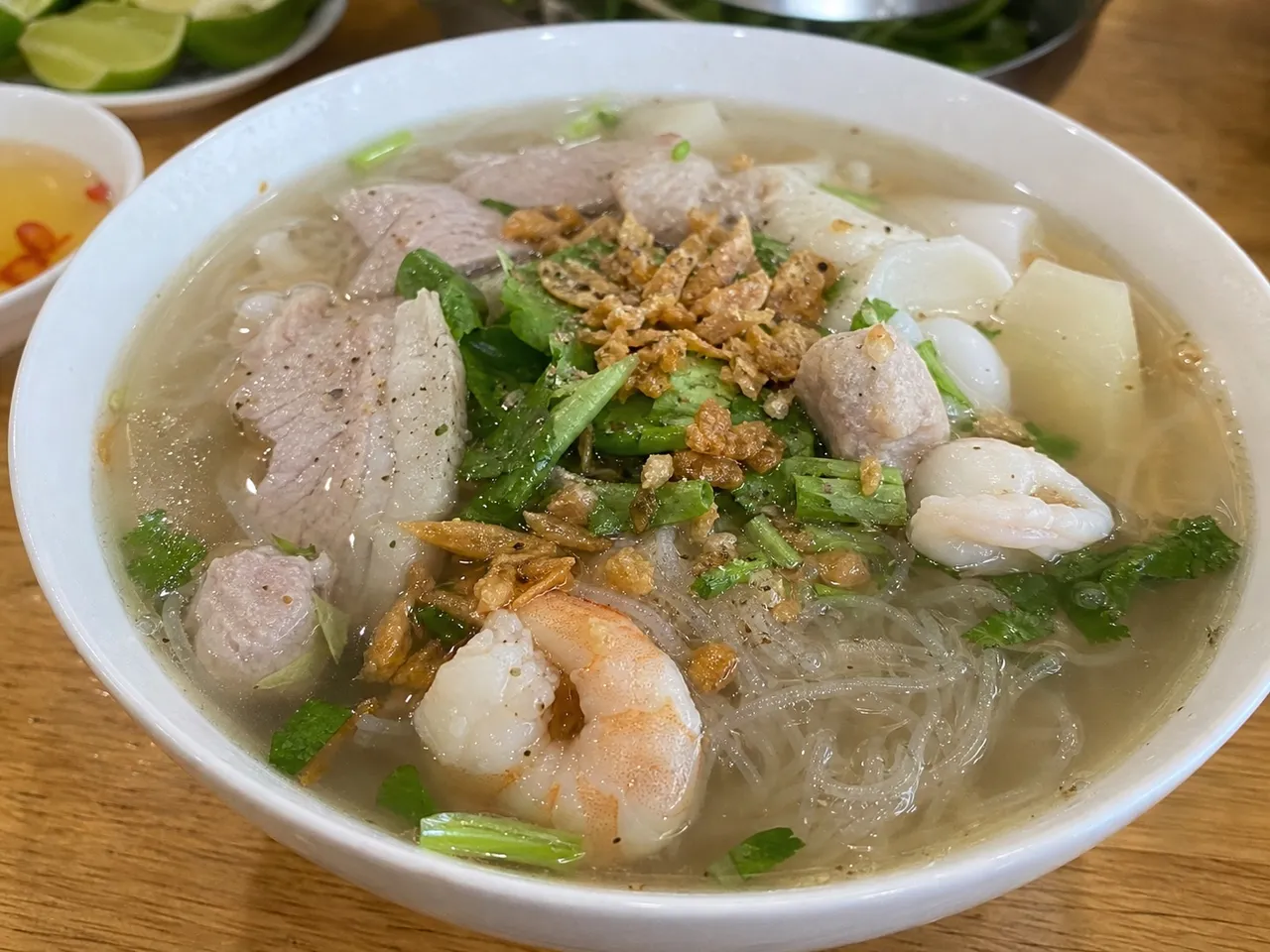
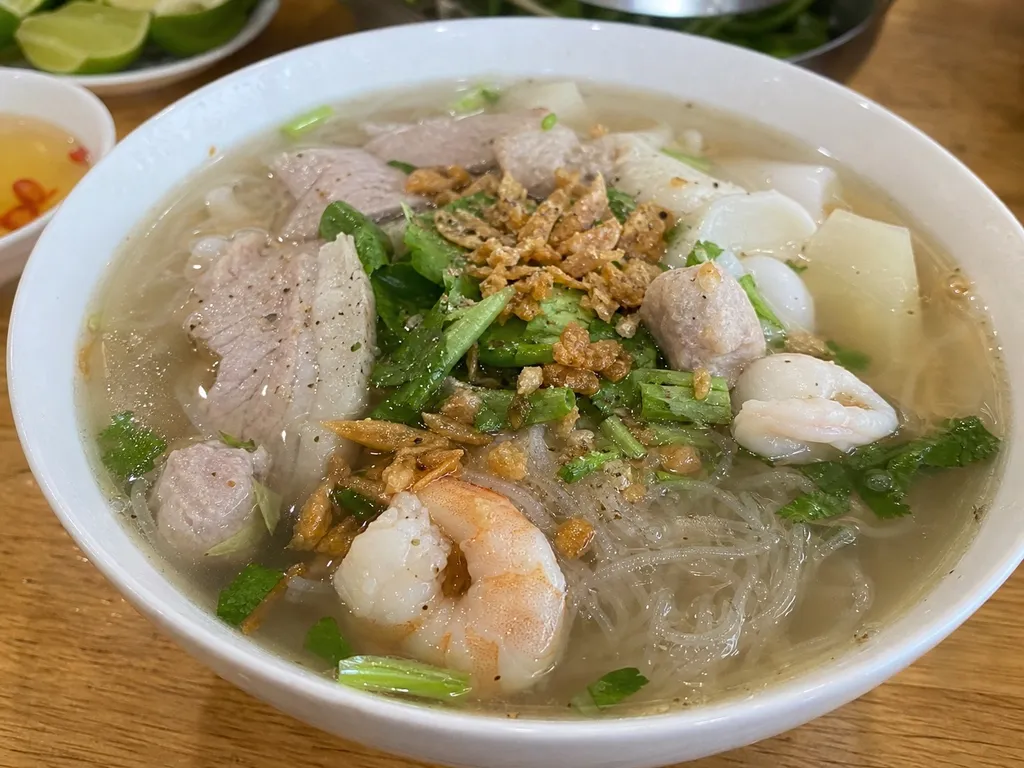
 Hủ Tiếu (Pork and Seafood Noodle Soup)
A Vietnamese pork-bone broth noodle soup loaded with ground pork, shrimp, and dried shrimp over chewy tapioca noodles, finished with garlic chives and fried garlic.
Contains common allergens
In the app, Listahan checks these against your household automatically.
Instructions
6 steps- 1
Simmer Broth: Clean the pork bones by parboiling for 5 minutes. Rinse and return to the pot with 4 quarts water, halved onion, dried shrimp, rock sugar, and fish sauce. Simmer for 2.5 hours. Strain the broth so it is perfectly clear.
- 2
Cook Ground Pork: Heat a little oil in a pan and sauté the ground pork until fully cooked. Season lightly with salt and pepper. Set aside.
- 3
Poach Shrimp: Bring the strained broth to a boil. Drop in the peeled shrimp and cook for 2 minutes until pink. Remove the shrimp with a slotted spoon.
- 4
Prepare Noodles: Blanch the chewy tapioca noodles in boiling water for 3-4 minutes until tender. Drain well and divide into serving bowls.
- 5
Assemble: Top the noodles with the cooked ground pork, poached shrimp, and a few slices of boiled pork from the bones (optional). Add garlic chives and Chinese celery.
- 6
Serve: Ladle the boiling hot, clear pork broth over the ingredients. Garnish generously with crispy fried garlic bits and serve with a side of soy sauce and fresh chilies.
 Images are for illustrative purposes only, may be inaccurate, and do not guarantee the presence or absence of specific ingredients.
 Listahan Family Score™
61/100
Works for many families
Score reflects how well this recipe fits a typical busy household. In the app, your Family Score is personalized to your household's allergens, kids, and pantry.
Nutrition
per serving390
Calories
48 g
Protein
1 g
Carbs
20 g
Fat
Estimated per serving. Actual values depend on the brands and portions you use.
Listahan cooking guide
Chef notes & practical guide
Technique notes, ingredient swaps, serve-alongside ideas, storage guidance, and equipment for this recipe.
Cultural context
Hủ tiếu is especially tied to southern Vietnam, where clear pork broths, seafood toppings, and chewy noodles reflect Chinese and Khmer influences moving through the Mekong Delta. The bowl is usually built in layers: broth first, then noodles, pork, shrimp, herbs, and fried garlic so each topping keeps its own texture.
Listahan note
This version keeps the broth clear and practical for a home kitchen, using pork bones, dried shrimp, onion, fish sauce, and rock sugar for depth without a long list of seasonings. The toppings stay separate until serving so the noodles remain springy and the shrimp stays clean-tasting.
Technique cues
- Parboil and rinse the pork bones before the long simmer. That first wash removes cloudy foam and helps the finished broth look bright instead of murky.
- Strain the broth before poaching the shrimp so the seafood cooks in a clean, seasoned liquid. Pull the shrimp as soon as they turn pink so they stay tender in the bowl.
- Blanch the Hủ Tiếu dai separately from the broth. The noodles release starch as they cook, and keeping that starch out of the soup preserves the clear broth style.
Kitchen flow
- Parallel prep
- Start the pork broth first; while it simmers, cook the ground pork, rinse herbs, and set up a separate pot for blanching noodles.
- Make-ahead
- Make and strain the broth ahead, then chill it separately from noodles and toppings so assembly stays fast.
- Leftover move
- Turn extra broth, ground pork, and shrimp into a smaller next-day bowl with freshly blanched noodles and new herbs.
- Cleanup rhythm
- Use one large stockpot, one blanching pot, and one small skillet; rinse the stockpot after straining before any residue dries onto the sides.
Ingredient brief
Role, handling, and swap guidance for each key ingredient.
Pork bones (neck or spine)
Broth foundation
Purpose: They give the soup its rounded pork flavor and enough body to carry the noodles and toppings.
Handling: Parboil for 5 minutes, rinse well, then simmer gently instead of hard-boiling.
Adaptation: Pork rib bones can work, but the broth may taste a little meatier and less delicate.
Dried shrimp
Seafood depth
Purpose: A small amount gives the broth a savory coastal note that fresh shrimp alone cannot provide.
Handling: Rinse before adding so the flavor is clean rather than dusty or overly salty.
Adaptation: Use a little more fresh shrimp in the bowl if you skip it, though the broth will be lighter.
Chewy tapioca noodles (Hủ Tiếu dai)
Noodle base
Purpose: Their springy bite is part of what makes this bowl different from softer rice-noodle soups.
Handling: Blanch just until tender, drain well, and portion directly into bowls.
Adaptation: Flat rice noodles can stand in, but they will be softer and less bouncy.
Ground pork
Savory topping
Purpose: It adds small, seasoned bites throughout the bowl instead of making the soup depend only on sliced meat.
Handling: Cook it separately so the broth stays clear and the pork browns lightly instead of dispersing into the pot.
Adaptation: Thin sliced pork from the simmered bones can replace some of it for a simpler topping set.
Fish sauce and rock sugar
Seasoning balance
Purpose: Fish sauce supplies the salty backbone while rock sugar rounds the broth without making it taste sweet.
Handling: Add both during the simmer, then adjust the final broth after straining if needed.
Adaptation: Granulated sugar works in place of rock sugar; add it gradually because it dissolves faster.
Garlic chives, Chinese celery, and fried garlic bits
Finishing aromatics
Purpose: They bring sharp, herbal, and crispy notes that keep the rich pork broth from tasting flat.
Handling: Slice the herbs right before serving and add fried garlic last so it stays crisp at the surface.
Adaptation: Scallions can replace garlic chives, and regular celery leaves can echo Chinese celery in a pinch.
Technique notes
- Keep the broth at a gentle simmer after the initial boil. A rolling boil breaks up sediment and makes the soup harder to clarify later.
- Season lightly before reducing or concentrating anything. Fish sauce and dried shrimp both keep contributing saltiness as the broth cooks.
- Build each bowl quickly: noodles first, toppings next, boiling broth last, then herbs and fried garlic so the final texture is lively.
Ingredient swaps
- Weeknight shortcut
- Use prepared unsalted pork broth as part of the liquid, then simmer it with pork bones, onion, dried shrimp, fish sauce, and rock sugar for a shorter build.
- Noodle backup
- Use rice sticks if Hủ Tiếu dai is unavailable; blanch gently and serve right away because they soften faster.
- Seafood-light direction
- Reduce the dried shrimp and add a little more onion and rock sugar for a cleaner pork-broth profile.
- Herb substitution
- Use scallions and celery leaves when garlic chives or Chinese celery are hard to find, knowing the bowl will taste milder and less distinctly Vietnamese.
Serve alongside
- Gỏi cuốn with shrimp and herbs
- Đồ chua pickled carrot and daikon
- Cucumber wedges with lime and salt
- Vietnamese fried spring rolls
- Iced jasmine tea
- Fresh lime soda
- Vietnamese iced coffee
Serving suggestions only — check pairings for your household's allergens.
Storage & reheating
- Refrigerate broth, noodles, and toppings in separate sealed containers so the noodles do not swell in the soup.
- Reheat the broth until steaming, then warm the pork and shrimp briefly in the hot broth before assembling fresh bowls.
- Freeze the strained broth on its own; thaw overnight and bring it back to a simmer before adding freshly cooked noodles and toppings.
Equipment
- Large stockpot
- Fine-mesh strainer
- Separate noodle-blanching pot
- Slotted spoon
Make this household-aware
Listahan Pro checks this recipe against your household's allergens, finds pantry-aware swaps, builds the shopping list, and helps you plan the week around it.
Plan it in Listahan
Add Hủ Tiếu (Pork and Seafood Noodle Soup) to your week, check it against your household's allergens, and build the shopping list automatically.
More Vietnamese recipes
 Vietnamese Lens Verified Images are for illustrative purposes only, may be inaccurate, and do not guarantee the presence or absence of specific ingredients.
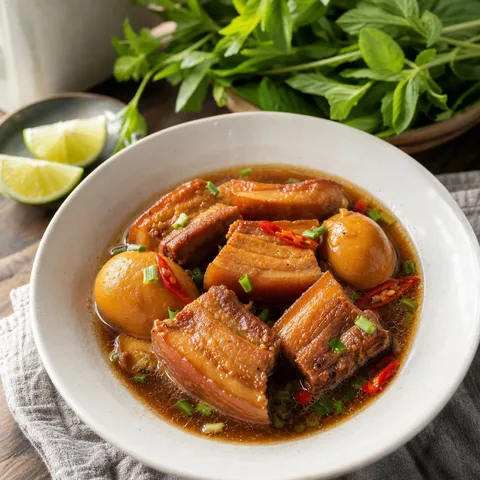
 Thịt Kho Tàu (Caramelized Pork and Eggs)
Meltingly tender pork belly and hard-boiled eggs braised in a rich, sweet, and savory coconut juice caramel, perfect over steamed rice.
 Vietnamese Lens Verified Images are for illustrative purposes only, may be inaccurate, and do not guarantee the presence or absence of specific ingredients.
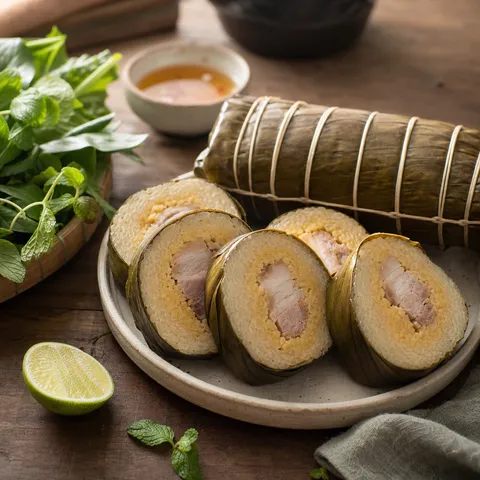
 Bánh Tét (Cylindrical Sticky Rice Cake)
The Southern equivalent of Bánh Chưng, rolled into a cylinder.
 Vietnamese Lens Verified Images are for illustrative purposes only, may be inaccurate, and do not guarantee the presence or absence of specific ingredients.
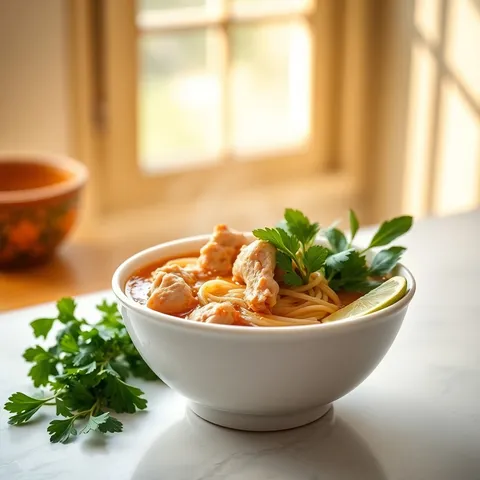
 Phở Gà (Chicken Noodle Soup)
Chicken version of the famous Phở, with a lighter chicken broth.