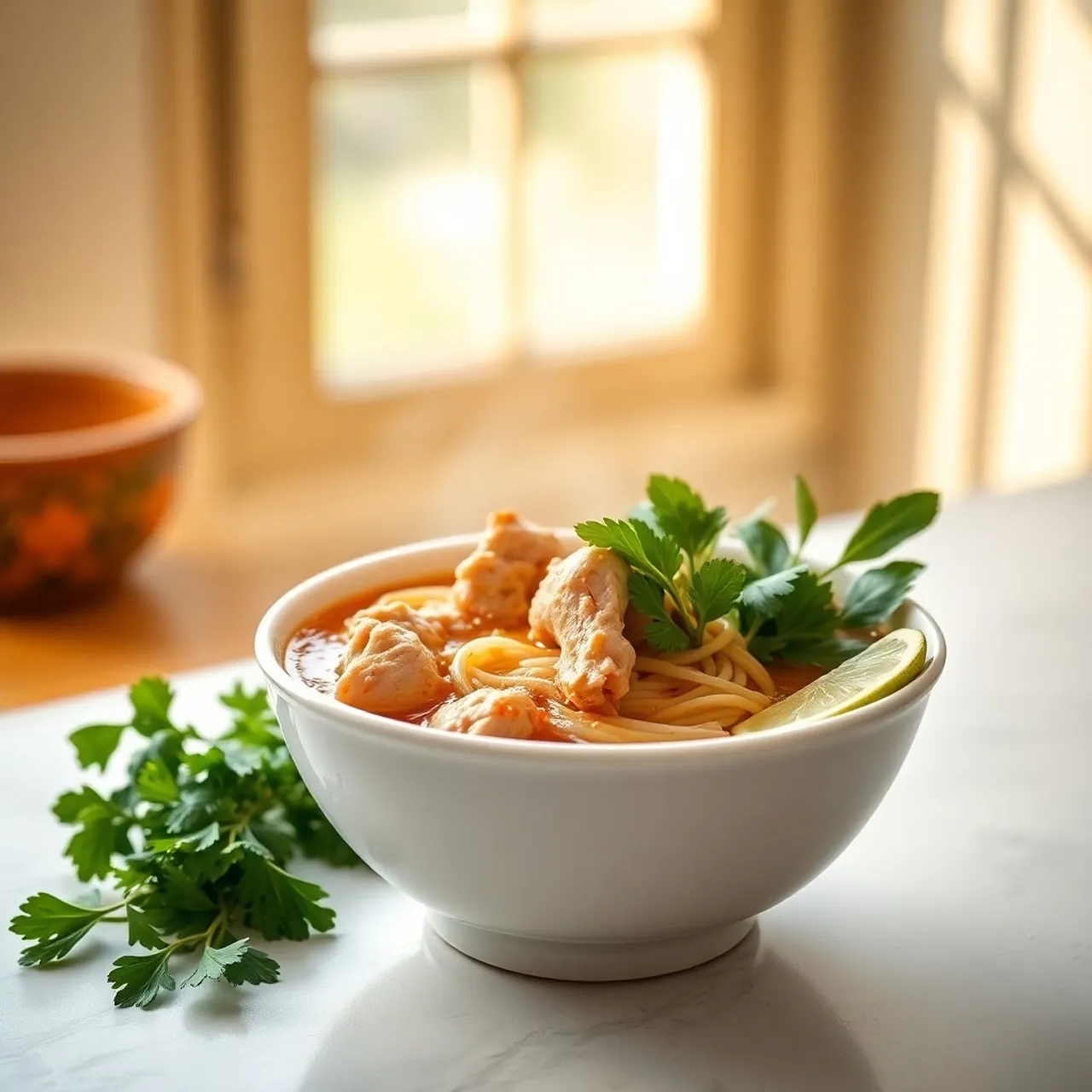
 Vietnamese Images are for illustrative purposes only, may be inaccurate, and do not guarantee the presence or absence of specific ingredients.
 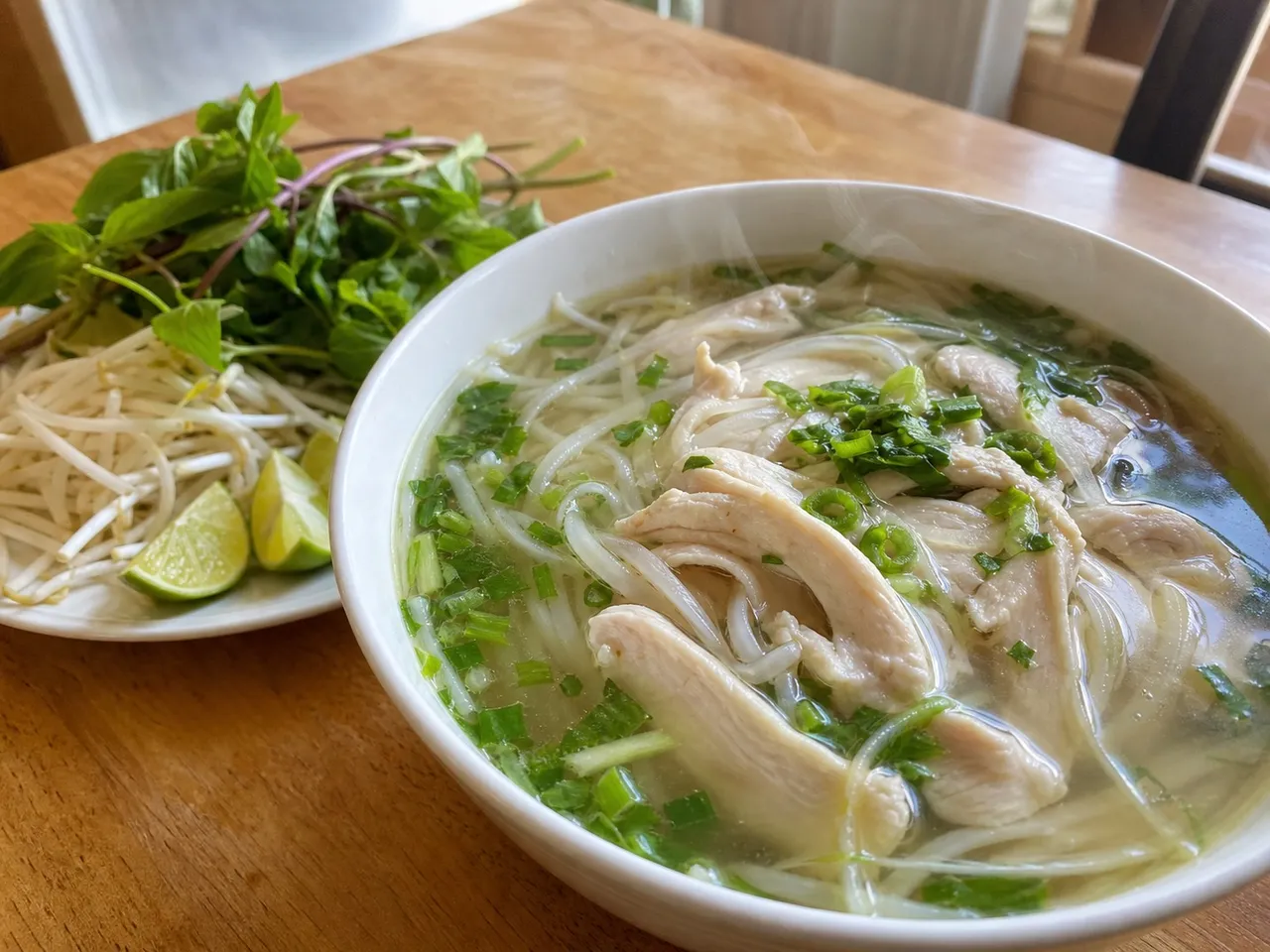 Serving Images are for illustrative purposes only, may be inaccurate, and do not guarantee the presence or absence of specific ingredients.
 Phở Gà (Chicken Noodle Soup)
Chicken version of the famous Phở, with a lighter chicken broth.
Contains common allergens
In the app, Listahan checks these against your household automatically.
Instructions
6 steps- 1
Char Aromatics: Char the onion and ginger under a broiler until blackened. Toast the spices in a dry skillet until fragrant, then place in a spice bag.
- 2
Simmer Chicken: Place the whole chicken in a large pot and cover with 4 quarts of cold water. Add the charred onion, ginger, spice bag, rock sugar, and a large pinch of salt. Bring to a boil, then reduce to a gentle simmer. Skim any foam.
- 3
Remove Chicken: After 45-50 minutes, check the chicken. When the juices run clear, remove the chicken and plunge it into an ice bath to tighten the skin. Let cool, then shred the meat and set aside.
- 4
Finish Broth: Return the chicken bones to the pot and continue simmering the broth for another 1 hour to deepen the flavor. Season with fish sauce to taste, ensuring it is slightly salty to balance the noodles.
- 5
Prepare Noodles: Soak and blanch the rice noodles according to package instructions until tender.
- 6
Assemble: Place noodles in a bowl, top with shredded chicken, thinly sliced red onions, and scallions. Pour boiling hot broth over the top. Serve with herbs, lime, and jalapeños.
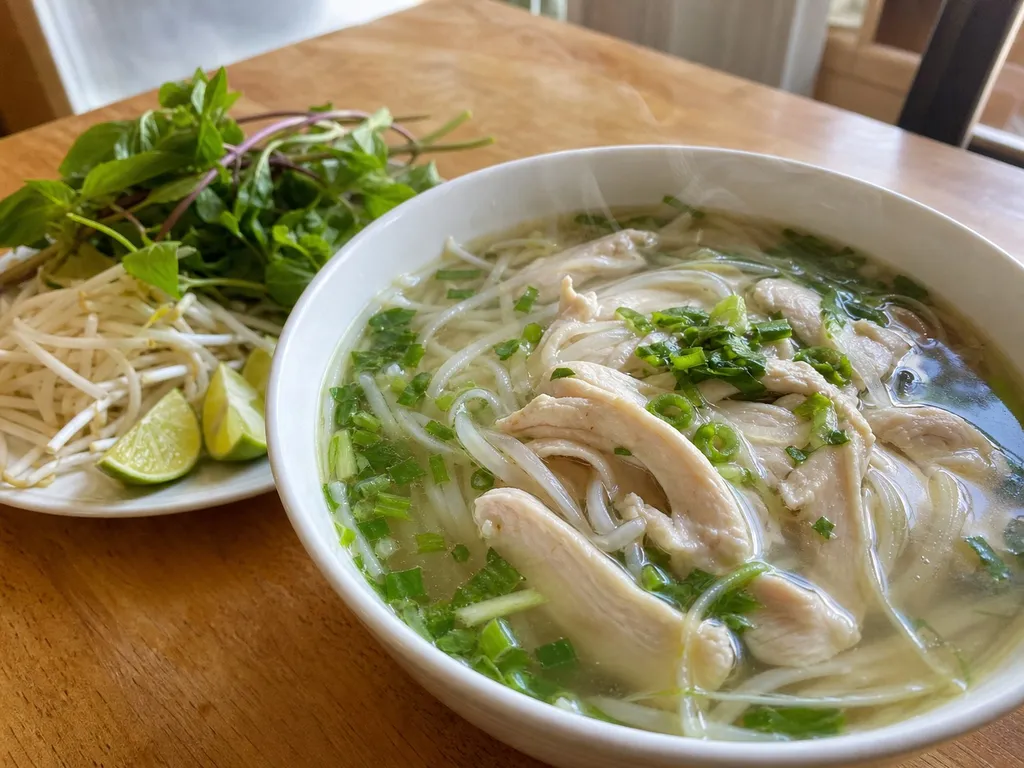 Images are for illustrative purposes only, may be inaccurate, and do not guarantee the presence or absence of specific ingredients.
 Listahan Family Score™
63/100
Works for many families
Score reflects how well this recipe fits a typical busy household. In the app, your Family Score is personalized to your household's allergens, kids, and pantry.
Nutrition
per serving30
Calories
1 g
Protein
7 g
Carbs
0 g
Fat
Estimated per serving. Actual values depend on the brands and portions you use.
Listahan cooking guide
Chef notes & practical guide
Technique notes, ingredient swaps, serve-alongside ideas, storage guidance, and equipment for this recipe.
Cultural context
Pho ga predates pho bo in some accounts, though the origin debate is contested among food historians; what is agreed is that chicken pho became widespread in Hanoi on Fridays during French colonial rule, when Catholic influence suppressed beef consumption on that day and vendors adapted their recipe to chicken. The resulting broth is cleaner, lighter, and faster to produce than beef pho, and it has remained a staple of Hanoian breakfast culture. In North America, pho ga is often the first pho a new cook makes at home because a good chicken broth requires far less time than the 6-8 hour beef version.
Listahan note
This version emphasizes the aromatics and a restrained simmer time -- just long enough to extract flavor and collagen from the chicken without making the broth taste flat and overcooked, which is a common home-cook mistake with chicken pho.
Technique cues
- Simmer the chicken for no more than 45-60 minutes; past that point the breast meat becomes chalky, the broth takes on a sulfurous cooked-chicken flavor, and the nuanced spice notes are overwhelmed -- remove the whole chicken when the breast registers 165F and finish the stock with just the carcass if you want another 30 minutes of extraction.
- Charring the onion and ginger is as essential in pho ga as in pho bo -- the caramelized sugars that develop on the cut face are what give the broth its amber color and rounded sweetness; a pale, uncharred pho ga broth tastes flat no matter how long you simmer it.
- Rock sugar adds a different quality of sweetness than white sugar: it dissolves more slowly and adds a slightly floral, neutral sweetness without the slight molasses note of granulated sugar -- add in small increments and taste as you go, looking for a broth that is savory first with sweetness that only registers as an aftertaste.
Kitchen flow
- Parallel prep
- Char the onion and ginger under the broiler and toast the spices in a dry pan simultaneously while the chicken blanching water comes to a boil -- all three happen in the same 10-15 minute window.
- Make-ahead
- The broth is best made a day ahead; refrigerate overnight, lift the fat cap, and reheat before serving -- this also makes it easy to remove any remaining solids that settled during cooling.
- Leftover move
- Shred leftover poached chicken into the broth for a second-day meal, or use it in banh mi, salad rolls, or a quick chicken rice bowl with the remaining broth as a dipping sauce.
- Cleanup rhythm
- The blanching pot and the charring pan are the main items; clean both during the 45-minute unattended stock simmer so the kitchen is mostly done by the time the broth strains.
Ingredient brief
Role, handling, and swap guidance for each key ingredient.
1 whole free-range chicken (about 3-4 lbs)
broth base and primary protein
Purpose: A whole chicken provides both the stock (from the bones, feet, and carcass) and the poached meat topping simultaneously, making pho ga more efficient than pho bo which requires separate bones and beef.
Handling: Rinse and pat dry; optionally blanch in boiling water for 3-5 minutes and rinse before adding to the stock pot to reduce impurities and produce a clearer broth.
Adaptation: Chicken backs and feet with skin-on chicken thighs produce a richer broth with more gelatin; a free-range or heritage bird has more flavor than a standard supermarket chicken.
1 package (16 oz) flat rice noodles (banh pho)
noodle base
Purpose: Flat rice noodles have just enough structure to hold their shape in hot broth without turning to mush while remaining soft enough to absorb the broth's flavor.
Handling: Soak in room-temperature water for 30 minutes, then blanch in boiling water for 30-45 seconds just before serving; pre-soaked noodles cook much faster than dry ones.
Adaptation: Thin round rice noodles (bun) can substitute for a slightly different texture; avoid wheat-based egg noodles, which change the flavor profile.
1 large yellow onion, halved and charred
aromatic base and color
Purpose: The charred onion provides sweetness, color, and complexity that raw or sauteed onion cannot replicate in this context.
Handling: Char cut-side down under the broiler on a foil-lined pan until deep brown with some blackened spots, 10-12 minutes; the foil catches drips for easy cleanup.
Adaptation: Two large shallots can substitute for a slightly more delicate, less sharp onion flavor in the stock.
2 tbsp fish sauce
primary seasoning
Purpose: Fish sauce provides the essential umami backbone that salt alone cannot give pho; it seasons from within and knits the spice flavors together.
Handling: Add in two stages: half near the beginning of the simmer, half at the end after tasting, to control the final salt level precisely.
Adaptation: For a fish-free version, use soy sauce plus a few drops of Worcestershire; the flavor is noticeably different but the broth remains savory and full.
2 star anise, 1 cinnamon stick, 1 tsp coriander seeds, 3 cloves
pho spice profile
Purpose: This smaller spice quantity compared to beef pho is intentional -- the lighter chicken broth needs less spice to avoid overwhelming the delicate poultry flavor.
Handling: Toast together in a dry skillet until fragrant, then tie in cheesecloth or a spice sock; remove after 30 minutes of simmering to prevent the spices from dominating the broth.
Adaptation: Pre-made pho spice packets sized for chicken pho are available at Asian grocery stores and are a reliable convenience option.
Technique notes
- Pull the whole chicken when the breast meat is just cooked through; shred or slice the meat and set aside covered, then return the carcass to the pot for another 30 minutes of stock extraction without risking dry, overcooked meat in the final bowl.
- The garnish plate -- fresh cilantro, sliced scallions, thinly sliced red onion, lime wedges, and jalapeno -- should be cold and very fresh; wilted herbs at room temperature diminish the brightness that makes pho ga feel lighter and more refreshing than beef pho.
- Pour the boiling broth over the noodles in the bowl from a height of about 6 inches; the aeration from the pour keeps the broth from instantly going flat and warms the bowl more evenly than setting the bowl in water.
Ingredient swaps
- Gluten-free direction
- Rice noodles and fish sauce are naturally gluten-free; verify the fish sauce label, and the dish is safe without modification.
- Lower-fat direction
- Making the broth the day before allows you to remove the solid fat cap completely before reheating, producing a noticeably lighter broth with the same depth of flavor.
- Quicker weeknight direction
- Use 32 oz of good-quality chicken stock as a base, simmer for 30 minutes with the charred aromatics and spice sock, season with fish sauce and rock sugar, and strain; the result lacks the body of a full broth but is a genuinely satisfying quick pho.
Serve alongside
- cold bean sprout and herb plate with lime and sliced jalapeno
- steamed jasmine rice on the side for a more filling meal
- simple water spinach stir-fry with garlic (rau muong xao toi)
- hot jasmine tea
- cold Vietnamese iced tea (tra da) with minimal sweetener
- sparkling water with lime
Serving suggestions only — check pairings for your household's allergens.
Storage & reheating
- Broth keeps refrigerated for up to 5 days; reheat to a full boil before serving.
- Store shredded chicken separately from the broth; it keeps for up to 3 days refrigerated and should be added cold to the bowl at serving and heated by the poured broth.
- Freeze broth in 2-cup portions for up to 3 months; freeze chicken separately and thaw overnight in the refrigerator.
Equipment
- large stockpot (6-8 quart) for the chicken and broth
- fine-mesh strainer or cheesecloth for straining
- dry skillet for toasting spices
- rimmed baking sheet and broiler for charring aromatics
Make this household-aware
Listahan Pro checks this recipe against your household's allergens, finds pantry-aware swaps, builds the shopping list, and helps you plan the week around it.
Plan it in Listahan
Add Phở Gà (Chicken Noodle Soup) to your week, check it against your household's allergens, and build the shopping list automatically.
More Vietnamese recipes
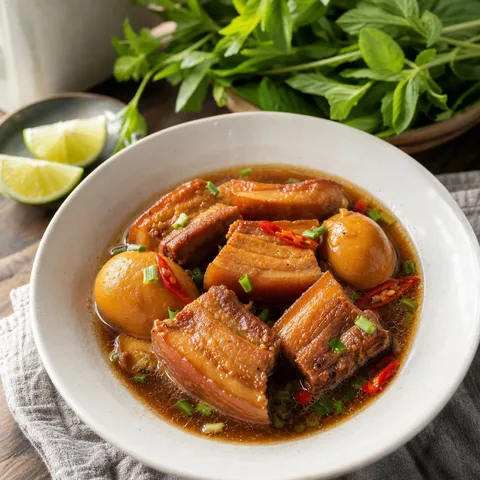 Vietnamese Lens Verified Images are for illustrative purposes only, may be inaccurate, and do not guarantee the presence or absence of specific ingredients.
 Thịt Kho Tàu (Caramelized Pork and Eggs)
Meltingly tender pork belly and hard-boiled eggs braised in a rich, sweet, and savory coconut juice caramel, perfect over steamed rice.
 Vietnamese Lens Verified Images are for illustrative purposes only, may be inaccurate, and do not guarantee the presence or absence of specific ingredients.
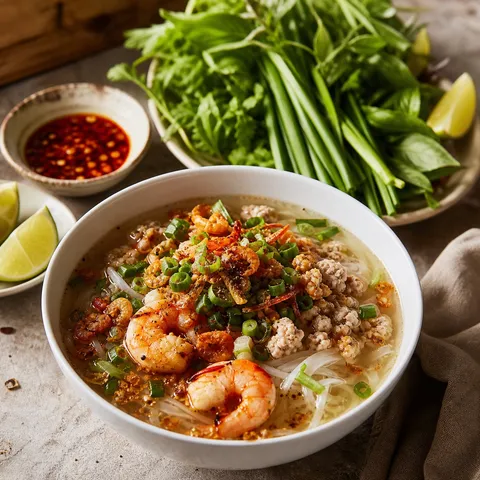
 Hủ Tiếu (Pork and Seafood Noodle Soup)
A Vietnamese pork-bone broth noodle soup loaded with ground pork, shrimp, and dried shrimp over chewy tapioca noodles, finished with garlic chives and fried garlic.
 Vietnamese Lens Verified Images are for illustrative purposes only, may be inaccurate, and do not guarantee the presence or absence of specific ingredients.
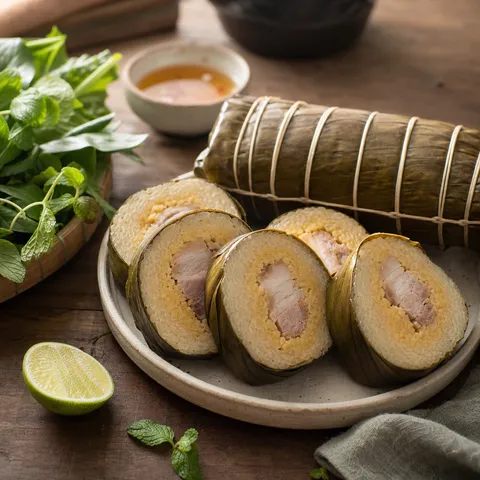
 Bánh Tét (Cylindrical Sticky Rice Cake)
The Southern equivalent of Bánh Chưng, rolled into a cylinder.