 Vietnamese Images are for illustrative purposes only, may be inaccurate, and do not guarantee the presence or absence of specific ingredients.
  Serving Images are for illustrative purposes only, may be inaccurate, and do not guarantee the presence or absence of specific ingredients.
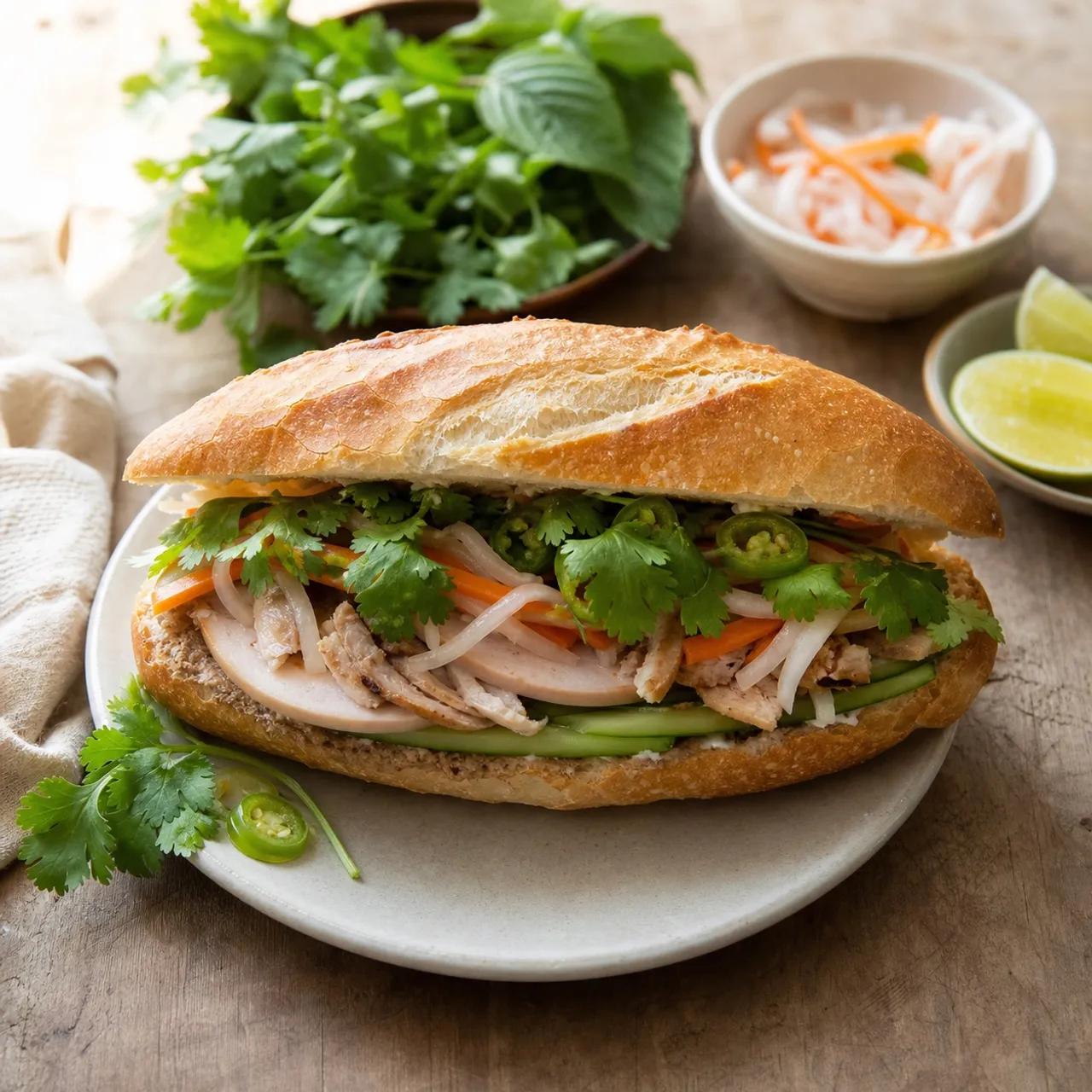
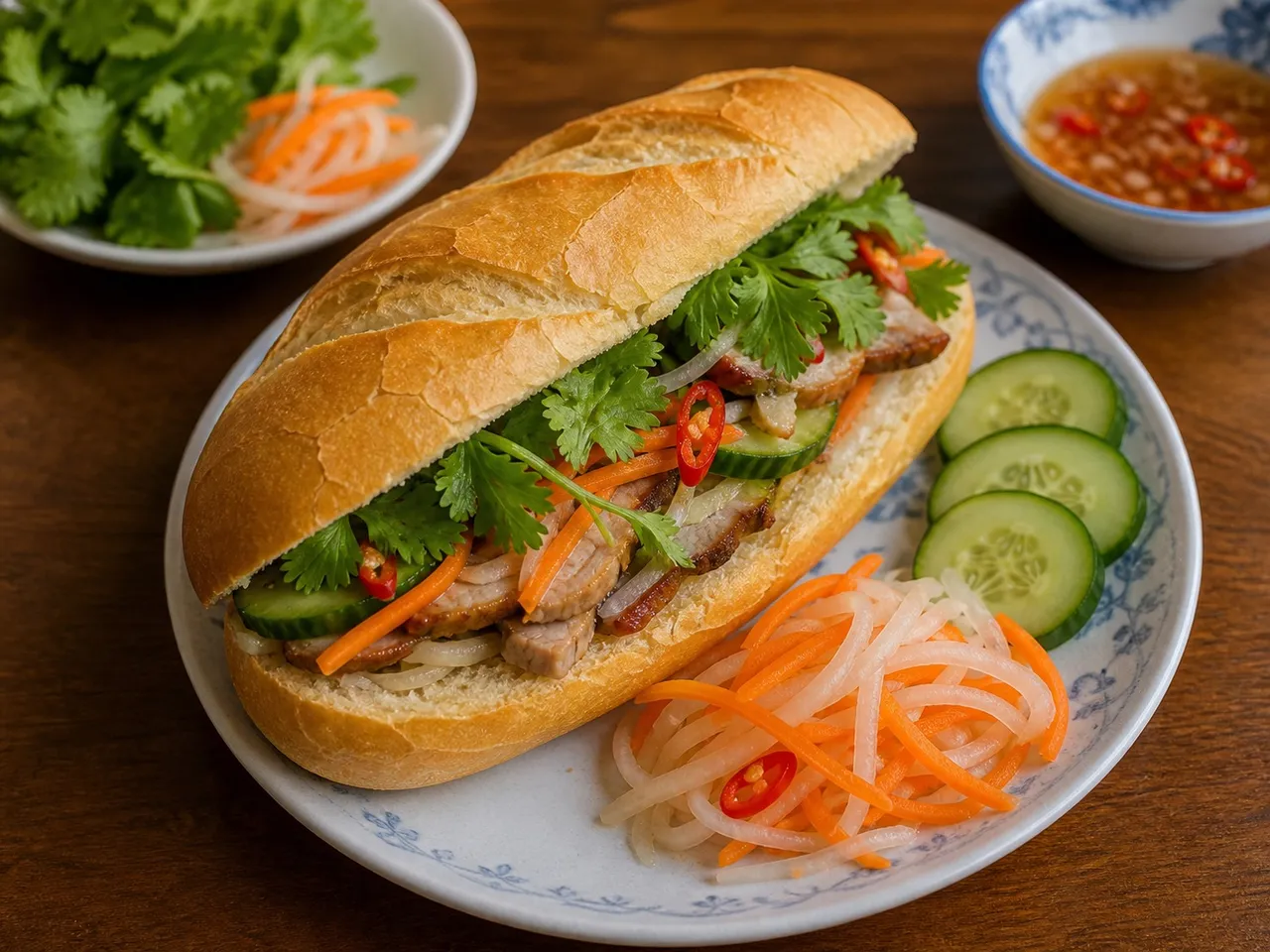
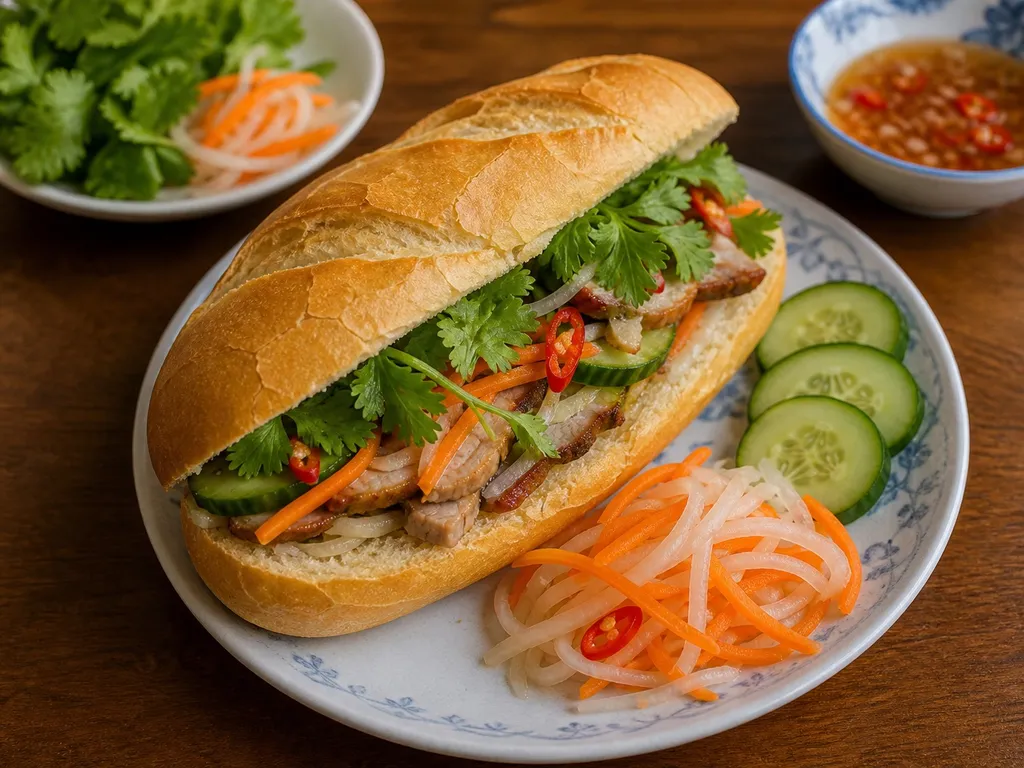
 Bánh Mì (Vietnamese Baguette Sandwich)
A short baguette with thin, crisp crust and soft, airy texture, filled with savory ingredients.
Contains common allergens
In the app, Listahan checks these against your household automatically.
Good to know
- Ready in under 30 minutes
Matched from this dish's own ingredients and timing. Browse more: 30-minute meals
Instructions
5 steps- 1
Toast Bread: Briefly warm the baguettes in a 350°F (175°C) oven for 3-5 minutes to restore their crispy crust, being careful not to dry them out.
- 2
Prepare Spreads: Slice the baguettes open lengthwise, leaving the hinge intact. Smear a generous layer of mayonnaise on the top half and a thick layer of pork liver pâté on the bottom half.
- 3
Layer the Meats: Arrange overlapping slices of Chả Lụa and roasted pork over the pâté.
- 4
Add Vegetables: Layer the cucumber spears, a generous handful of pickled daikon and carrots (drained of excess liquid), jalapeño slices, and sprigs of fresh cilantro over the meat.
- 5
Season: Drizzle Maggi seasoning lightly over the fillings for an umami boost. Close the sandwich, press down gently, and cut in half diagonally to serve.
 Images are for illustrative purposes only, may be inaccurate, and do not guarantee the presence or absence of specific ingredients.
 Listahan Family Score™
62/100
Works for many families
Score reflects how well this recipe fits a typical busy household. In the app, your Family Score is personalized to your household's allergens, kids, and pantry.
Nutrition
per serving510
Calories
30 g
Protein
8 g
Carbs
40 g
Fat
Estimated per serving. Actual values depend on the brands and portions you use.
Listahan cooking guide
Chef notes & practical guide
Technique notes, ingredient swaps, serve-alongside ideas, storage guidance, and equipment for this recipe.
Cultural context
Banh mi is a direct product of French colonial rule in Vietnam from the 1860s through 1954: the French introduced wheat flour, bakeries, and the baguette, which Vietnamese bakers adapted by mixing in rice flour to produce a lighter, crispier loaf with a thinner crust. After 1954, Saigon street vendors perfected the filled version, layering French-style charcuterie with Vietnamese pickles, fresh herbs, and fish sauce, creating one of the most architecturally interesting sandwiches in the world. Vietnamese immigrants brought it to North American cities, where dedicated banh mi shops have operated in Vietnamese communities since the late 1970s.
Listahan note
This version prioritizes the textural contract at the heart of a great banh mi: a truly crispy crust against cool, crunchy pickled vegetables and soft, fatty pork, so every bite has contrast rather than a uniform soft texture.
Technique cues
- The Vietnamese baguette's light, airy crumb and thin crackly crust come from the partial rice flour substitution -- a standard wheat baguette is too dense and chewy to eat as a sandwich without overwhelming the fillings, so sourcing a Vietnamese bakery loaf or a light, thin-crusted baguette is worth the extra effort.
- Do Chua (the pickled daikon and carrot) needs at least 2 hours of marinating in salted sugar and rice vinegar before building the sandwich; freshly made do chua is crunchy and bright where a good one should be, but under-pickled vegetables taste raw and flat rather than tangy.
- The layering order matters for structural integrity: spread the fat components (pate and mayo) on both cut faces first to act as moisture barriers, then build from the heaviest proteins up to the fresh herbs on top so the lightest ingredients don't get crushed before the first bite.
Kitchen flow
- Parallel prep
- Make the do chua the night before (it keeps for 2 weeks refrigerated); day-of prep reduces to slicing proteins, washing herbs, and warming the baguettes.
- Make-ahead
- Assemble the sandwiches up to 30 minutes ahead without the fresh herbs and cucumber, which go in right before serving to stay crisp; wrap tightly in parchment to hold the shape.
- Leftover move
- Store extra proteins and pickles separately from the bread; leftover pork and pate make a quick rice bowl with steamed jasmine rice and a fried egg.
- Cleanup rhythm
- The only cooking step is warming the bread; set up an assembly line with proteins, pickles, and herbs in small prep bowls to build all four sandwiches in under 5 minutes with minimal mess.
Ingredient brief
Role, handling, and swap guidance for each key ingredient.
4 Vietnamese baguettes (light and airy with a thin, crispy crust)
structural vessel and textural anchor
Purpose: The specific baguette -- lighter and crispier than a standard French loaf -- is what makes banh mi structurally distinct; a heavy crumb collapses and goes soggy almost immediately.
Handling: Warm the baguettes in a 375F oven for 5-7 minutes just before building to restore the crust's crunch if they've been sitting.
Adaptation: A light French demi-baguette can work; avoid sourdough or ciabatta, which have too much chew and wrong flavor.
4 oz Vietnamese pork liver pate
richness and French-derived savory base
Purpose: The pate is the element that most directly references the dish's French colonial origin and provides the fatty, umami-rich counterpoint to the acidic pickles.
Handling: Bring the pate to room temperature 20 minutes before spreading so it goes on evenly without tearing the bread.
Adaptation: For a pate-free version, extra mayo or a smear of cream cheese adds fat without the offal flavor; for a dairy-free option, use avocado.
1 cup Do Chua (pickled daikon and carrots)
acid, crunch, and brightness
Purpose: The pickles are the structural and flavor backbone of the sandwich -- they cut through the fat of the pate and mayo and keep the sandwich from feeling heavy.
Handling: Toss julienned daikon and carrot with salt, let sit 15 minutes, rinse, then marinate in equal parts sugar and rice vinegar diluted with water for at least 2 hours.
Adaptation: Quick-pickled cucumbers or kimchi can stand in as the acid element, though the flavor profile shifts.
1/2 cup mayonnaise (preferably Kewpie or homemade)
fat binder and moisture barrier
Purpose: Kewpie mayo's egg-yolk richness and mild sweetness balances the fish sauce and acid better than standard American mayo, which can taste flat in this context.
Handling: Spread generously on both cut faces of the baguette to prevent the bread from absorbing liquid from the fillings.
Adaptation: Vegan mayo works well and is already a common swap; for a lighter option, a thin layer of butter echoes the French origin more directly.
2 tbsp Maggi seasoning sauce
umami finisher and seasoning
Purpose: A few drops of Maggi over the finished sandwich adds a concentrated savory punch that knits the layered components together without making the bread soggy.
Handling: Apply in drops or a light drizzle directly over the protein layer just before closing the sandwich.
Adaptation: Soy sauce is a functional substitute; for soy-free, use coconut aminos.
Technique notes
- Use scissors rather than a knife to partially open the baguette -- cutting all the way through creates two halves that slide apart and lose fillings, while a scissors cut leaves a hinge that holds everything together.
- Fresh cilantro and jalapeno go in last, right before serving; if you assemble too far ahead, the cilantro wilts and discolors the bread, undermining the fresh contrast that defines the sandwich.
- Press the sandwich firmly closed and let it rest wrapped for 2-3 minutes before eating; the brief compression melds the layers and lets the bread absorb the smallest amount of moisture from the fillings, improving cohesion.
Ingredient swaps
- Gluten-free direction
- Banh mi is fundamentally a bread sandwich and there is no close gluten-free substitute for the baguette; serving the same fillings over rice or rice noodles as a deconstructed version is the most satisfying workaround.
- Pork-free direction
- Substitute lemongrass-marinated grilled chicken or tofu for the pork products; keep the pate slot with a chicken or mushroom pate for similar richness.
- Vegan direction
- Use marinated and grilled lemongrass tofu for the protein, mushroom pate, and vegan Kewpie mayo; the do chua and fresh herbs are already vegan.
- Heat level
- Skip the jalapeno or use sweet banana peppers for a mild version suitable for young children; serrano chiles replace jalapeno for more heat.
Serve alongside
- simple cucumber salad with rice vinegar and sesame seeds
- clear chicken pho broth as a soup course
- plain jasmine rice congee (chao) for a more filling meal
- Vietnamese iced coffee with sweetened condensed milk
- cold barley tea or plain iced green tea
- sparkling lemonade with ginger
Serving suggestions only — check pairings for your household's allergens.
Storage & reheating
- Assembled sandwiches are best eaten within 1 hour; after that the bread softens and the herbs wilt.
- Store components separately: proteins and pickles refrigerate for up to 3 days; herbs should be washed, dried, and stored loosely wrapped in a damp paper towel.
- Do not freeze assembled sandwiches; freeze cooked proteins individually and thaw overnight in the refrigerator.
Equipment
- serrated knife or kitchen scissors for opening the baguette
- mandoline or sharp knife for julienning daikon and carrot
- rimmed baking sheet for warming baguettes
- small prep bowls for assembly line setup
Make this household-aware
Listahan Pro checks this recipe against your household's allergens, finds pantry-aware swaps, builds the shopping list, and helps you plan the week around it.
Plan it in Listahan
Add Bánh Mì (Vietnamese Baguette Sandwich) to your week, check it against your household's allergens, and build the shopping list automatically.
More Vietnamese recipes
 Vietnamese Lens Verified Images are for illustrative purposes only, may be inaccurate, and do not guarantee the presence or absence of specific ingredients.
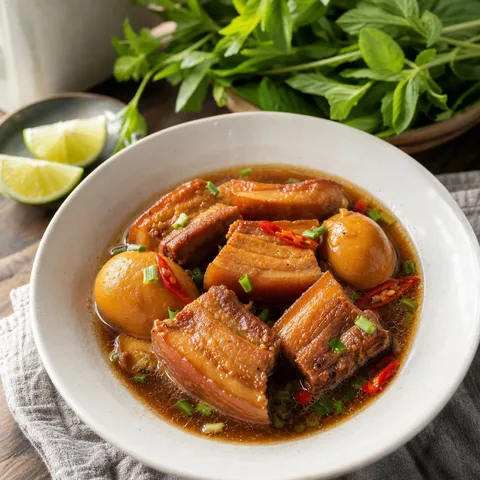
 Thịt Kho Tàu (Caramelized Pork and Eggs)
Meltingly tender pork belly and hard-boiled eggs braised in a rich, sweet, and savory coconut juice caramel, perfect over steamed rice.
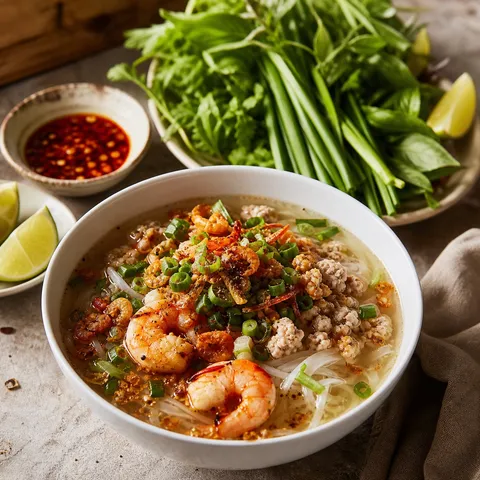 Vietnamese Lens Verified Images are for illustrative purposes only, may be inaccurate, and do not guarantee the presence or absence of specific ingredients.
 Hủ Tiếu (Pork and Seafood Noodle Soup)
A Vietnamese pork-bone broth noodle soup loaded with ground pork, shrimp, and dried shrimp over chewy tapioca noodles, finished with garlic chives and fried garlic.
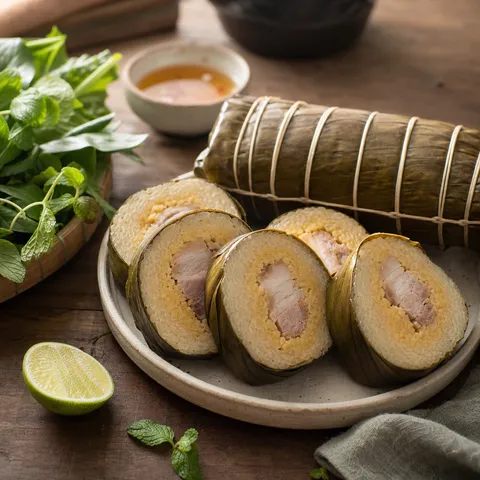 Vietnamese Lens Verified Images are for illustrative purposes only, may be inaccurate, and do not guarantee the presence or absence of specific ingredients.
 Bánh Tét (Cylindrical Sticky Rice Cake)
The Southern equivalent of Bánh Chưng, rolled into a cylinder.