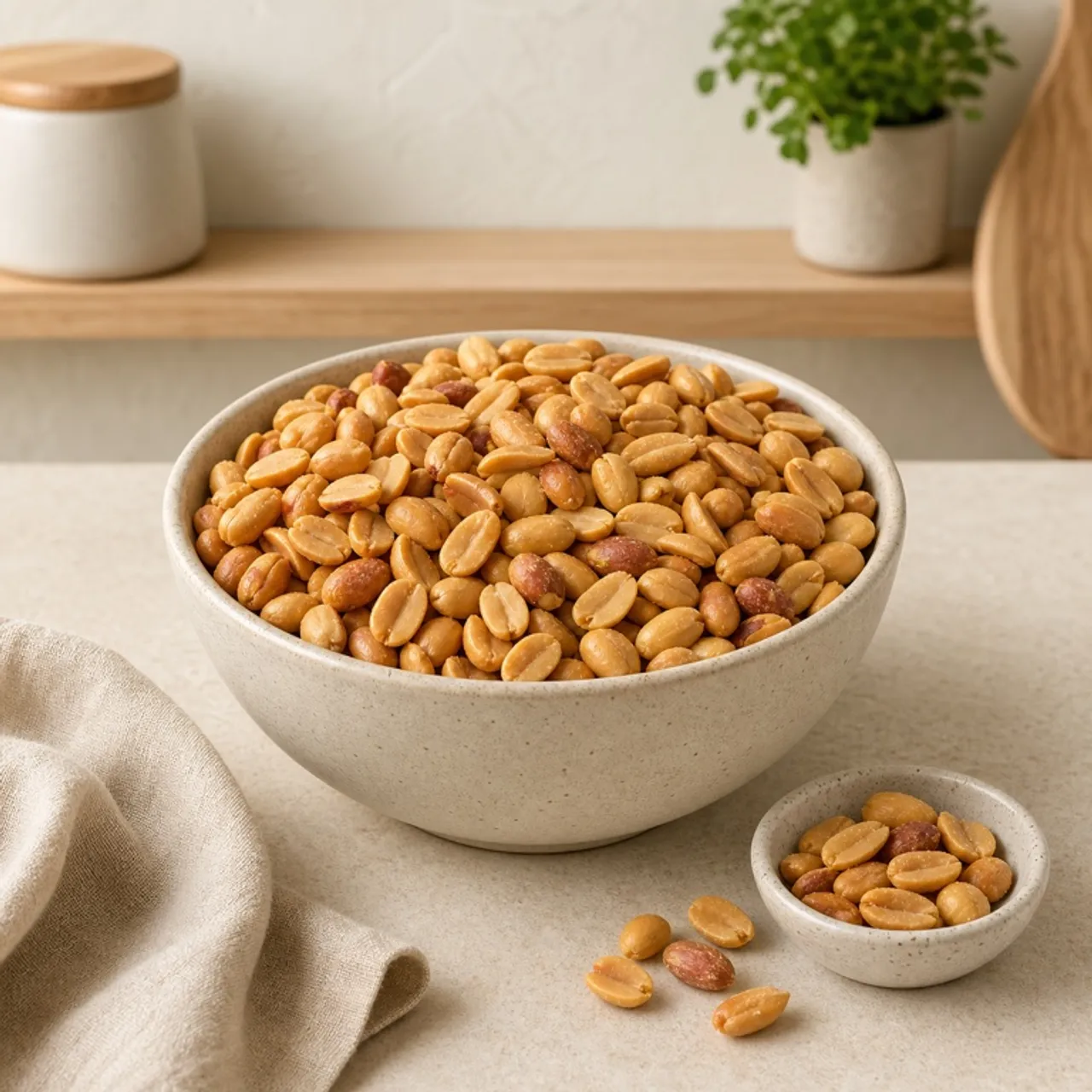
 Food Lens Images are for illustrative purposes only, may be inaccurate, and do not guarantee the presence or absence of specific ingredients.
 Food Lens · Recipe ingredients
Roasted Peanuts
Deep, savory nuttiness with a satisfying crunch; a light toasty bitterness at the finish
Lens VerifiedDry- or oil-roasted peanuts are a globally essential cooking ingredient — toasted to deepen their nutty, savory flavor before being crushed into sauces, scattered over noodles, or stirred into stews.
Where it comes from
Native to South America, the peanut traveled the world through the Columbian Exchange, becoming indispensable in West African, Southeast Asian, and Chinese cooking long before North America embraced peanut butter. Roasting transforms the raw legume's mild flavor into something deeply savory and complex. Today roasted peanuts appear in kitchens from Accra to Chengdu to Jakarta — as often in a broth or sauce as on a snack table.
Varieties — Dry-roasted (no added oil) and oil-roasted; sold whole, halved, or coarsely chopped. Some are lightly salted.
In West Africa, roasted peanuts are the base of groundnut soup — a rich, complex dish that predates the North American peanut butter tradition by generations.
In a modern kitchen — Toast raw peanuts yourself in a dry skillet over medium heat for the freshest flavor; store roasted peanuts in an airtight container away from light.
Buying it
Choose roasted peanuts with a fresh, nutty aroma and no off or musty smell — rancidity sets in quickly once the package is open. Dry-roasted have a cleaner flavor; oil-roasted are slightly richer.
Storing it
Store in an airtight container in a cool, dry pantry, away from heat. Their oils can turn rancid — a sharp or bitter smell means they've gone off; refrigerate or freeze for longer freshness.
Keeps about 1 year in the pantry.
Out of roasted peanuts? Good swaps
- Cashews (roasted) — 1:1 by volume; milder and sweeter, works well in stir-fries and garnish roles
- Sunflower seeds (roasted) — 1:1 by weight; nuttier, slightly earthier — a good nut-free swap in sauces and garnishes
General cooking guidance — always check the labels on the products you use. Listahan’s allergen checks run automatically when you plan a recipe in the app. Not medical advice.
Recipes that use roasted peanuts
- Gỏi Gà Trộn Hành Tây (Chicken and Onion Salad)
- Vatapá
- Nasi Lemak
- Massaman Curry
- Mì Quảng (Turmeric Noodle Soup)
- Chả Cá Lã Vọng (Hanoi Turmeric Fish with Dill)
- Peanut Noodle Salad
- Gỏi Ngó Sen (Lotus Stem Salad)
- Bún Thịt Nướng (Cold Noodle Salad with Grilled Pork)
- Tangyuan (Sweet Rice Balls)
- Ocopa Arequipeña (Potatoes in Spicy Huacatay Sauce)
- Gỏi Cuốn (Spring Rolls)
Common questions about roasted peanuts
Is roasted peanuts vegan?
Roasted Peanuts is generally plant-based and suitable for a vegan diet, but brands differ — confirm on the label.
What can I use instead of roasted peanuts?
Good swaps include Cashews (roasted), Sunflower seeds (roasted). Each behaves a little differently — see the swaps above for notes, and always check labels for allergens.
How do I store roasted peanuts?
Store in an airtight container in a cool, dry pantry, away from heat. Their oils can turn rancid — a sharp or bitter smell means they've gone off; refrigerate or freeze for longer freshness. It keeps about 1 year in the pantry.
More recipe ingredients
See all


Make roasted peanuts about your kitchen — with Listahan Pro
Everything above is free, forever. Pro adds the Household Lens — the same food, seen for your family:
-
Checked for each member
Flags roasted peanuts per person against your household's allergies and school rules — not just a generic "contains" tag.
-
Pantry-aware
Knows whether you already have it, what is running low, and the best swap from what is in your kitchen tonight.
-
What it costs near you
A real price from the Presyo community index, so you can plan the budget — not guess.
-
Your household memory
Who likes it, plus your own private notes — brand, where you keep it, who skips it.
Allergen safety is always free — Pro adds the automation, never the safety.
Cook with roasted peanuts — safely
Plan a recipe in Listahan and the household allergen check runs automatically — every plan, every swap, every lunchbox. Safety is never paywalled.