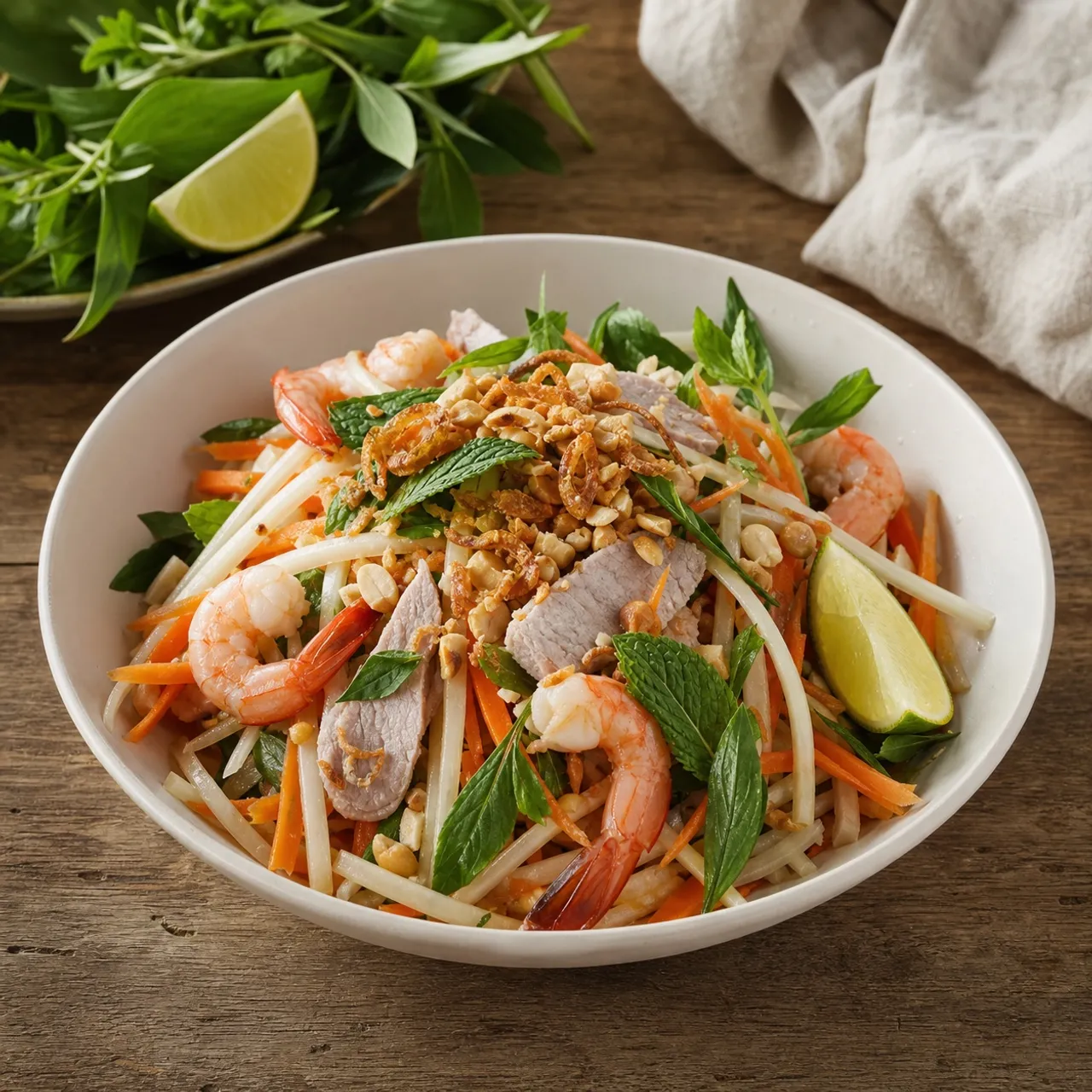
 Vietnamese Images are for illustrative purposes only, may be inaccurate, and do not guarantee the presence or absence of specific ingredients.
 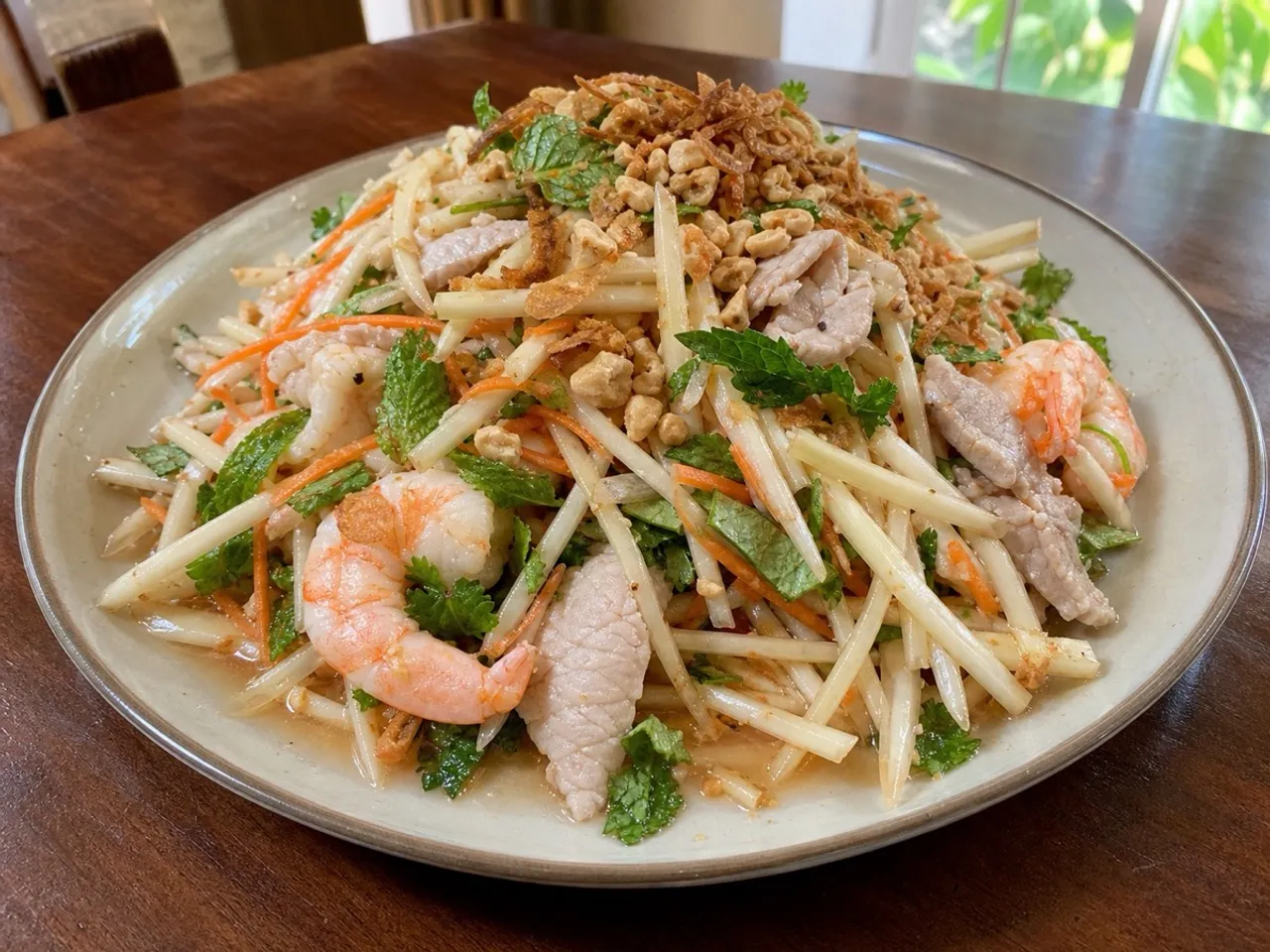 Serving Images are for illustrative purposes only, may be inaccurate, and do not guarantee the presence or absence of specific ingredients.
 Gỏi Ngó Sen (Lotus Stem Salad)
A refreshing salad made with pickled lotus stems, shrimp, and pork.
Contains common allergens
In the app, Listahan checks these against your household automatically.
Instructions
6 steps- 1
Prepare Lotus Stems: Drain the pickled lotus stems, slice them in half lengthwise if they are thick, and gently squeeze out excess liquid.
- 2
Cook Proteins: Boil the pork belly in salted water for 20 minutes until tender. Let cool, then slice into thin matchsticks. Boil the shrimp until pink (about 3 minutes), let cool, peel, slice in half laterally, and remove the vein.
- 3
Make Dressing: In a small bowl, whisk together the fish sauce, lime juice, sugar, minced garlic, and minced chili until the sugar is fully dissolved.
- 4
Toss Salad: In a large mixing bowl, combine the lotus stems, julienned carrots, sliced pork, and shrimp halves. Pour the dressing over the ingredients and toss gently but thoroughly.
- 5
Add Herbs: Just before serving, tear the fresh mint and Vietnamese coriander into the bowl and toss lightly.
- 6
Garnish: Transfer the salad to a serving platter. Top generously with crushed roasted peanuts and crispy fried shallots. Serve immediately with shrimp crackers.
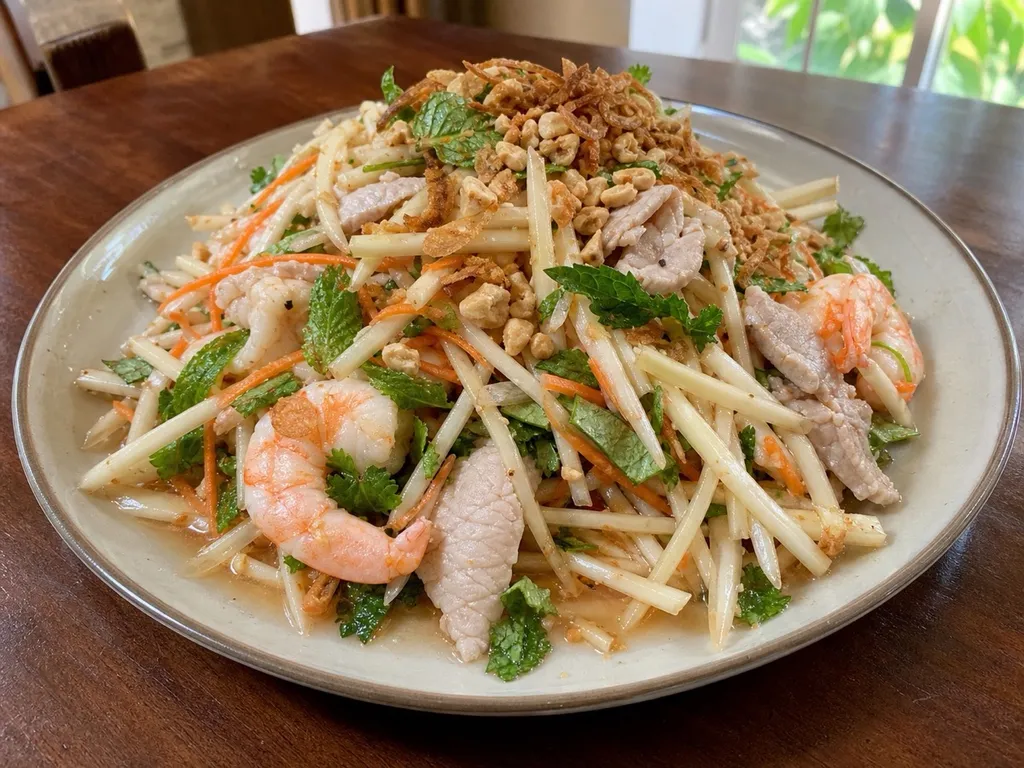 Images are for illustrative purposes only, may be inaccurate, and do not guarantee the presence or absence of specific ingredients.
 Listahan Family Score™
51/100
Works for many families
Score reflects how well this recipe fits a typical busy household. In the app, your Family Score is personalized to your household's allergens, kids, and pantry.
Nutrition
per serving390
Calories
44 g
Protein
14 g
Carbs
20 g
Fat
Estimated per serving. Actual values depend on the brands and portions you use.
Listahan cooking guide
Chef notes & practical guide
Technique notes, ingredient swaps, serve-alongside ideas, storage guidance, and equipment for this recipe.
Cultural context
Gỏi ngó sen is a Vietnamese lotus stem salad often served at family gatherings, holiday meals, and restaurant-style shared tables because it is bright, crunchy, and easy to portion. The lotus stem is the point of the dish: it keeps a crisp snap after pickling and carries the sweet-salty-sour dressing without turning heavy.
Listahan note
This version leans on jarred pickled lotus stems so the salad stays practical for a North American kitchen. The main work is cooking the shrimp and pork cleanly, slicing everything thin, and adding the herbs only at the end so they stay fresh.
Technique cues
- Squeeze the drained lotus stems gently, not aggressively. You want to remove excess brine without crushing their hollow, crunchy texture.
- Dissolve the sugar fully in the fish sauce and lime juice before dressing the salad so the seasoning lands evenly instead of in sharp pockets.
- Toss the pork, shrimp, lotus stems, and carrot first, then fold in the herbs right before serving so the mint and rau răm do not bruise.
Kitchen flow
- Parallel prep
- Start the pork first; while it simmers, drain and slice the lotus stems, julienne the carrot, and mix the dressing.
- Make-ahead
- Cook and slice the pork, cook and peel the shrimp, and mix the dressing earlier in the day; toss with herbs, peanuts, and fried shallots just before serving.
- Leftover move
- Tuck the chilled salad into rice paper rolls with extra herbs, or pile it over cool rice noodles for a quick lunch.
- Cleanup rhythm
- Use the pork pot for the shrimp after the pork comes out, then wash the cutting board once the cooked proteins are sliced.
Ingredient brief
Role, handling, and swap guidance for each key ingredient.
Pickled lotus stems
Crunchy salad base
Purpose: They give the salad its signature snap and lightly tangy backbone.
Handling: Drain well, halve thick stems lengthwise, and squeeze out extra liquid with a gentle hand.
Adaptation: Pickled daikon or green papaya can stand in for crunch, though the flavor will be less floral and less distinctly lotus-stem-like.
Medium shrimp, shell-on
Sweet seafood element
Purpose: Shell-on shrimp cook up with a cleaner, fuller shrimp flavor before being peeled and split for the salad.
Handling: Boil just until pink, cool, peel, devein, and slice in half laterally so the pieces spread through the bowl.
Adaptation: Cooked shrimp can shorten the prep; rinse and dry them well so they do not water down the dressing.
Pork belly or shoulder
Savory meat component
Purpose: Thin slices of pork add richness and make the salad feel like a complete shared dish rather than a side.
Handling: Boil until tender, cool before slicing, and cut into narrow matchsticks so each bite stays balanced.
Adaptation: Pork shoulder gives a leaner chew, while pork belly gives a softer, richer bite.
Carrot
Color and crispness
Purpose: Julienned carrot adds sweetness and a firmer crunch against the tender shrimp and pork.
Handling: Cut into thin, even strips so it tosses through the lotus stems instead of clumping.
Adaptation: Daikon can replace part of the carrot for a sharper, juicier crunch.
Fresh mint and Vietnamese coriander (rau răm)
Fresh herb lift
Purpose: Mint cools the salad while rau răm adds the peppery, citrusy edge that makes the dish taste Vietnamese.
Handling: Tear the herbs just before serving rather than chopping them far ahead.
Adaptation: Use extra mint with a little cilantro if rau răm is hard to find, though the flavor will be softer.
Fish sauce, lime juice, sugar, garlic, and Thai chili
Sweet-sour-salty dressing
Purpose: This dressing seasons the salad quickly and ties the pickled lotus stems, pork, shrimp, and herbs together.
Handling: Whisk until the sugar disappears, then taste for balance before pouring it over the salad.
Adaptation: Use less Thai chili for a gentler bowl, or add a little more lime juice if the pickled stems taste especially sweet.
Technique notes
- Cool the pork before cutting it. Warm pork is harder to slice thinly and can soften the salad too quickly.
- Do not overdress at first. Add most of the dressing, toss, wait a minute, then decide whether the salad needs the rest.
- Keep the peanuts and fried shallots off until the platter is ready. Their crunch is best when they sit on top, not buried in dressing.
Ingredient swaps
- Lotus stem backup
- Use pickled daikon or green papaya when lotus stems are unavailable; slice them thin and expect a less hollow, more solid crunch.
- Pork choice
- Choose pork belly for a richer salad or pork shoulder for firmer, meatier strips that stay distinct in the bowl.
- Gentler heat
- Use half the Thai chili and remove the seeds if you want the dressing to stay bright without much burn.
- Crunch adjustment
- Replace some of the crushed roasted peanuts with extra fried shallots for a lighter, more savory finish.
Serve alongside
- Shrimp crackers
- Jasmine rice
- Bánh phồng tôm
- Canh chua cá
- Iced jasmine tea
- Fresh lime soda
- Light lager
Serving suggestions only — check pairings for your household's allergens.
Storage & reheating
- Refrigerate leftover dressed salad in a sealed container and eat it chilled within the next day for the best texture.
- Do not reheat; refresh cold leftovers with a small squeeze of lime and add new fried shallots or peanuts before serving.
- Freezing is not a good fit because the lotus stems, herbs, shrimp, and dressing lose their crisp texture after thawing.
Equipment
- Medium saucepan
- Large mixing bowl
- Sharp knife
- Serving platter
Make this household-aware
Listahan Pro checks this recipe against your household's allergens, finds pantry-aware swaps, builds the shopping list, and helps you plan the week around it.
Plan it in Listahan
Add Gỏi Ngó Sen (Lotus Stem Salad) to your week, check it against your household's allergens, and build the shopping list automatically.
More Vietnamese recipes
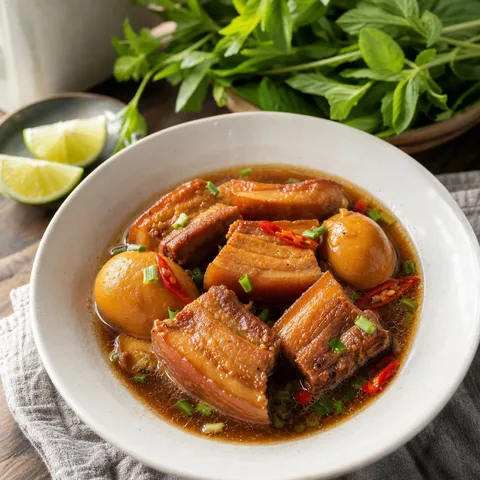 Vietnamese Lens Verified Images are for illustrative purposes only, may be inaccurate, and do not guarantee the presence or absence of specific ingredients.
 Thịt Kho Tàu (Caramelized Pork and Eggs)
Meltingly tender pork belly and hard-boiled eggs braised in a rich, sweet, and savory coconut juice caramel, perfect over steamed rice.
 Vietnamese Lens Verified Images are for illustrative purposes only, may be inaccurate, and do not guarantee the presence or absence of specific ingredients.
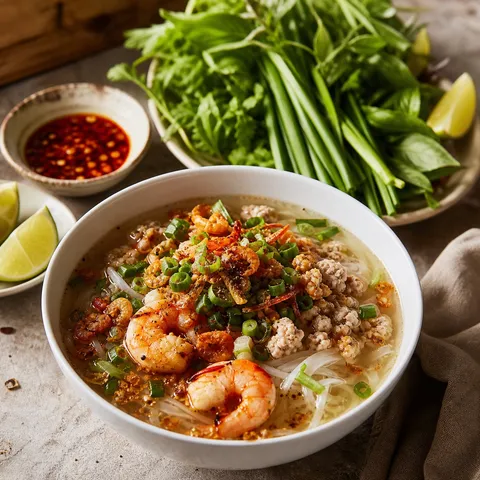
 Hủ Tiếu (Pork and Seafood Noodle Soup)
A Vietnamese pork-bone broth noodle soup loaded with ground pork, shrimp, and dried shrimp over chewy tapioca noodles, finished with garlic chives and fried garlic.
 Vietnamese Lens Verified Images are for illustrative purposes only, may be inaccurate, and do not guarantee the presence or absence of specific ingredients.
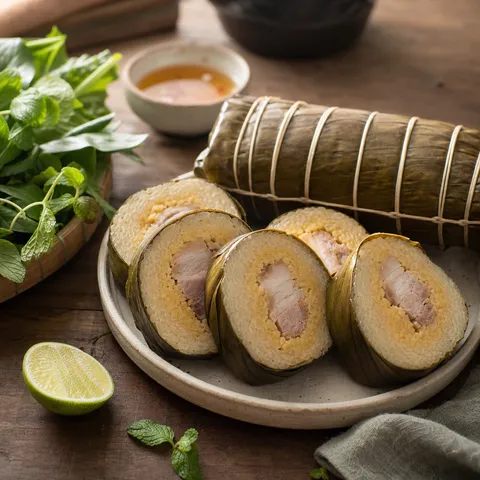
 Bánh Tét (Cylindrical Sticky Rice Cake)
The Southern equivalent of Bánh Chưng, rolled into a cylinder.