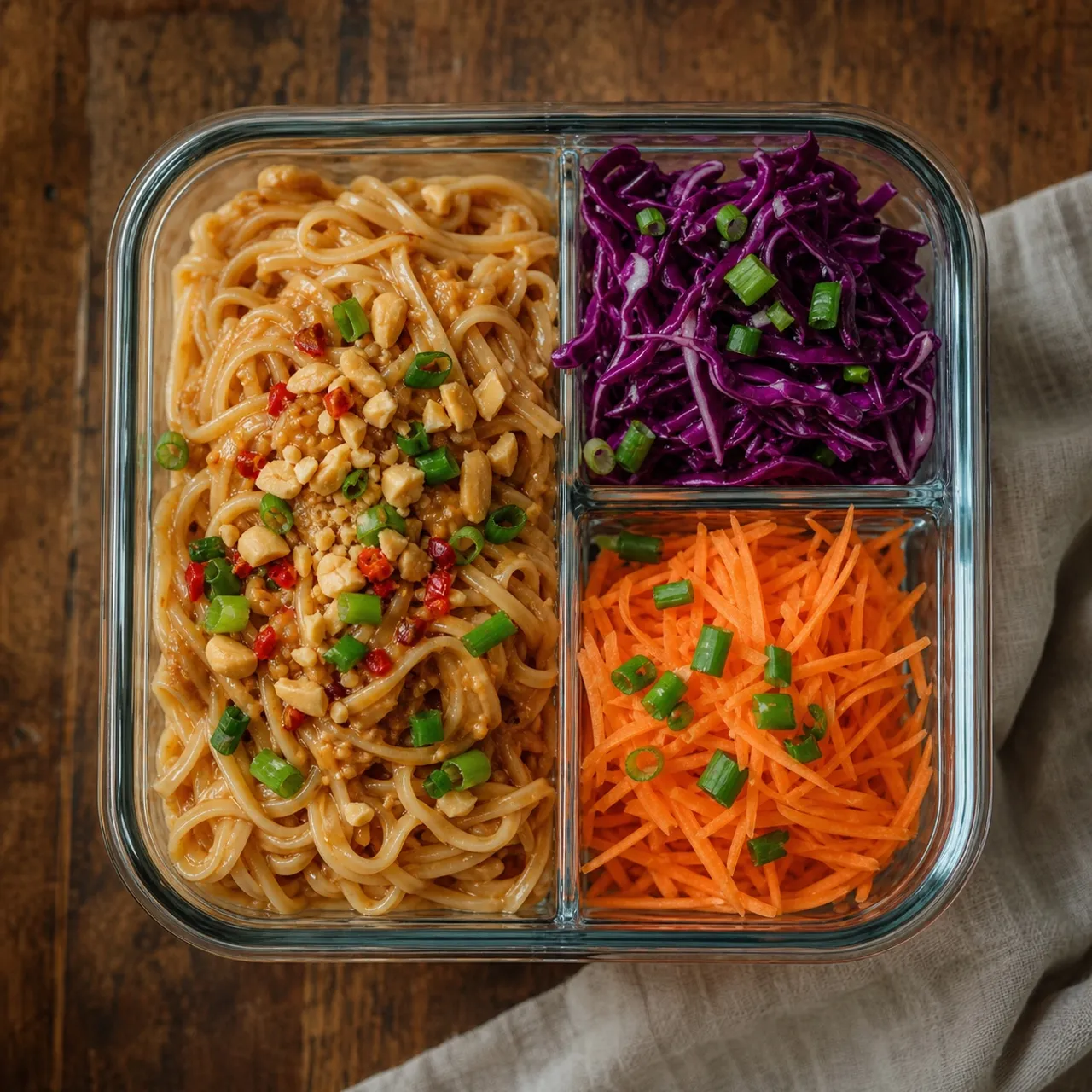
 Meal Prep Images are for illustrative purposes only, may be inaccurate, and do not guarantee the presence or absence of specific ingredients.
 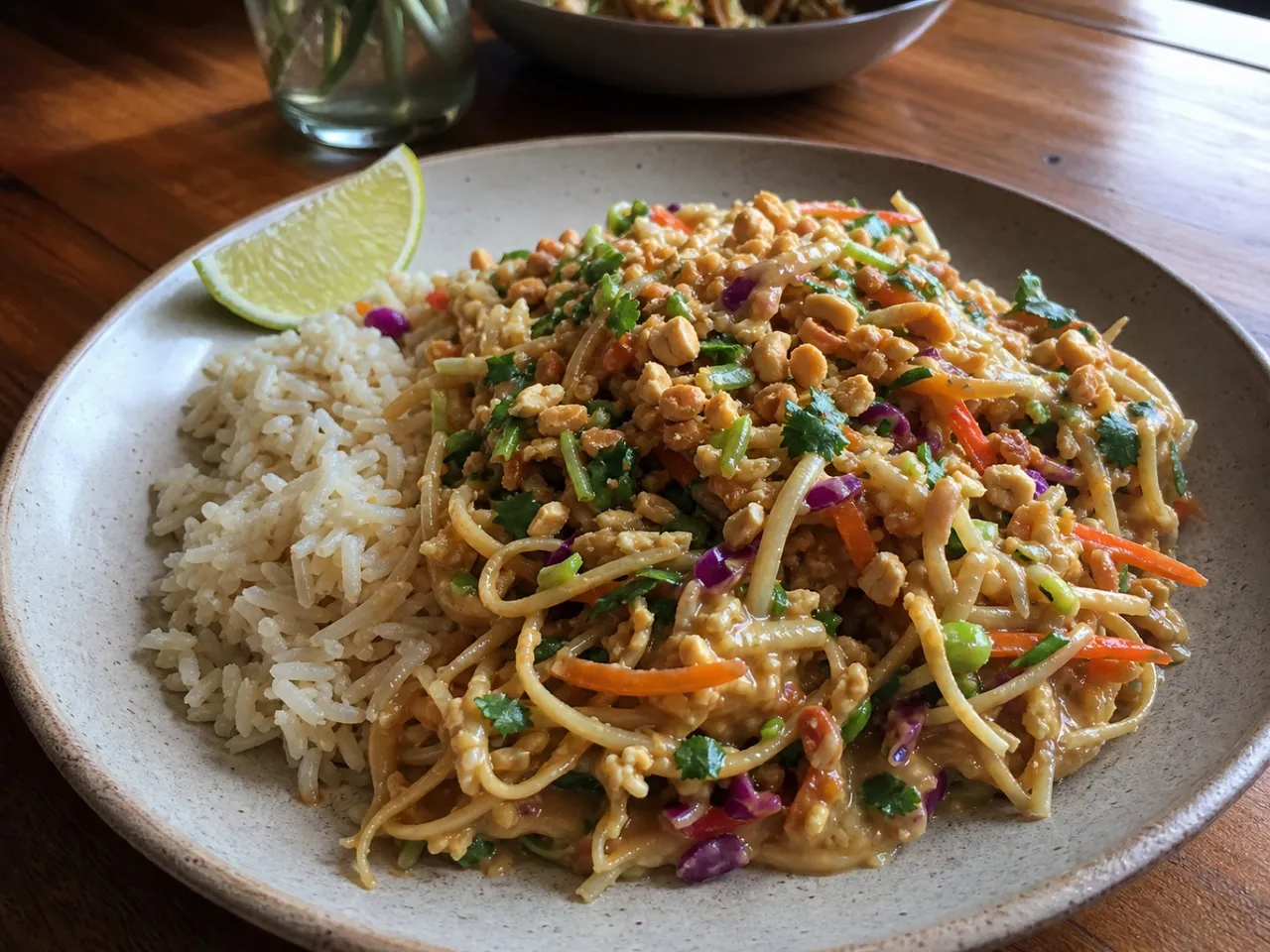 Serving Images are for illustrative purposes only, may be inaccurate, and do not guarantee the presence or absence of specific ingredients.
 Peanut Noodle Salad
Chewy noodles tossed in a rich peanut-sesame dressing with shredded cabbage, crunchy peanuts, and a kick of chili oil — deeply savory, nutty, and refreshing cold.
Contains common allergens
In the app, Listahan checks these against your household automatically.
Good to know
- Ready in under 30 minutes
Matched from this dish's own ingredients and timing. Browse more: 30-minute meals
Instructions
6 steps- 1
Cook the noodles according to package directions, then drain and rinse under cold water.
- 2
Whisk together the peanut butter, soy sauce, rice vinegar, honey, sriracha, and warm water until smooth and pourable, adding more water if needed to thin.
- 3
Toss the noodles with the cabbage and carrot in a large bowl.
- 4
Pour the peanut dressing over the noodles and toss until every strand is coated.
- 5
Divide among meal prep containers.
- 6
Top with chopped peanuts before serving; keeps refrigerated for up to 4 days.
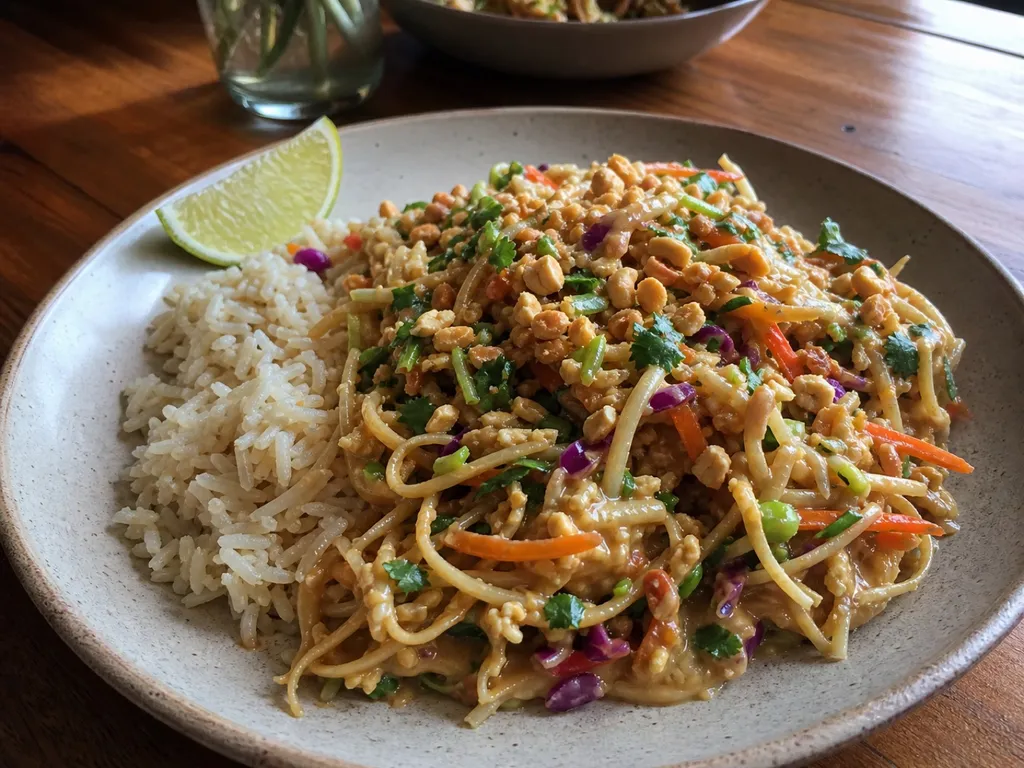 Images are for illustrative purposes only, may be inaccurate, and do not guarantee the presence or absence of specific ingredients.
 Listahan Family Score™
70/100
Good fit for most families
Score reflects how well this recipe fits a typical busy household. In the app, your Family Score is personalized to your household's allergens, kids, and pantry.
Nutrition
per serving610
Calories
24 g
Protein
59 g
Carbs
33 g
Fat
Estimated per serving. Actual values depend on the brands and portions you use.
Listahan cooking guide
Chef notes & practical guide
Technique notes, ingredient swaps, serve-alongside ideas, storage guidance, and equipment for this recipe.
Cultural context
Peanut-dressed noodles have roots across Southeast and East Asian cuisines, where peanut sauces appear in Indonesian gado-gado, Thai satay accompaniments, and Chinese cold sesame noodles. The American meal prep version became a pantry-friendly staple in the 1990s and 2000s, prized because the sauce clings well to noodles that have been cooled and dressed ahead of time. Unlike hot noodle dishes that harden when chilled, peanut noodle salad is deliberately designed to be eaten cold, and its flavor deepens as the noodles absorb the sauce overnight.
Listahan note
This version builds a deeply savory peanut sauce with soy, sesame, and ginger, then loads the noodles with shredded cabbage and carrots for crunch that holds for days in the fridge.
Technique cues
- Toss the noodles with a small drizzle of sesame oil immediately after draining to prevent them from clumping into a solid mass before the sauce goes on.
- Whisk the peanut sauce until it is looser than you expect at room temperature; it will tighten significantly once it hits cold noodles and chills in the fridge, so thin it with warm water one tablespoon at a time.
- Add the crunchy toppings like sesame seeds, sliced scallions, and crushed peanuts just before eating rather than at the start, so they retain their texture after days in the refrigerator.
Kitchen flow
- Parallel prep
- Whisk the sauce and shred the vegetables while the noodles cook so everything is ready to combine at the same moment.
- Make-ahead
- Store sauce separately from noodles if prepping more than 2 days ahead to prevent the noodles from absorbing all the liquid and drying out.
- Leftover move
- Add a fried egg and a handful of edamame to a leftover portion to turn it into a more substantial dinner bowl.
- Cleanup rhythm
- The peanut butter bowl is the hardest to clean; fill it with warm water and dish soap immediately and let it soak while you dress the noodles.
Ingredient brief
Role, handling, and swap guidance for each key ingredient.
rice noodles
noodle base
Purpose: Rice noodles stay springy when cold and absorb peanut sauce readily without becoming gummy the way wheat noodles can.
Handling: Cook just to al dente, drain, rinse under cold water, and toss with a little sesame oil to separate.
Adaptation: Soba noodles or whole wheat spaghetti both work well and add a nuttier flavor.
peanut butter
sauce base
Purpose: Natural peanut butter creates a rich, protein-boosting sauce that clings to noodles without requiring cream or butter.
Handling: Stir natural peanut butter well to reincorporate the oil before measuring so the sauce has consistent fat content.
Adaptation: Almond butter or tahini make a nut-free-adjacent or peanut-free sauce with a similar creamy texture.
soy sauce
umami and salt
Purpose: Soy sauce gives the sauce savory depth and helps thin the peanut butter to a pourable consistency.
Handling: Add gradually and taste as you go because different peanut butters vary in saltiness.
Adaptation: Tamari keeps the dish gluten-free; coconut aminos offers a milder, slightly sweeter profile.
fresh ginger
aromatics and heat
Purpose: Ginger cuts through the richness of peanut butter and gives the sauce a clean, bright finish.
Handling: Grate on a microplane for the smoothest integration into the sauce.
Adaptation: Ground ginger works in a pinch at one-quarter the volume, though the flavor will be less fresh.
shredded red cabbage
crunchy bulk vegetable
Purpose: Red cabbage adds color, crunch, and fiber while holding its texture for the full four-day prep window.
Handling: Shred finely so it integrates with the noodles rather than sitting in large clumps.
Adaptation: Shredded napa cabbage or thinly sliced bok choy are softer alternatives.
lime juice
acid and brightness
Purpose: Acid is essential in a rich peanut sauce to balance fat and prevent the dish from tasting flat.
Handling: Squeeze fresh and add just before tossing the noodles; bottled lime juice lacks the brightness of fresh.
Adaptation: Rice vinegar delivers acid with a gentler, less citrusy edge.
Technique notes
- A touch of chili garlic sauce or sriracha stirred into the peanut sauce adds heat that infuses the whole batch during refrigeration, making the flavor more complex by day two.
- For best texture, undercook the noodles by 30 seconds relative to the package instructions because they continue to soften as they soak in the sauce overnight.
- Portioning into individual containers before the sauce fully saturates the noodles gives you better texture control than keeping everything in one large bowl.
Ingredient swaps
- Peanut-free direction
- Use sunflower seed butter in the same quantity as peanut butter for a nut-free sauce that is safe for school lunches.
- Gluten-free direction
- Use tamari instead of soy sauce and confirmed gluten-free rice noodles or soba labeled 100 percent buckwheat.
- Higher-protein direction
- Toss in shredded rotisserie chicken, cooked shrimp, or drained edamame to each container before sealing.
Serve alongside
- Cucumber sesame salad
- Steamed edamame with sea salt
- Miso soup
- Jasmine iced tea
- Coconut water
Serving suggestions only — check pairings for your household's allergens.
Storage & reheating
- Dressed noodle salad keeps in sealed containers in the refrigerator for up to 4 days; the sauce thickens as it absorbs, so splash in a teaspoon of warm water and toss before eating.
- Do not freeze peanut noodle salad because the noodles become mushy and the sauce separates on thawing.
Equipment
- Microplane grater for fresh ginger
- Large mixing bowl for tossing noodles without spilling
- Airtight meal prep containers with flat lids for stacking in the fridge
Make this household-aware
Listahan Pro checks this recipe against your household's allergens, finds pantry-aware swaps, builds the shopping list, and helps you plan the week around it.
Plan it in Listahan
Add Peanut Noodle Salad to your week, check it against your household's allergens, and build the shopping list automatically.
More Meal Prep recipes
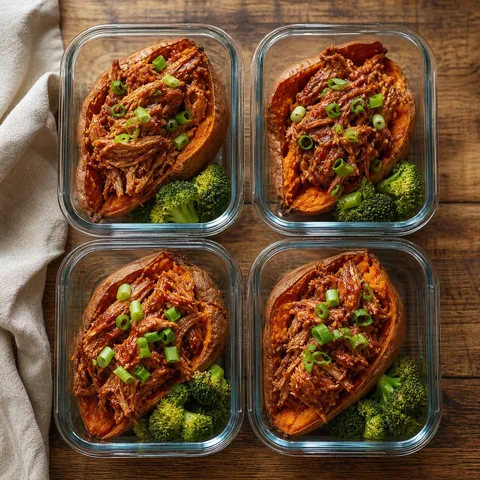 Meal Prep Lens Verified Images are for illustrative purposes only, may be inaccurate, and do not guarantee the presence or absence of specific ingredients.
 BBQ Pulled Pork Stuffed Sweet Potatoes
A hearty, smoky, and sweet combination that balances protein and complex carbohydrates perfectly.
 Meal Prep Lens Verified Images are for illustrative purposes only, may be inaccurate, and do not guarantee the presence or absence of specific ingredients.
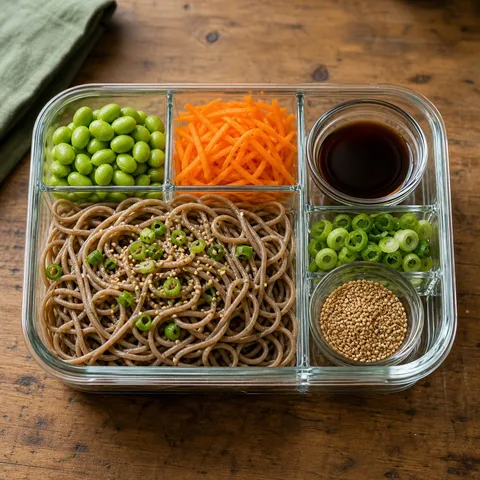
 Soba Noodle Salad
Buckwheat soba noodles tossed in a sesame-ginger dressing with edamame, shredded carrots, and scallions — nutty, refreshing, and endlessly satisfying served cold.
 Meal Prep Lens Verified Images are for illustrative purposes only, may be inaccurate, and do not guarantee the presence or absence of specific ingredients.
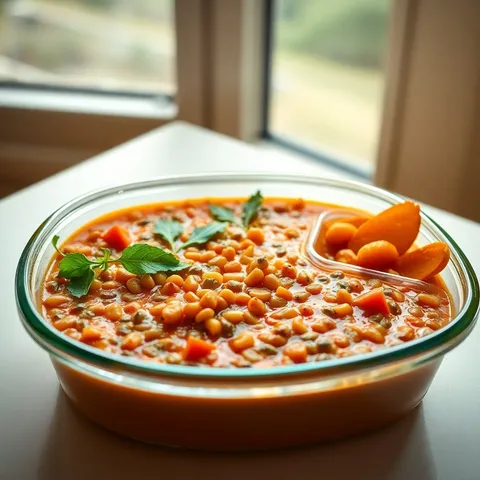
 Rustic French Lentil Soup
A deeply nourishing and earthy soup that is rich in plant-based protein and freezes exceptionally well.