 Vietnamese Images are for illustrative purposes only, may be inaccurate, and do not guarantee the presence or absence of specific ingredients.
  Serving Images are for illustrative purposes only, may be inaccurate, and do not guarantee the presence or absence of specific ingredients.
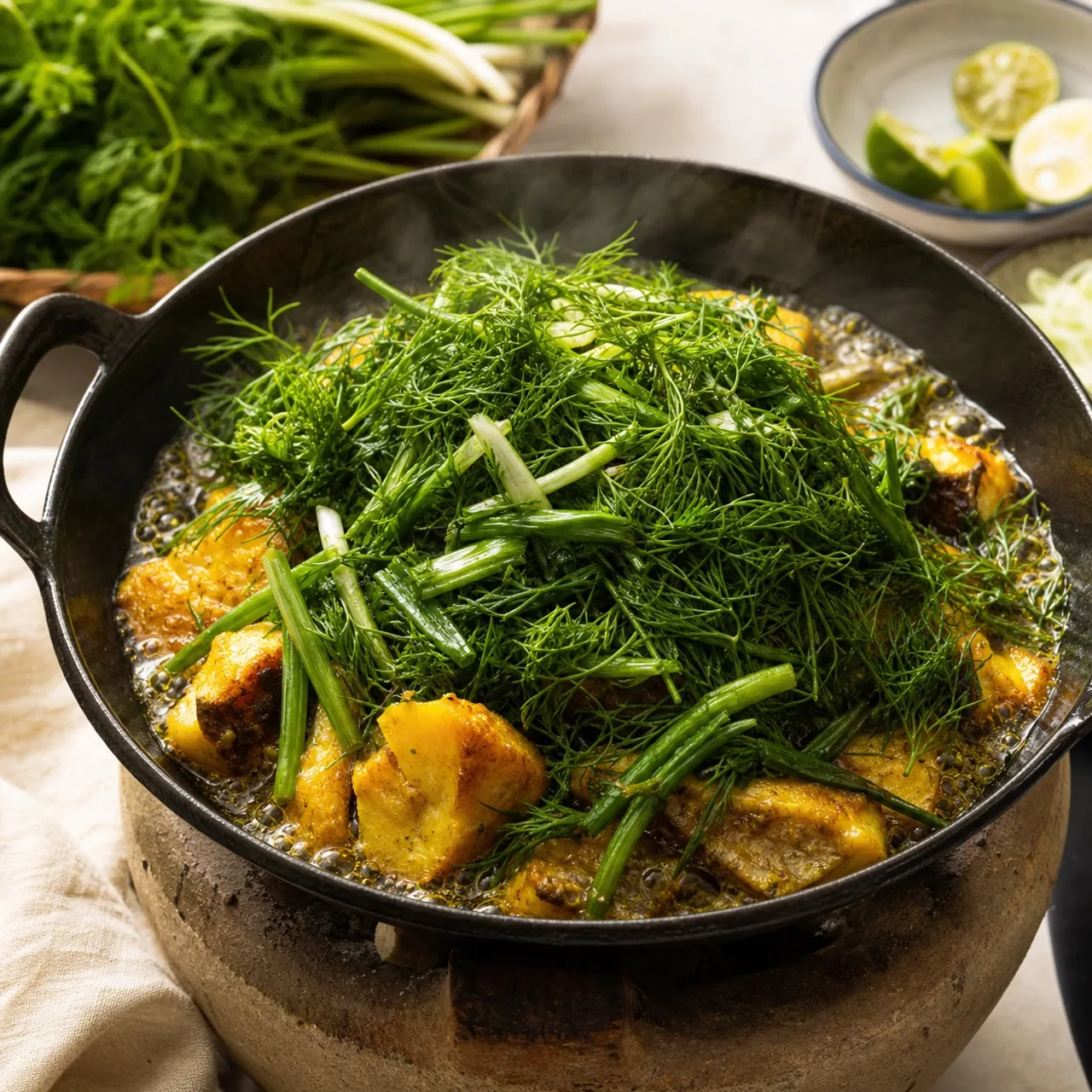
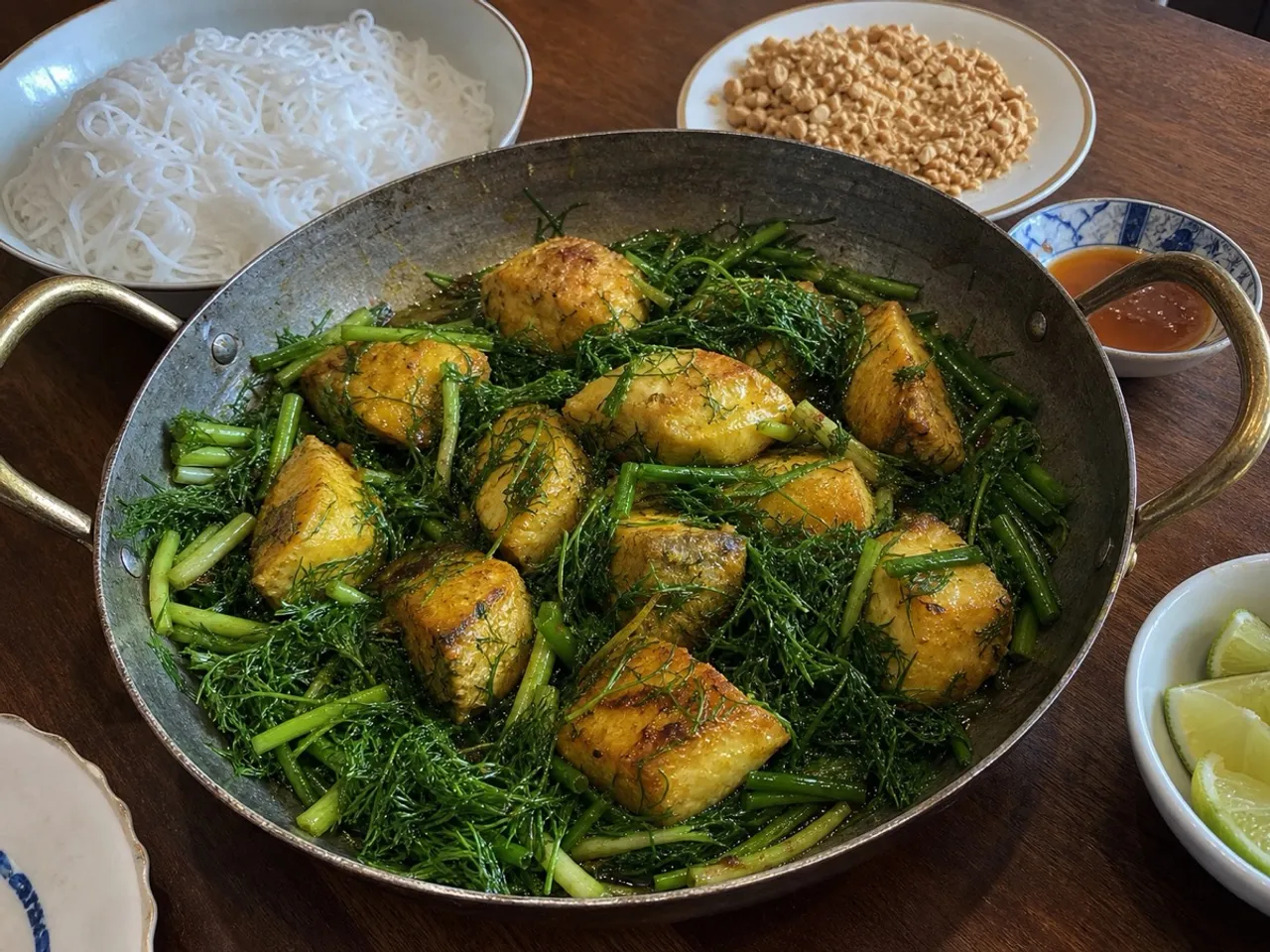
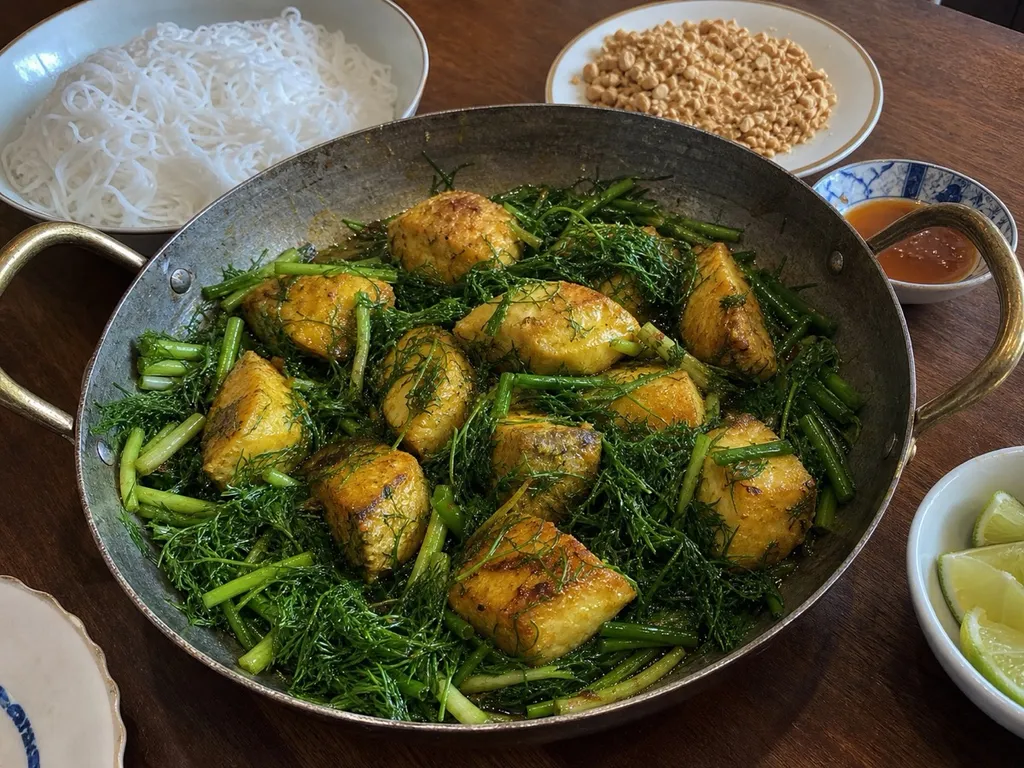
 Chả Cá Lã Vọng (Hanoi Turmeric Fish with Dill)
A legendary Hanoi dish of turmeric-marinated fish sizzled tableside with mountains of fresh dill and scallions over rice noodles.
Contains common allergens
In the app, Listahan checks these against your household automatically.
Instructions
5 steps- 1
Whisk together the turmeric, 2 tablespoons fish sauce, galangal paste, and yogurt in a bowl, then add the fish chunks and toss gently to coat, marinating covered in the refrigerator for at least 1 hour.
- 2
Soak the rice vermicelli in hot water for 8 minutes until soft, then drain, rinse under cold water, and set aside in serving bowls.
- 3
Heat 3 tablespoons oil in a large skillet over medium-high heat and pan-fry the marinated fish in a single layer, undisturbed, for 3 to 4 minutes per side until golden and just cooked through, then remove to a plate.
- 4
Add the dill and scallions to the same hot skillet and toss for 30 to 45 seconds, just until bright green and barely wilted, then return the fish and add the remaining 1 tablespoon fish sauce.
- 5
Pile the sizzling fish, dill, and scallions over the vermicelli, scatter with chopped peanuts, and serve at once with a dipping bowl of fish sauce and lime on the side.
 Images are for illustrative purposes only, may be inaccurate, and do not guarantee the presence or absence of specific ingredients.
 Listahan Family Score™
67/100
Works for many families
Score reflects how well this recipe fits a typical busy household. In the app, your Family Score is personalized to your household's allergens, kids, and pantry.
Nutrition
per serving600
Calories
48 g
Protein
71 g
Carbs
13 g
Fat
Estimated per serving. Actual values depend on the brands and portions you use.
Listahan cooking guide
Chef notes & practical guide
Technique notes, ingredient swaps, serve-alongside ideas, storage guidance, and equipment for this recipe.
Cultural context
Chả cá lã vọng is so iconic in Hanoi that the street where it has been served since the late 19th century was renamed Pho Cha Ca — Cha Ca Street — in its honor, a distinction awarded to only a handful of dishes in the world. The recipe is credited to the Doan family, who originally cooked it for resistance fighters during the French colonial period and eventually opened it to the public, guarding the full recipe closely for generations. The dish reflects northern Vietnamese cooking's preference for clean, bold ingredient pairings — golden turmeric fish sizzled tableside in a hot pan, buried under an extravagant amount of fresh dill, a herb rarely used at this volume in any other Vietnamese dish.
Listahan note
This version uses catfish or cod as accessible substitutes for the traditional snakehead fish, and builds the marinade around turmeric and galangal with a yogurt tenderizer that keeps the fish moist through high-heat pan-frying.
Technique cues
- The dill in cha ca is used in genuinely enormous quantities — far more than any Western recipe convention would suggest — because it wilts dramatically in the hot oil and its volume collapses to a fraction; start with what looks like too much and you will end with just enough.
- The galangal marinade is not interchangeable with ginger: galangal is earthier, more piney, and less sharp, and it is specifically this flavor that makes cha ca taste distinctly northern Vietnamese rather than generically Southeast Asian.
- The fish should be pan-fried in batches over high heat in enough oil to shallow-fry rather than saute; crowding the pan traps steam, prevents the turmeric crust from developing, and causes the fish to fall apart.
Kitchen flow
- Parallel prep
- Soak vermicelli noodles in cold water while marinating the fish, then drain and set aside; chop peanuts and trim dill in advance so the tableside cooking goes quickly.
- Make-ahead
- Marinate the fish up to 24 hours in advance and refrigerate uncovered for the last hour so the surface dries slightly, which helps the crust form during frying.
- Leftover move
- Flake leftover fish over steamed rice with the remaining dipping sauce and a handful of fresh herbs for a simple lunch bowl the next day.
- Cleanup rhythm
- Line the work area near the stove with paper towels for draining fish; the marinade's turmeric will stain — use an older cutting board and wipe the pan with a dry paper towel before washing to keep turmeric from spreading.
Ingredient brief
Role, handling, and swap guidance for each key ingredient.
catfish or cod fillets, cut into 2-inch chunks
primary protein
Purpose: Firm white fish holds its shape during high-heat pan-frying and absorbs the turmeric-galangal marinade without the delicate texture of flakier fish falling apart in the pan.
Handling: Pat completely dry before marinating and again before frying; any surface moisture creates steam that prevents the golden crust from forming.
Adaptation: Tilapia or monkfish work well; salmon can be used for a richer result but changes the flavor profile substantially.
ground turmeric
color, flavor, and anti-steaming agent
Purpose: Turmeric gives the dish its signature golden hue, contributes a mild earthy bitterness that balances the rich fish and dill, and helps form a dry surface crust during frying.
Handling: Mix into the marinade with the other wet ingredients and coat the fish at least 30 minutes before cooking; overnight marinating deepens the color noticeably.
Adaptation: Fresh turmeric grated fine gives a more vivid color and brighter flavor; use about three times the amount by volume compared to ground.
galangal paste or grated fresh galangal
aromatic backbone
Purpose: Galangal's piney, mentholated quality is the defining flavor note that distinguishes cha ca from other turmeric fish dishes; skipping it in favor of ginger produces a noticeably different dish.
Handling: Fresh galangal can be tough to grate — use a microplane or blitz chunks in a small food processor with a splash of water to make a paste.
Adaptation: Substitute half the amount of ginger plus a tiny pinch of ground cardamom if galangal is unavailable; it is an imperfect but workable approximation.
fish sauce
primary seasoning and umami foundation
Purpose: Divided between the marinade and the dipping sauce, fish sauce provides the fermented depth that underpins all the other flavors and connects the dish to its Vietnamese identity.
Handling: Use in the marinade to season the fish from within rather than salting post-cook; add the second portion to the nuoc cham-style dipping sauce with lime, sugar, and chili.
Adaptation: Coconut aminos plus a small amount of dried seaweed powder approximates fish sauce umami for a pescatarian-avoiding-fish-sauce substitute.
fresh dill, cut into 2-inch lengths
primary aromatic and textural element
Purpose: Dill is used in quantities that would be considered extravagant in any other context, wilting in the hot fat alongside the fish to create a silky, anise-scented nest that is as much a component as the protein itself.
Handling: Keep dill at room temperature before cooking; cold dill hits the hot pan and steams rather than wilts, losing its delicate texture.
Adaptation: No true substitute exists for dill's specific flavor in this dish; if unavailable, a mix of fennel fronds and flat-leaf parsley comes closer than any other option.
roasted peanuts, roughly chopped
crunchy textural finish
Purpose: Peanuts provide a toasty, fatty crunch that contrasts the soft noodles and wilted dill, and their mild sweetness rounds out the sharp fish sauce in the dipping sauce.
Handling: Dry-toast raw peanuts in a pan until golden if using unroasted; chop roughly rather than fine so individual pieces register in each bite.
Adaptation: Toasted cashew pieces work well; sunflower seeds provide similar crunch for a nut-free option.
Technique notes
- Get the oil genuinely hot — it should shimmer and a corner of fish placed in it should sizzle immediately and aggressively; fish added to insufficiently hot oil will stick, absorb oil, and turn greasy rather than forming a golden crust.
- Cook the fish about 80% through on the first side before flipping; the crust releases naturally from the pan when it is ready, and forcing an early flip guarantees breakage.
- The traditional cha ca experience is interactive — the pan comes to the table still sizzling and diners add their own dill, scallions, and peanuts; replicating this at home by serving in the hot pan with condiments on the side dramatically improves the meal.
Ingredient swaps
- Gluten-free direction
- All core ingredients are naturally gluten-free; verify any store-bought fish sauce is gluten-free (most are, but some blends contain wheat).
- Dairy-free option
- Replace the plain yogurt in the marinade with full-fat coconut milk; it provides a similar tenderizing fat without dairy and adds a subtle sweetness that works well with turmeric.
- Nut-free option
- Replace roasted peanuts with toasted pumpkin seeds (pepitas) for a comparable crunch without tree nuts or peanuts.
Serve alongside
- dried rice vermicelli noodles, cooked and served in a separate bowl for each diner to add
- sliced cucumber with rice vinegar and chili for a cooling side
- shrimp paste on sugarcane skewers for a Hanoi street-food spread
- cold Hanoi-style bia hoi (light lager) or any crisp light beer
- jasmine green tea served warm
- sparkling water with lime and a pinch of salt
Serving suggestions only — check pairings for your household's allergens.
Storage & reheating
- Cooked fish keeps in the fridge for up to 2 days; reheat in a dry nonstick pan over medium-high to re-crisp the crust rather than microwaving, which turns it soft.
- The dipping sauce keeps refrigerated for up to 5 days in a sealed jar; fresh lime juice may need topping up as acidity fades.
- Do not freeze cooked fish; the texture becomes waterlogged. Uncooked marinated fish can be frozen for up to 1 month before cooking.
Equipment
- large heavy skillet or cast-iron pan for even, high-heat frying
- microplane or small food processor for galangal paste
- spider or slotted spatula for flipping fish without breaking
- small bowls for individual dipping sauce portions
Make this household-aware
Listahan Pro checks this recipe against your household's allergens, finds pantry-aware swaps, builds the shopping list, and helps you plan the week around it.
Plan it in Listahan
Add Chả Cá Lã Vọng (Hanoi Turmeric Fish with Dill) to your week, check it against your household's allergens, and build the shopping list automatically.
More Vietnamese recipes
 Vietnamese Lens Verified Images are for illustrative purposes only, may be inaccurate, and do not guarantee the presence or absence of specific ingredients.
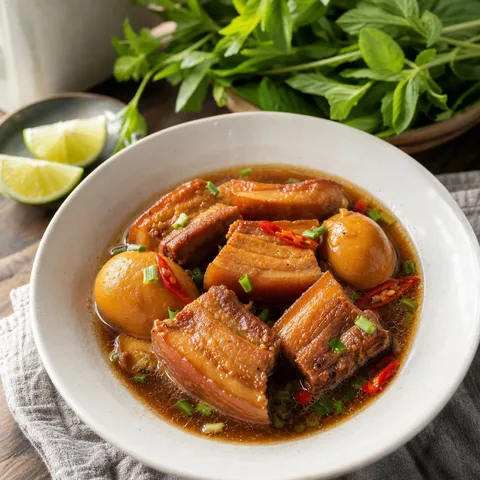
 Thịt Kho Tàu (Caramelized Pork and Eggs)
Meltingly tender pork belly and hard-boiled eggs braised in a rich, sweet, and savory coconut juice caramel, perfect over steamed rice.
 Vietnamese Lens Verified Images are for illustrative purposes only, may be inaccurate, and do not guarantee the presence or absence of specific ingredients.
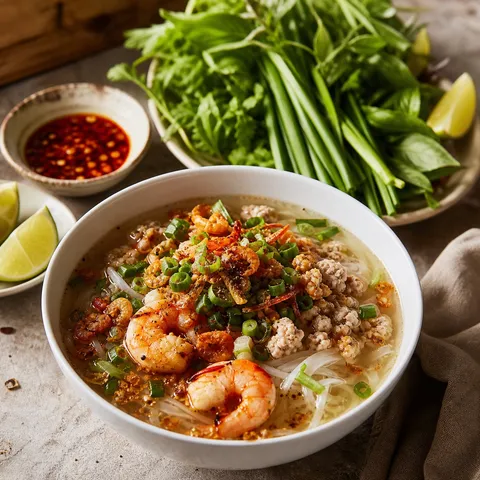
 Hủ Tiếu (Pork and Seafood Noodle Soup)
A Vietnamese pork-bone broth noodle soup loaded with ground pork, shrimp, and dried shrimp over chewy tapioca noodles, finished with garlic chives and fried garlic.
 Vietnamese Lens Verified Images are for illustrative purposes only, may be inaccurate, and do not guarantee the presence or absence of specific ingredients.
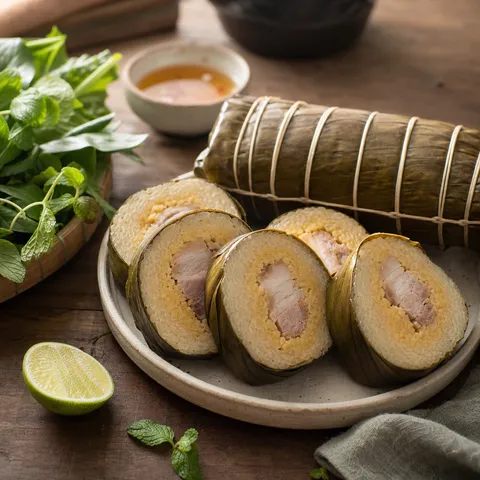
 Bánh Tét (Cylindrical Sticky Rice Cake)
The Southern equivalent of Bánh Chưng, rolled into a cylinder.